The 7 dimensions of ABA are applied, behavioral, analytic, technological, conceptually systematic, effective, and generality. Together, they set the standard for good applied behavior analysis.
This guide explains each one in plain words. You get everyday examples, a simple memory trick, and a checklist you can use right away.
Table of Contents
What Are the 7 Dimensions of ABA?
What are the 7 dimensions of ABA? They are seven rules that show whether a program is true applied behavior analysis. Think of them as a quality check for ABA therapy.
Three researchers at the University of Kansas wrote them down: Donald Baer, Montrose Wolf, and Todd Risley. Their paper, “Some Current Dimensions of Applied Behavior Analysis,” appeared in the first issue of the Journal of Applied Behavior Analysis (JABA) in 1968. You can read the original citation on PubMed Central.
Twenty years later, the same authors revisited the list in a 1987 JABA paper.
Parents, BCBAs, RBTs, behavior technicians, and teachers all use the dimensions. They are also core study material for people preparing for certification through the Behavior Analyst Certification Board (BACB).
One point is easy to miss. The dimensions are not therapy steps. They describe the quality standard that every plan should meet.
The 7 Dimensions of ABA Explained With Examples
Here is each dimension in simple terms, with a real-life example.
Applied
The goal must matter in the learner’s real life. This is called a socially significant behavior. Examples: asking for a snack with words, or holding a parent’s hand in a parking lot.

A skill that only looks good on paper is not applied.
Behavioral
The target must be observable and measurable. Anyone watching should see it and count it. You can track frequency, duration, latency, and intensity.
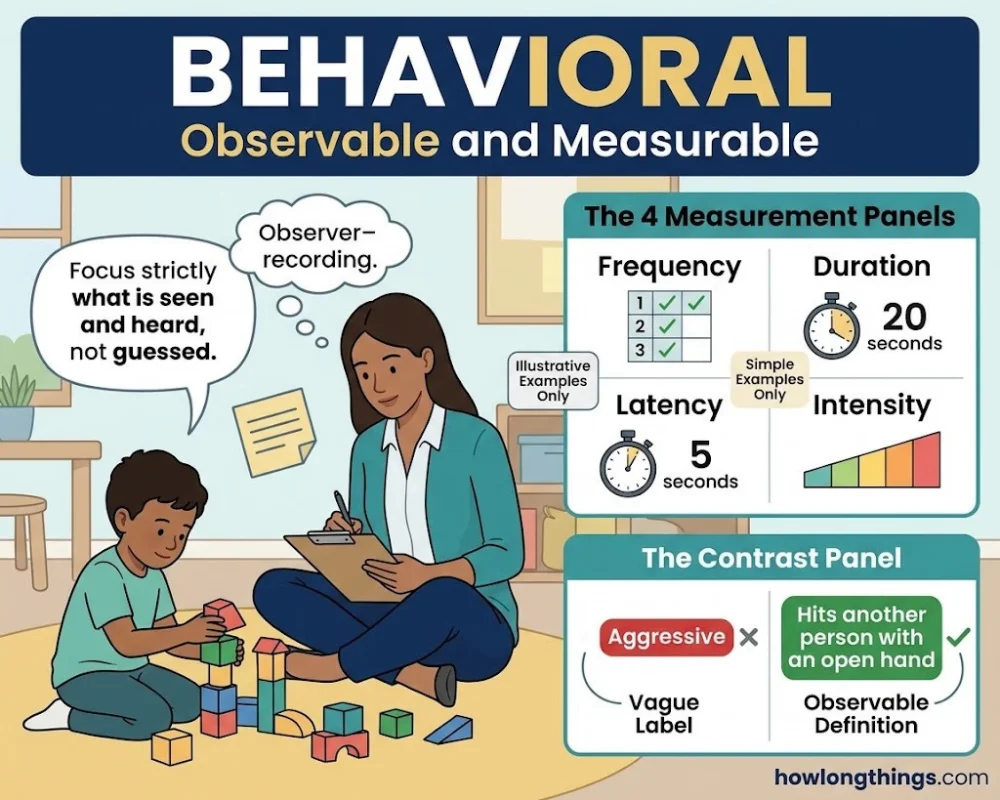
Anxiety cannot be counted. Crying, pacing, or running away can. A vague label like “aggressive” does not work. A clear definition, such as “hits another person with an open hand,” does.
Analytic
Data must show that the plan caused the change. It should not be luck or simple growing up. This proof is called a functional relationship.

Analysts use methods like reversal designs and multiple-baseline designs to test this. They change one thing at a time and watch the data.
Technological
The plan must be written so clearly that another trained person can repeat it exactly. Think of a recipe with exact measures.

“Do play therapy” is too vague. A technological plan states what the adult says, what the child does, and what happens next.
Conceptually Systematic
Every step must come from proven behavior principles, not guesswork. Common ones are positive reinforcement, prompting, modeling, extinction, and fading.
A good plan names the principle behind each step. That keeps ABA consistent from one practitioner to the next.

Effective
The change must be big enough to matter in daily life. A tiny shift on a chart is not enough. Example: a child who learns a word and uses it at home, not just in a session.
Teams review the data often. If progress stalls, they change the plan. The child is never blamed.

Generality
A skill should last over time, carry across places and people, and spread to related behaviors. This is called generalization. Keeping the skill going is called maintenance.

Example: a child greets a technician, then a teacher, then a grandparent. Generality rarely happens by chance. Teams plan for it and teach in natural settings like home, school, and the park.
Must Visit: Cinder Block Dimensions: Standard Sizes, Types & Uses (2026)
How to Remember and Use the 7 Dimensions
How do you remember the 7 dimensions of ABA? Use the memory aid GET A CAB. Each letter stands for one dimension. The phrase was added later by teachers. It is not in the 1968 paper.
| Letter | Dimension | Question to ask |
| G | Generality | Does the skill last and carry over? |
| E | Effective | Is the change big enough to matter? |
| T | Technological | Could someone else repeat the steps? |
| A | Applied | Does the goal matter in daily life? |
| C | Conceptually systematic | Is it based on behavior principles? |
| A | Analytic | Do the data prove the plan works? |
| B | Behavioral | Can we see and count it? |
Another memory aid is BATCAGE. Use whichever one sticks.
How can parents use the dimensions? Treat them as a checklist when you review a therapy plan. Ask the team:
- Is each goal meaningful to our family?
- How do you measure it, and can I see the data?
- Are the steps written down so any trained staff member can follow them?
- What will you change if progress slows?
- How will the skill carry over to home and school?
Common mistakes to watch for include vague goals, unwritten steps, data that no one reviews, and skills taught in only one place.
A qualified BCBA can answer these questions. If you are unsure about any plan, ask for an explanation in plain language.
7 Dimensions of ABA vs Principles of ABA
People often mix these up. The two ideas do different jobs.
The dimensions judge a program. They ask, “Is this good applied behavior analysis?” The principles explain how behavior works. They include reinforcement, punishment, extinction, stimulus control, and motivating operations.
So a plan uses principles to change behavior. Then the dimensions check that the plan is done well.
Some authors have suggested adding more to the list. For example, Penney and Veverka proposed compassion as an eighth dimension in Behavior Analysis in Practice. It is a proposal, not part of the original 1968 list.
FAQs
How to remember the seven dimensions of ABA?
Use the memory aid GET A CAB: Generality, Effective, Technological, Applied, Conceptually systematic, Analytic, Behavioral. BATCAGE is another option. Saying each dimension with one real example helps it stick.
What is the 8th dimension of ABA?
There is no official eighth dimension. The original list has seven. Some authors, including Penney and Veverka, have proposed compassion as an eighth, but it is not a standard part of the framework.
Who created the 7 dimensions of ABA?
Donald Baer, Montrose Wolf, and Todd Risley created them at the University of Kansas. They published the list in the Journal of Applied Behavior Analysis in 1968 and revisited it in 1987.
Are all 7 dimensions of an ABA necessary?
Practitioners use them together as one set. If a plan misses one, it has a gap. For example, a plan with no data is not analytic, and a plan with unwritten steps is not technological.
What is the purpose of the dimensions of ABA?
They keep ABA focused on useful, measurable, evidence-based change. They also give families and professionals a clear way to judge the quality of a program.
What are the 5 principles of ABA?
ABA has no single official list of five. Textbooks often teach these core principles: reinforcement, punishment, extinction, stimulus control, and motivating operations. Lists vary by source.
Conclusion
The 7 dimensions of ABA give every program the same clear test: real goals, measurable change, proven methods, and skills that last. Use them as a checklist, and ask a qualified BCBA when you need help applying them.

Elizabeth Queen is a Owner and consumer research writer at HowLongThings.com, specializing in product lifespan, durability, and everyday household research. She’s passionate about helping readers make smarter, longer-lasting buying decisions.