Most people think wellness means a gym habit and a clean diet. That is only a small slice of the picture.
The 8 dimensions of wellness cover your body, mind, money, work, relationships, purpose, and surroundings. This guide explains each one in plain words and gives you simple steps to try today.
Table of Contents
What Are the 8 Dimensions of Wellness?
Here is the quick answer, followed by where the model came from.
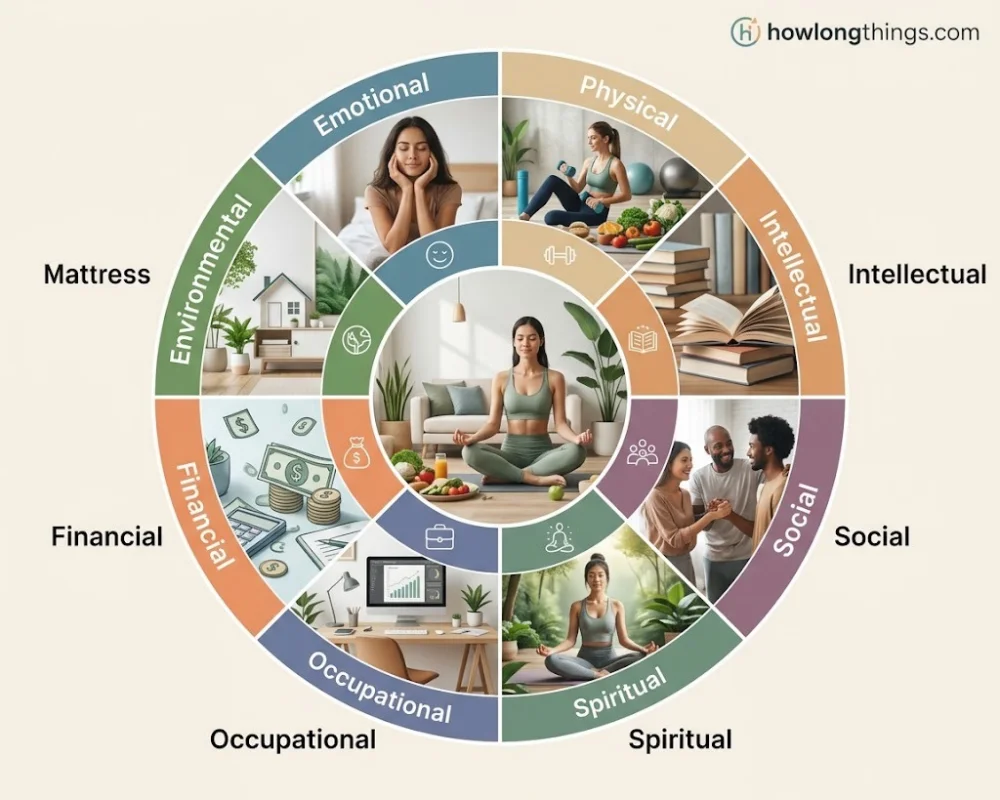
The eight dimensions of wellness are emotional, physical, intellectual, social, spiritual, occupational, financial, and environmental. Together they form a holistic wellness model that looks at your whole life, not just your body.
The idea started in 1976. Dr. Bill Hettler, a physician and co-founder of the National Wellness Institute (NWI), built a six-dimension model at the University of Wisconsin–Stevens Point. The Substance Abuse and Mental Health Services Administration (SAMHSA) now uses an eight-dimension version that adds environmental and financial wellness.
Wellness is more than the absence of illness. The NWI describes it as an active process, where you become aware of your choices and move toward a fuller life.
The dimensions are interconnected. Money stress can ruin sleep, poor sleep can sour your mood, and a sour mood can strain your job and your friendships. Balance does not mean equal effort, though. The goal is personal harmony, and it looks different for every person.
A wellness wheel puts all eight dimensions on one circle, like slices of a pie. Rate each slice, and the weak spots show up fast.
The Eight Dimensions of Wellness Explained
Each dimension below has a plain definition, a warning sign, and one habit you can start today.
Emotional Wellness
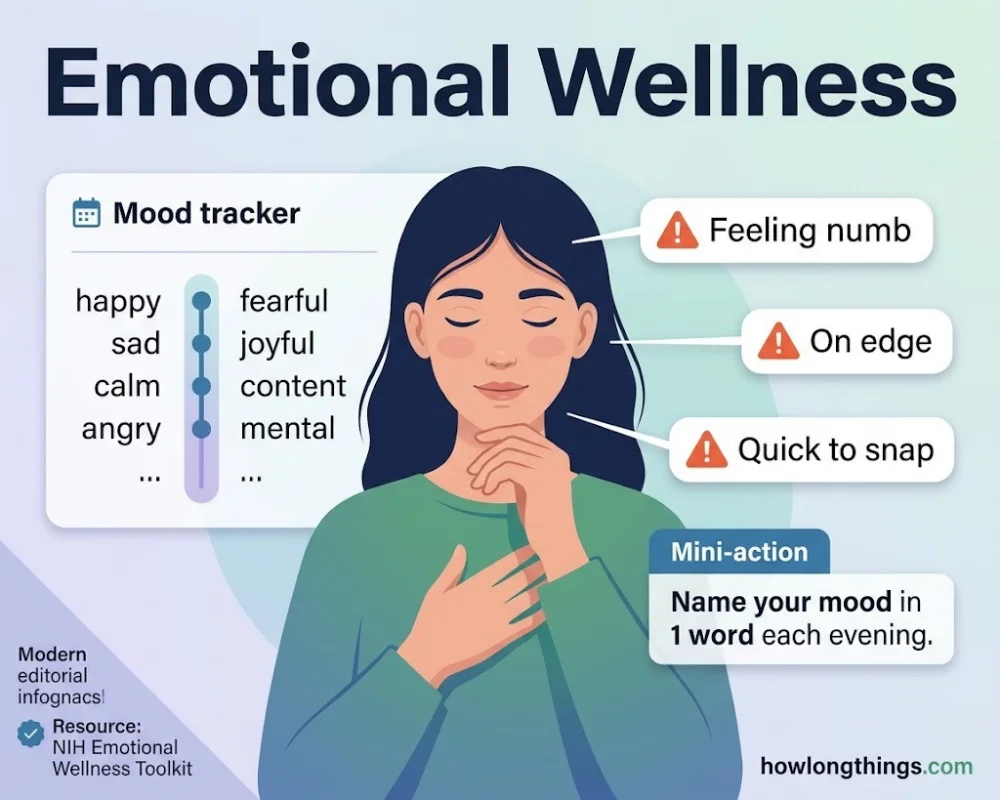
Emotional wellness means noticing your feelings and handling them in a healthy way. A warning sign is feeling numb, on edge, or quick to snap at people you care about. Try naming your mood in one word each evening, and explore the free tips in the NIH Emotional Wellness Toolkit.
Physical Wellness
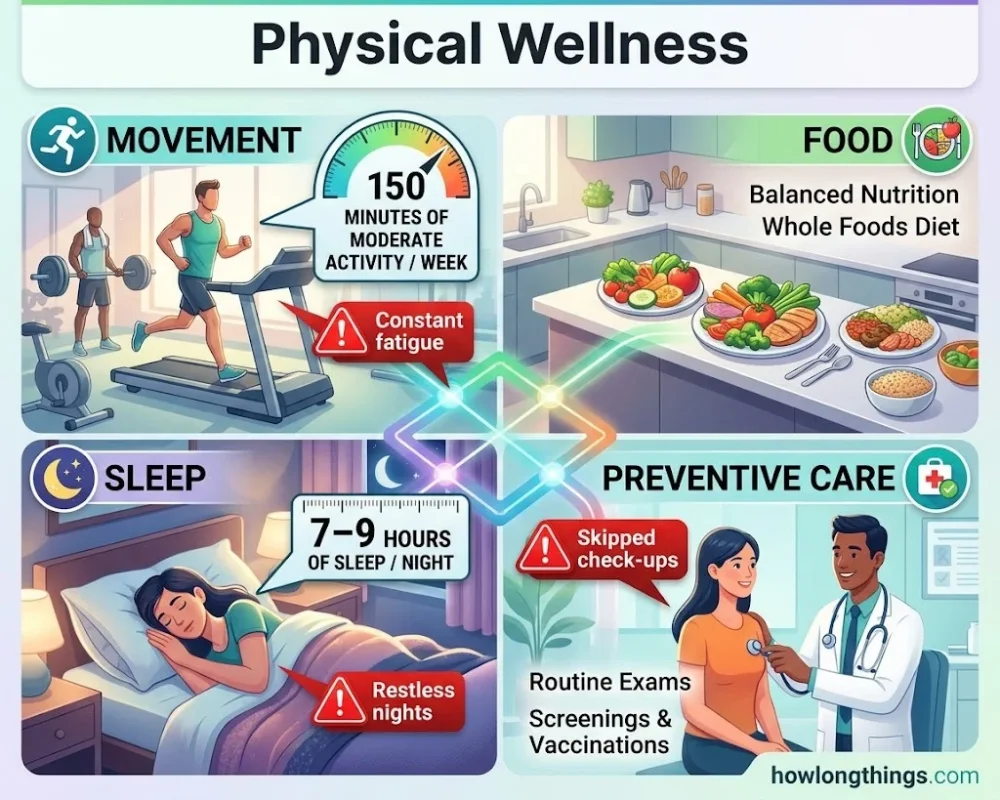
Physical wellness covers movement, food, sleep, and preventive care like regular check-ups. Constant fatigue, restless nights, and skipped doctor visits are common red flags. Aim for about 150 minutes of moderate activity a week and seven to nine hours of sleep a night.
Intellectual Wellness
Intellectual wellness is about keeping your mind curious through lifelong learning, creativity, and critical thinking. Boredom, mental fog, and fear of anything new can signal a stalled mind. Read ten pages a day, learn a few words in a new language, or take up a hobby that stretches you.

Social Wellness
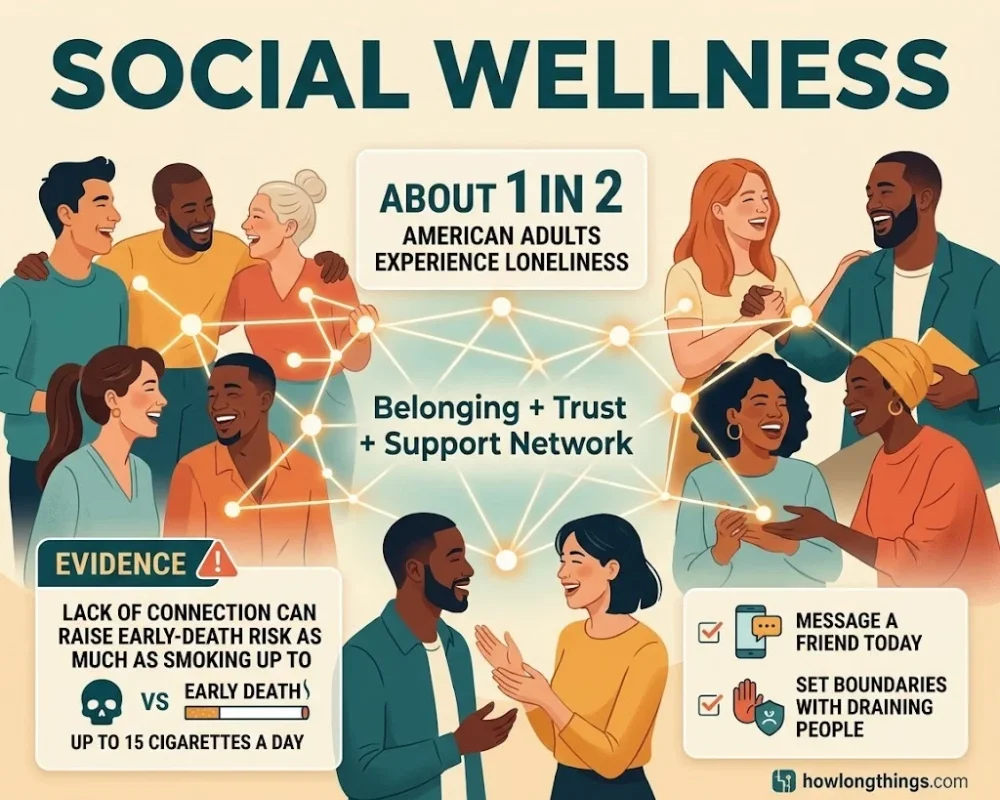
Social wellness means having a sense of belonging, trust, and a dependable support network. The U.S. Surgeon General’s advisory reports that about half of American adults experience loneliness, and a lack of connection can raise the risk of early death as much as smoking up to 15 cigarettes a day. Send one message to a friend today, and set clear boundaries with people who drain you.
Spiritual Wellness
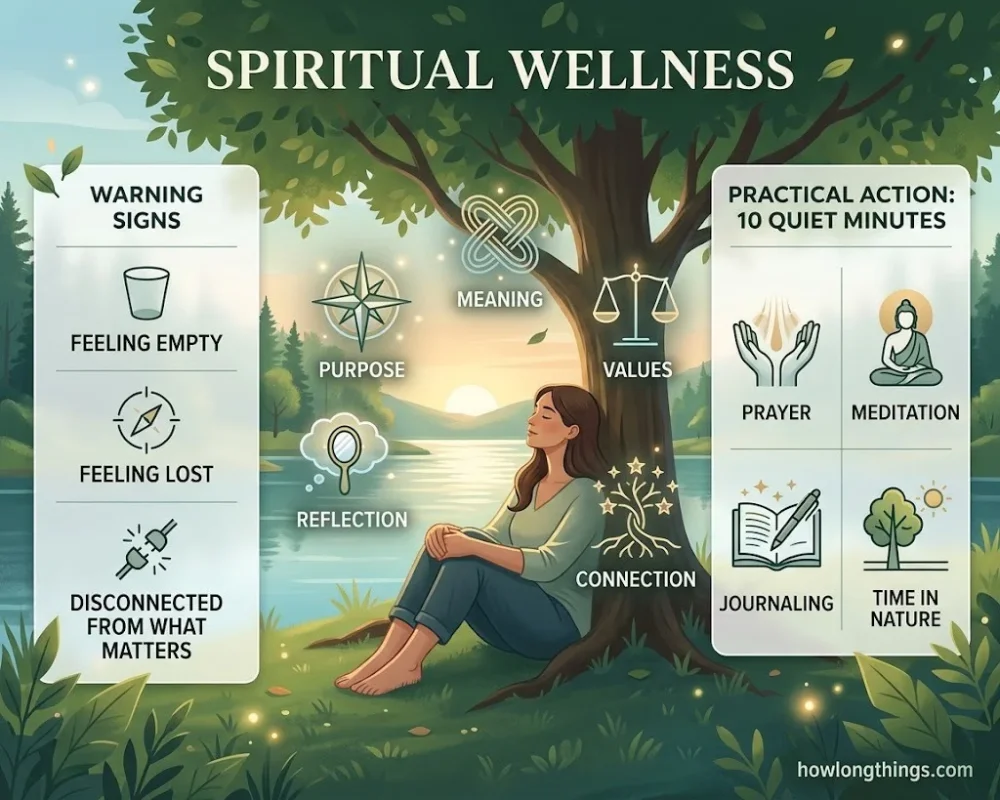
Spiritual wellness is a sense of purpose and meaning built on your values, with or without organized religion. Feeling empty, lost, or cut off from what matters can point to a gap here. Spend ten quiet minutes in prayer, meditation, journaling, or time in nature.
Occupational Wellness
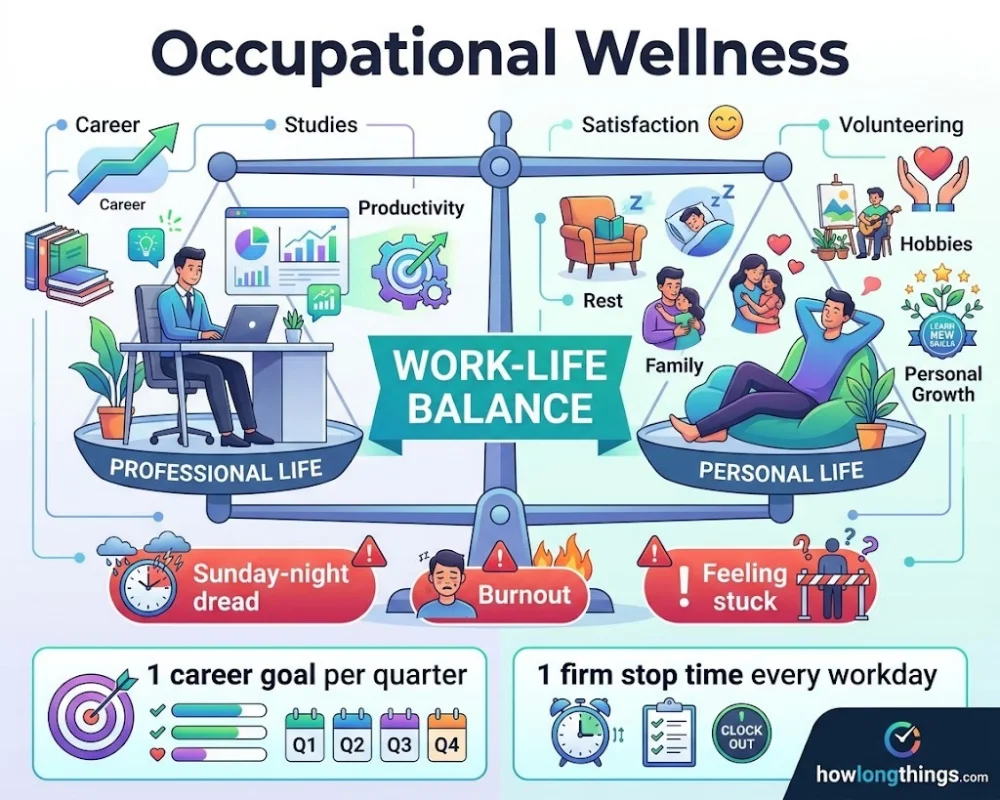
Occupational wellness means finding satisfaction and growth in your work, studies, or volunteering, while keeping a healthy work-life balance. Sunday-night dread, burnout, and feeling stuck are classic warning signs. Set one career goal for the quarter and one firm stop time for each workday.
Financial Wellness
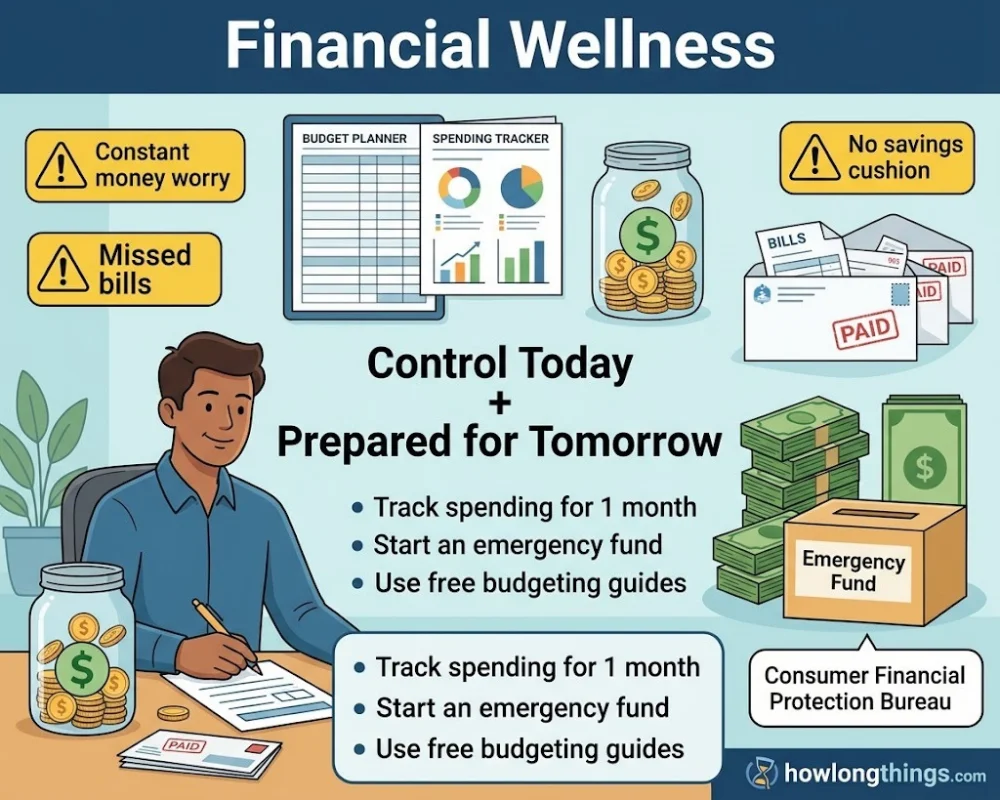
Financial wellness is feeling in control of your money today and prepared for tomorrow. Constant money worry, missed bills, and no savings cushion are signs of strain. Track your spending for one month, start a small emergency fund, and use the free budgeting guides from the Consumer Financial Protection Bureau.
Environmental Wellness
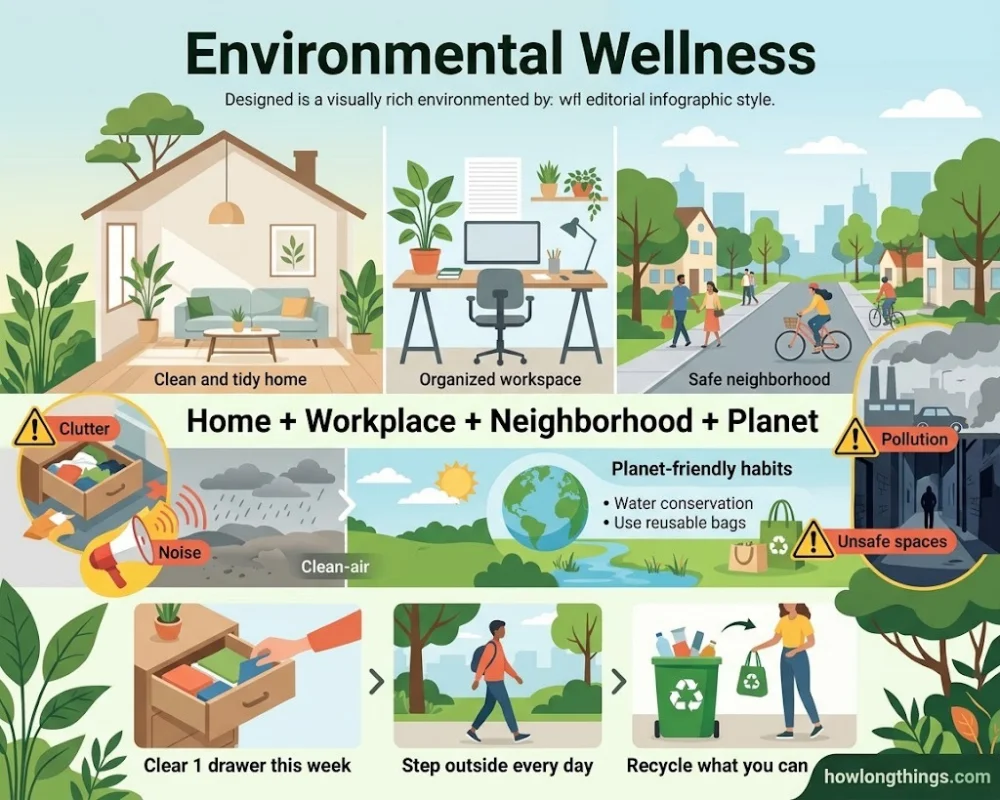
Environmental wellness looks at how your home, workplace, neighborhood, and planet affect your health. Clutter, noise, pollution, and unsafe spaces can quietly raise stress. Clear out one drawer this week, step outside every day, and recycle what you can.
A balanced lifestyle also depends on making space for enjoyable activities that support social connection and physical well-being. For outdoor recreation, understanding the official cornhole board dimensions can help you set up a comfortable and regulation-friendly game area.
Benefits of Balancing the 8 Dimensions of Wellness
Balanced wellness helps more than one part of life at a time. Here is what expert models point to.
It creates a domino effect. When one dimension improves, others often follow. A daily walk lifts your mood, clears your head, and gives you time with a friend.
It builds resilience. Strong ties, steady money, and solid sleep make hard weeks easier to handle.
It protects your long-term health. Neglecting one dimension over time tends to drag down the others, and with them your quality of life.
It fits real life. A new parent may focus on sleep and social support. A college student may focus on money and learning. Both are valid, because wellness is self-defined and always changing.
Many schools and employers also use the model to guide wellness programs, stress management efforts, and work-life balance policies.
How to Improve the 8 Dimensions of Wellness Daily
Small steps beat big overhauls. Use this simple plan to build a balanced life.
- Rate each dimension from 1 (needs work) to 5 (thriving) on your wellness wheel.
- Pick your one or two lowest scores.
- Attach one tiny habit to something you already do, like stretching after you brush your teeth.
- Review your scores once a month and adjust.
Why tiny habits? Because habits save mental energy. Studies suggest that about 40% of daily behavior runs on habit. In The Power of Habit, Charles Duhigg explains the habit loop: a cue, a routine, and a reward. Keep the cue and the reward, then swap in a better routine.
Gretchen Rubin, author of Better Than Before, adds that self-awareness matters. A night owl will struggle with a 5 a.m. workout. Researchers at University College London also found that a new habit took 66 days to form on average, so give yourself time.
Use this table to pick a quick win for your weakest dimension.
| If your lowest score is | Try this quick win |
| Emotional | Name your mood in one word each night |
| Physical | Walk for ten minutes after lunch |
| Intellectual | Read ten pages or learn five new words |
| Social | Text or call one person today |
| Spiritual | Sit in silence for five to ten minutes |
| Occupational | Write down one work goal for the month |
| Financial | Check your bank balance once a week |
| Environmental | Declutter one small space |
Avoid three common mistakes. Do not try to fix all eight at once. Do not ignore the quiet ones, like financial and environmental wellness. And do not treat wellness as a project with an end date.
If low mood, anxiety, or stress lasts for weeks, talk to a doctor or licensed counselor. If you are in crisis in the U.S., call or text 988 at any hour.
FAQs About the 8 Dimensions of Wellness
What is the 5-3-1 rule for wellness?
The 5-3-1 rule is a social health guide from social scientist Kasley Killam. It suggests you connect with five different people or groups each week, nurture three close relationships, and spend about one hour a day in social contact. That hour can be split into small moments, like a quick call or a walk with a friend. Do not confuse it with the 5-3-2-1-Almost None plan, a child health guide on fruits and vegetables, meals, screen time, and activity.
What is the 9th dimension of wellness?
There is no single official ninth dimension. The most common addition is cultural wellness, which covers identity, heritage, and belonging. The Integrated Classification of Wellness added it in 2025. Some university models add sexual, creative, or mental wellness instead.
Who created the 8 dimensions of wellness?
Dr. Bill Hettler, co-founder of the National Wellness Institute, created the original six-dimension model in 1976. No single person created the eight-dimension version. SAMHSA uses it today, with environmental and financial wellness added to Hettler’s six.
What are the 8 pillars of health?
No single official list exists. Lifestyle medicine uses six pillars: a whole-food, plant-predominant diet, physical activity, restorative sleep, stress management, positive social connections, and avoiding risky substances. Integrative approaches add purpose and environment, which brings the list to eight.
What are the 12 pillars of wellness?
There is no standard set. Different groups publish their own lists. One popular model, tied to psychologist Rick Hanson, names self-care, mindfulness, learning, vitality, gratitude, confidence, calm, motivation, intimacy, courage, aspiration, and service. Other models stretch the eight dimensions to twelve by splitting areas like social wellness.
What are the 8 principles of wellness?
Experts do not publish one official list. The core ideas behind the eight dimensions are that wellness is holistic, personal, active, dynamic, positive, preventive, interconnected, and self-directed. Some people also use “principles” to mean the eight dimensions themselves.
Final Thoughts
The 8 dimensions of wellness give you a clear map of a healthy life. You do not need to master all eight at once. Pick one dimension, start one small habit this week, and let the others follow.

Elizabeth Queen is a Owner and consumer research writer at HowLongThings.com, specializing in product lifespan, durability, and everyday household research. She’s passionate about helping readers make smarter, longer-lasting buying decisions.