Reading a food can dimensions label shouldn’t feel like cracking a code. This guide lays out every standard can size, height, and width in one place, so you always know exactly what you’re picking up.
Table of Contents
Standard Food Can Dimensions Chart
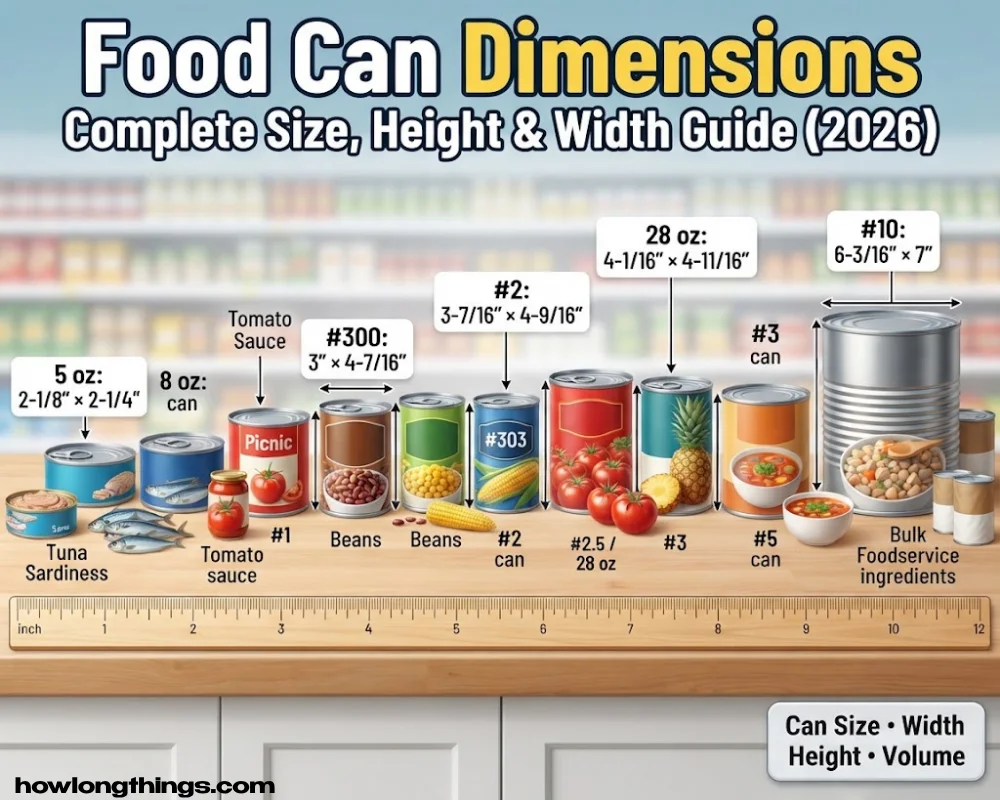
Every canned food size follows a set of standard measurements set by the packaging industry. Below is the full food can size chart, covering everything from small specialty tins to bulk institutional cans.
| Can Name | Volume (fl oz) | Diameter (Width) | Height | Common Uses |
| #10 | 100–117 oz | 6-3/16″ | 7″ | Bulk foodservice, restaurants, institutions |
| #5 | 56 oz | 5-1/8″ | 5-7/8″ | Soups, chili, institutional sauces |
| #3 | 46–51 oz | 4-1/4″ | 4-7/8″ | Fruit and vegetable juices, condensed soups |
| #2.5 | 26–29 oz | 4-1/16″ | 4-11/16″ | Sliced fruit, stews, thick soups, pumpkin |
| #2 | 20 oz | 3-7/16″ | 4-9/16″ | Beans, corn, whole tomatoes |
| #300 | 14–16 oz | 3″ | 4-7/16″ | Canned vegetables, beans |
| #303 | 16–17 oz | 3-3/16″ | 4-6/16″ | Retail beans, tomatoes |
| #1 (Picnic) | 10-1/2–12 oz | 2-11/16″ | 4″ | Condensed soups |
| 12 oz | 12 oz | 2-11/16″ | 4-13/16″ | Tuna, vacuum-packed corn |
| 15 oz | 15 oz | 3-3/16″ | 4-7/16″ | Most common retail vegetable can |
| 16 oz | 16 oz | 3-3/16″ | 4-13/16″ | Taller equivalent of the 15 oz can |
| 28 oz | 28–32 oz | 4-1/16″ | 4-11/16″ | Large tomatoes, pineapple, big soups |
| 8 oz | 8 oz | 2-11/16″ | 3″ | Tomato sauce, small soups |
| 5 oz | 5 oz | 2-1/8″ | 2-1/4″ | Small tuna, sardines |
This chart lines up with the sizing standard published in the USDA Food Buying Guide, the federal reference foodservice operators and manufacturers use to identify can dimensions by template rather than guesswork. Learn more at foodbuyingguide.fns.usda.gov.
More posts: Soup Can Dimensions: Complete Size, Height & Diameter Guide(2026)
Common Food Can Sizes Explained
Each food can size below is broken down by its exact diameter, height, and typical use. Use this section to match a can in your pantry to its real name.
#10 Can Dimensions

The #10 can is the largest standard food can dimension on this list. It measures 6-3/16 inches across and 7 inches tall, holding 100 to 117 fluid ounces — roughly 13 cups.
This size shows up in restaurants, cafeterias, and other high-volume kitchens. Its large width and height make it efficient for bulk items like tomatoes, beans, and sauces.
#2 and #2.5 Can Dimensions
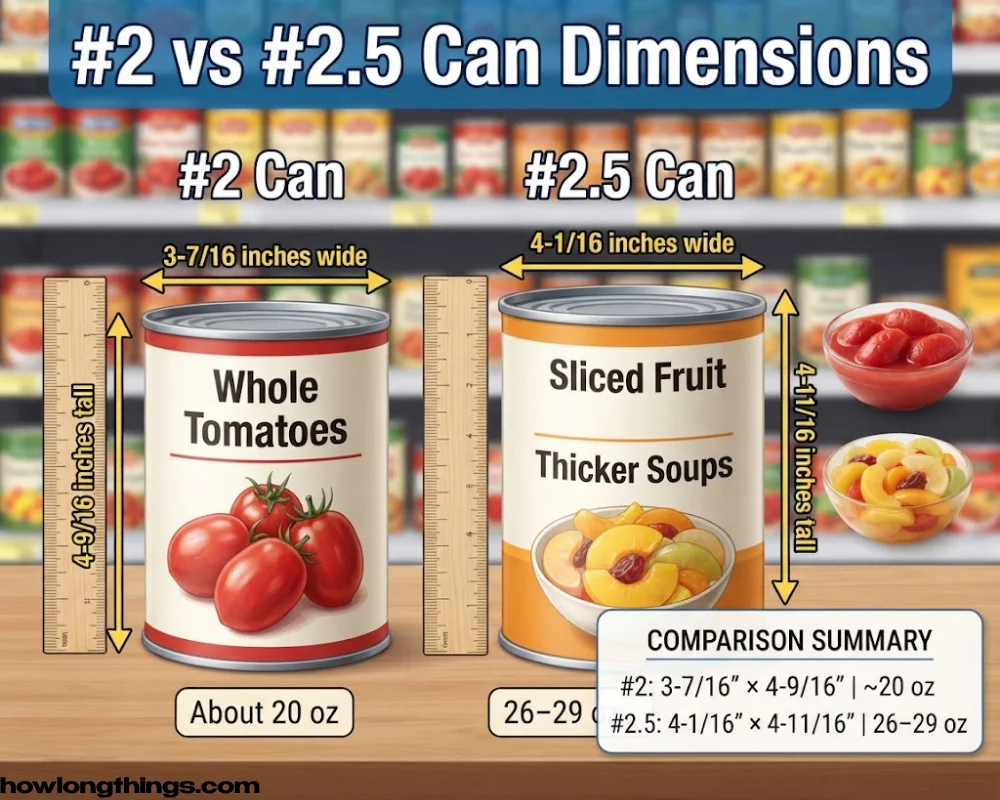
The #2 can measures 3-7/16 inches wide by 4-9/16 inches tall and holds about 20 ounces. The #2.5 can is a step up, at 4-1/16 inches wide by 4-11/16 inches tall, holding 26 to 29 ounces.
Both sizes are common on grocery shelves. You’ll typically find whole tomatoes, sliced fruit, and thicker soups packed in these can dimensions.
#300 and #303 Can Dimensions
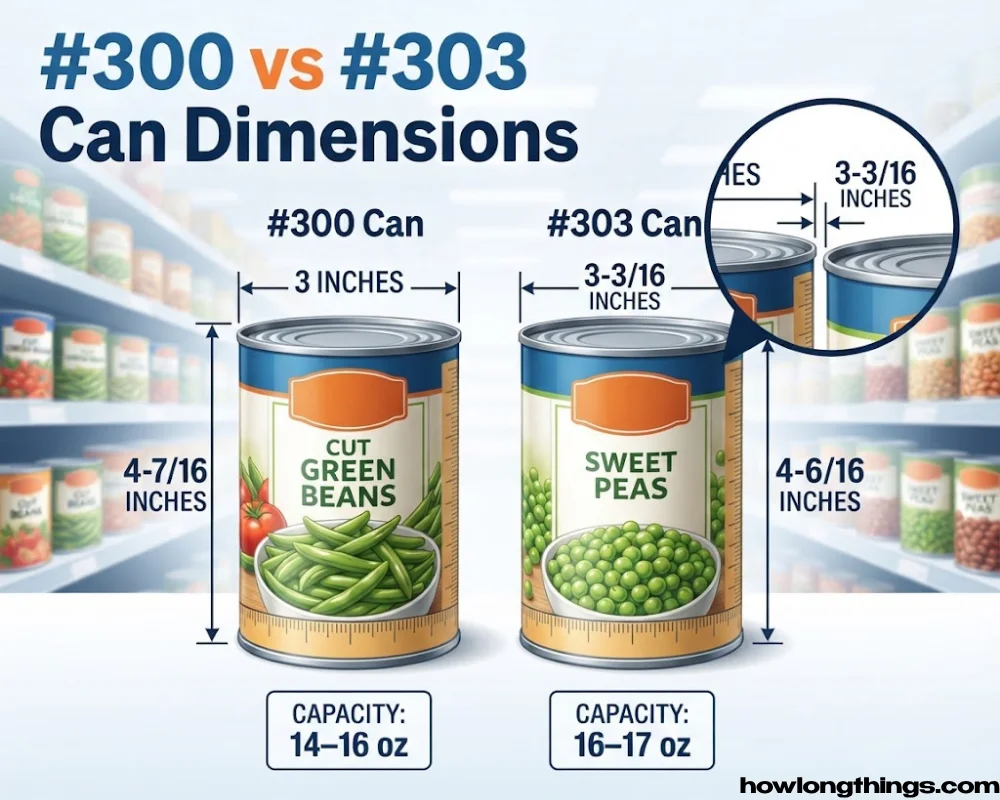
The #300 can is 3 inches wide and 4-7/16 inches tall, holding 14 to 16 ounces. The #303 can is slightly wider at 3-3/16 inches, with a nearly identical height of 4-6/16 inches and a volume of 16 to 17 ounces.
These two food can sizes are the workhorses of the canned vegetable and bean aisle. The small width difference between them is easy to miss unless you measure.
#1 (Picnic) Can Dimensions
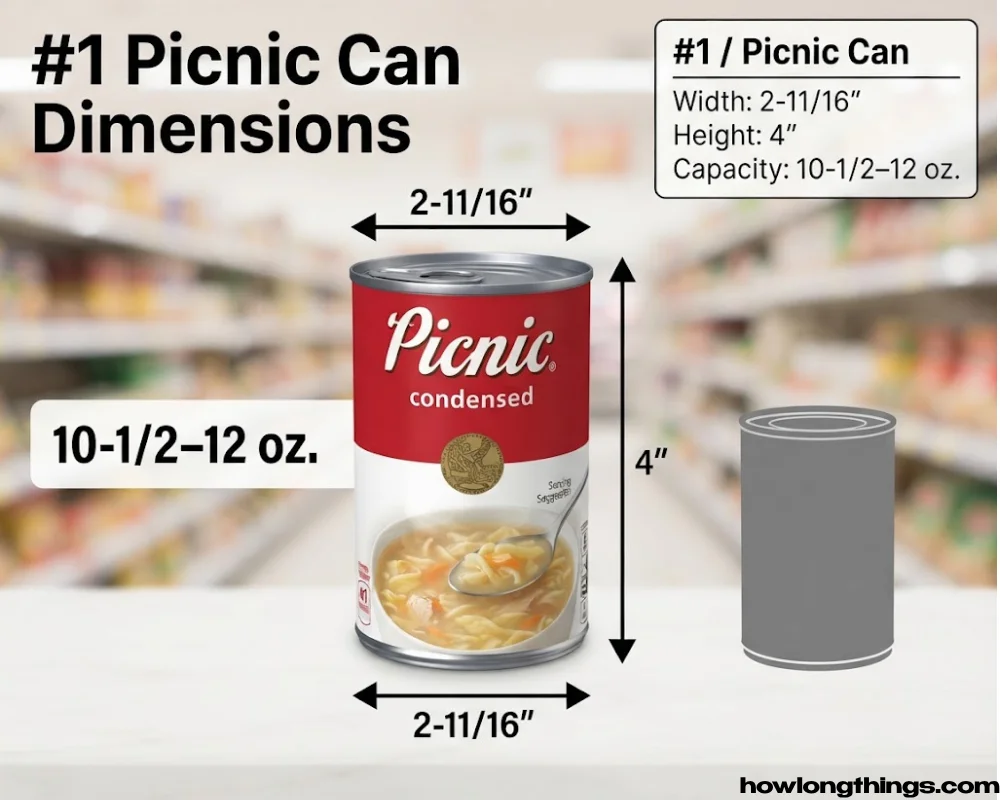
The #1, or “picnic,” can is one of the smaller standard sizes, at 2-11/16 inches wide and 4 inches tall. It holds 10-1/2 to 12 ounces, making it a common choice for condensed soups.
12 oz, 15 oz, 16 oz, and 28 oz Can Dimensions
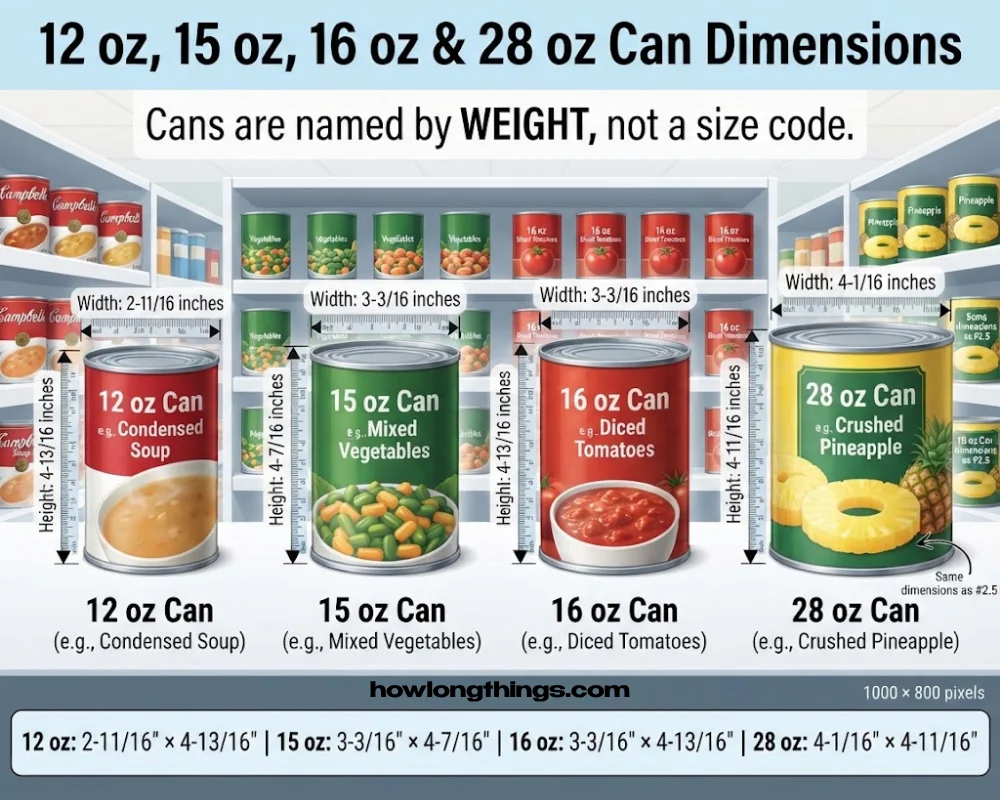
These sizes are named by weight rather than a size code, but they still follow standard food can dimensions. A 12 oz can measures 2-11/16 by 4-13/16 inches, while a 15 oz can is 3-3/16 by 4-7/16 inches.
A 16 oz can shares the same width as the 15 oz size but stands taller, at 4-13/16 inches. A 28 oz can matches the #2.5 in dimensions and is common for large tomatoes and pineapple.
Specialty Small Can Dimensions (5 oz and 8 oz)
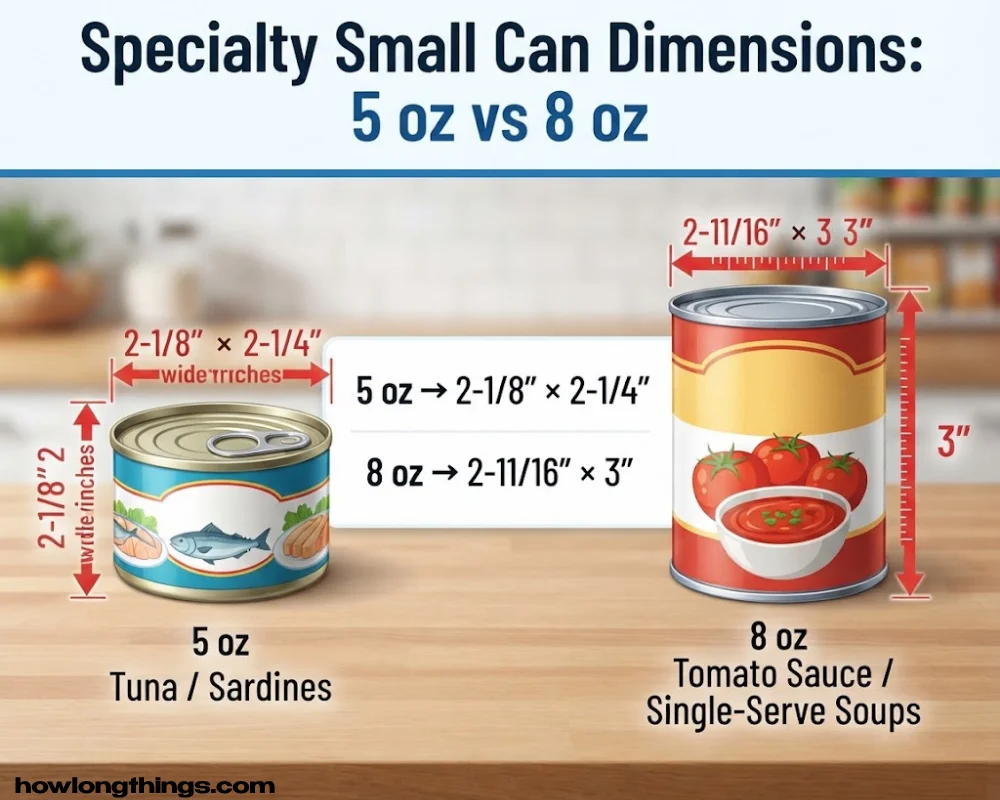
Smaller food cans cover niche portions. A 5 oz can measures just 2-1/8 by 2-1/4 inches, typically used for small tuna or sardines. An 8 oz can is 2-11/16 by 3 inches, a common size for tomato sauce and single-serve soups.
How to Read Food Can Size Numbers
Standard food can dimensions are written as a three-digit code, and once you know the pattern, any can code becomes easy to read. The first digit is the number of whole inches in the diameter, and the remaining two digits are sixteenths of an inch.
For example, a can coded 303 x 406 is 3 and 3/16 inches wide and 4 and 6/16 inches tall. You’ll also see older size names, like #303, used alongside these numeric codes — both refer to the same can dimensions, just labeled differently across eras.
Food Can Dimensions: Volume vs. Weight
The ounces printed on a can label usually describe the weight of the food inside, not its fluid volume. A 15 oz can, for instance, might only hold about 14 fluid ounces once you account for density.
Manufacturers also leave a small gap at the top of every can, called headspace, to allow for expansion during processing. This is why the net weight on the label can differ slightly from the drained weight you’d measure after opening it.
How to Measure Dimensions of Food Can by Yourself
If a can has no readable label, you can find its dimensions with a ruler. Measure the diameter across the flat lid, avoiding the raised seam, then measure the height from the flat bottom to the top edge.
For a quicker check, lay the can against a printed can size template — a tool used by foodservice buyers to match unmarked cans to standard sizes at a glance. Either method gets you within a sixteenth of an inch, which is accurate enough for most kitchen and storage needs.
Food Can Dimensions FAQs
What are the standard dimensions of a food can?
Standard food can dimensions range from small 5 oz tins at 2-1/8 by 2-1/4 inches up to institutional #10 cans at 6-3/16 by 7 inches. Common retail sizes like #300, #303, and #2 fall in between, generally measuring 3 to 4 inches wide and 4 to 5 inches tall.
What is the standard size of a tin can?
There’s no single “standard” tin can size — it depends on the food inside. The most common retail can size is the #300 or #303, each holding 14 to 17 ounces and measuring about 3 inches wide by 4-7/16 inches tall.
What are the dimensions of a 28 oz can?
A 28 oz can measures 4-1/16 inches in diameter and 4-11/16 inches in height. This size is common for large tomatoes, pineapple, and bigger batches of soup.
What is the size of a 10 can?
A #10 can measures 6-3/16 inches wide and 7 inches tall, holding 100 to 117 fluid ounces, or roughly 13 cups. It’s the largest standard food can size used in foodservice and bulk cooking.
Why is it called a 10 can?
The “10” in a #10 can comes from an older can-numbering system based on standardized container sizes, not the number of ounces or cups it holds. Over time, the name stuck as the common term for this large institutional can size, even as exact dimensions were standardized separately.
What is the size of a small can?
Small food cans usually range from 5 to 8 ounces, with dimensions as compact as 2-1/8 by 2-1/4 inches. These sizes are common for sardines, small tuna portions, and single-serve tomato sauce.
Conclusion
Knowing your food can dimensions takes the guesswork out of cooking, storage, and shopping. Whether you’re reaching for a small 5 oz tin or a bulk #10 can, these standard sizes keep recipes and pantry planning consistent every time.

Elizabeth Queen is a Owner and consumer research writer at HowLongThings.com, specializing in product lifespan, durability, and everyday household research. She’s passionate about helping readers make smarter, longer-lasting buying decisions.