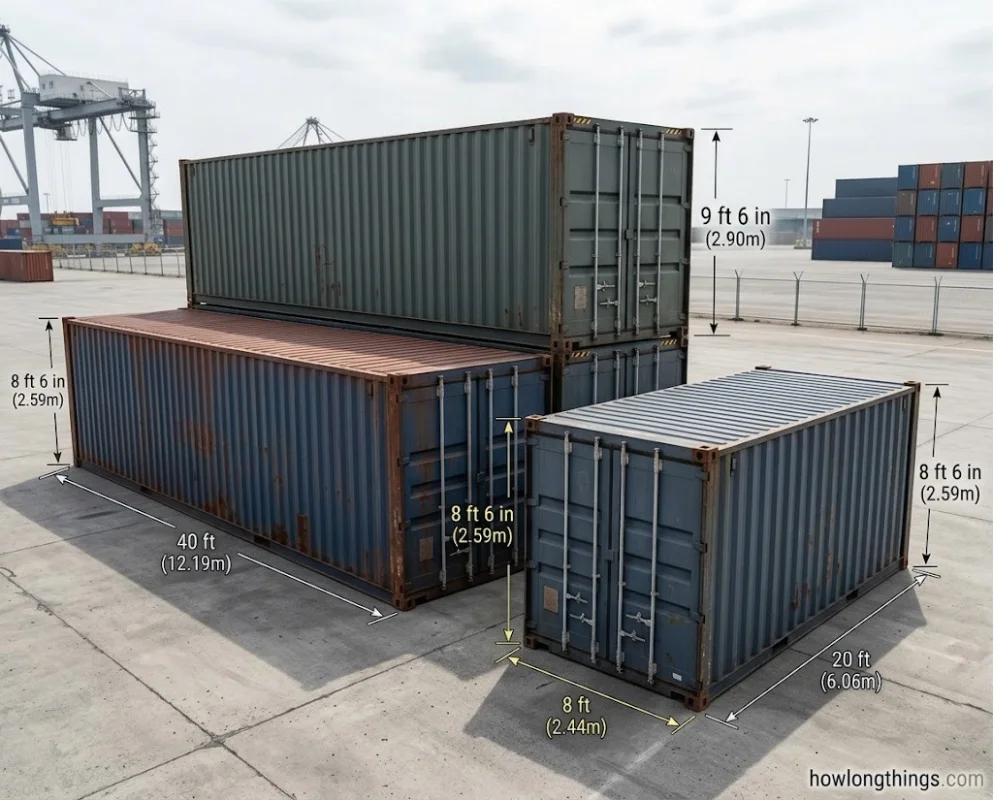
Standard container dimensions are simple. Most units are 8 ft wide, 8 ft 6 in tall, and either 20 ft or 40 ft long. A high cube unit adds one extra foot of height.
This guide gives you exact 20ft and 40ft container sizes in feet, inches, and metric. You also get door openings, volume, weight, and tips for choosing the right unit in the USA.
Table of Contents
Standard Shipping Container Dimensions Chart
Every standard shipping container follows the ISO 668 standard. It sets the external sizes for series 1 freight containers used in worldwide shipping. That is why one box fits any ship, train, or truck chassis.
Here is the container size chart. All figures are approximate.
Spec
20ft Standard
40ft Standard
40ft High Cube
Exterior (L × W × H)
20′ × 8′ × 8’6″
40′ × 8′ × 8’6″
40′ × 8′ × 9’6″
Exterior (metric)
6.06 × 2.44 × 2.59 m
12.19 × 2.44 × 2.59 m
12.19 × 2.44 × 2.90 m
Interior (L × W × H)
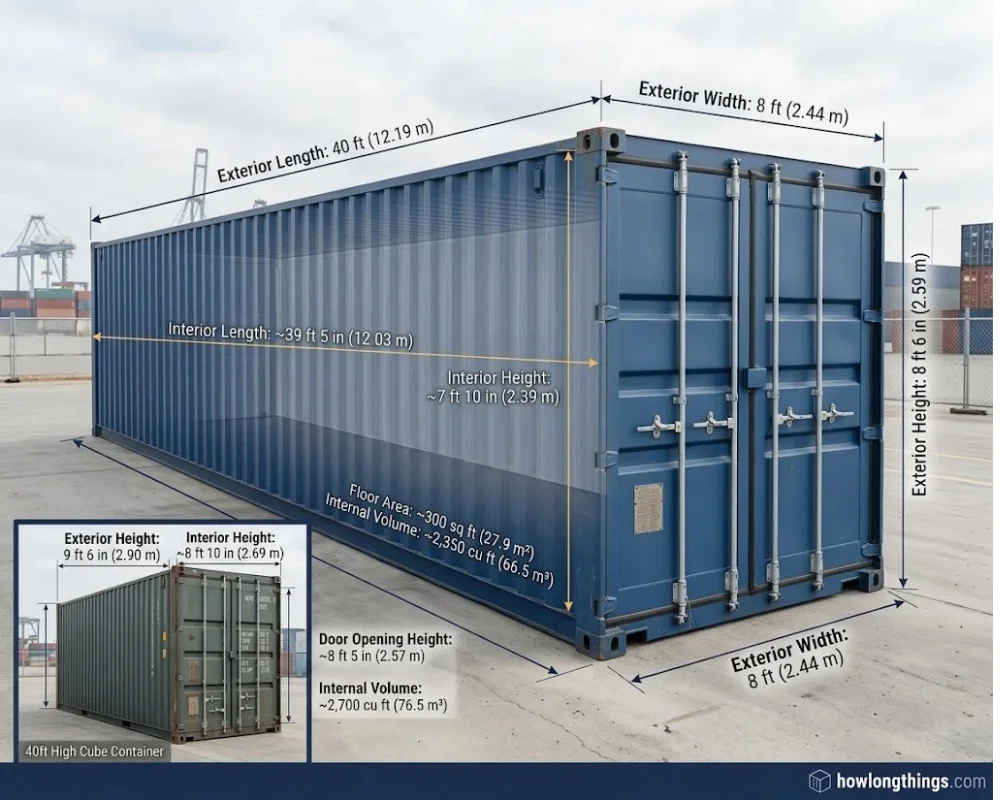
19’4″ × 7’8″ × 7’10”
39’5″ × 7’8″ × 7’10”
39’5″ × 7’8″ × 8’10”
Door opening (W × H)
7’8″ × 7’5″
7’8″ × 7’5″
7’8″ × 8’5″
Floor area
about 150 sq ft
about 300 sq ft
about 300 sq ft
Volume
about 1,170 cu ft
about 2,350 cu ft
about 2,700 cu ft
Empty (tare) weight
4,500–5,000 lbs
8,000–8,500 lbs
8,500–8,800 lbs
Max payload
about 61,000 lbs
about 59,000–61,000 lbs
about 62,000–63,000 lbs
Exterior size matters for your site and delivery. Interior size matters for your cargo or build. Always check the door opening too, since it is smaller than the inside.
Numbers shift by a few inches between makers. Confirm exact specs with your supplier before you buy.
20ft Container Dimensions
The 20ft container is the most popular size in the USA. It fits most driveways and job sites, and it counts as one TEU, the standard unit used to measure container cargo.
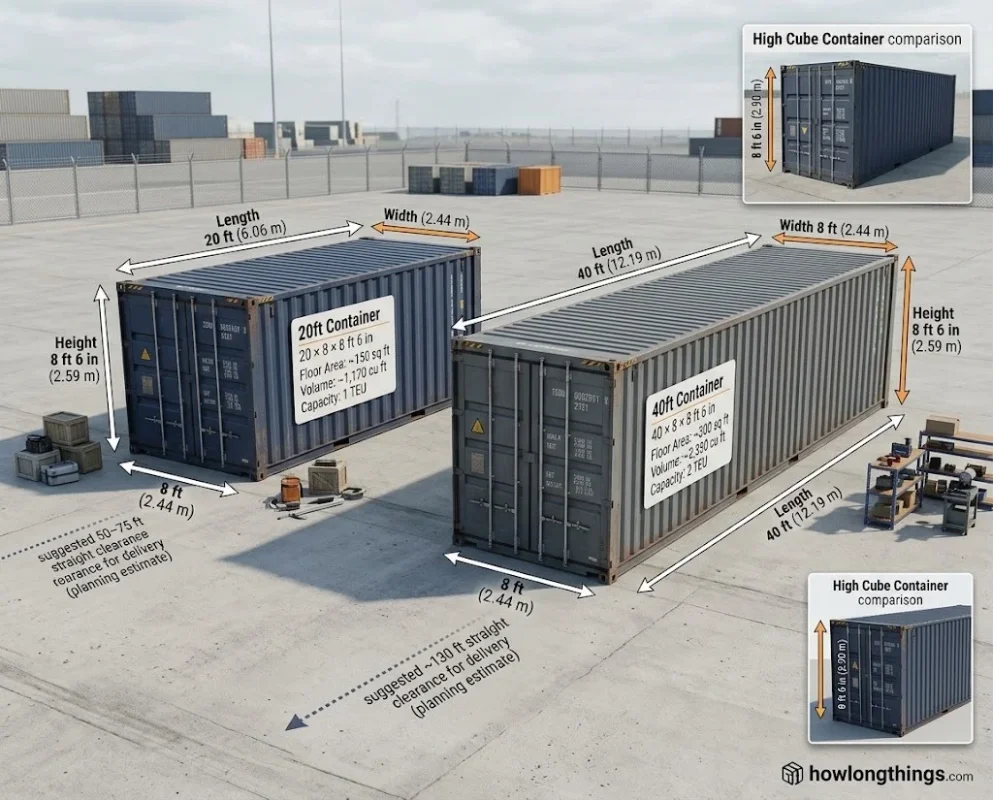
What are the dimensions of a 20ft container? Outside, it measures 20′ × 8′ × 8’6″. Inside, you get about 19’4″ long, 7’8″ wide, and 7’10” high. That gives you roughly 150 sq ft of floor space.
Here is what fits inside:
About 10 standard pallets on the floor
A small car, an ATV, or a motorcycle
Tools, lumber, and home renovation overflow
One tip from the field: measure your largest item against the door opening, not the outside width. Many buyers miss this.
Insulation and framing also shrink the inside. A container conversion can lose several inches on every wall.
Just as choosing the right container size helps maximize storage and space efficiency, selecting properly sized cabinets can improve organization in kitchens and bathrooms. Explore our guide to standard cabinet sizes and measurements to find the ideal dimensions for your home and storage needs.
40ft Container Dimensions
The 40ft container gives you double the length for large storage, freight, and building projects. It counts as two TEU.
What are the dimensions of a 40ft container? Outside, it measures 40′ × 8′ × 8’6″. Inside, you get about 39’5″ × 7’8″ × 7’10”. That means about 300 sq ft of floor and around 2,350 cubic feet of space.
The 40ft high cube adds a foot of height. The inside rises to about 8’10”, and volume jumps to roughly 2,700 cubic feet. The door opening grows to about 8’5″ tall. Builders like it for offices, workshops, and homes because the extra headroom allows insulation and a ceiling.
A 40ft unit often costs less per square foot than two 20ft units. It does need more room to deliver.
You may also see 10ft, 45ft, and 53ft containers. They are less common and harder to find. Most buyers choose a 20ft or 40ft.
20ft vs 40ft Container: Which Size Should You Choose?
What is the difference between a 20ft and 40ft container? Length is the main one. The 40ft has about double the floor area, double the volume, and nearly double the empty weight.
Standard and high cube units also differ in height. A standard height box is 8’6″ tall. A high cube is 9’6″ tall. High cube units also give better airflow, which helps in climate-sensitive storage.
Use this quick guide:
Tight lot or limited access: choose a 20ft.
Large inventory, workshop, or home build: choose a 40ft.
Tall gear, shelving, or conversions: choose a high cube.
Before you order, check delivery. Most suppliers advise about 50–75 ft of straight, clear space for a 20ft unit. A 40ft needs about 130 ft. Plan for roughly 14 ft of overhead clearance, with no low wires or branches.
The ground should be firm and level. Also check local zoning and permit rules before you place a container.
Know three weight terms:
Tare weight is the empty weight.
Payload is the cargo weight the unit can hold.
Maximum gross weight is tare plus payload. It is about 67,200 lbs for most standard units.
Strong Cor-ten steel, steel corner castings, and marine plywood floors let these boxes carry heavy loads. They can also stack many units high.
FAQs
What are the dimensions of a 40ft container?
A 40ft container measures 40′ × 8′ × 8’6″ outside. Inside, it is about 39’5″ × 7’8″ × 7’10”. The door opening is about 7’8″ × 7’5″. It holds roughly 2,350 cubic feet.
What are the dimensions of a 20ft container?
A 20ft container measures 20′ × 8′ × 8’6″ outside. Inside, it is about 19’4″ × 7’8″ × 7’10”. The door opening is about 7’8″ × 7’5″. It holds roughly 1,170 cubic feet.
What is the difference between a 20ft and 40ft container?
The 40ft is twice as long. It offers about double the floor area and volume. It also weighs more empty and needs more delivery space.
What are the dimensions of a standard container?
A standard container is 8 ft wide and 8’6″ tall. Its length is 20 ft or 40 ft. High cube units stand 9’6″ tall.
What are the most common container sizes?
The most common sizes are the 20ft, the 40ft, and the 40ft high cube. The 10ft, 45ft, and 53ft sizes are less common.
Conclusion
Standard container dimensions stay steady across the industry: 8 ft wide, 8’6″ tall, and 20 ft or 40 ft long. Pick the length for your space and load, then add a high cube if you need height. Check exact specs with your supplier, since sizes vary slightly by maker.
Elizabeth Queen is a Owner and consumer research writer at HowLongThings.com, specializing in product lifespan, durability, and everyday household research. She’s passionate about helping readers make smarter, longer-lasting buying decisions.