Buying cans for a new drink? Guessing the wrong size can throw off your whole production line. This guide breaks down every common beverage can dimension — height, diameter, and volume — so you can pick the right fit fast.
You’ll also learn how can sizes are coded, why “sleek” and “slim” cans aren’t the same thing, and what these numbers actually mean for your shelf space and shipping costs.
Table of Contents
Standard Beverage Can Dimensions: Size, Height & Diameter at a Glance
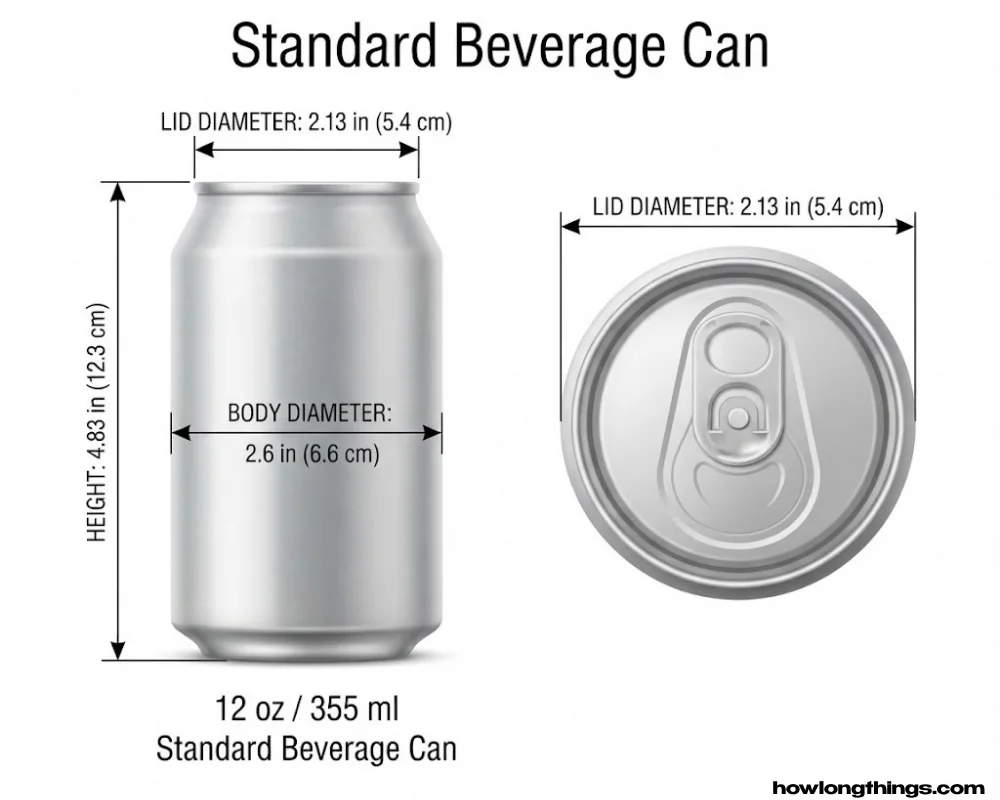
The standard beverage can in the US holds 12 oz (355 ml). It stands about 4.83 inches (12.3 cm) tall, with a diameter of 2.6 inches (6.6 cm) at its widest point and roughly 2.13 inches (5.4 cm) at the lid.
But “standard” shifts depending on where you are. In Canada, the older standard was 341 ml, though most producers switched to the US 355 ml size decades ago. Mexico typically uses 355 ml, with smaller 235 ml cans gaining ground in recent years. Australia sets its standard at 375 ml, while Brazil and China commonly use 350 ml and 330 ml respectively.
| Can Type | Volume | Height | Diameter |
| Standard (US) | 12 oz / 355 ml | 4.83 in (12.3 cm) | 2.6 in (6.6 cm) |
| Standard (Canada, legacy) | 341 ml | ~4.6 in | ~2.6 in |
| Standard (Australia) | 375 ml | ~4.9 in | ~2.6 in |
| Standard (China) | 330 ml | ~4.6 in | ~2.3 in |
This regional variation matters if you’re sourcing cans internationally — a “standard can” ordered from a European supplier won’t match a US filling line without checking the spec sheet first.
Beverage Can Dimensions by Size (Full Size Chart)
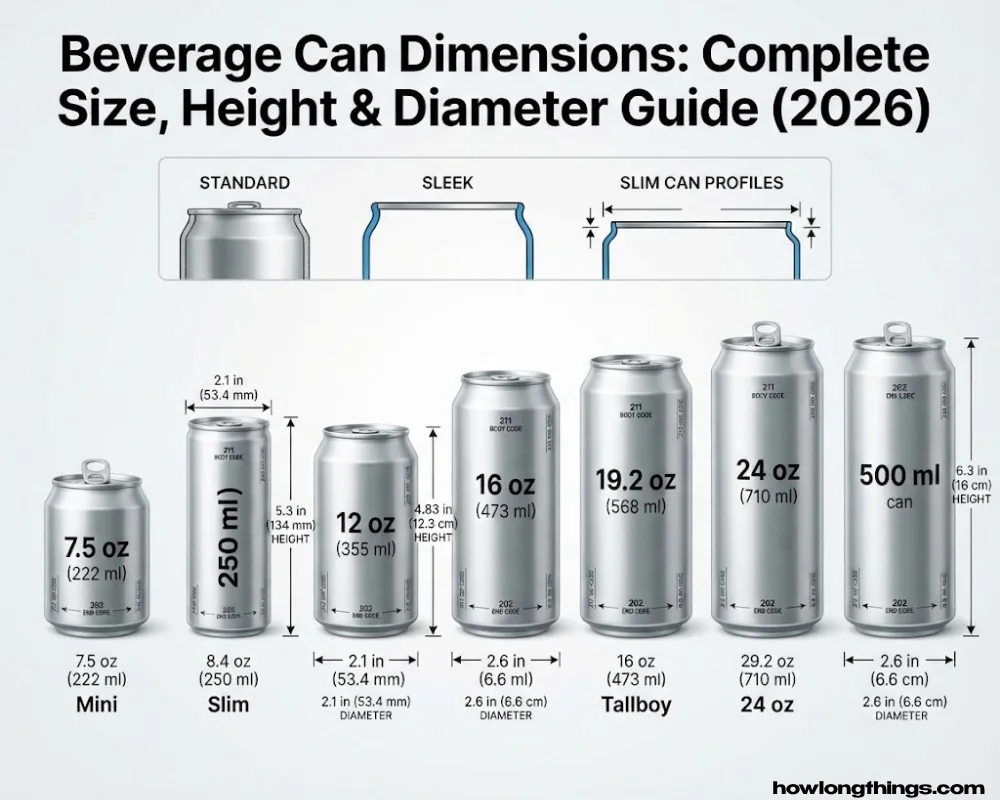
Beverage cans come in a range of sizes built for different drink categories. Here’s how the most common ones measure up.
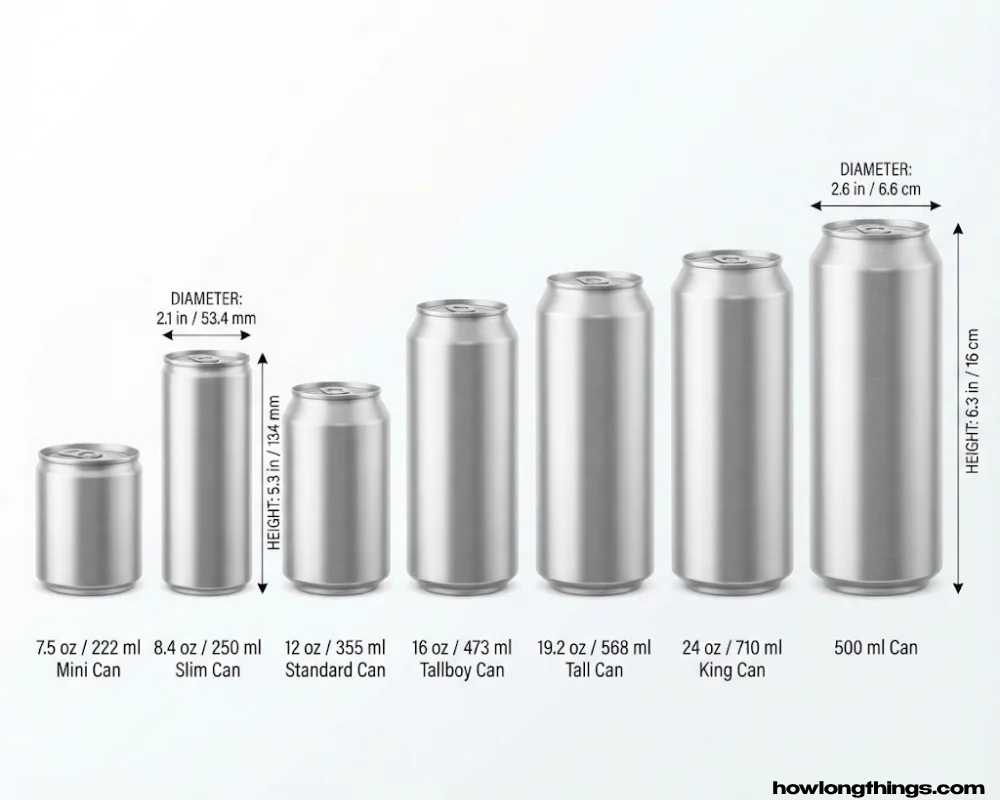
The 7.5 oz (222 ml) mini can is the smallest widely-produced size. It’s popular for kids’ drinks, low-calorie sodas, and portion-controlled sparkling water — anywhere a brand wants to signal light, mindful consumption.
The 8.4 oz (250 ml) energy can is the classic slim silhouette you’ll recognize from Red Bull and similar brands. Its narrow diameter gives it a tall, sleek look that stands apart from soda cans on the shelf.
The 12 oz (355 ml) standard can is the most manufactured beverage can size in the world. It’s what most people picture when they hear “soda can” or “beer can,” and it fits nearly every existing filling line and vending machine in North America.
The 16 oz (473 ml) tallboy is a favorite for craft beer and hard seltzer. It roughly doubles the standard can’s visual presence without needing a wider diameter — just extra height.
The 19.2 oz (568 ml) can, sometimes sold as a single “party size” can, is common at stadiums, concerts, and convenience stores for single-serve, on-the-go drinking.
The 24 oz (710 ml) can is the largest common retail size, often used for high-ABV beer, energy drinks, and iced coffee. It’s cost-efficient per ounce but more prone to flavor loss once opened, since more air makes contact with the leftover liquid.
What are the dimensions of a 500 mL can? A 500 ml can generally measures close to 6.3 inches (16 cm) tall with a diameter of about 2.6 inches (6.6 cm), similar in width to a standard can but noticeably taller. Exact figures vary slightly by manufacturer and wall design.
What are the dimensions of a 250ml can? A 250 ml slim can typically stands around 5.3 inches (134 mm) tall with a body diameter near 2.1 inches (53.4 mm) — figures confirmed by can-manufacturer spec sheets from producers like Ardagh Metal Packaging.
Sleek vs. Slim vs. Standard Can Dimensions Compared
These three terms get mixed up constantly, but they describe genuinely different can shapes.
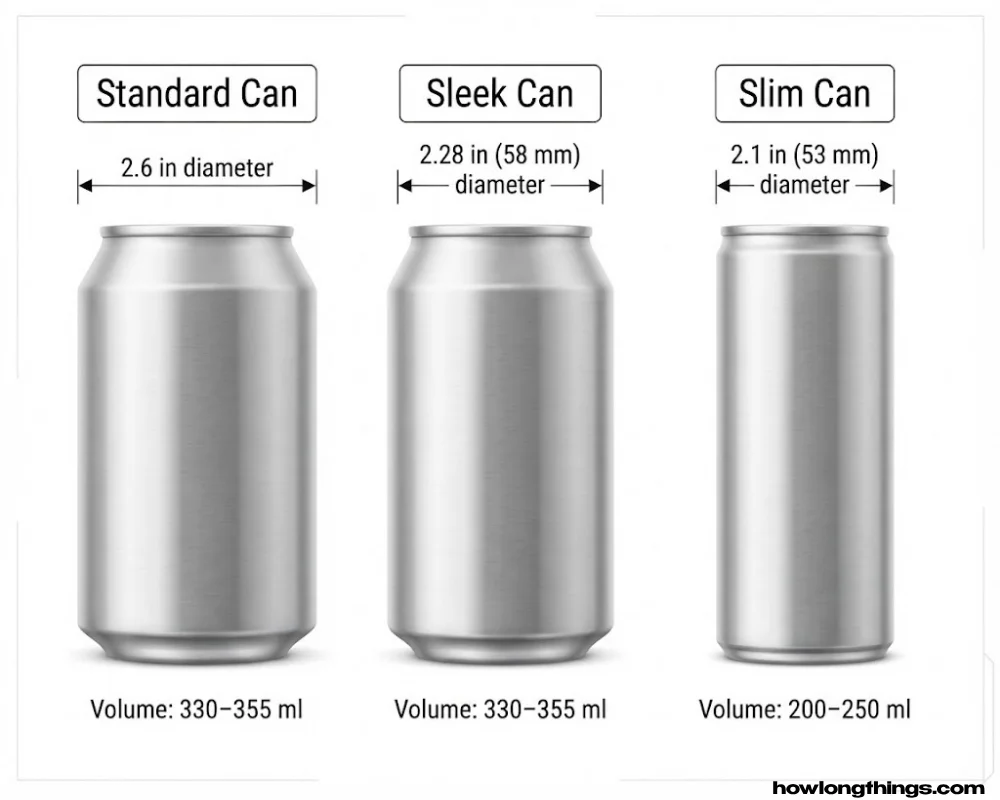
A standard can has the widest, most familiar body diameter — around 2.6 inches. A sleek can keeps a similar height range but narrows the diameter down to roughly 2.28 inches (58 mm), giving it a noticeably slimmer profile while holding the same 330 ml or 355 ml volume. Ball Packaging Europe pioneered the format in the mid-2000s, and Coca-Cola and Kronenbourg were among the first major brands to adopt it for market differentiation.
A slim can goes narrower still, typically down to about 2.1 inches (53 mm) in diameter, and is almost always paired with smaller volumes like 200 ml or 250 ml.
The difference isn’t just cosmetic. A narrower can feels more premium in the hand, takes up less shelf-facing width (letting retailers fit more units per shelf row), and often signals “healthier” or “lower calorie” to shoppers — even when the actual drink formula hasn’t changed. That’s a big reason energy drink and sparkling water brands lean toward sleek and slim formats, while mainstream soda and beer stick with standard.
When choosing between them, think about your target shelf placement, your filling equipment compatibility, and whether your brand positioning calls for a premium, minimalist look or a familiar, high-volume feel.
Must Visit: Dollar Bill Dimensions: Complete Size, Width & Length Guide(2026)
How Can Dimensions Are Measured & Coded (Industry Standards)
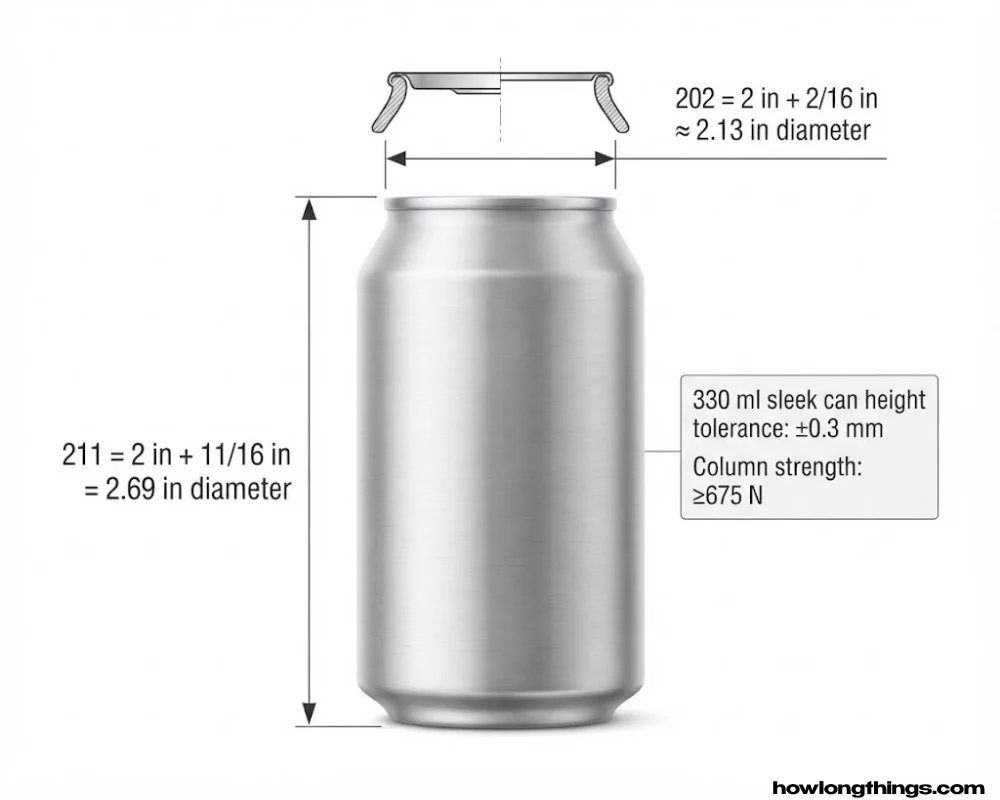
If you’ve seen a can listed as “211” or “202,” those aren’t random numbers — they’re industry shorthand for diameter, based on inches and sixteenths of an inch.
A 211 code means 2 inches plus 11 sixteenths of an inch — a 2.69-inch diameter, which is the classic standard can body size. A 202 code means 2 inches plus 2 sixteenths — roughly 2.13 inches, common for can ends (the lid) rather than the body.
This matters because a can’s body diameter and end (lid) diameter are almost always different numbers. The body is wider; the end is narrower and “necked in” so the lid seals properly. Mixing these up is one of the most common sourcing mistakes for new beverage brands.
Manufacturing also works within strict tolerances — small allowed variations, often measured in fractions of a millimeter. For example, industry spec sheets for a 330 ml sleek can show a finished height tolerance of about ±0.3 mm and a column strength requirement of at least 675 Newtons, so the can can survive stacking and shipping without crushing. These tolerances aren’t just technical trivia — they’re the reason a can from one supplier will reliably fit a filling line built around a different supplier’s spec.
Why Beverage Can Dimensions Matter for Brands & Buyers
Can size isn’t just a packaging detail — it touches nearly every part of getting a drink to market.

Shipping and storage costs scale directly with can diameter and height. A slightly taller, narrower can might pack more efficiently per pallet than a shorter, wider one holding the same volume, which can meaningfully cut freight costs at scale.
Label and branding space shrinks or grows with the can’s surface area. Taller, slimmer cans give designers more vertical room to work with — useful for storytelling-heavy label designs — while shorter, wider cans favor bold, simple graphics that read well from a distance.
Filling line compatibility is often the deciding factor for new beverage startups. Switching can diameter usually means retooling filling and seaming equipment, so many new brands choose a size that matches what their co-packer already runs, at least for their first production batch.
If you’re launching a new drink, a practical starting checklist looks like this: confirm your co-packer’s existing tooling, check retailer shelf-depth requirements, decide whether your brand needs a premium (sleek/slim) or familiar (standard) shape, and confirm your target case-pack and pallet configuration before locking in a final size.
FAQs About Beverage Can Dimensions
What are the standard dimensions of a drinks can?
The standard 12 oz (355 ml) drinks can measures about 4.83 inches (12.3 cm) tall and 2.6 inches (6.6 cm) in diameter at its widest point, with a narrower 2.13-inch diameter at the lid.
What are the dimensions of a 250ml can?
A 250 ml can, usually made in a slim format, measures roughly 5.3 inches (134 mm) tall with a body diameter near 2.1 inches (53.4 mm).
What is the standard size of a can?
In the US, the standard beverage can size is 12 oz (355 ml). Internationally, standard sizes vary — 330 ml in much of Europe and China, 375 ml in Australia, and 350 ml in Brazil.
What are the dimensions of a 500 mL can?
A 500 ml can typically stands about 6.3 inches (16 cm) tall with a diameter close to 2.6 inches (6.6 cm), similar in width to a standard can but taller to hold the extra volume.
What are the dimensions of a 500ml container?
For beverage cans specifically, a 500 ml container follows the same rough dimensions as above — around 6.3 inches tall by 2.6 inches wide — though exact figures shift slightly by manufacturer and can wall thickness.
Conclusion
Beverage can dimensions come down to three numbers: height, diameter, and volume — but which combination is “right” depends on your drink category, your target shelf, and your filling equipment. Use the size chart above as your starting point, then confirm exact specs with your can supplier before production.

Elizabeth Queen is a Owner and consumer research writer at HowLongThings.com, specializing in product lifespan, durability, and everyday household research. She’s passionate about helping readers make smarter, longer-lasting buying decisions.