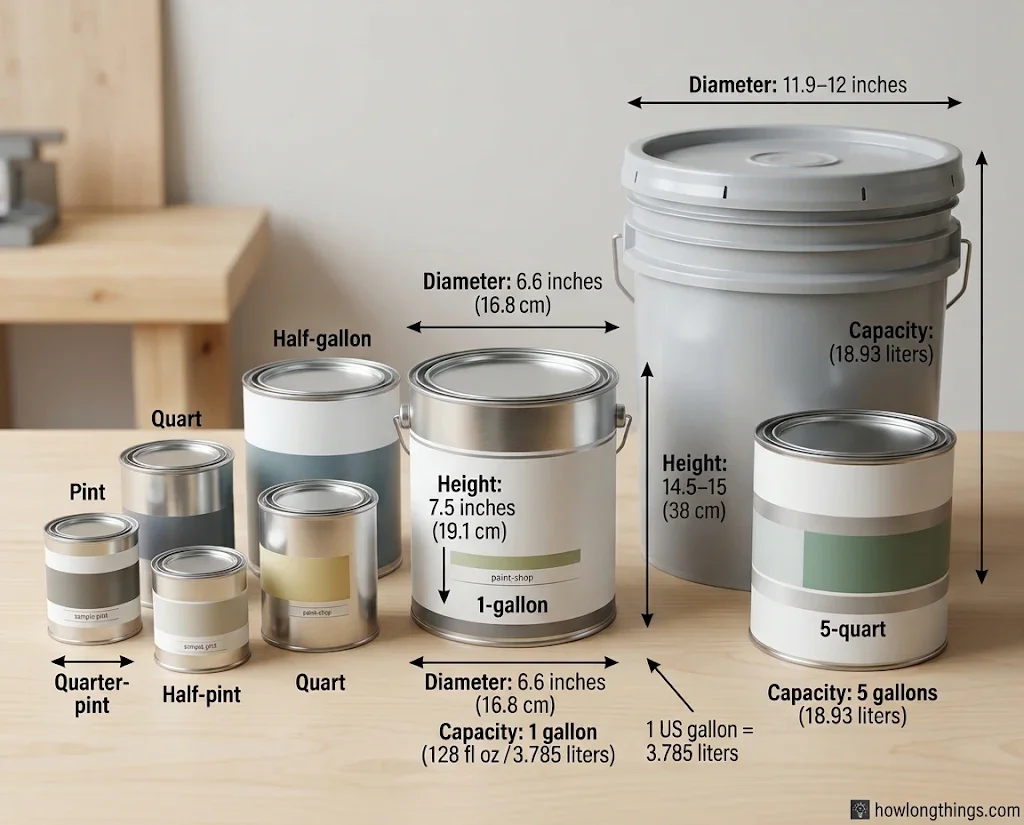
A standard 1-gallon paint can is about 7.5 inches tall and 6.6 inches wide. It holds 128 fluid ounces, which is 3.785 liters.
This guide lists every standard paint can size, from a quarter pint to a 5-gallon bucket. You get paint can dimensions in inches, gallons, and liters, plus how much wall each can covers.
Table of Contents
Standard Paint Can Dimensions Chart & Sizes
All numbers below are outside measurements with the lid on. Makers vary a little, so treat them as typical values.
| Paint can size | Height (in) | Diameter (in) | Fluid oz | Gallons | Liters | Coverage per coat |
|---|---|---|---|---|---|---|
| Quarter pint | 2.0–2.13 | 2.38–2.5 | 4 | 0.03 | 0.12 | ~10–12 sq ft |
| Half pint | 2.88–3.0 | 2.88–3.0 | 8 | 0.06 | 0.24 | ~25 sq ft |
| 1 pint | 3.94–4.0 | 3.44–3.5 | 16 | 0.125 | 0.47 | 40–50 sq ft |
| 1 quart | 4.75–5.0 | 4.25–4.3 | 32 | 0.25 | 0.95 | 87–100 sq ft |
| Half gallon | 5.38–5.5 | 5.88–6.0 | 64 | 0.5 | 1.89 | 175–200 sq ft |
| 1 gallon | 7.5–7.68 | 6.5–6.63 | 128 | 1 | 3.79 | 350–400 sq ft |
| 5 quart | 9.5–9.63 | 6.5–6.63 | 160 | 1.25 | 4.73 | 437–500 sq ft |
| 5 gallon | 14.5–15.0 | 11.9–12.0 | 640 | 5 | 18.93 | 1,750–2,000 sq ft |
Here is what each size does best:
- Quarter pint and half pint: color samples, scuffed baseboards, and small touch-ups.
- 1 pint: doors, furniture, and small repairs.
- 1 quart: an accent wall or a small room.
- Half gallon: a short, wide can that resists tipping.
- 1 gallon: the industry standard for home painting.
- 5 quart: bigger jobs when a bucket is too much.
- 5 gallon: whole-house jobs and contractor work.
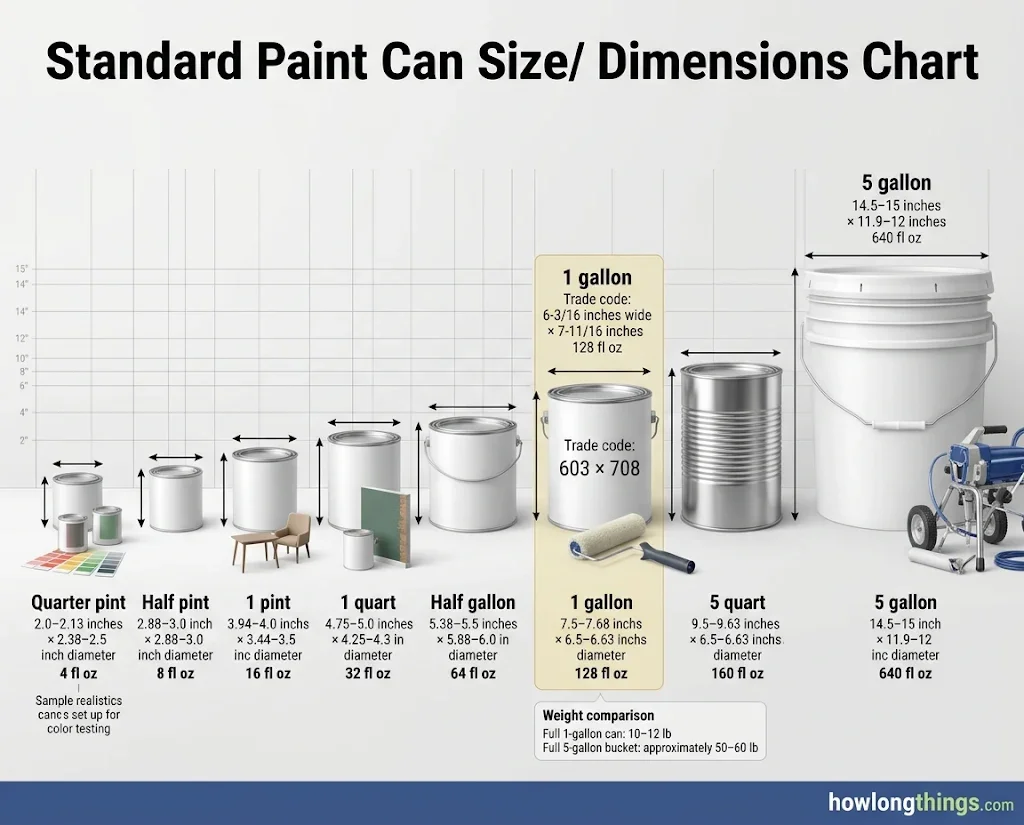
The 1-gallon can has a trade code of 603 × 708. That means 6-3/16 inches wide and 7-11/16 inches tall. A full gallon weighs 10 to 12 pounds. A 5-gallon bucket can weigh roughly 50 to 60 pounds, so plan your lift.
Two more facts help. The inside of a can is a bit smaller than the outside because of the wall thickness. And 2-gallon and 3-gallon cans have no fixed size, so check the label before you plan storage.
Choosing the right paint can size helps ensure a smooth home improvement project, but accurate measurements matter just as much when planning a bathroom renovation. Explore standard bathtub sizes, measurements, and clearance requirements to find the right tub for your bathroom layout.
Metric Paint Can Sizes in Liters and Milliliters
Metric paint tins show up in imports and online orders. Here are the common ones:
- 250ml tin: about 3.15 inches tall and 2.76 inches wide. It holds about 8.5 fl oz, close to a US half pint.
- 500ml tin: about 3.5 inches tall and 3.3 inches wide. It holds about 16.9 fl oz and covers roughly 60 sq ft.
- 1 liter tin: about 5 inches tall and 4 inches wide. It holds 33.8 fl oz, a bit more than a US quart.
- 2.5 liter tin: about 6.3 inches tall and 5.9 inches wide. It holds 84.5 fl oz.
- 5 liter tin: about 169 fl oz, which is more than a US gallon.
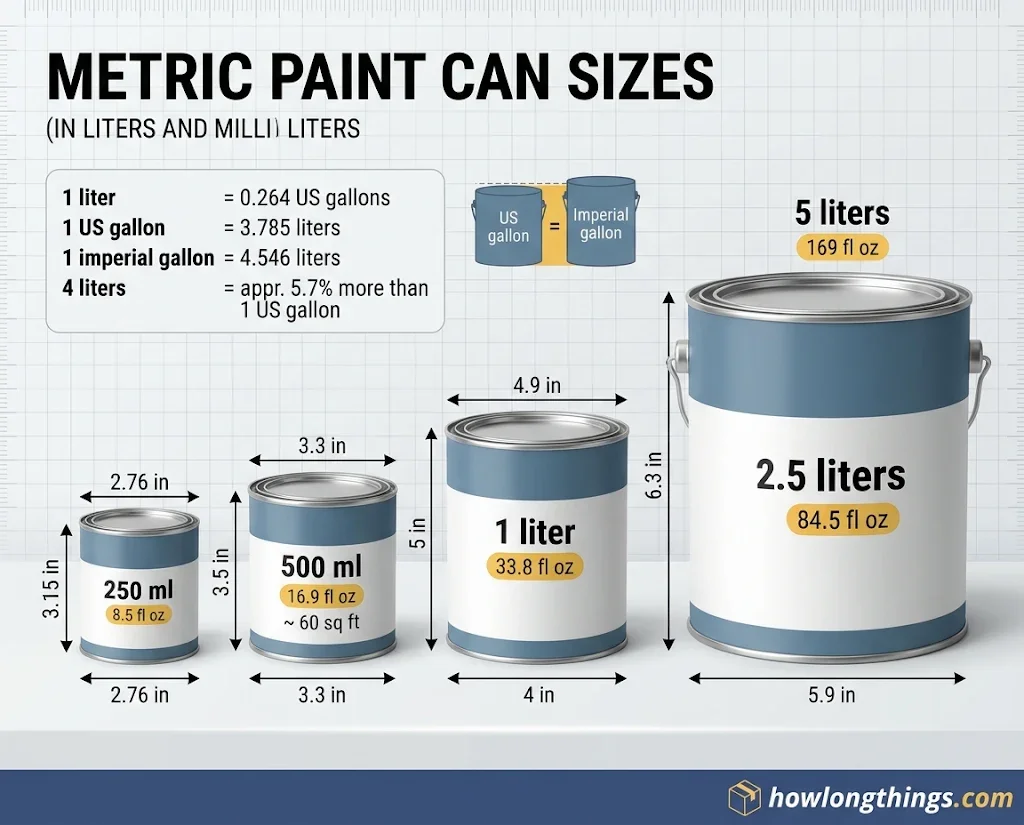
Not all gallons are equal. A US gallon equals 3.785 liters. An imperial gallon equals 4.546 liters. The US gallon is defined as 231 cubic inches by NIST.
Quick conversions:
- 1 liter = 0.264 US gallons
- 1 US gallon = 3.785 liters
- A 4-liter can holds about 5.7% more than a US gallon.
Two metric tins of the same volume can differ in height and width. Measure the real tin if shelf space is tight.
How to Choose the Right Paint Can Size
Pick your can by wall area, number of coats, and storage space. Follow these steps:
- Multiply wall length by height to get square footage.
- Subtract doors and windows.
- Multiply by the number of coats.
- Add 10% for edges, trim, and waste.
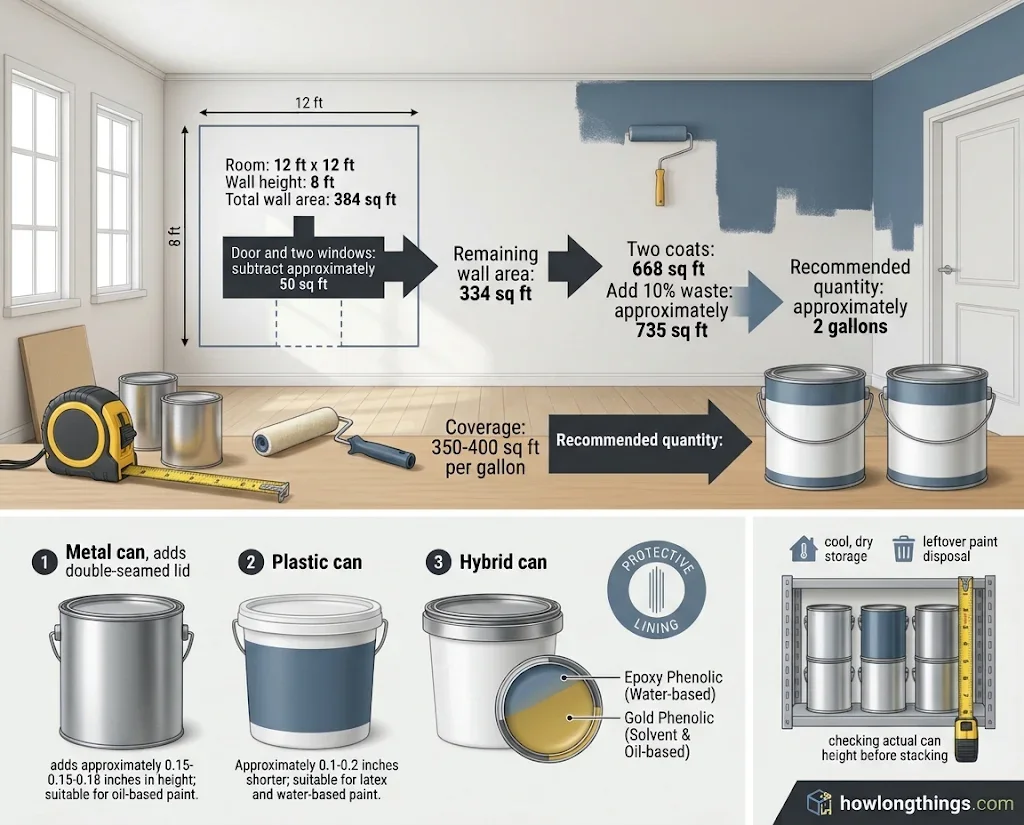
Example: A 12 × 12 foot room with 8-foot walls has 384 sq ft of wall. Remove about 50 sq ft for a door and two windows. That leaves about 334 sq ft. Two coats make 668. Add 10% and you get about 735. At 350 to 400 sq ft per gallon, you need about 2 gallons.
Metal, plastic, and hybrid cans differ in small ways:
- Metal cans have a double-seamed lid that adds about 0.15 to 0.18 inches in height. They suit oil-based paint.
- Plastic cans run 0.1 to 0.2 inches shorter and suit latex and water-based paint.
- Hybrid cans have a plastic body with a metal ring and lid.
- Linings stop rust. Epoxy phenolic fits water-based paint. Gold phenolic fits solvent and oil-based paint.
Dark colors, rough walls, bare drywall, and primer all raise paint coverage needs. Smooth, primed walls reach the high end of the range.
Store cans upright in a cool, dry spot. Measure actual can height before you stack a dozen on a garage shelf. For leftovers, follow the EPA guidance on household paint disposal and your local rules.
FAQs
What is the standard size of a paint can?
The 1-gallon can is the standard paint can size in the USA. It is about 7.5 inches tall and 6.6 inches wide. It holds 128 fluid ounces (3.785 liters) and covers about 350 to 400 square feet per coat.
How big is a 500ml paint can?
A 500ml paint can is about 3.5 inches tall and 3.3 inches wide. It holds about 16.9 fluid ounces, slightly more than a US pint. It covers roughly 60 square feet per coat.
How big is a 250ml tin of paint?
A 250ml tin of paint is about 8 cm (3.15 inches) tall and 7 cm (2.76 inches) wide. It holds about 8.5 fluid ounces. That is close to a US half pint, which makes it a good sample size.
What are the dimensions of a 1-gallon paint can?
A 1-gallon paint can measures 7.5 to 7.68 inches tall and 6.5 to 6.63 inches wide. Its trade code is 603 × 708. It holds 128 fluid ounces and weighs 10 to 12 pounds when full.
What are the dimensions of a paint can?
It depends on the size. A quart is about 4.9 inches tall and 4.25 inches wide. A pint is about 4 inches tall and 3.5 inches wide. A gallon is 7.5 by 6.6 inches. A 5-gallon bucket is about 14.5 to 15 inches tall and 12 inches wide.
How big is a 1 litre tin of paint?
A 1 litre tin of paint is about 5 inches tall and 4 inches wide. It holds 33.8 fluid ounces, which is about 0.26 US gallons. That is roughly 5.7% more than a US quart.
Conclusion
Match your paint can size to your wall area, add 10% extra, and check the height and diameter before you buy. Know your units too. A US gallon is 3.785 liters, and metric tins are not the same size as US cans.

Elizabeth Queen is a Owner and consumer research writer at HowLongThings.com, specializing in product lifespan, durability, and everyday household research. She’s passionate about helping readers make smarter, longer-lasting buying decisions.