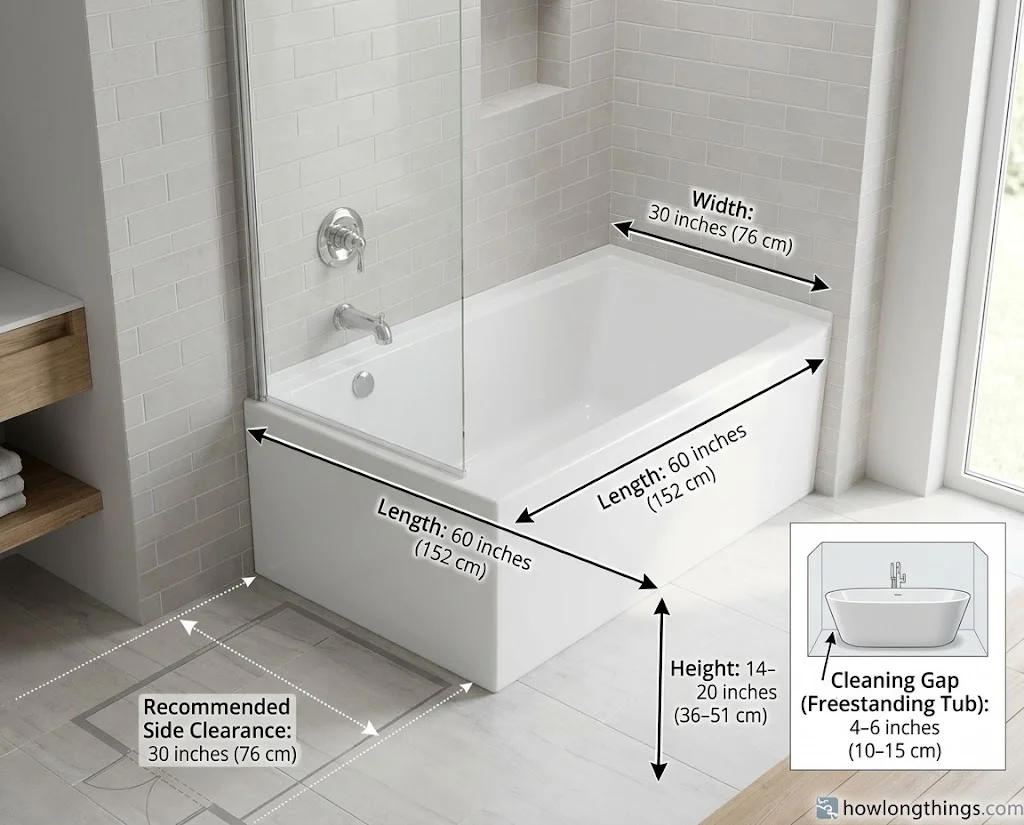
The standard bathtub size is 60 inches long, 30 inches wide and 14 to 20 inches high (152 x 76 x 36 to 51 cm). This is the alcove tub, the default in most US homes.
Tubs also come in other lengths and shapes. This guide gives you the standard tub dimensions, a bathtub size chart and the bathtub clearance rules to check before you buy.
Table of Contents
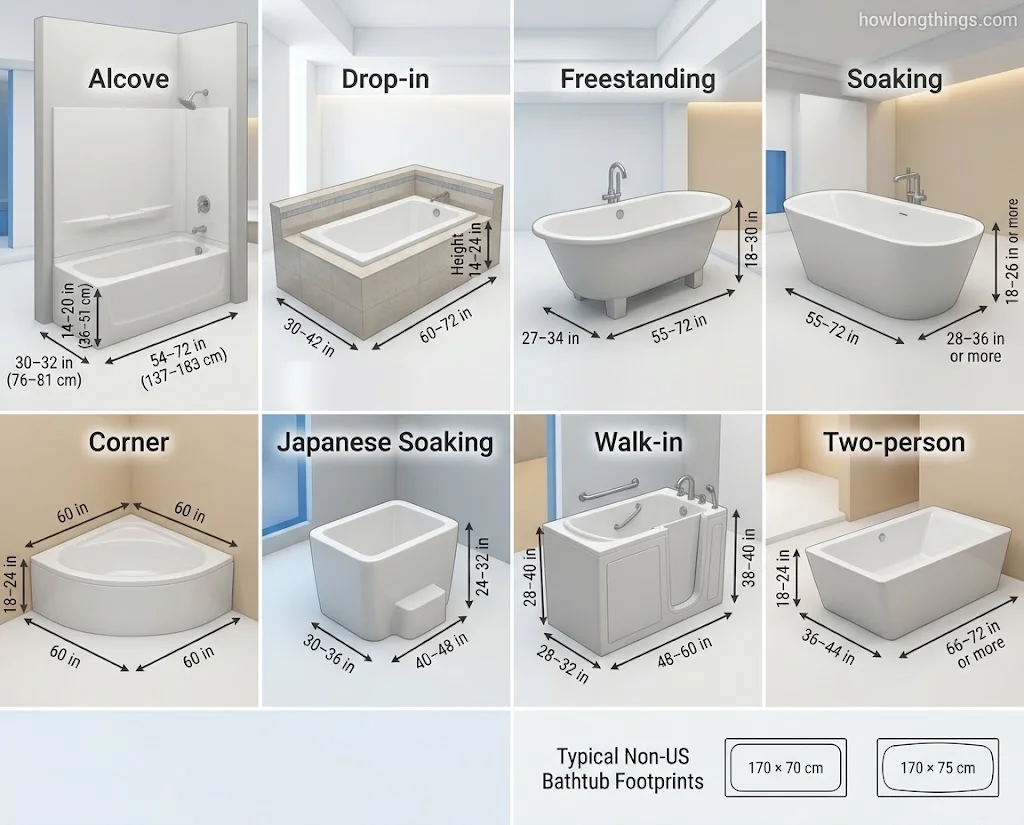
Standard Bathtub Dimensions Chart by Tub Type
Each type has its own standard bathtub size in inches. Brands vary, so check the spec sheet before you order.
Tub type
Length
Width
Height or depth
Best for
Alcove
54–72 in (137–183 cm)
30–32 in (76–81 cm)
14–20 in (36–51 cm)
Tub-shower combos
Drop-in
60–72 in
30–42 in
14–24 in
Decks and platforms
Freestanding
55–72 in
27–34 in
18–30 in
Large bathrooms
Soaking
55–72 in
28–36 in
18–26 in or more
Deep baths
Corner
60 in per wall
Diagonal
18–24 in
Unused corners
Japanese soaking
40–48 in
30–36 in
24–32 in
Small floor space
Walk-in
48–60 in
28–32 in
38–40 in
Seniors and low mobility
Two-person
66–72 in or more
36–44 in
18–24 in
Couples
Outside the US, a standard bath is often 170 x 70 or 170 x 75 cm. That is longer and narrower than the US alcove tub.
Just as choosing the right bathtub size improves bathroom comfort, properly sized pillows make your bedroom more comfortable and inviting. Explore standard pillow sizes and measurements in inches and centimeters to find the perfect fit for your bed and pillowcases.
Standard Bathtub Size by Length, Width and Depth
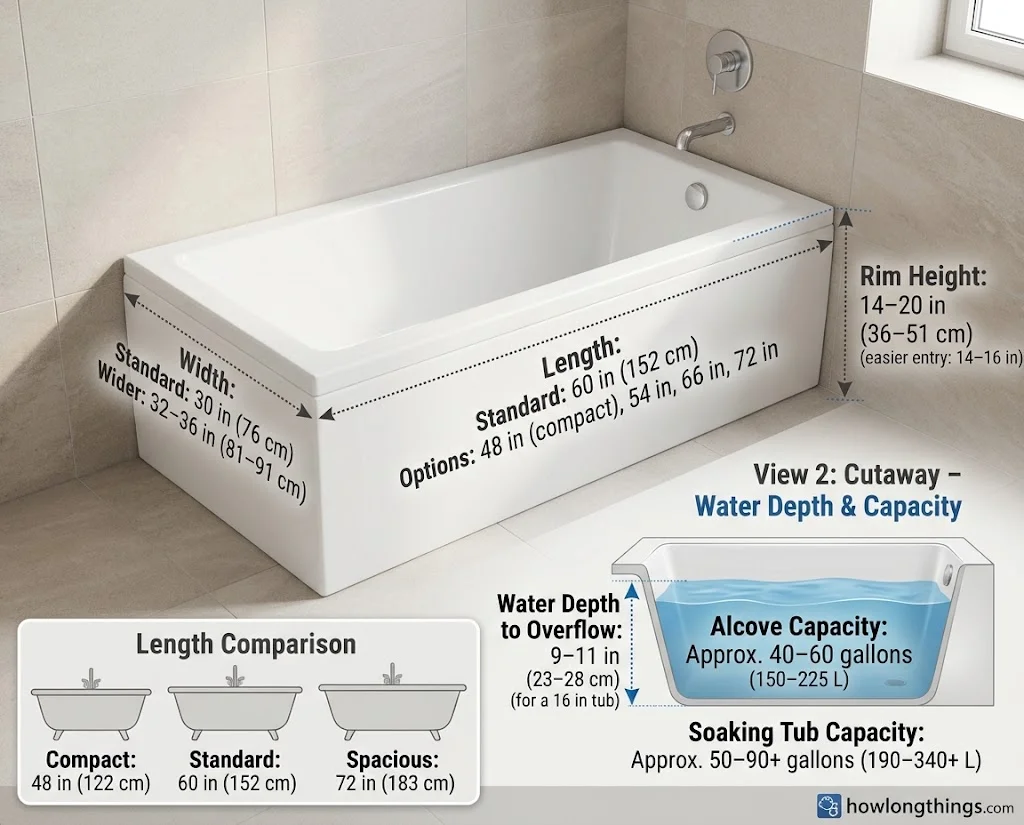
Alcove tubs come in 54, 60, 66 and 72 inches. The 60-inch tub fits most adults. A 48-inch tub is a compact option for children and tight spaces.
Width is usually 30 inches. A 32 to 36 inch tub gives more shoulder room.
Rim height matters for entry. A low rim of 14 to 16 inches is easier to step over. A higher rim holds more water.
What is the difference between tub depth and water depth? The overflow drain sits below the rim, so the tub never fills to the top. A 16-inch tub holds about 9 to 11 inches of water. If you want to be covered, compare water depth at the overflow, not rim height.
How many gallons does a bathtub hold? An alcove tub holds about 40 to 60 gallons to the overflow. Soaking tubs often hold 50 to 90 gallons or more.
Bathtub Clearance Guide: How Much Space You Need
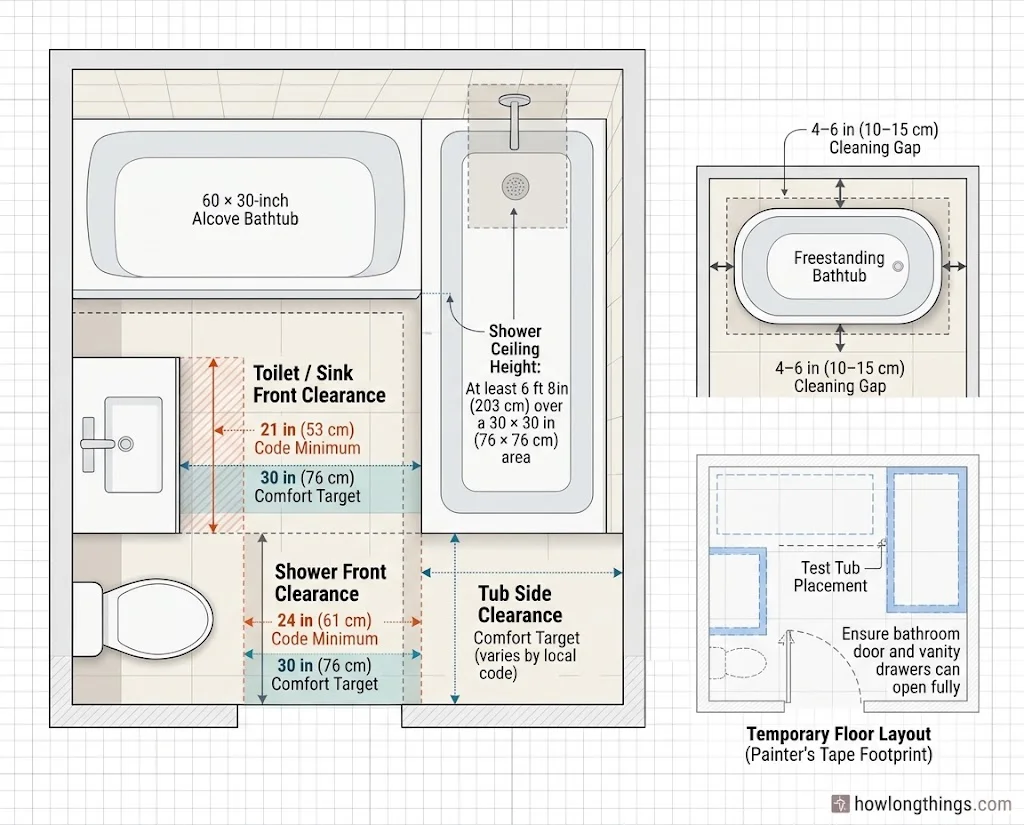
Clearance decides whether a tub is comfortable to use. Start with the rough-in opening for an alcove tub. Measure wall to wall at the floor, the middle and the top. Use the smallest number.
On the code side, the IRC requires at least 21 inches in front of a toilet, sink or bidet. The tub is a different case. One state fire marshal’s office notes that the tub has no clearance assigned in the code figure, while the shower needs 24 inches in front. Check your local rules, because some cities add their own.
The NKBA gives a comfort target. It advises planning at least 30 inches of clear space along the side of the tub, and more if you dress there. Treat 30 inches as the goal.
For a freestanding tub, leave 4 to 6 inches around the tub so you can clean it. Add space for the faucet and for plumbing access.
A shower over the tub also has a height rule. The code asks for a ceiling height of at least 6 feet 8 inches above a 30 by 30 inch area at the showerhead.
Tape test: mark the tub footprint on the floor with painter’s tape. Then check that the door, vanity drawers and toilet still work.
Item
Code minimum
Comfort target
Toilet or sink front
21 in (53 cm)
30 in (76 cm)
Shower front
24 in (61 cm)
30 in (76 cm)
Tub side
Varies by location
30 in (76 cm)
Freestanding tub, all sides
None
4–6 in (10–15 cm)
Hidden Bathtub Dimensions That Affect Fit
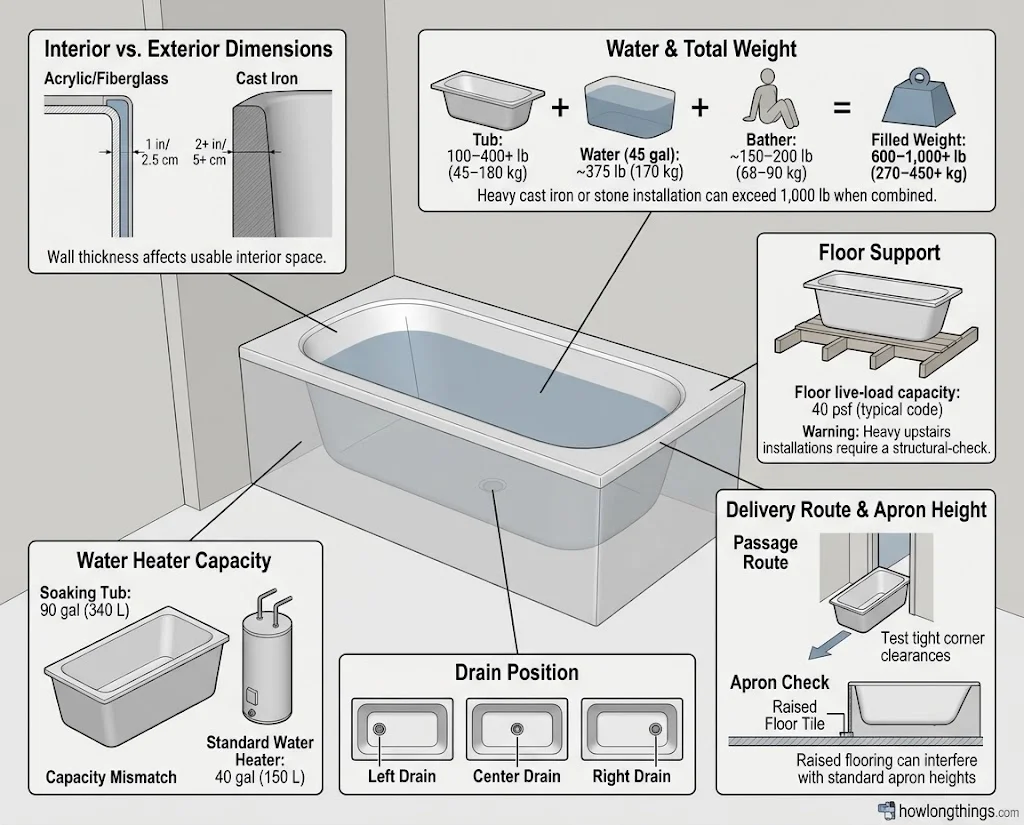
Some numbers never appear in the headline size. They cause most fit problems.
Interior vs exterior size: Acrylic and fiberglass walls are thin, about 1 inch. Cast iron walls are 2 inches or more. Stone and marble tubs are thicker still. A 60-inch cast iron tub bathes smaller than a 60-inch acrylic one.
Full tub weight: Water weighs 8.34 pounds per gallon. A tub holding 45 gallons carries about 375 pounds of water alone. Add the tub and a bather, and cast iron or stone can pass 1,000 pounds. The code’s design live load for most rooms is 40 psf. Ask a pro to check the floor joists before putting a heavy tub upstairs.
Water heater size: A 90-gallon soaking tub and a 40-gallon heater do not pair well.
Drain position: Tubs have a left, right or center drain. Stand facing the tub to decide. Ordering the wrong hand is a common mistake.
Delivery route: Measure doorways, hallway turns and stairs. Check the diagonal at each corner.
Apron height: New floor tile can raise the floor and clash with the tub apron.
How to Choose the Right Standard Bathtub Size
Match the tub to the room, the bather and the job.
Replacing a tub: Stay with 60 x 30 inches for a straight swap. A new size can mean opening the wall.
Small bathroom: Choose 48 to 54 inches, or a deep Japanese soaking tub.
Tall bathers: Choose 66 to 72 inches.
Seniors or children: Choose a low rim or a walk-in tub.
Couples: Choose a two-person tub, 36 inches wide or more.
Quick buying checklist:
Measure the rough-in opening.
Check clearance on every open side.
Measure the delivery route.
Confirm the drain hand.
Compare tub gallons with your water heater.
Frequently Asked Questions
What is the standard size of a bathtub in inches?
The standard bathtub is 60 x 30 inches, with a rim 14 to 20 inches high. Alcove tubs run 54 to 72 inches long. Width is usually 30 to 32 inches.
How much space is needed for a standard bathtub?
A standard alcove tub needs a 60 x 30 inch opening. Plan 30 inches of clear floor space beside it, as the NKBA advises. Local codes may add rules, so check them.
Is a 54 inch tub too small?
Not for small bathrooms or renovations. Most adults can sit and soak in a 54-inch tub, but taller people cannot fully lie back. Choose 60 inches or more for a full stretch.
Is a 60 inch tub standard?
Yes. 60 inches is the standard alcove tub length in US homes, and most bathrooms are framed for it. It makes the easiest swap when you replace a tub.
Is a 55 inch tub too small?
Not for shorter adults or small bathrooms. A 55-inch tub is slightly shorter than the 60-inch standard, so measure your alcove first. Freestanding tubs often come in this size.
Can two people fit in a 60 inch tub?
Only in a tight squeeze. A 66 to 72 inch tub, 36 inches wide or more, gives two adults real room. A 60-inch tub suits one adult for a quick bath.
Conclusion
The standard bathtub dimensions are 60 x 30 inches, with other sizes for other needs. Measure the opening, check bathtub clearance, and confirm weight, drain hand and the delivery route. Then buy.
Elizabeth Queen is a Owner and consumer research writer at HowLongThings.com, specializing in product lifespan, durability, and everyday household research. She’s passionate about helping readers make smarter, longer-lasting buying decisions.