Filling up a water bottle and wondering how it stacks up against your daily goal? 50 oz of water is a common target for hydration trackers, gym bottles, and daily intake apps.
This guide breaks down exactly how much 50 oz of water equals in cups, liters, and milliliters — plus whether it’s actually enough water for a full day.
Table of Contents
How Much Is 50 Oz of Water? (Quick Answer)
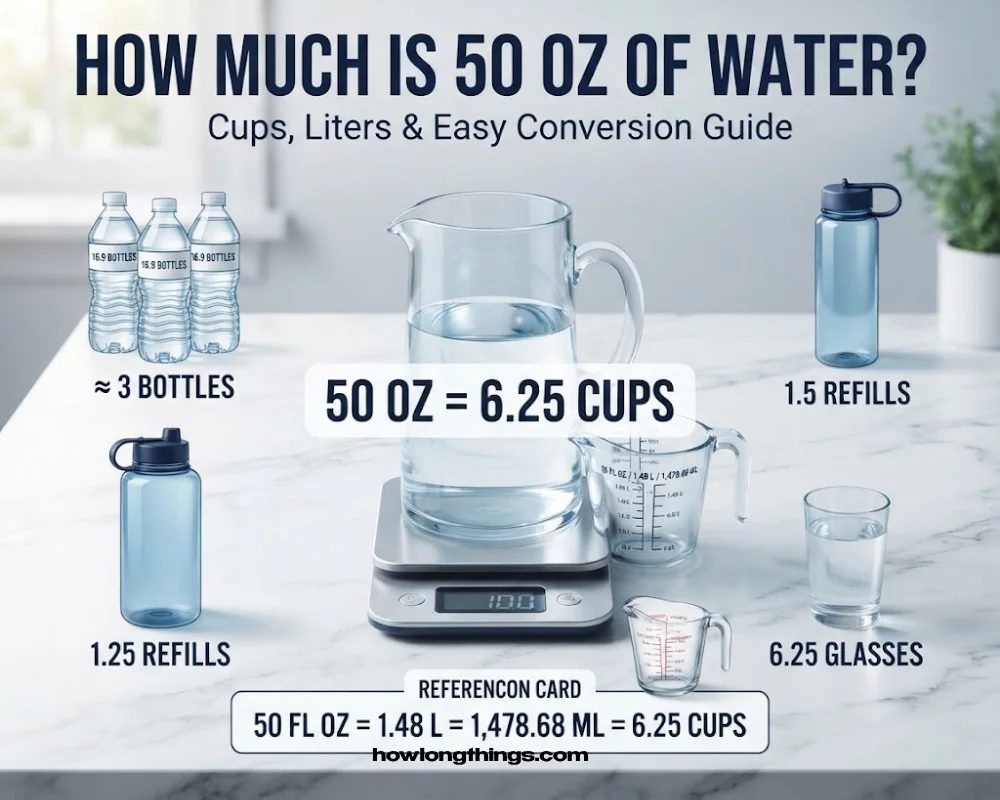
50 oz of water equals 1.48 liters, or 1,478.68 milliliters, or 6.25 cups. These numbers come from the standard US fluid ounce, the volume unit used across American recipes, water bottles, and nutrition labels.
A fluid ounce (fl oz) measures volume, not weight. This matters because a plain “ounce” often refers to weight, while fluid ounces measure how much space a liquid takes up. Water is one of the few substances where the two numbers land close together, but they aren’t the same unit.
50 Oz to Cups, Liters, and Milliliters (Conversion Chart)
Converting 50 oz to cups, liters, or milliliters uses three different but related numbers. Here’s each one broken down.
50 Oz to Cups
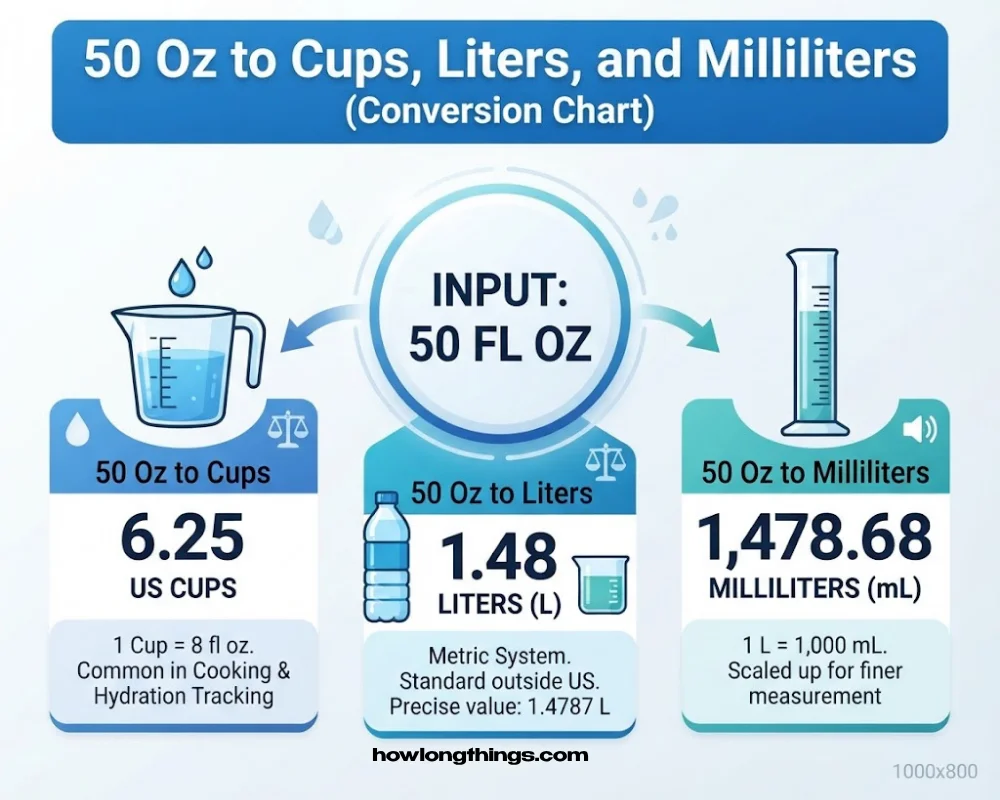
50 oz equals 6.25 cups. This comes from the standard US measurement where 1 cup equals 8 fluid ounces — a conversion used constantly in cooking and hydration tracking.
50 Oz to Liters
50 oz equals about 1.48 liters, or more precisely, 1.4787 liters. Liters belong to the metric system, the measurement standard used in most countries outside the US.
50 Oz to Milliliters
50 oz equals 1,478.68 milliliters. Since 1 liter contains 1,000 milliliters, this number is simply the liter figure scaled up for finer measurement.
Unit
Amount
Cups
6.25 cups
Liters
1.48 L
Milliliters
1,478.68 mL
Pints
3.125 pints
Quarts
1.5625 quarts
How to Convert 50 Oz of Water (Formula and Example)
Once you know the formula, converting 50 ounces to liters or any other unit becomes a quick calculation.
The Fluid Ounce Conversion Formula
One US fluid ounce equals 29.5735 milliliters. To convert any amount of fluid ounces into milliliters, multiply the ounce figure by this number.
Step-by-Step Example Using 50 Oz
Take 50 and multiply it by 29.5735. That gives you 1,478.675 milliliters, which rounds to 1,478.68 mL, or 1.48 liters when divided by 1,000.
Quick Mental Math Shortcut
For a fast estimate, round 29.5735 down to 30. Fifty times 30 equals 1,500 — close enough for everyday tracking, though not precise enough for lab work or medical dosing.
Is 50 Oz of Water Enough Per Day? (Hydration Guide)
Knowing the conversion is one thing. Knowing whether 50 oz of water a day actually meets your body’s needs is the more important question.
Daily Water Intake Recommendations
The National Academies of Sciences, Engineering, and Medicine recommends about 125 ounces of total water per day for men and 91 ounces for women, including water from food and all beverages combined, according to guidance summarized by the Mayo Clinic. Based on that benchmark, 50 oz falls short of the full daily target for most adults, though it can cover a meaningful portion of it.
Factors That Change Your Water Needs
Activity level, climate, and body size all shift how much water a person actually needs. Someone exercising heavily or living in a hot climate loses more fluid through sweat and needs more than someone with a sedentary, indoor routine.
Signs of Proper Hydration
Pale yellow urine, steady energy levels, and minimal thirst are common signs of adequate hydration. Dark urine, fatigue, and persistent thirst often signal it’s time to drink more, regardless of how many ounces you’ve already logged.
50 Oz of Water in Everyday Terms (Bottles, Glasses & Containers)
Numbers feel more useful when tied to things you actually hold and drink from.
Standard Water Bottle Sizes
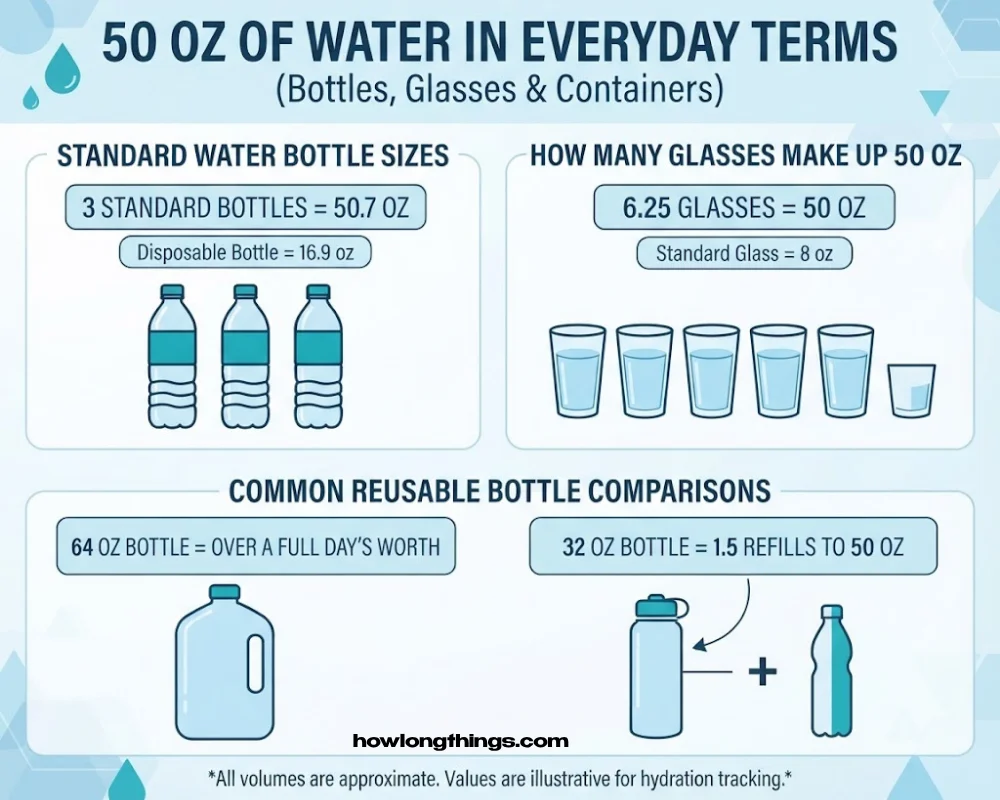
A typical disposable water bottle holds about 16.9 oz, meaning 50 oz equals roughly three standard bottles. Larger reusable bottles, like 32 oz or 40 oz models, get you close to the 50 oz mark in one or two refills.
How Many Glasses Make Up 50 Oz
Using the common 8 oz glass as a reference, 50 oz equals about 6.25 glasses of water. That’s a helpful mental benchmark for anyone tracking intake without measuring tools.
Common Reusable Bottle Comparisons
A 64 oz bottle holds more than a full day’s worth beyond 50 oz, while a 32 oz bottle needs about one and a half refills to reach 50 oz. Choosing a bottle size that matches your daily goal makes tracking intake far simpler.
FAQs About 50 Oz of Water
Is 50 oz 1 liter?
No. 50 oz equals about 1.48 liters, not exactly 1 liter. One liter is closer to 33.81 fluid ounces, so 50 oz is roughly 48% more than a full liter.
How much is 50 ounces of water?
50 ounces of water equals 1.48 liters, 1,478.68 milliliters, or 6.25 cups. It’s the same liquid volume, just expressed in three different measurement units.
Is 50oz of water a day enough?
It depends on the person. For many adults, 50 oz covers part but not all of the recommended daily fluid intake, which sits closer to 91–125 oz total when counting food and all beverages, based on National Academies guidance.
How many glasses of water is 50 ounces?
50 ounces equals about 6.25 glasses, using the standard 8 oz glass as the measurement. That’s slightly more than six full glasses.
Is it healthy to drink 8 glasses of water a day?
Drinking eight 8 oz glasses, or 64 oz total, is a widely known guideline and works well for many people, though actual needs vary by activity level, climate, and individual health factors. It’s a reasonable general target rather than a strict medical rule.
What is 4 glasses of water in ounces?
4 glasses of water equals 32 ounces, based on the standard 8 oz glass measurement. That’s exactly 1 quart, or about 0.95 liters.
Final Thoughts
50 oz of water breaks down to 1.48 liters, 1,478.68 milliliters, or 6.25 cups — simple numbers once you know the formula. While it’s a solid amount toward your daily hydration goal, most adults need somewhat more across the full day. Keep a bottle size in mind that matches your target, and staying properly hydrated becomes far easier to track.
Elizabeth Queen is a Owner and consumer research writer at HowLongThings.com, specializing in product lifespan, durability, and everyday household research. She’s passionate about helping readers make smarter, longer-lasting buying decisions.