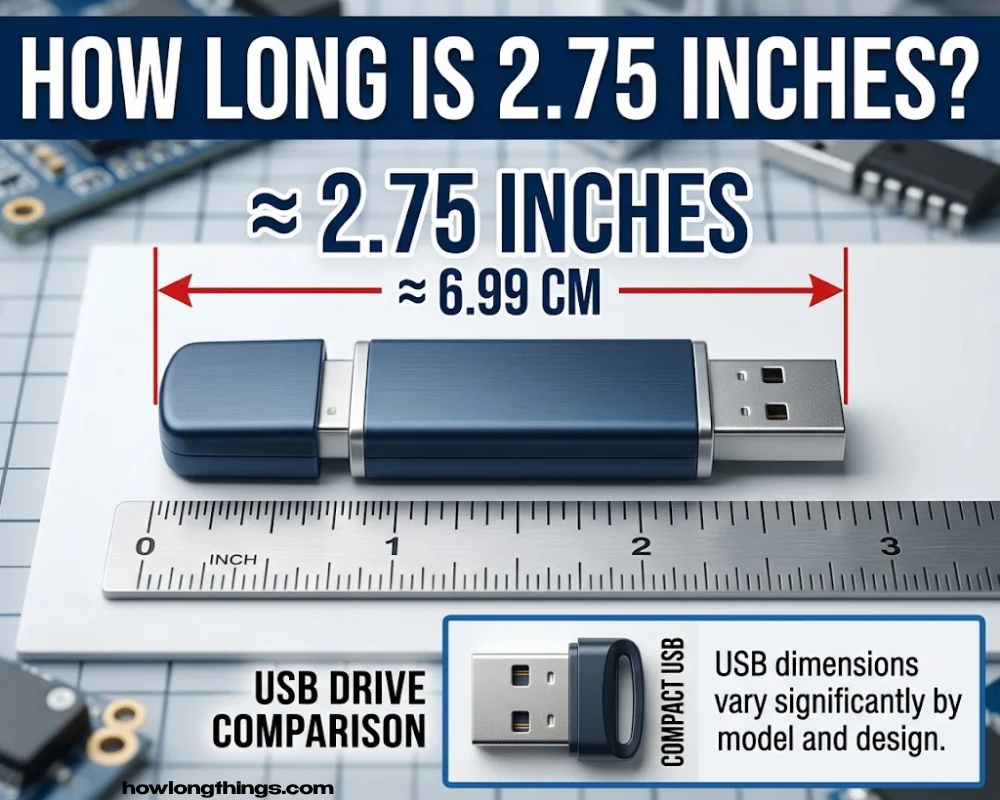
2.75 inches equals 6.985 centimeters, or 69.85 millimeters. That’s it that’s the exact answer. But a number on its own doesn’t tell you much.
This guide breaks down what 2.75 inches actually looks like, where it sits on a ruler, how it stacks up against nearby measurements, and eight everyday objects you can use as a mental ruler the next time you don’t have a tape measure handy.
Table of Contents
2.75 Inches to CM, MM & Feet — Exact Conversion Chart
Let’s start with the hard numbers. How long is 2.75 inches in every unit you’re likely to need?
Centimeters: 6.985 cm
Millimeters: 69.85 mm
Feet: 0.229 ft
Fraction form: 2¾ inches
The conversion factor between inches and centimeters is fixed at 2.54. This isn’t an estimate — it was locked in by the 1959 International Yard and Pound Agreement, which the US, UK, Canada, Australia, and other nations signed to make imperial and metric units match up cleanly. Every conversion tool, ruler, and engineering spec in the world still runs on that same fixed number.
The formula is simple:
Centimeters = Inches × 2.54
So: 2.75 × 2.54 = 6.985 cm
For millimeters, just multiply the centimeter figure by 10, or multiply inches by 25.4 directly: 2.75 × 25.4 = 69.85 mm.
Here’s how 2.75 inches compares with nearby measurements, useful if you searched this page but your actual number is slightly different:
Inches
Centimeters
Millimeters
2.5
6.35
63.5
2.6
6.604
66.04
2.75
6.985
69.85
2.9
7.366
73.66
3.0
7.62
76.2
What Is 2.75 Inches on a Ruler?
Grab a standard inch ruler and here’s exactly where 2.75 inches falls: right between the 2-inch and 3-inch marks, three-quarters of the way across.
Most rulers break each inch into eight small segments (eighths), with the halfway point marked by a slightly longer line. To find 2.75 inches:
Locate the 2-inch mark.
Count forward to the midpoint line between 2 and 3 — that’s 2.5 inches.
From there, count two more small eighth-inch ticks — that lands you on 2¾ inches, or 2.75 inches.
Reading it as a fraction makes this easier than reading the decimal. Since 0.75 converts cleanly to 3/4, you’re really just looking for the “three-quarter” tick past the 2-inch line. This is the same logic behind fraction-to-decimal conversion on any imperial ruler — quarters, eighths, and sixteenths are just decimals in disguise.
If you don’t have a physical ruler nearby, an online ruler tool that renders to actual screen size (after a quick calibration) works just as well for a rough visual check.
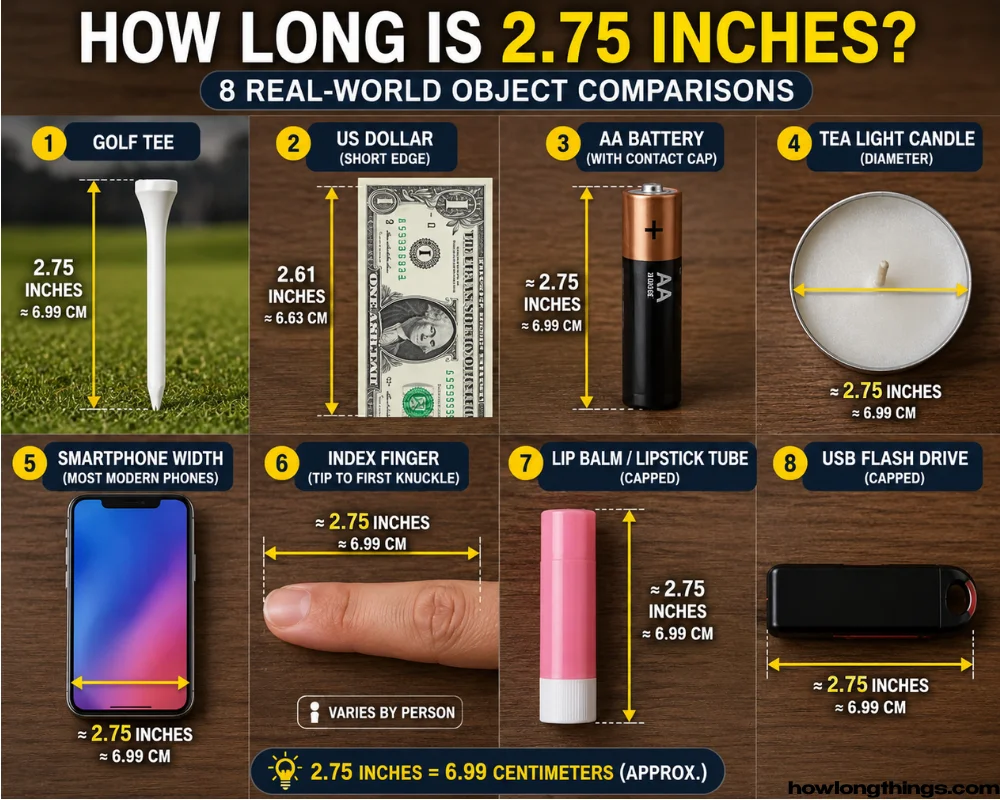
How long Is 2.75 Inches? 8 Real-World Object Comparisons
Numbers on a page don’t always stick. Here are eight physical items close to 2.75 inches long, so you can picture the size without pulling out a tape measure.
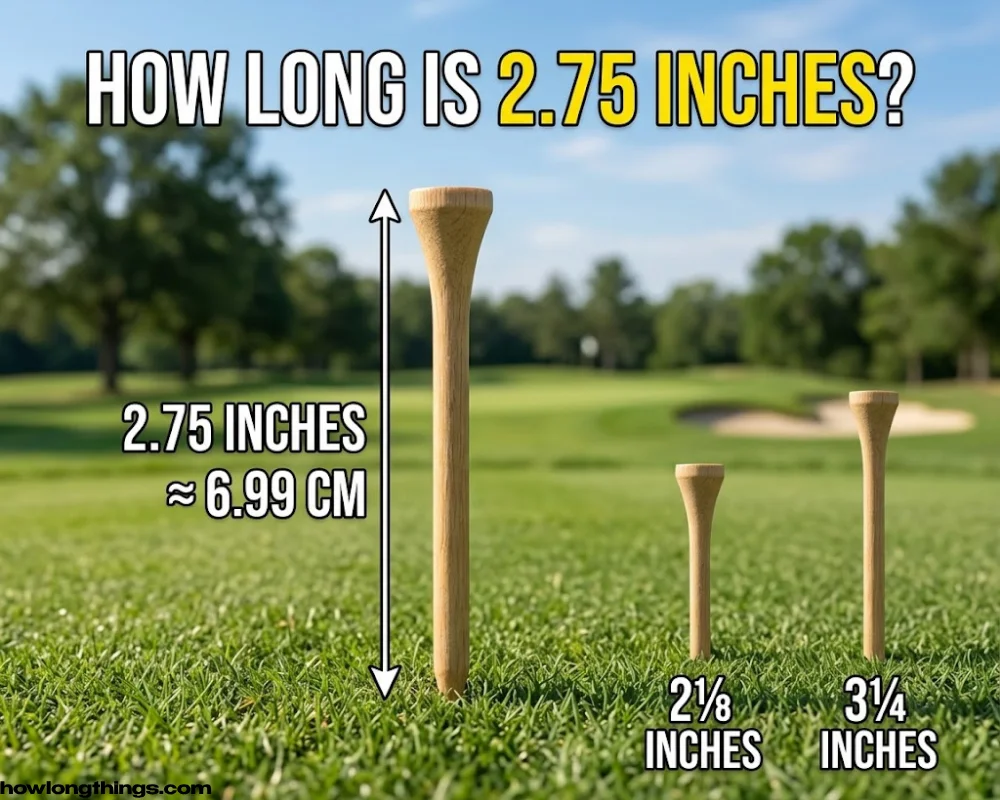
A standard golf tee. Golf tees are sold in a few fixed lengths, and 2¾ inches is the single most common one — it’s the go-to size for drivers and fairway woods, sitting right between the shorter 2⅛-inch tees used for irons and the taller 3¼-inch tees.
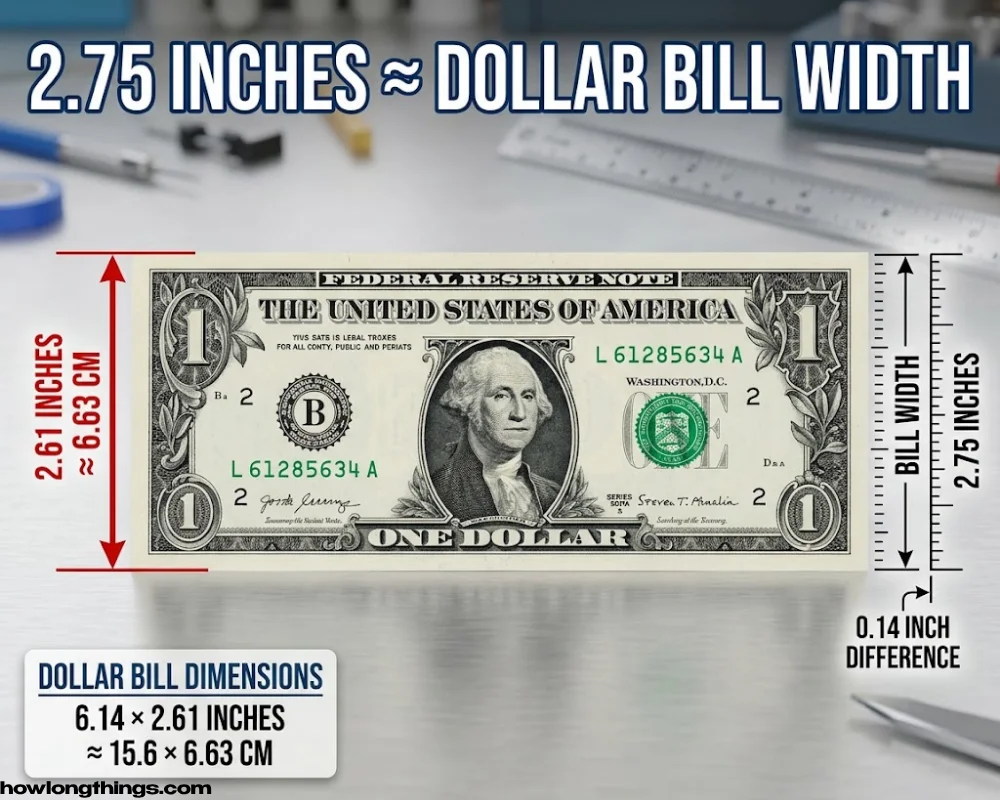
The short edge of a US dollar bill. Every US bill, regardless of denomination, measures 6.14 by 2.61 inches. The narrow width is close enough to 2.75 inches to make a dollar bill a genuinely useful pocket ruler.
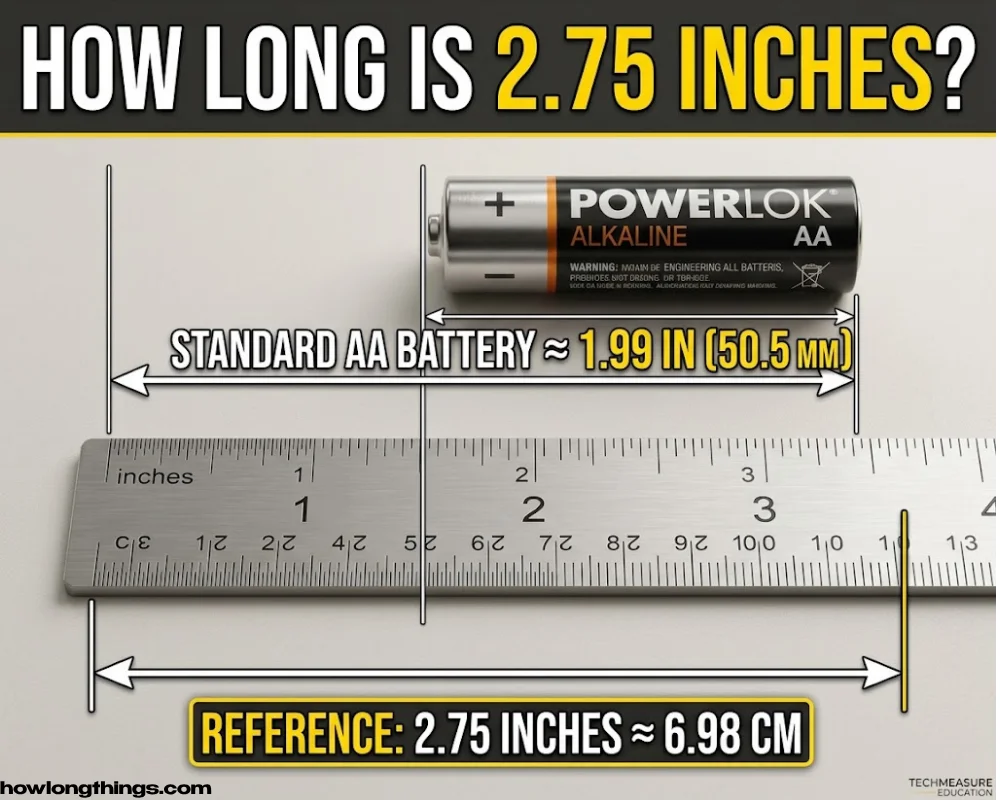
A AA battery with its contact cap. The bare cylinder of a AA battery measures about 1.99 inches, but once you include the raised terminal and base, many AA batteries used in remotes and flashlights measure close to 2.75 inches end to end.
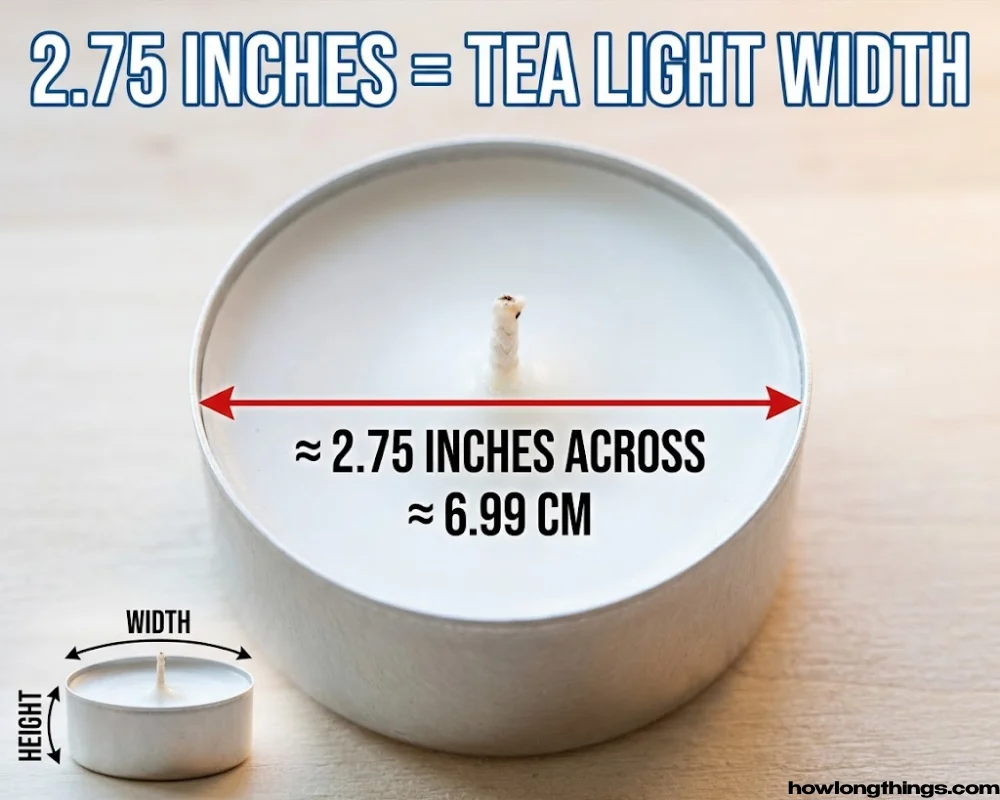
A tea light candle. The small aluminum or plastic cup that holds a tea light typically spans close to 2.75 inches across its outer rim — a size that’s stayed consistent across candle brands for decades.
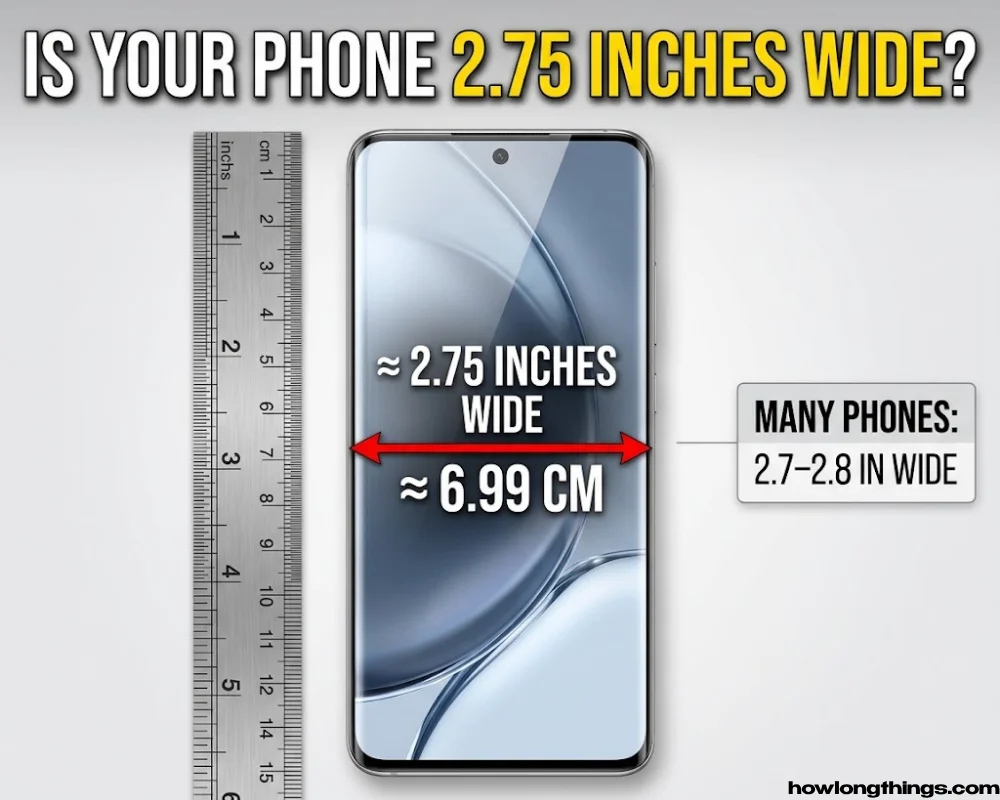
The width of many modern smartphones. Most current smartphone bodies fall in the 2.7 to 2.8-inch range across the width, making your own phone a quick, always-on-hand comparison.
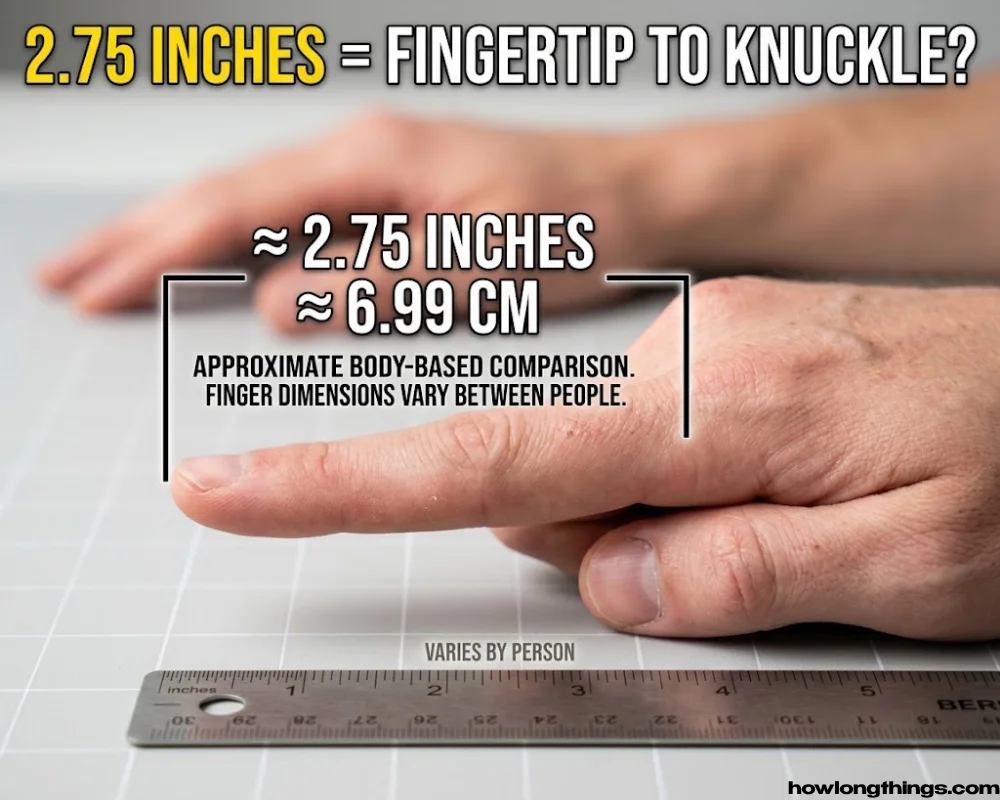
An adult index finger, tip to first knuckle. This body-based reference isn’t exact for everyone, but for most adults, the distance from the fingertip to the first knuckle lands close to 2.75 inches — a genuinely portable measuring stick.
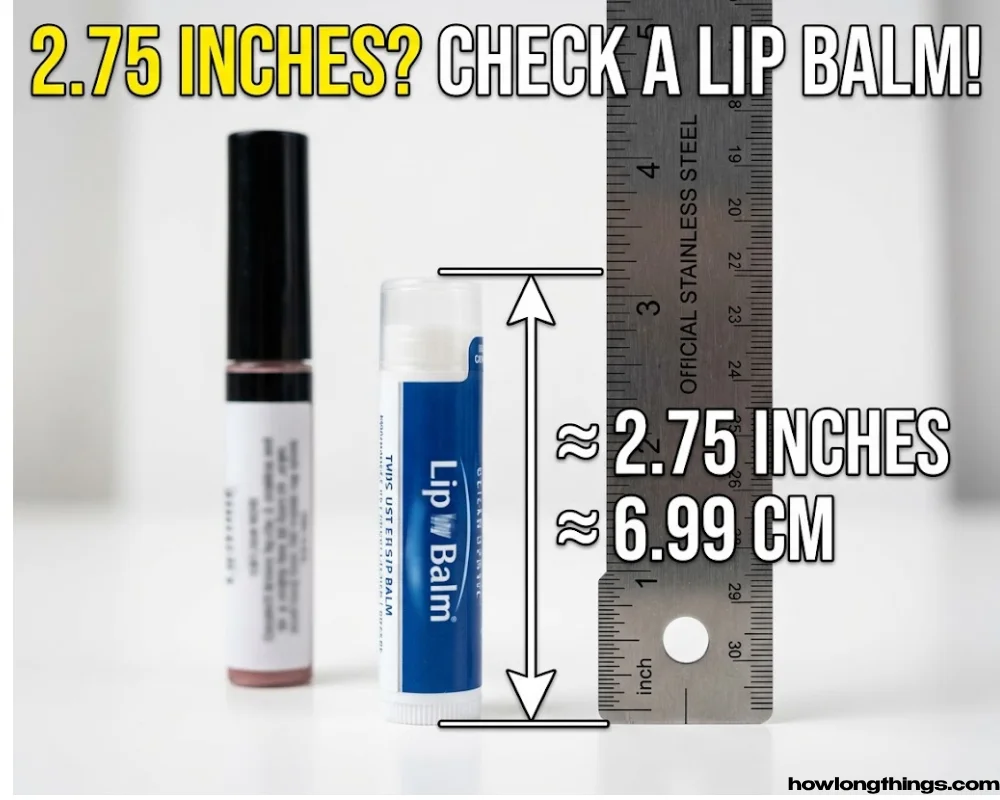
A lip balm or lipstick tube. Capped tubes from most major brands run close to 2.75 inches in length, thanks to standardized packaging molds used across the cosmetics industry.
A USB flash drive. With its cap on or connector retracted, a typical USB stick body measures around 2.75 inches — handy if you’re comparing tech accessories or packaging.
2.75 Inches vs Similar Measurements (2, 2.5, and 3 Inches)
Context matters. Here’s how 2.75 inches stacks up against the sizes people search for most often.
How much does 2 inches look like? Two inches is roughly the width of a standard matchbox, or about the length from your thumb tip to the first knuckle. It’s a full three-quarters of an inch shorter than 2.75 inches — a noticeable gap when you’re comparing small parts or craft materials.
How big is 2.5 inches? Two and a half inches sits just a quarter-inch below 2.75 inches — close enough that the difference is subtle to the eye but still measurable with a ruler. A standard tennis ball’s diameter (2.5 to 2.7 inches) sits almost exactly here.
How does 2.5 inches look like in daily objects? Picture a credit card turned on its side — the card’s height is 2.125 inches, so 2.5 inches is just a bit taller than that, roughly the height of a small votive candle holder.
The takeaway: moving from 2 inches to 2.75 inches adds nearly 40% more length, while moving from 2.5 to 2.75 inches is a smaller, quarter-inch step — the kind of difference that matters most in precision work like jewelry making, model building, or parts fitting.
How to Measure 2.75 Inches Without a Ruler
No ruler on hand? These quick, no-tool methods get you close.
Use your fingers. How many fingers is 2 inches, and how does that scale to 2.75? For most adults, two fingers held side by side (index and middle) span close to 1.5 inches, while three fingers together get you nearer to 2 inches. Add roughly another finger-width’s worth of space, and you’re at 2.75 inches — though hand size varies, so this is an estimate, not a precise measurement.
Use a dollar bill. As noted above, the short side of any US bill is 2.61 inches — add a small margin (about the width of a pencil line) and you’ve got 2.75 inches.
Use a credit card. A standard card’s height is 2.125 inches. Add roughly a third more length and you land close to 2.75 inches.
Use a phone measuring app. Most modern smartphones include a built-in AR measuring tool (Measure on iPhone, Google’s Measure app on Android) that uses the camera to estimate real-world length — accurate enough for quick household checks, though not a replacement for a physical ruler on anything that needs precision.
FAQs
How much does 2 inches look like?
Two inches is about the width of a standard matchbox or roughly three finger-widths held together. It’s shorter than the diameter of a standard drink coaster and close to the length of a large paperclip.
What is 2.75 inches on a ruler?
It sits between the 2-inch and 3-inch marks, at the three-quarter point — the same spot marked as 2¾ on a ruler that uses fractions instead of decimals.
What does 2.75 equal to?
As a fraction, 2.75 equals 2¾. In metric terms, 2.75 inches equals 6.985 centimeters or 69.85 millimeters.
How big is 2.5 inches?
Two and a half inches is close to the diameter of a standard tennis ball and just a quarter-inch shorter than 2.75 inches.
How many fingers is 2 inches?
For most adults, roughly three fingers held together span close to 2 inches, though exact finger width varies by person.
How does 2.5 inches look like?
Picture a credit card standing on its short side (2.125 inches) with a bit of extra room added that visual gap is close to 2.5 inches.
Final Thoughts
2.75 inches is a small but very specific measurement exactly 6.985 centimeters, sitting three-quarters of the way past the 2-inch mark on any ruler. Whether you’re checking a golf tee, sizing up a phone, or estimating with your fingers, you now have a handful of real, reliable references to picture it instantly, ruler or no ruler.
Elizabeth Queen is a Owner and consumer research writer at HowLongThings.com, specializing in product lifespan, durability, and everyday household research. She’s passionate about helping readers make smarter, longer-lasting buying decisions.