Numbers on a tape measure rarely mean much until you connect them to something real. 40 inches is one of those in-between measurements — too big to ignore, too small to picture right away.
This guide breaks down exactly how long is 40 inches in feet, centimeters, and meters, then walks through 19 everyday objects that sit right at this mark, so you can picture it instantly the next time you see it on a label or spec sheet.
Table of Contents
How Long Is 40 Inches? (Quick Conversion Chart)
Before comparing objects, it helps to see the raw numbers side by side.
40 inches equals 3 feet 4 inches, or 101.6 centimeters, or 1.016 meters. That’s just a touch over one full meter and a little more than a yard. The conversion formula is simple: multiply the inch value by 2.54 to get centimeters, since one inch is defined as exactly 2.54 cm under the international system maintained by the National Institute of Standards and Technology.
Unit
Value
Inches
40 in
Feet
3.33 ft (3 ft 4 in)
Centimeters
101.6 cm
Meters
1.016 m
Yards
1.11 yd
Millimeters
1,016 mm
If you’re working backward from the metric side, 101.6 cm converts back to exactly 40 inches, so the math holds in both directions. This dual view matters because American shoppers usually think in feet and inches, while product spec sheets — especially electronics — often list centimeters too.
Is 40 Inches the Same as 4 Feet? How Tall Is 40 Inches Compared to a Human?
This is one of the most common mix-ups with this measurement, so it’s worth clearing up early.
No — 40 inches is not 4 feet. Four feet equals 48 inches, which is a full 8 inches longer than 40 inches. The confusion usually happens because “40” and “4 feet” sound similar in casual conversation, but the math doesn’t line up. 40 inches actually equals 3 feet and 4 inches, roughly two-thirds of the way to that 4-foot mark.
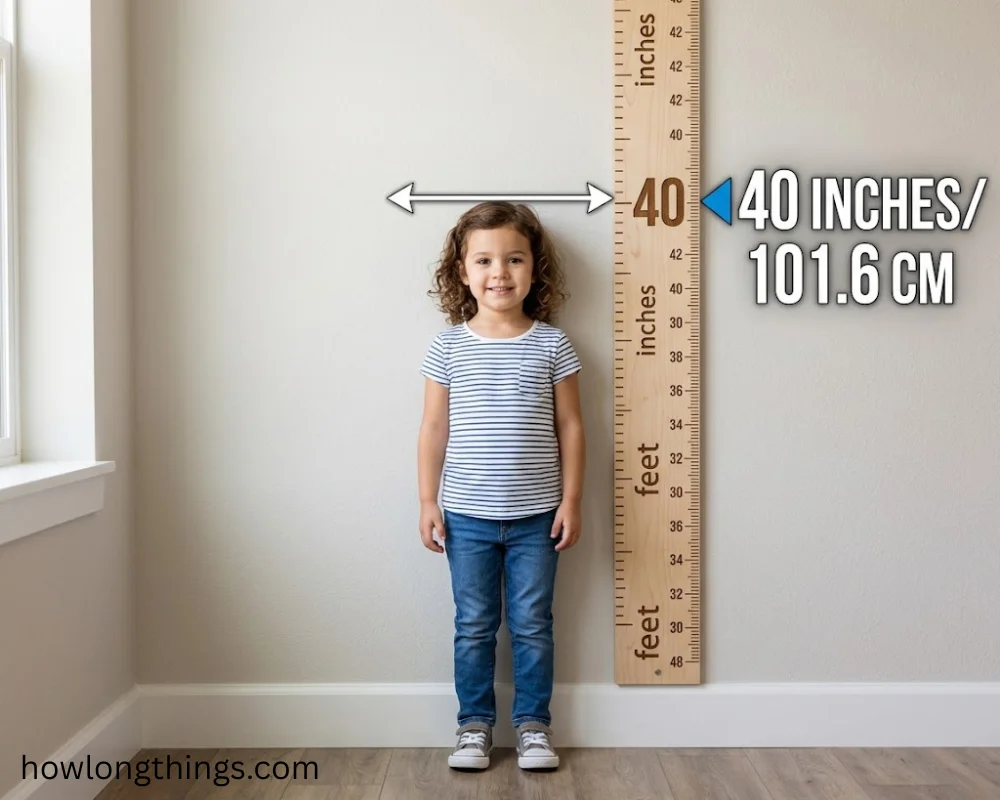
So how tall is 40 inches compared to a human? On an average adult, this height lands somewhere between the waist and the lower chest, depending on the person’s overall height. For children, it’s a much closer match. According to growth data published by the Centers for Disease Control and Prevention, the average height for a healthy 3-to-4-year-old child in the United States falls close to this range, which is why pediatricians and parents often use 40 inches as a rough developmental marker. That single comparison — a preschooler standing next to a yardstick — is often the fastest way to grasp this length without touching a tape measure at all.
19 Real-Life Things That Are 40 Inches Long
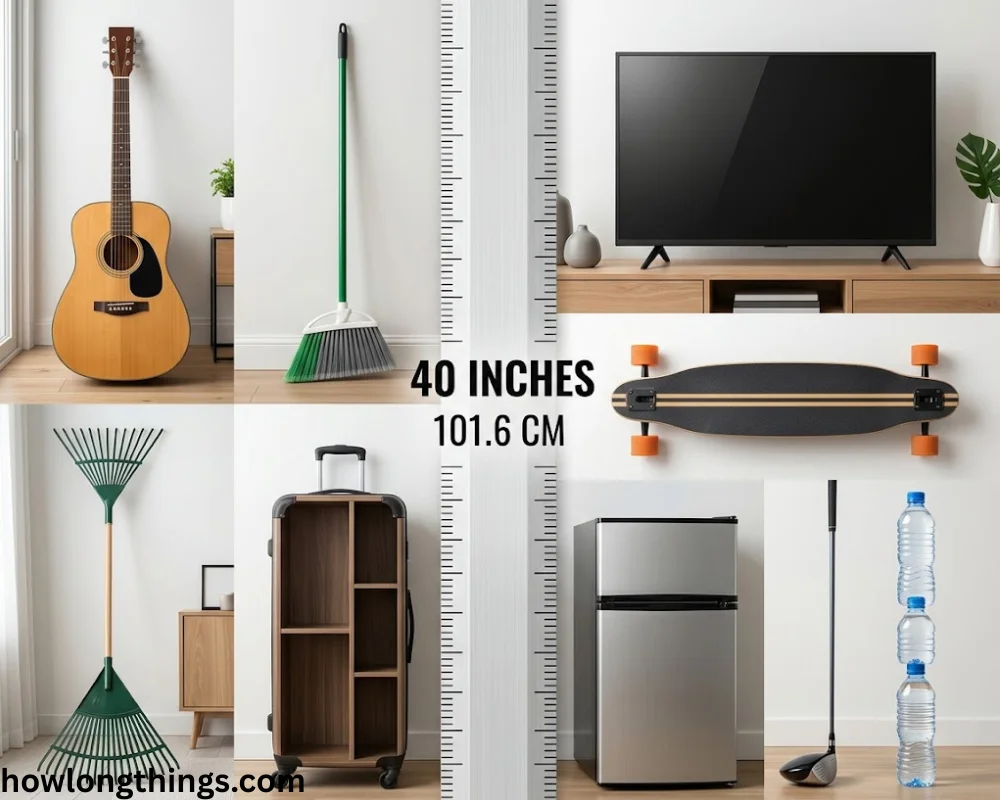
Numbers stick better when they’re tied to something you can picture in your own home, garage, or backyard. Here are 19 objects, tools, and even living things that land right around 40 inches.
A Standard Kitchen Counter Plus a Small Appliance
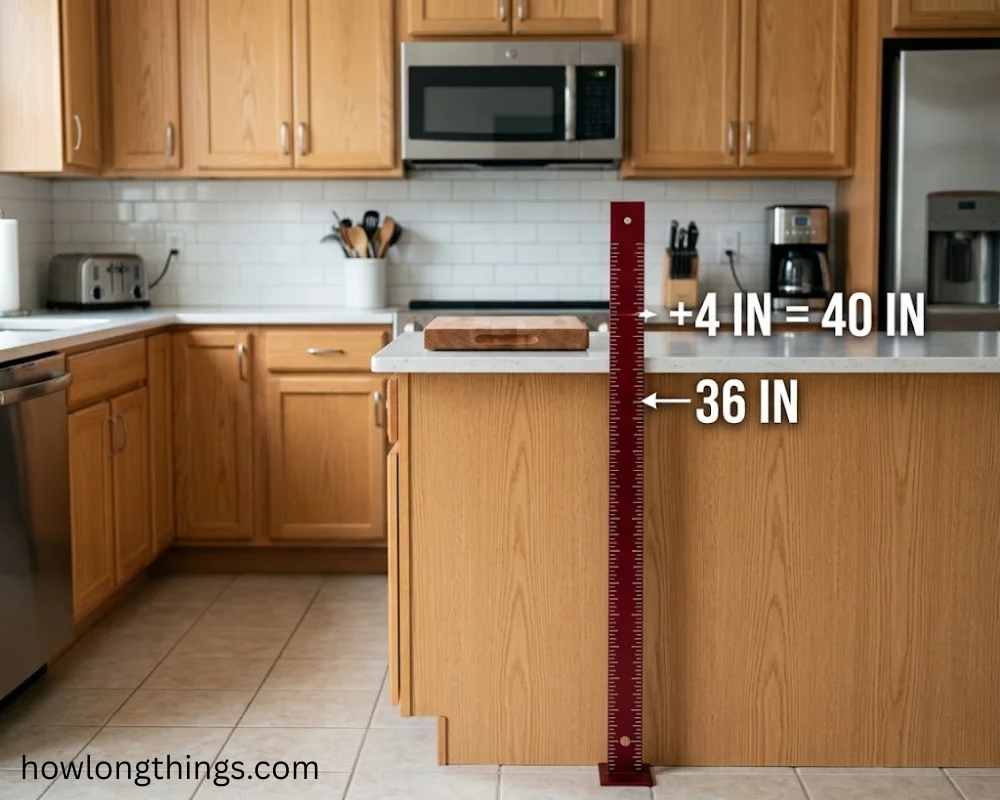
A typical American kitchen counter stands 36 inches tall, which is already a familiar height in most homes. Add a cutting board or a small stand mixer on top, and the combined height climbs right up to the 40-inch mark. This comparison works well for home renovation projects, since counter height is one of the most standardized dimensions in residential kitchens. It’s a handy mental shortcut if you’re shopping for furniture and want something that sits just above counter level.
A 3-to-4-Year-Old Child
This is one of the most relatable comparisons on the entire list. Pediatric growth charts frequently place the average height for children in this age bracket close to 40 inches, give or take a couple of inches depending on genetics. Parents tracking growth milestones often see this exact number appear on a wall chart or doctor’s office measurement. If you’ve ever stood a toddler next to a yardstick, you’ve already seen this measurement in action.
A 40-Inch Flat-Screen TV
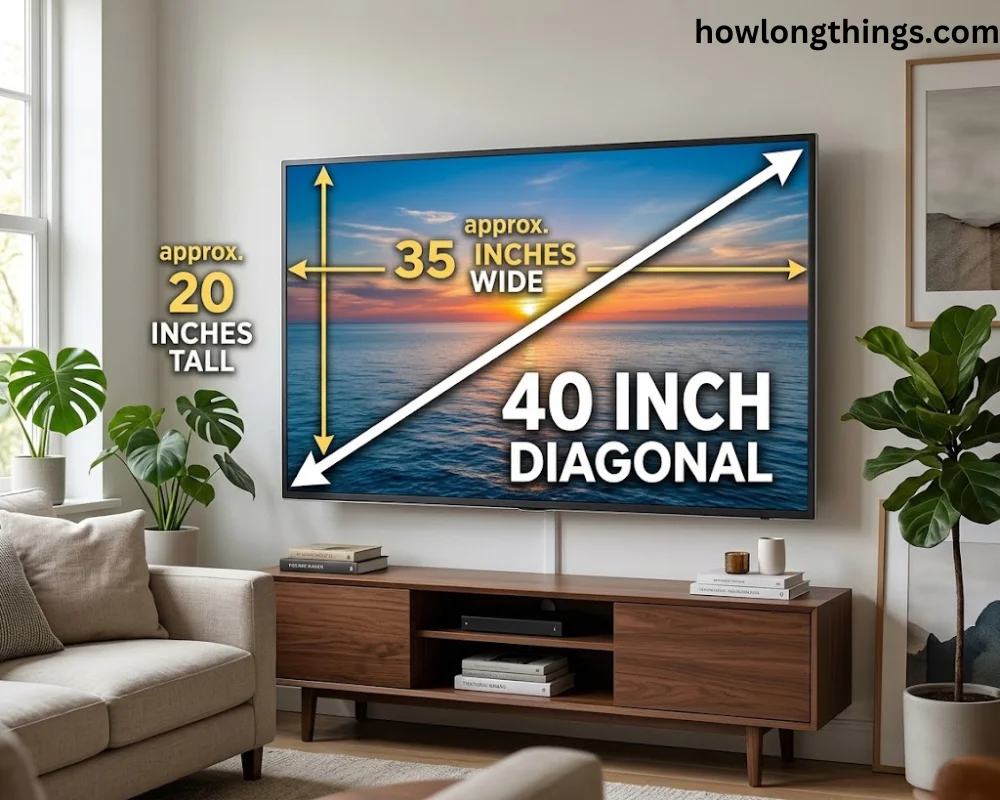
Screen sizes are always measured diagonally, so a 40-inch television isn’t actually 40 inches tall — its diagonal screen spans that distance corner to corner. Most 40-inch televisions from major brands like Samsung and LG measure closer to 35 inches wide and 20 inches tall without a stand. This size has become a popular choice for bedrooms and smaller living rooms because it delivers a sharp picture without overwhelming the space. Once mounted on a wall or paired with a media console, the overall setup often approaches the 40-inch mark from floor to top edge.
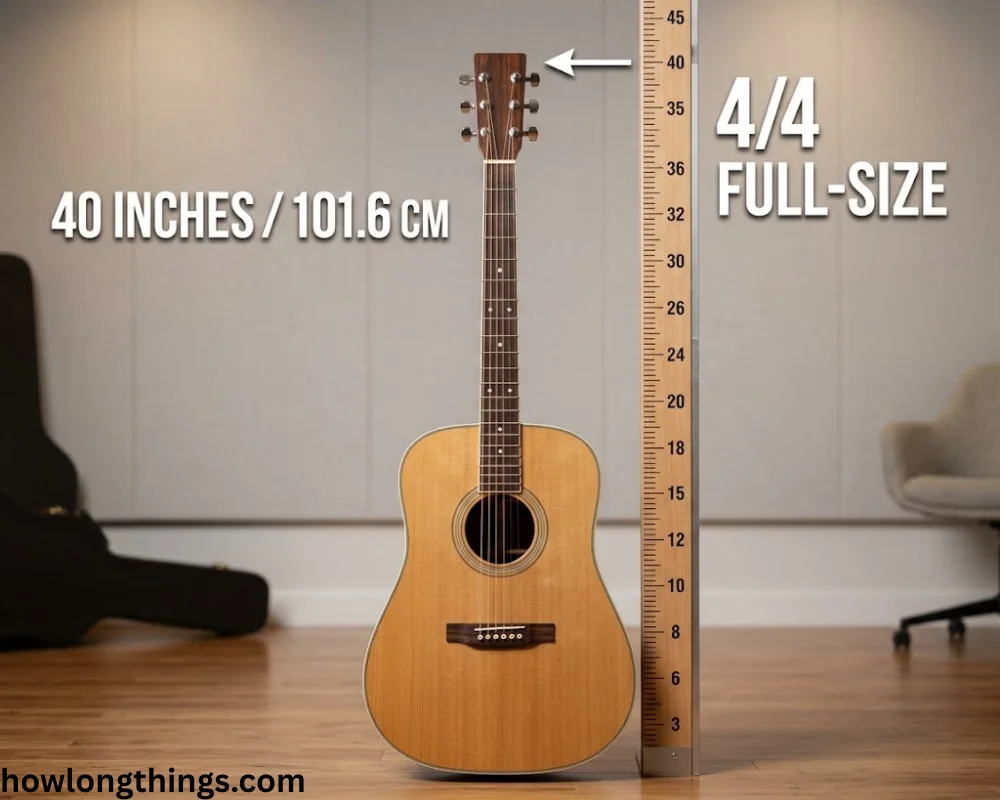
A Full-Size Acoustic Guitar
Guitar manufacturers have kept this dimension remarkably consistent for decades. A standard 4/4 acoustic guitar, the kind made by brands like Fender and Yamaha, typically measures close to 40 inches from the headstock to the base of the body. This full-size instrument produces a fuller, richer tone than smaller travel or parlor guitars because of its larger resonating chamber. Musicians shopping for their first adult-sized guitar often use this exact length as a sizing benchmark.
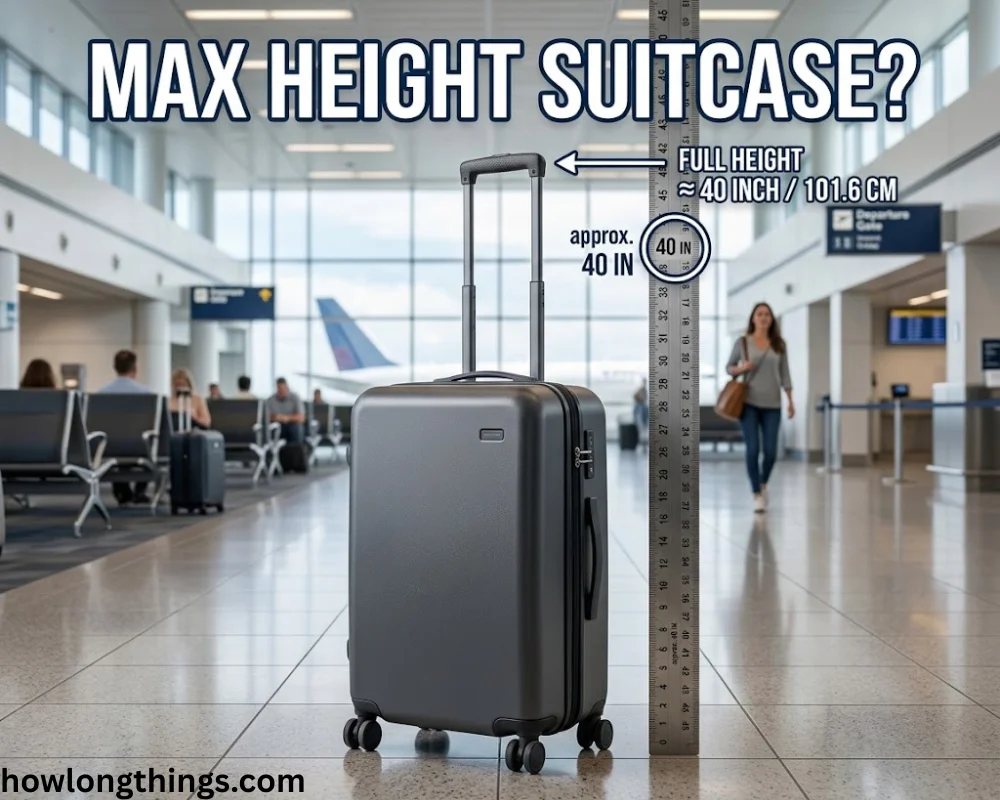
A Rolling Carry-On Suitcase
Travelers see this measurement constantly without realizing it. Most large rolling suitcases, once the telescoping handle is fully extended, stand somewhere between 38 and 42 inches tall. The top of the handle typically reaches mid-torso or waist height for an average adult, which is part of what makes rolling luggage so easy to maneuver through crowded airports. This comparison is especially useful if you’re deciding whether a suitcase will fit comfortably in an overhead bin or a car trunk.
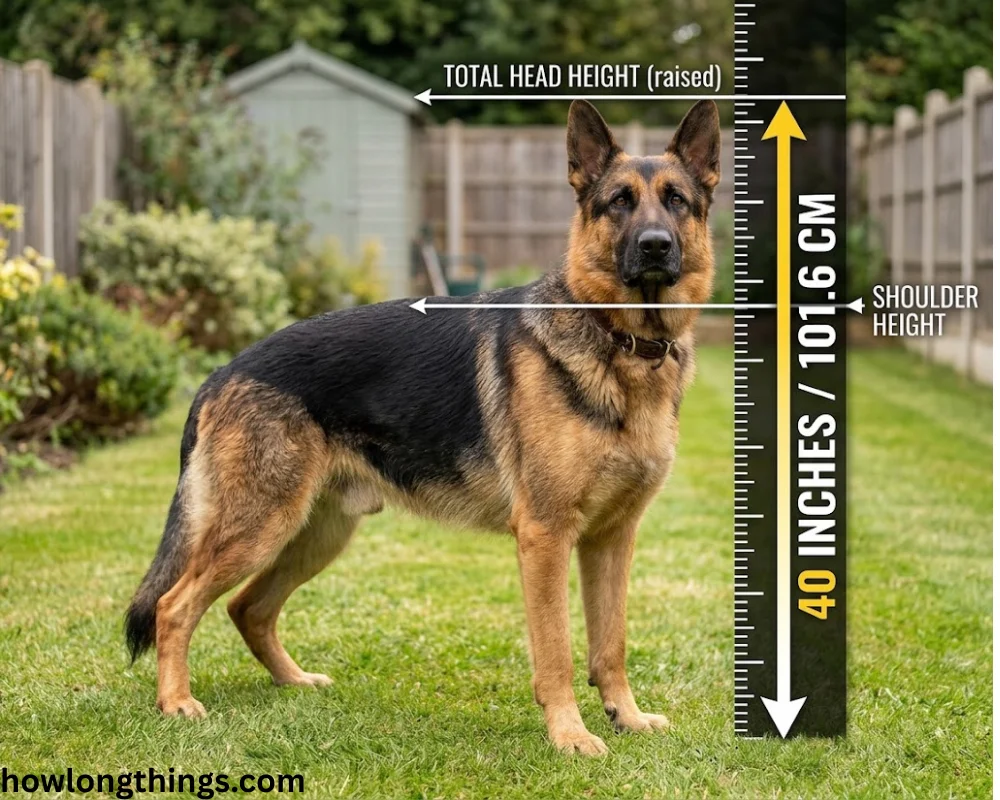
A Large Dog Standing on All Fours
Big dog breeds bring this measurement to life in a very literal way. Breeds like German Shepherds, Golden Retrievers, and Labrador Retrievers often stand 24 to 30 inches tall at the shoulder, but once you factor in the height of a raised or alert head, many large dogs approach the 40-inch mark. Pet owners shopping for crates, gates, or car barriers frequently reference this height when sizing equipment. It’s a great comparison for anyone who’s spent time around larger dog breeds.
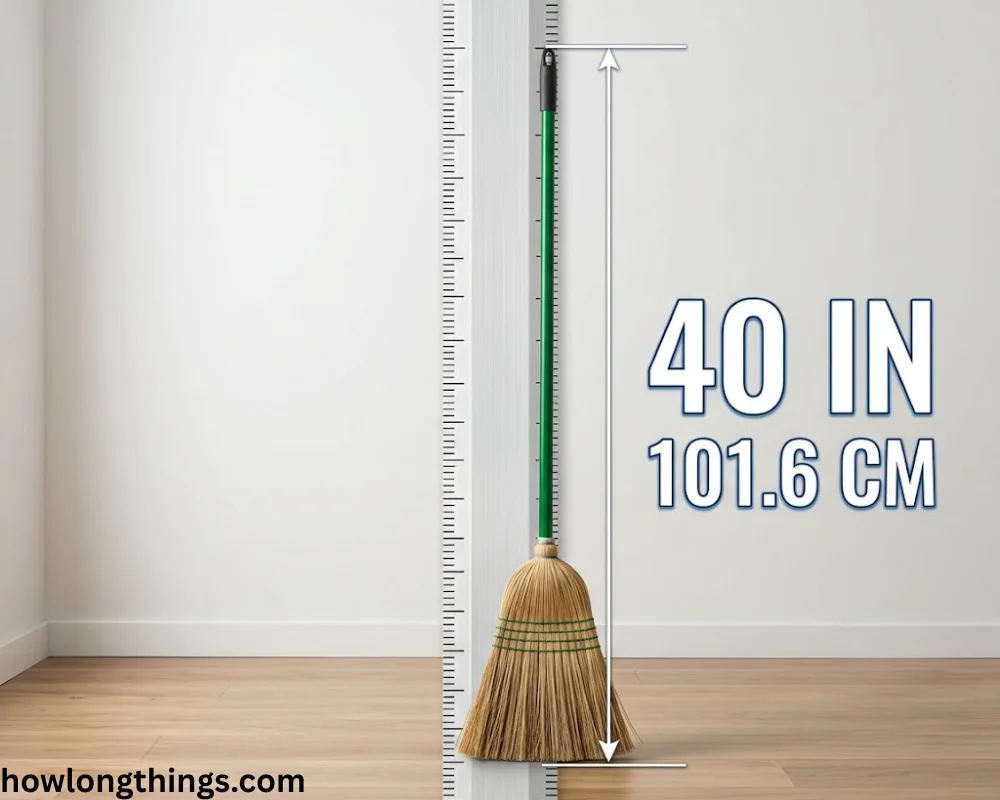
A Standard Household Broom
Few items are as universally accessible as a broom, which makes it one of the easiest ways to picture this length. From the top of the handle to the bottom of the bristles, most household brooms sold across the United States measure close to 40 inches. This length is designed around average adult ergonomics, keeping users from bending too far forward while sweeping. Next time you grab one from the closet, you’re holding a near-perfect 40-inch reference.
A Small Bookcase or Shelf Unit
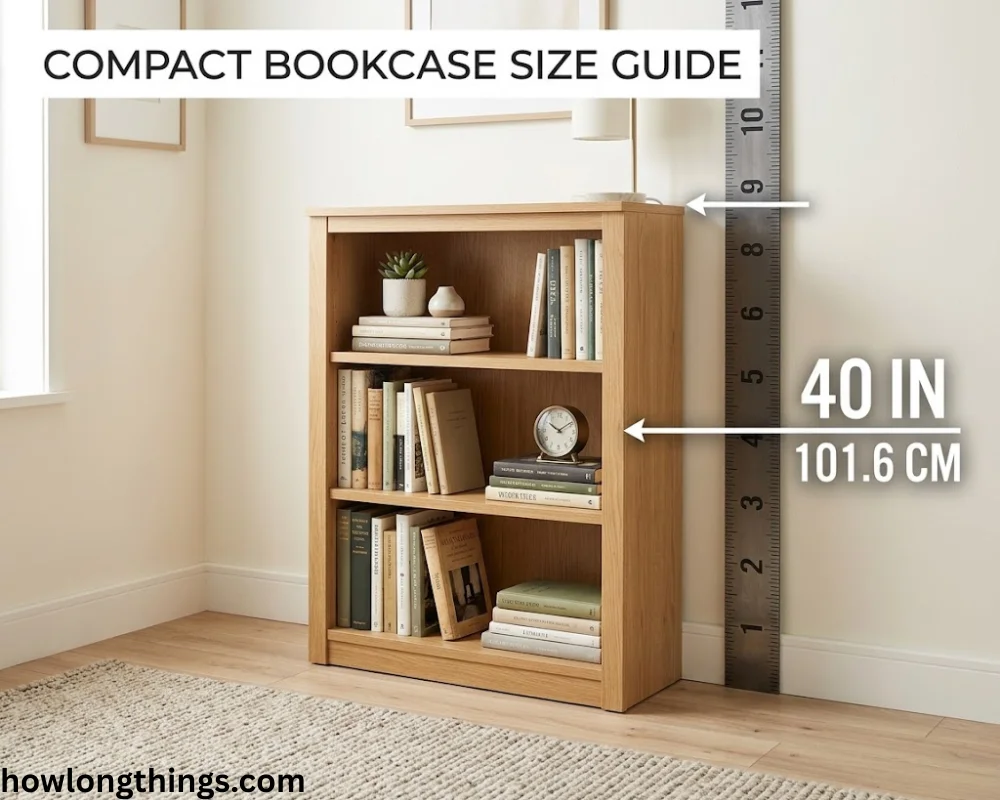
Compact bookcases, especially models marketed for apartments, dorm rooms, or children’s bedrooms, are frequently built to a height right around 40 inches. This size usually includes three to four shelves and sits comfortably below average adult eye level, making it easy to reach the top shelf without a step stool. Furniture designers favor this dimension because it maximizes storage without visually crowding a small room. It’s a common answer to the question, “how long is a 40 inch example” in a furniture context.
A Mini Refrigerator
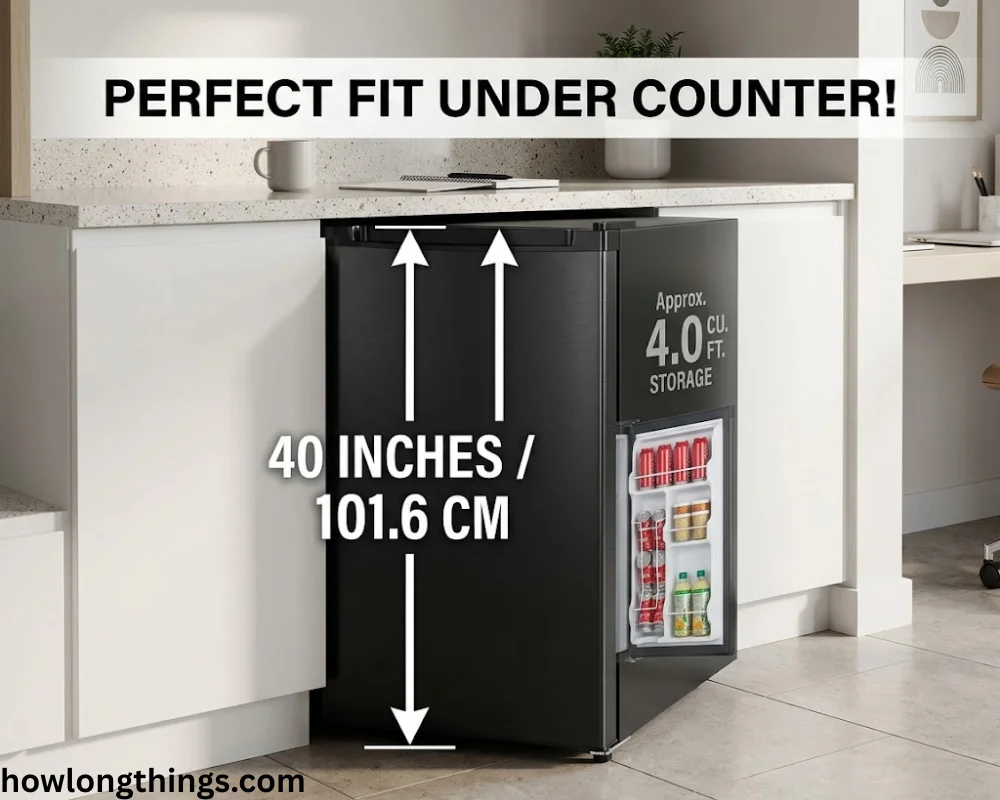
Compact and under-counter refrigerators are engineered to a very specific height so they slide neatly beneath standard countertops. Most models stand close to 40 inches tall, offering somewhere between 3.5 and 4.5 cubic feet of storage. This makes them a popular choice for home offices, dorm rooms, and small apartment kitchens where a full-size fridge simply won’t fit. The height is one of the most tightly standardized dimensions in the compact appliance category.
A Bar Stool Without a Backrest
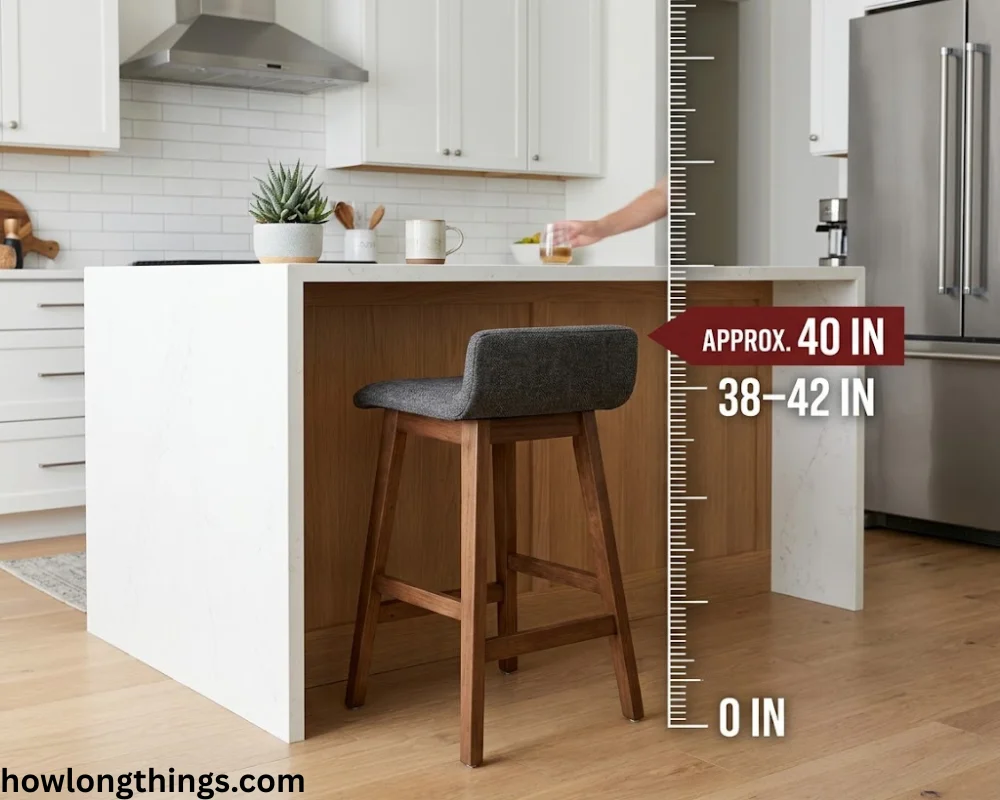
Kitchen islands and breakfast bars typically call for taller seating than a standard dining chair, and many backless bar stools measure between 38 and 42 inches from the floor to the top of the seat. This range makes 40 inches one of the more common furniture standards in modern American homes. Interior designers often use this exact height when planning kitchen islands with built-in seating. It pairs naturally with counters that sit 36 to 42 inches high.
A Garden Rake
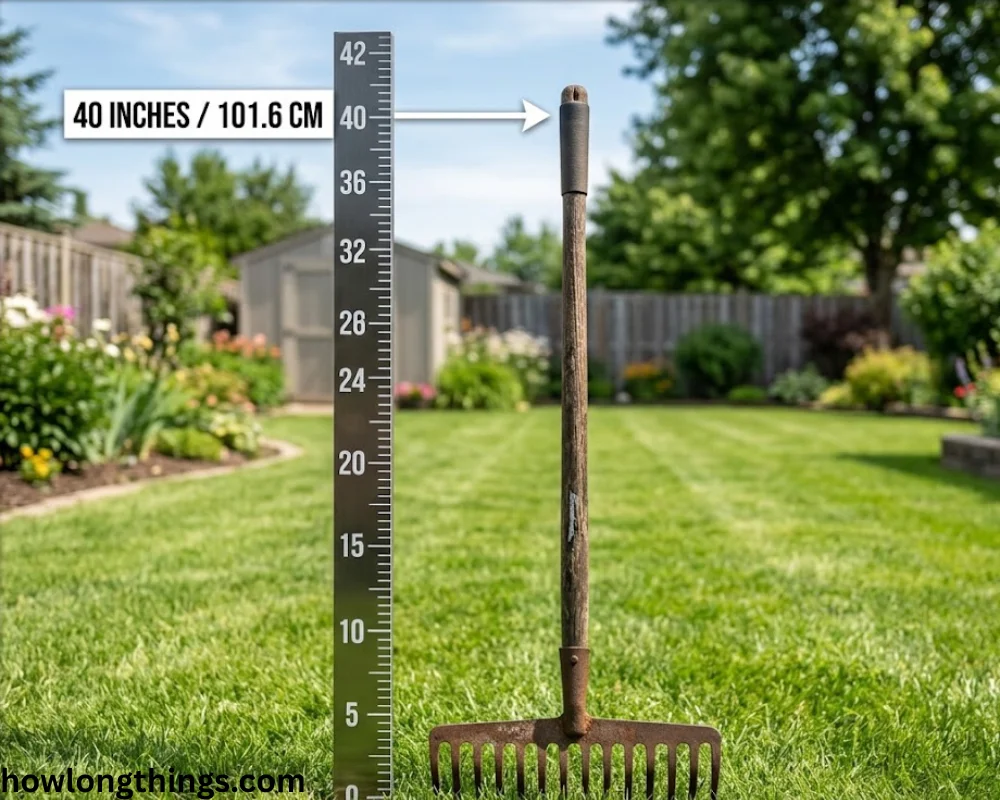
Lawn and garden tools are built around practical, ergonomic lengths, and a standard residential garden rake usually starts at close to 40 inches in handle length. Longer models stretch to 60 inches for taller users or heavier-duty yard work, but 40 inches remains the most common entry-level size sold at hardware stores. This length lets most adults rake comfortably without excessive bending. It’s a familiar tool for anyone who has tackled fall leaf cleanup or spring yard prep.
A Crowbar
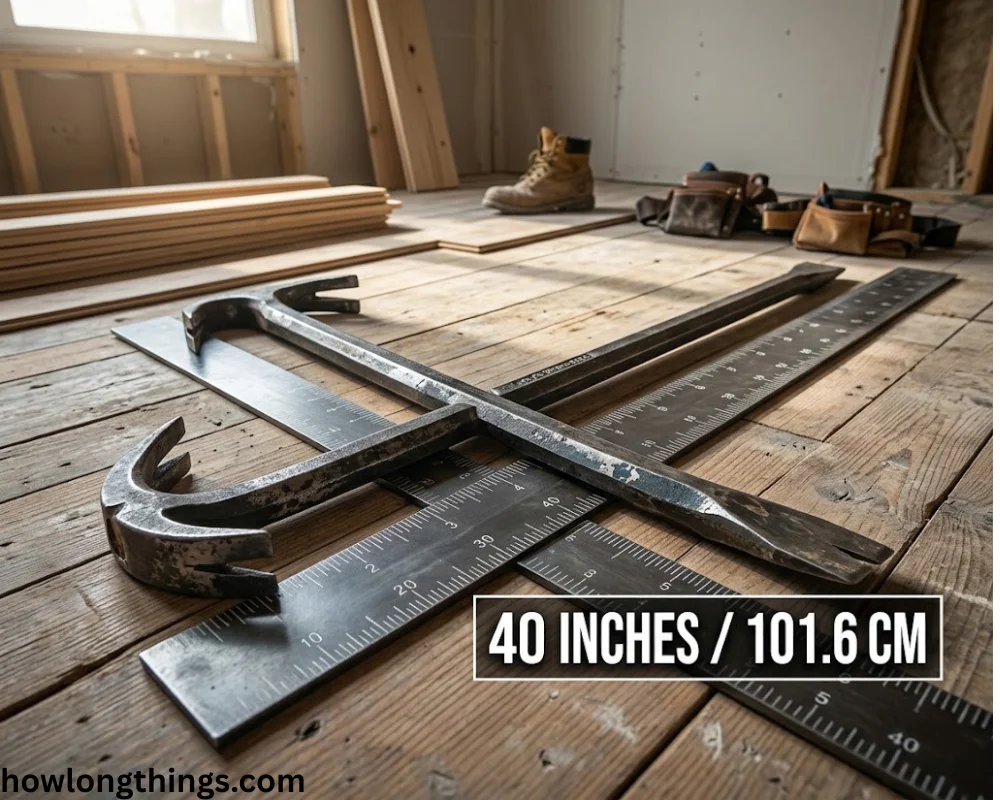
Mid-size crowbars occupy a useful middle ground between compact pry bars and heavy demolition tools, and a 40-inch model is a common choice for construction and renovation work. This length provides enough leverage to pry apart flooring, lift heavy panels, or separate stubborn wooden structures without requiring excessive force. Contractors and DIY renovators often keep a crowbar close to this length in their toolkit because it balances portability with mechanical advantage. It’s a practical, hands-on way to picture 40 inches for anyone who’s worked on a home renovation project.
A Golf Club Driver
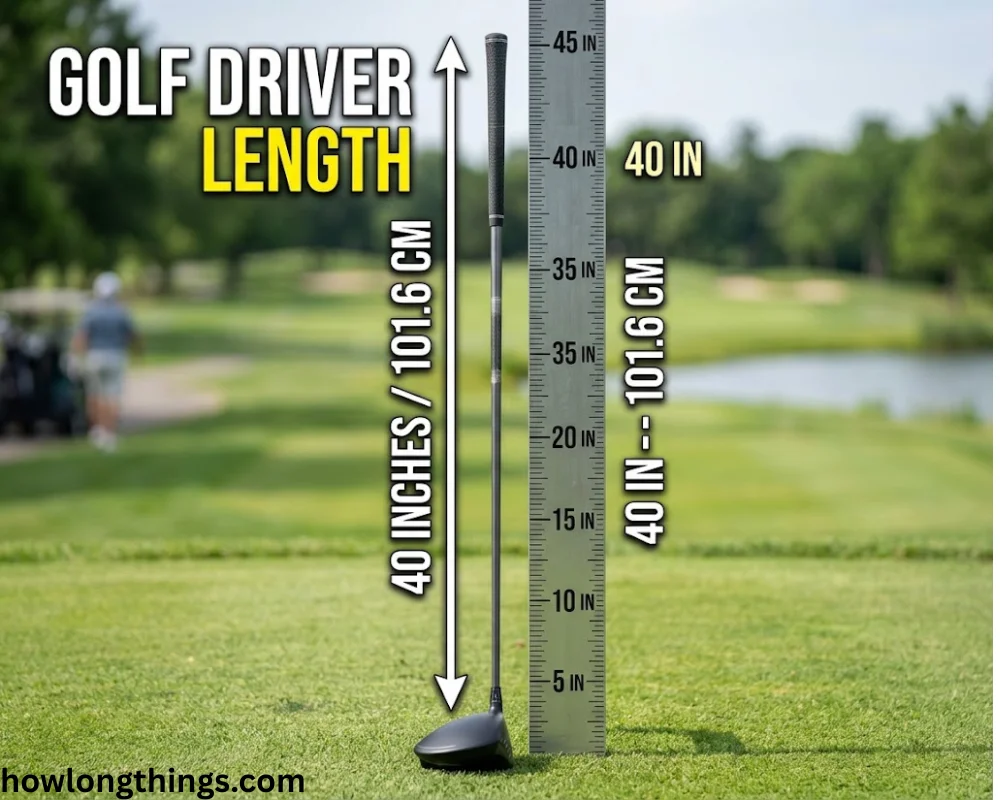
Golf equipment is built to precise, regulated lengths, and a standard driver shaft measures close to 40 inches for many off-the-shelf clubs. The United States Golf Association permits driver shafts up to 48 inches, but most manufacturers stick closer to 40 inches as the baseline for control and accuracy. Beginner and intermediate golfers especially benefit from this length, since it offers a manageable balance between swing control and distance. Anyone who has picked up a driver at a golf shop has likely held something close to this exact measurement.
A Standard Katana
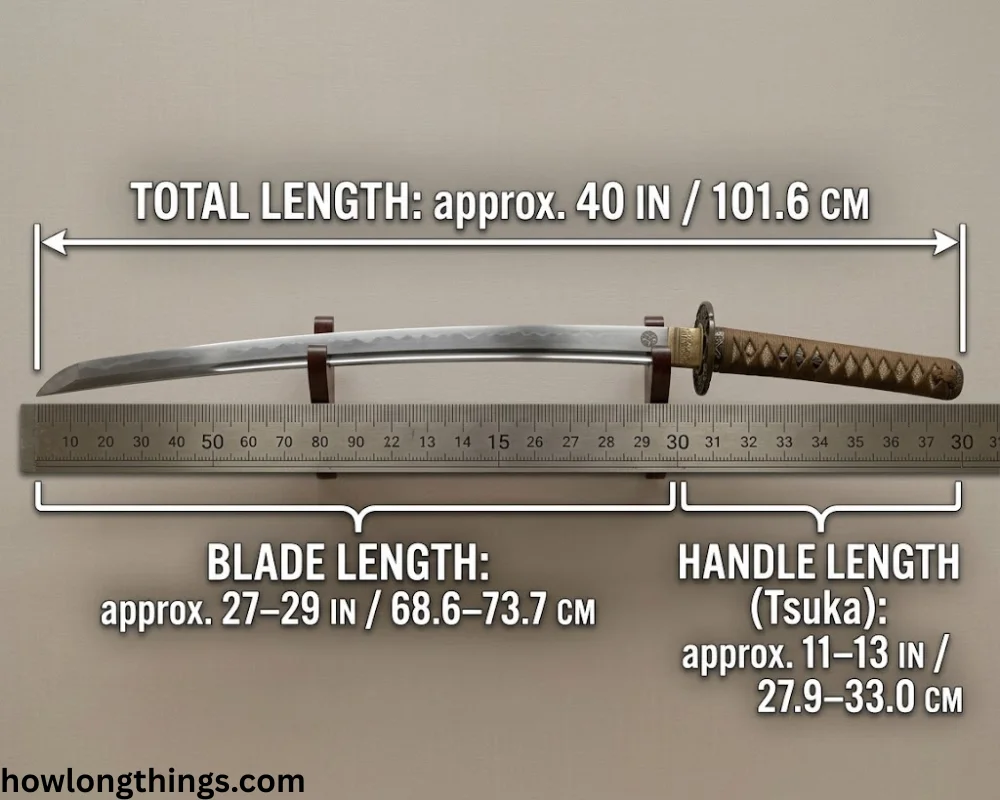
This traditional Japanese sword offers a striking and memorable comparison. A full-length katana, combining the blade — known as the nagasa — with the wrapped handle, or tsuka, typically measures close to 40 inches overall. Martial arts practitioners and collectors consider this the standard adult size, both historically and in modern practice. The blade alone usually accounts for 27 to 29 inches, with the remaining length made up by the handle grip.
A Shower Curtain
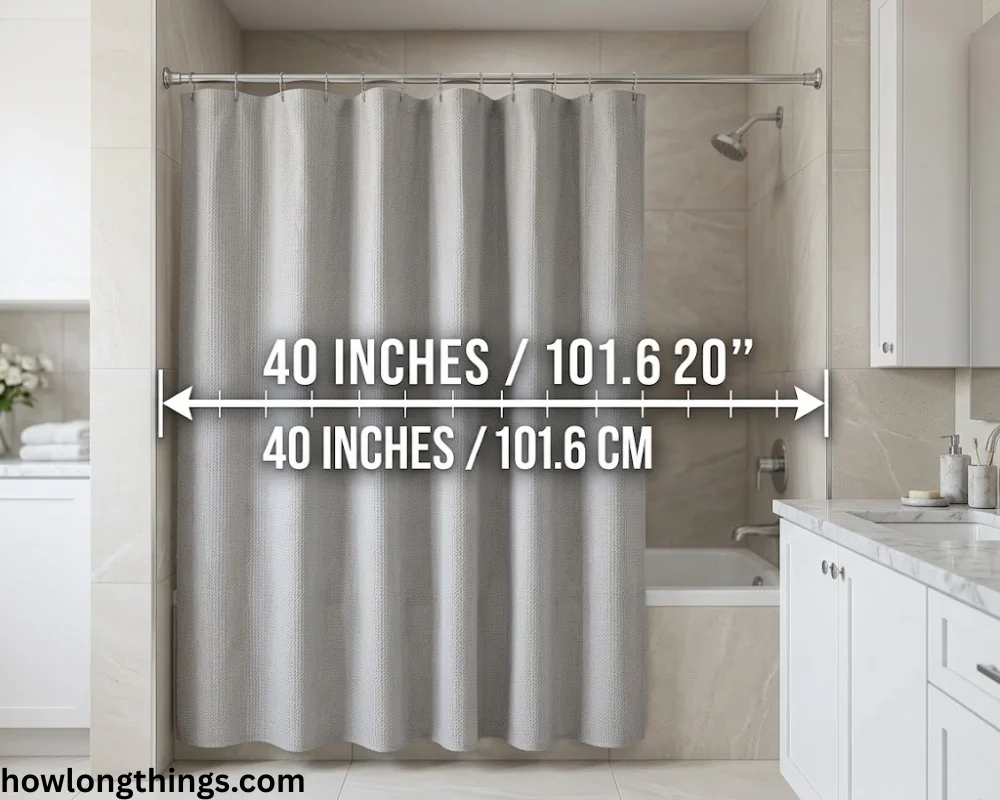
Bathroom fixtures are some of the most standardized items in American homes, and a typical shower curtain measures close to 40 inches wide. This width provides enough overlap coverage for a standard bathtub or shower opening, keeping water contained during use. Builders and plumbing manufacturers rely on this dimension because it fits the vast majority of tub and shower stalls built in the United States.
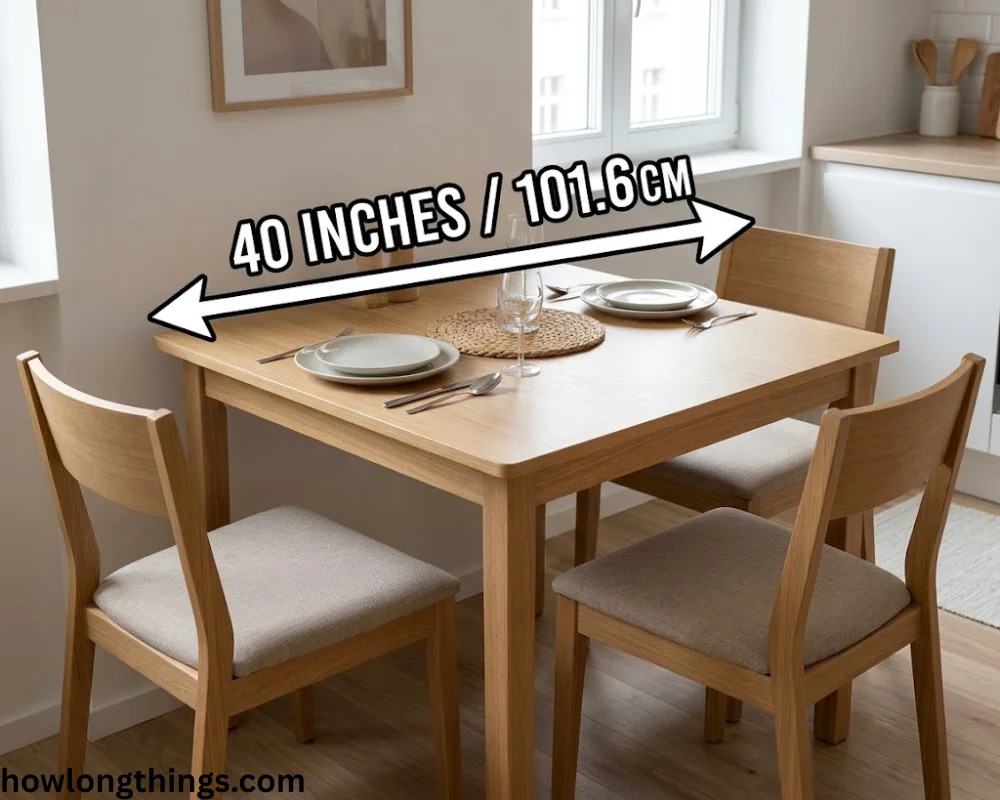
A Small Dining Table
Compact dining tables designed for two to four people frequently measure close to 40 inches in width, making them a popular choice for breakfast nooks, studio apartments, and smaller dining rooms.
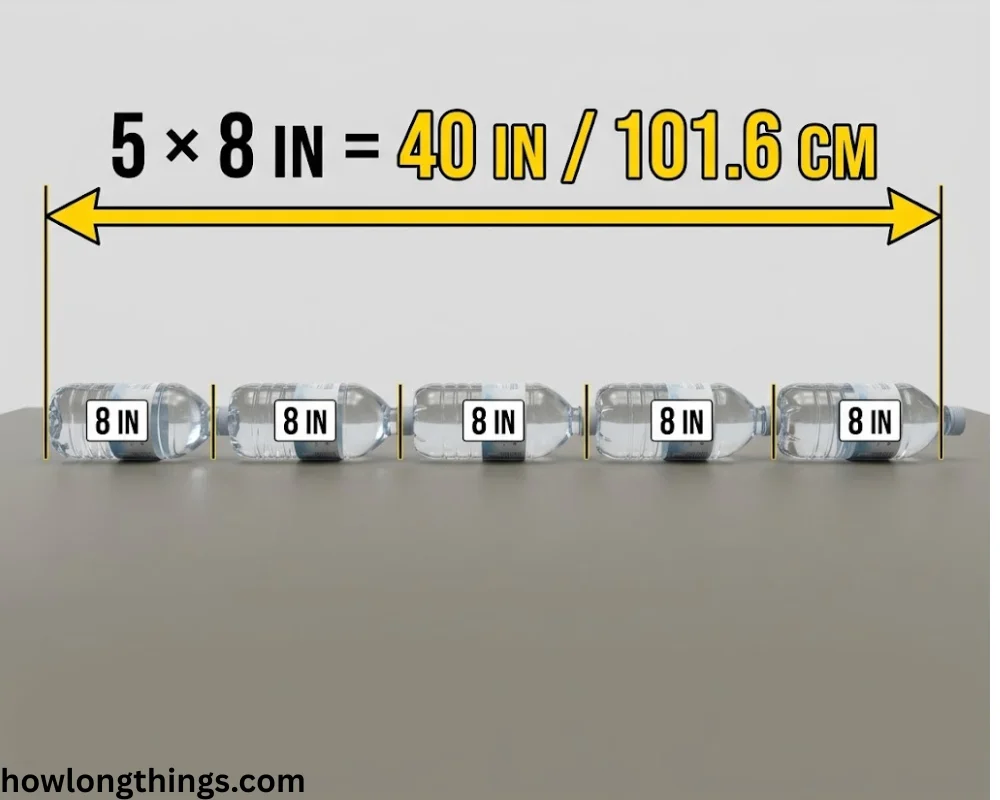
Five 500-Milliliter Water Bottles Lined Up
This is one of the simplest do-it-yourself measuring tricks available. A standard 500ml plastic water bottle, the kind found in nearly every grocery store and gym bag, stands close to 8 inches tall. Line up five of them end to end, and the total span lands almost exactly at 40 inches. Because these bottles are so universally available, this comparison works as a quick, no-tools-needed way to estimate the length anywhere.
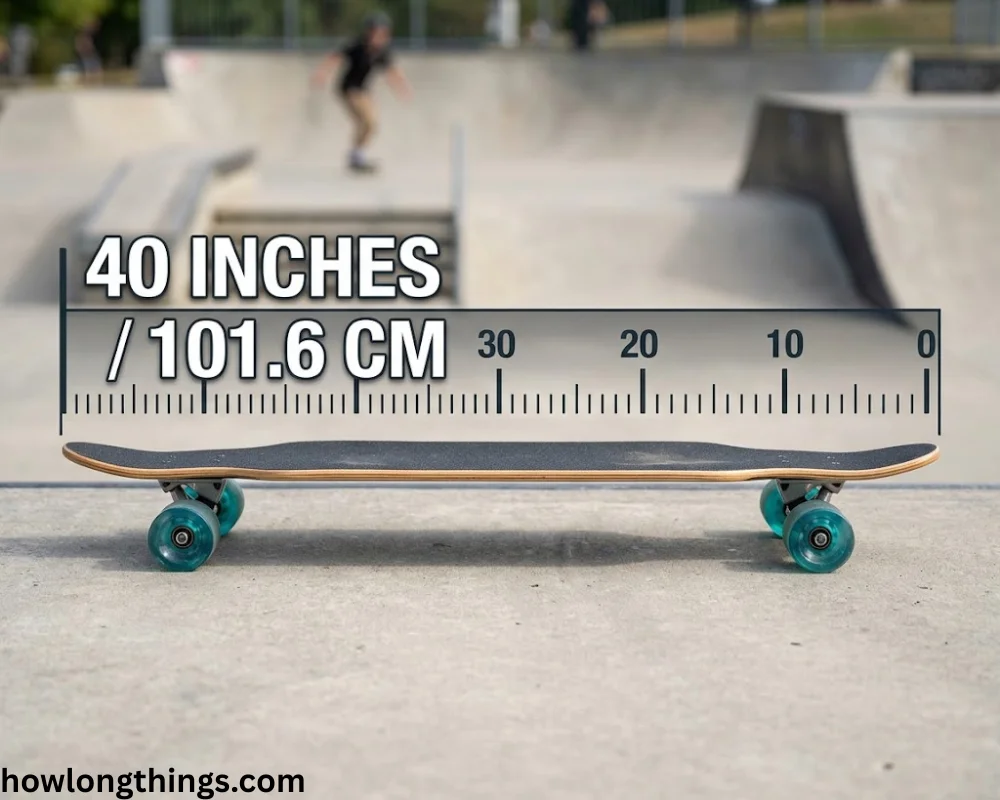
A Longboard Skateboard
Longboards are built longer than standard skateboards to improve stability at higher speeds, and many models measure close to 40 inches from nose to tail. This extra length gives riders a wider stance and smoother ride, which is why longboards are popular for cruising and downhill riding rather than tricks. Skate shops frequently list 40 inches as a benchmark length when comparing different board models. It’s a familiar reference for anyone who has spent time around skate culture.
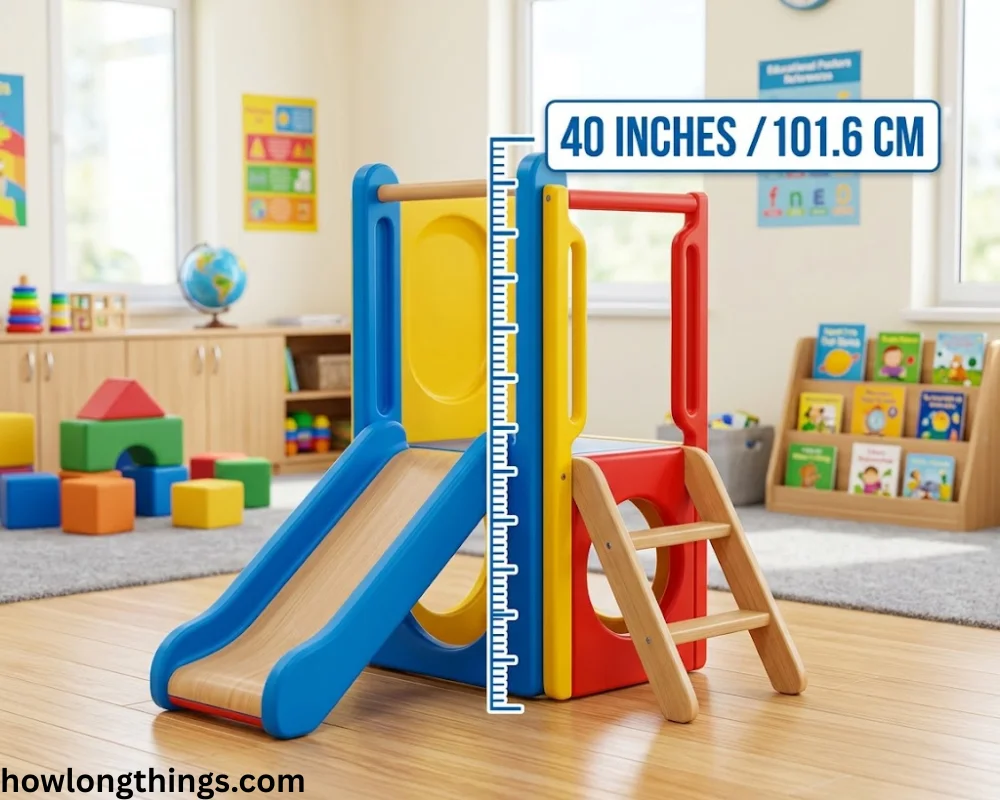
A Toddler Slide or Indoor Play Structure
Children’s play equipment is designed around strict safety and accessibility standards, and many indoor slides and climbing structures are built to stand close to 40 inches tall. This height keeps the equipment exciting and challenging for young children while staying low enough to remain safe for indoor use. Manufacturers of children’s furniture and play equipment often treat this measurement as a sweet spot between fun and safety.
Sometimes you need a fast estimate and there’s no measuring tool within reach.
The quickest trick is lining up five standard 500ml water bottles end to end, since their combined height lands almost exactly at this mark. Another easy method is extending both forearms from elbow to fingertip, since the average adult forearm measures close to 18 to 20 inches, meaning two forearms placed end to end come impressively close to 40 inches. You can also picture a kitchen counter with a small appliance on top, since that combination naturally reaches this height. For a more permanent solution, keep a household broom nearby, since its handle-to-bristle length is one of the most consistent 40-inch references in any home. Practicing with two or three of these tricks builds an instinct for spotting this length at a glance, without ever reaching for a measuring tape.
FAQs About 40 Inches
How long is 40 inches in feet?
40 inches equals exactly 3 feet 4 inches, or 3.33 feet in decimal form.
Is 40 inches 4 feet?
No. Four feet equals 48 inches, which is 8 inches longer than 40 inches.
How can I visualize 40 inches?
Line up five standard 500ml water bottles end to end, or extend two adult forearms from elbow to fingertip — both come very close to 40 inches.
How long is a 40 inch example?
A full-size acoustic guitar, a standard household broom, and a large rolling suitcase are all common 40-inch examples found in most homes.
How tall is 40 inches compared to a human?
It reaches roughly waist to lower-chest height on an average adult, and it closely matches the average height of a 3-to-4-year-old child.
Conclusion
Once you connect 40 inches to a guitar, a broom, a suitcase, or even a preschooler standing next to a yardstick, the number stops feeling abstract. The next time you spot this measurement on a product label or a spec sheet, you’ll already know exactly what it looks like in the real world.
Elizabeth Queen is a Owner and consumer research writer at HowLongThings.com, specializing in product lifespan, durability, and everyday household research. She’s passionate about helping readers make smarter, longer-lasting buying decisions.