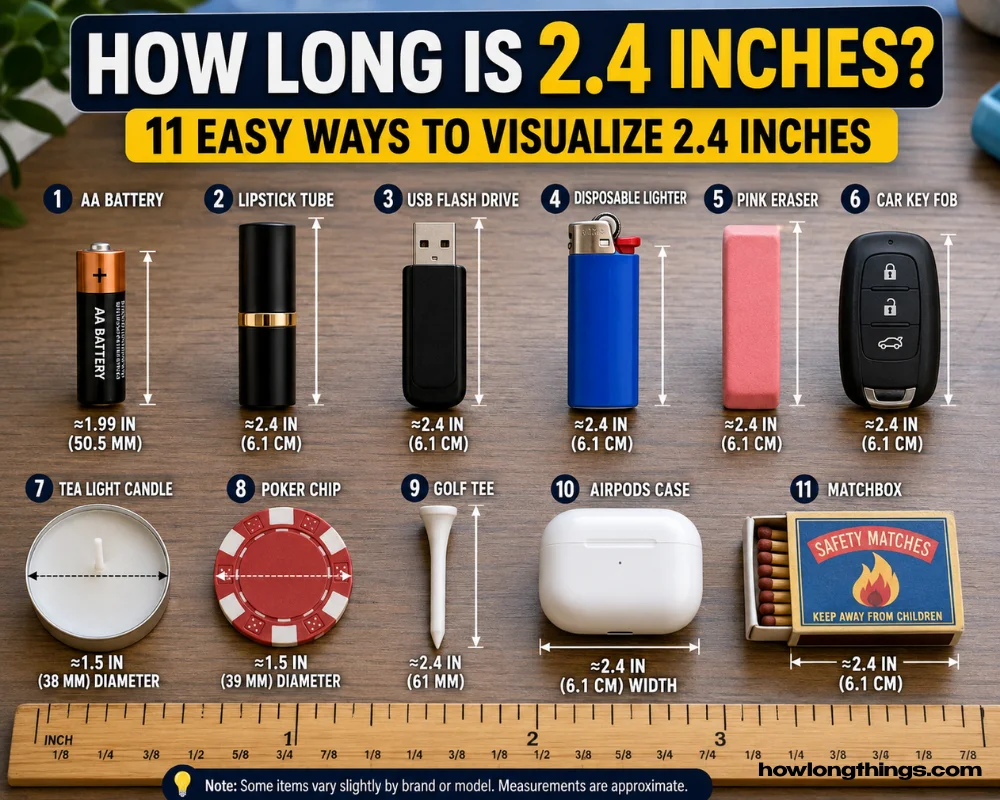
2.4 inches equals 6.096 centimeters (60.96 millimeters, or about 0.2 feet). That’s the short answer. But numbers on a screen don’t always click. If you want to actually see how long 2.4 inches is, without grabbing a ruler, this guide gives you 11 real-world objects, a ruler and tape measure breakdown, and quick comparisons to nearby sizes all backed by exact math, not guesswork.
Whether you’re measuring a phone case, checking a product listing, or just curious, here’s everything you need to know about 2.4 inches in plain, simple terms.
Table of Contents
How Long Is 2.4 Inches? (Quick Conversion Chart)
The inch is a unit from the US customary measurement system. The centimeter belongs to the metric system, used almost everywhere outside the United States. Because the US and most of the world use different systems, converting between them is one of the most common measurement questions people search for.
Here’s 2.4 inches converted into the units you’ll run into most often:
Unit
Value
Inches
2.4 in
Centimeters
6.096 cm
Millimeters
60.96 mm
Feet
0.2 ft
Meters
0.06096 m
Yards
0.067 yd
The formula is simple: multiply inches by 2.54 to get centimeters. So 2.4 × 2.54 = 6.096 cm, exactly. There’s no rounding involved — one inch is defined as 2.54 centimeters under the international yard-and-pound agreement of 1959, so this conversion is fixed, not estimated.
Where Is 2.4 Inches on a Ruler or Tape Measure?
Rulers and tape measures use the same inch markings, but reading them takes a little practice if you’re not used to fractional measurements.
Where is 2.4 inches on a ruler?
On a standard 12-inch ruler, 2.4 inches sits between the 2-inch and 3-inch marks — closer to the 2-inch line than the 3-inch line. Most rulers divide each inch into 16 smaller tick marks (each representing 1/16 of an inch). To find 2.4 inches, count about 4/10 of the way past the 2-inch mark, which lands just shy of the 2 3/8-inch tick.
What does 2.4 inches look like on a tape measure?
A tape measure works the same way as a ruler, just longer and more flexible. Locate the bold “2” line, then look for the next major tick after it — usually marked at the half-inch and quarter-inch points. 2.4 inches lands just past the 2 3/8-inch mark, roughly two small ticks before the 2 1/2-inch line. If your tape measure only shows fractions (not decimals), rounding to 2 3/8 inches gets you close enough for most everyday tasks like home projects or packing boxes.
11 Everyday Objects That Are 2.4 Inches Long
Numbers are easier to remember when you attach them to something familiar. Here are 11 common objects that measure close to 2.4 inches, so you’ll have an instant mental reference next time you need one.
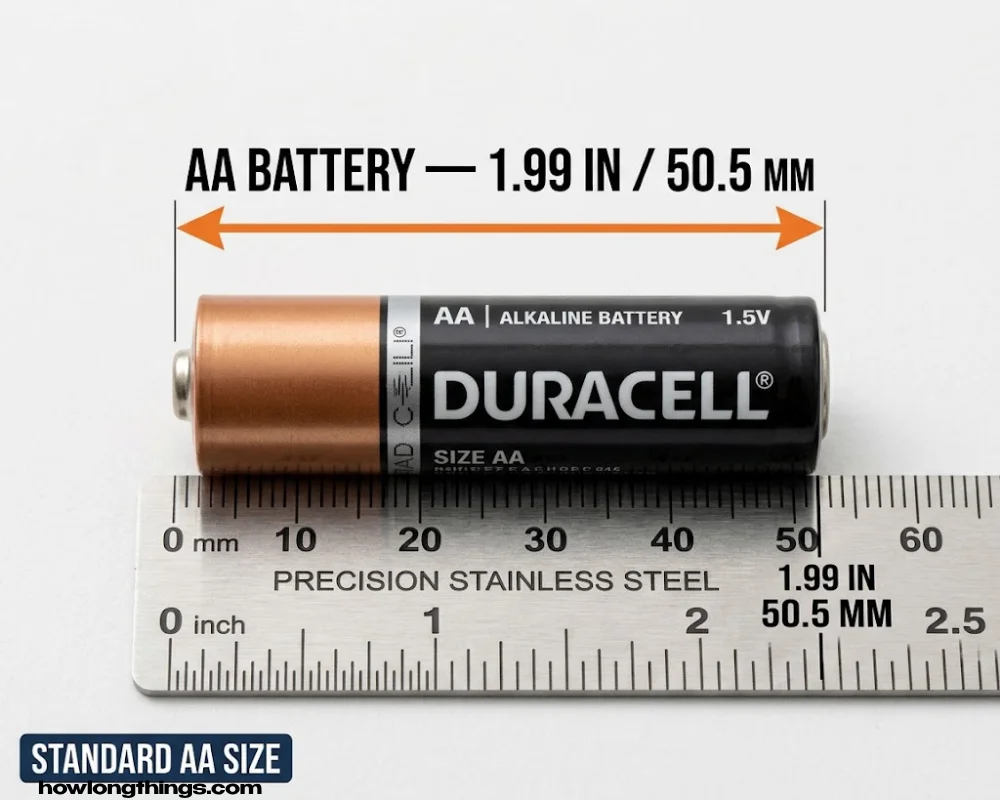
AA Battery A standard AA battery measures 2.4 inches from the positive terminal to the flat negative end. This size is standardized under IEC 60086, the international battery specification, which is why every AA battery regardless of brand comes out to nearly the same length.
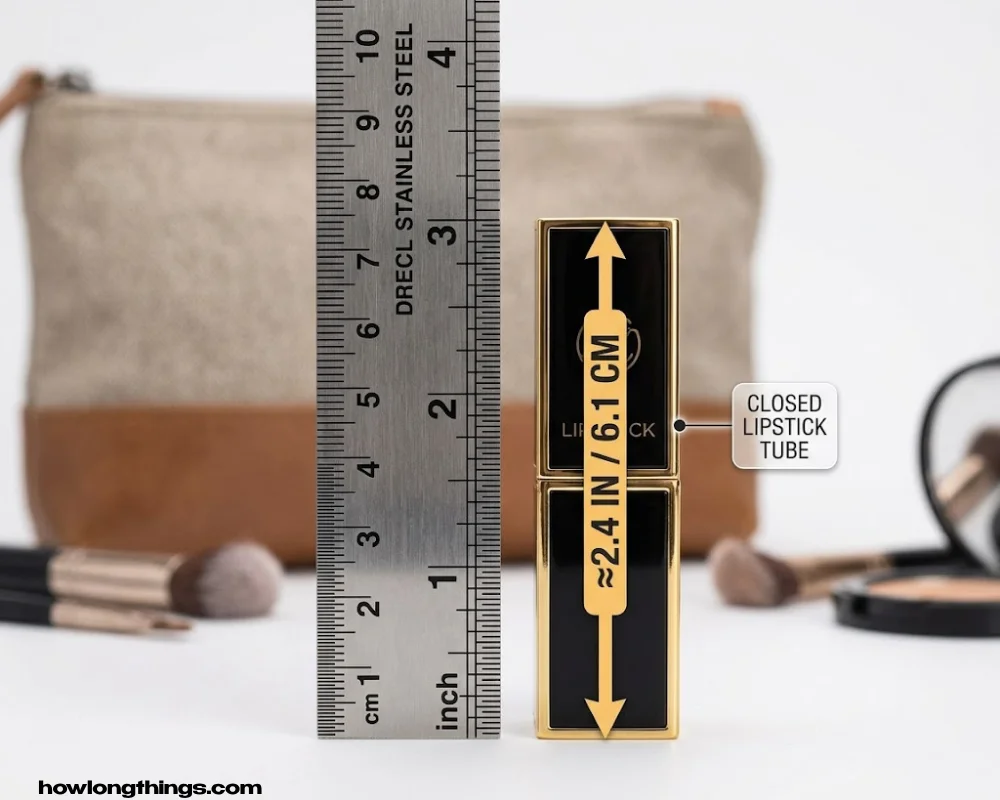
Lipstick Tube A closed, standard lipstick tube stands about 2.4 inches tall. This compact size is intentional it’s small enough to fit in a clutch or makeup bag while still holding enough product to last.
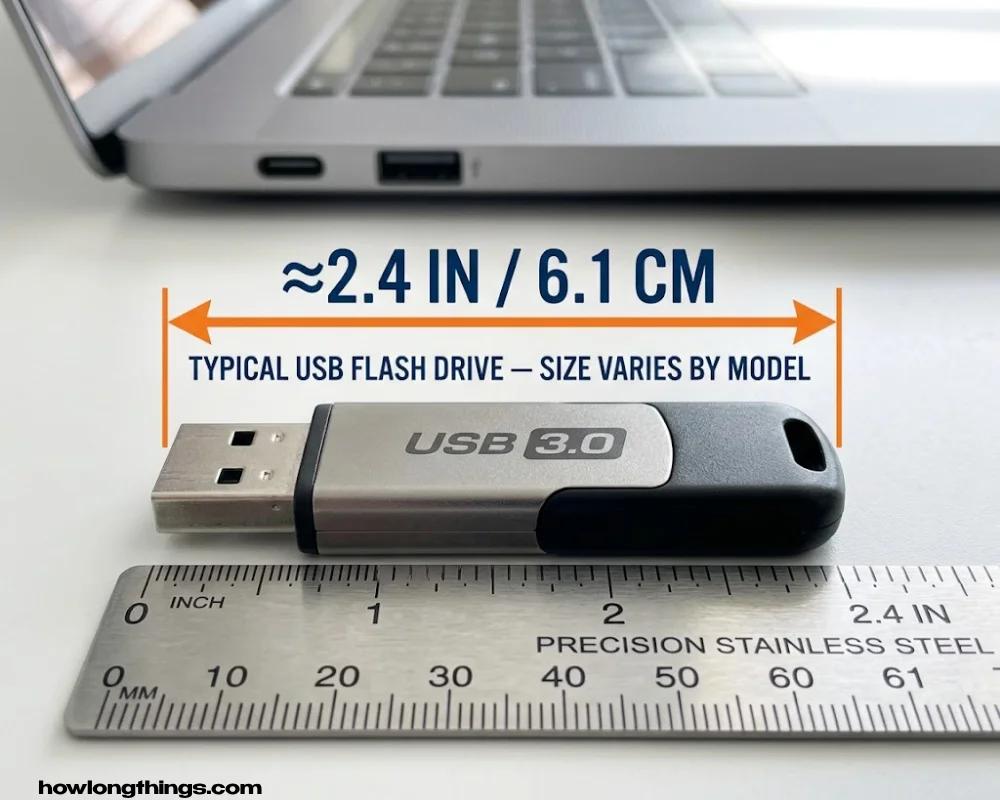
USB Flash Drive Measured from the connector tip to the far edge of the casing, a typical USB flash drive runs close to 2.4 inches. Drive length varies a bit by manufacturer, but this size fits comfortably in a laptop port without much overhang.
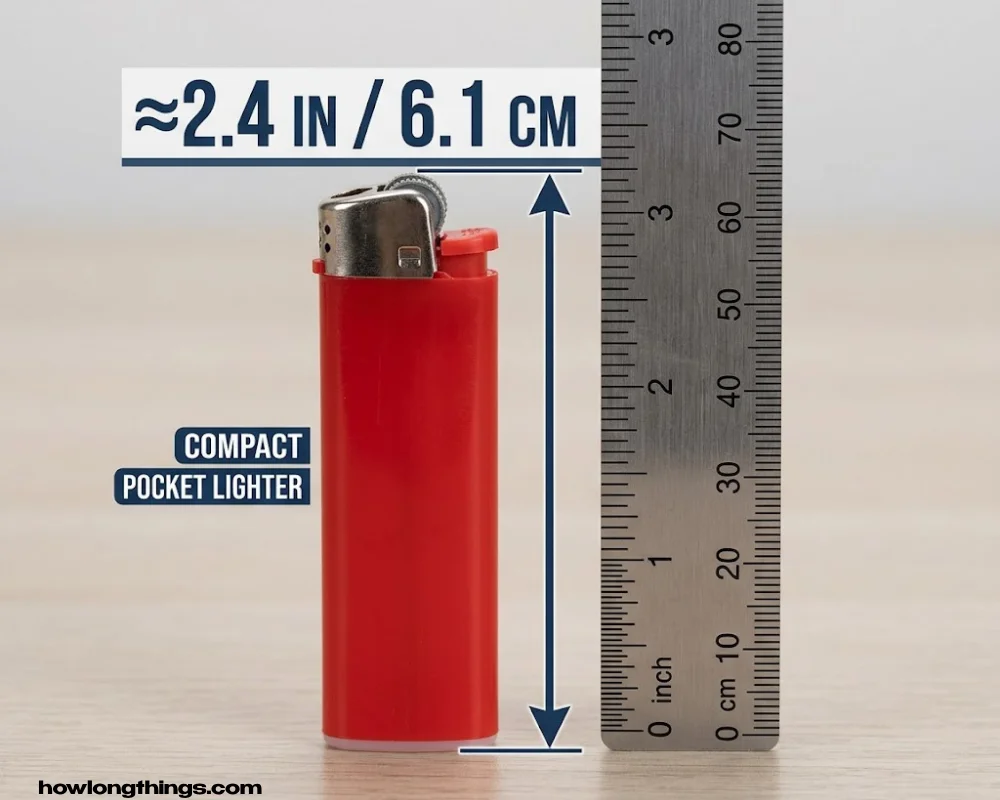
Disposable Lighter A standard disposable lighter measures roughly 2.4 inches from its base to the top of the metal striker wheel. It’s built to fit easily in a pocket, which is part of why this size has stuck around for decades.
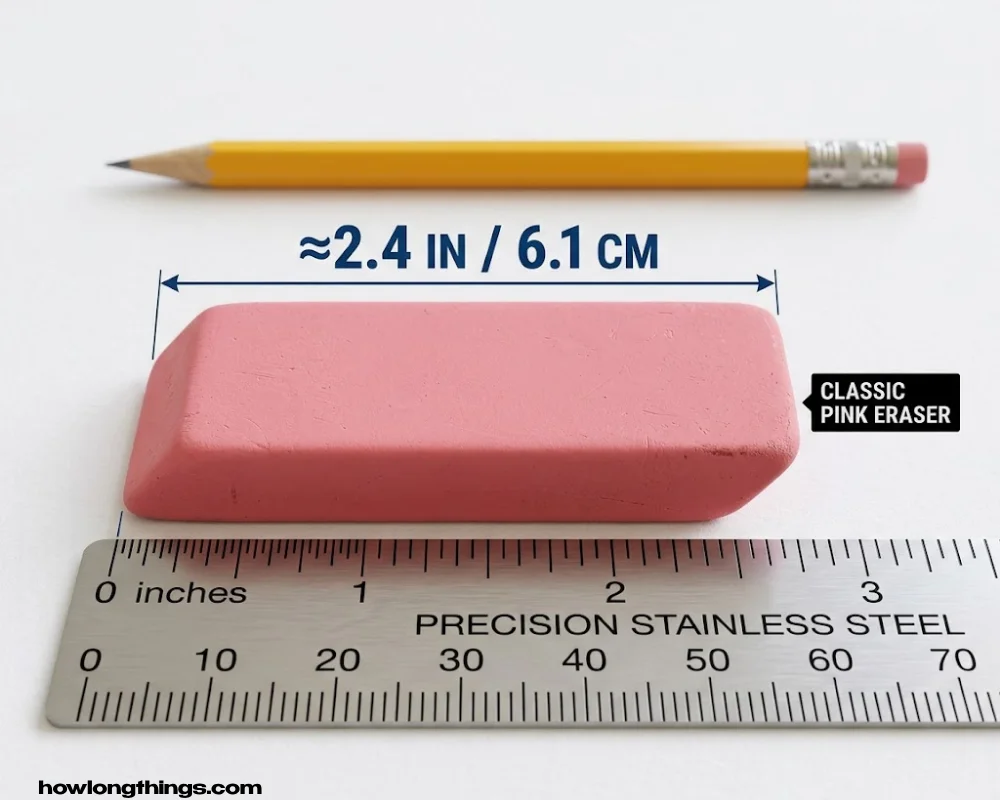
Pink Eraser The classic rectangular pencil eraser is about 2.4 inches long. It’s one of the most familiar small objects in any school supply drawer, making it a handy visual reference for kids and adults alike.
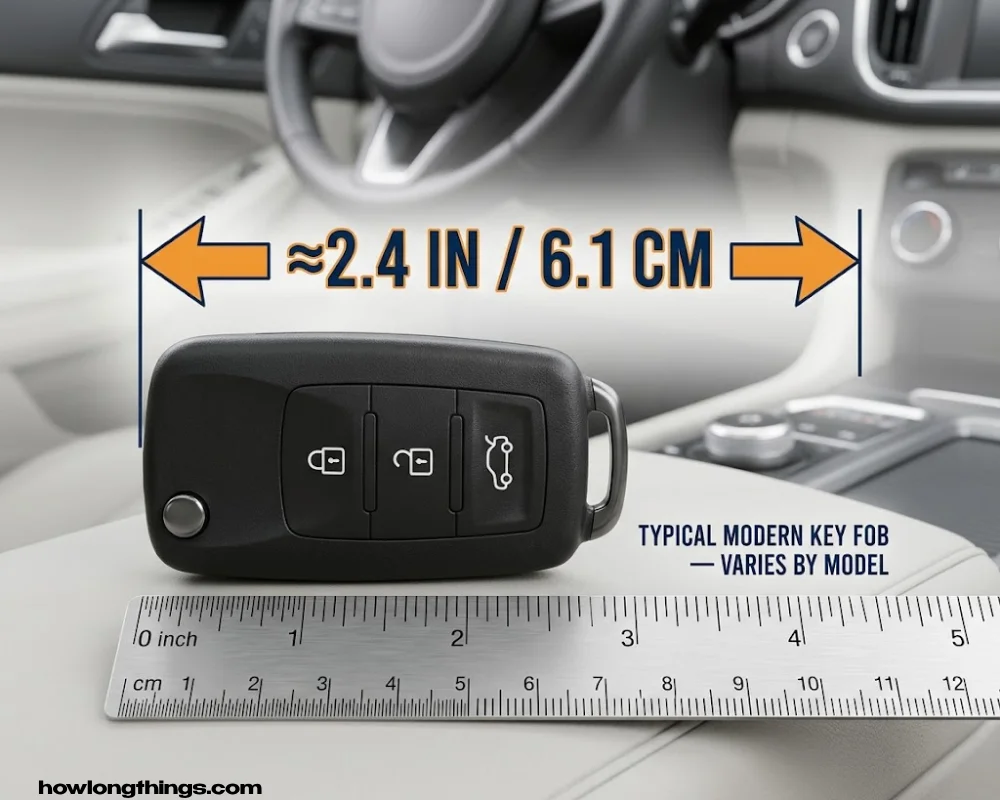
Car Key Fob Modern key fobs, measured from the button panel to the bottom edge, come in around 2.4 inches. Automakers keep fobs this size to balance comfortable grip with enough room for buttons and internal circuitry.
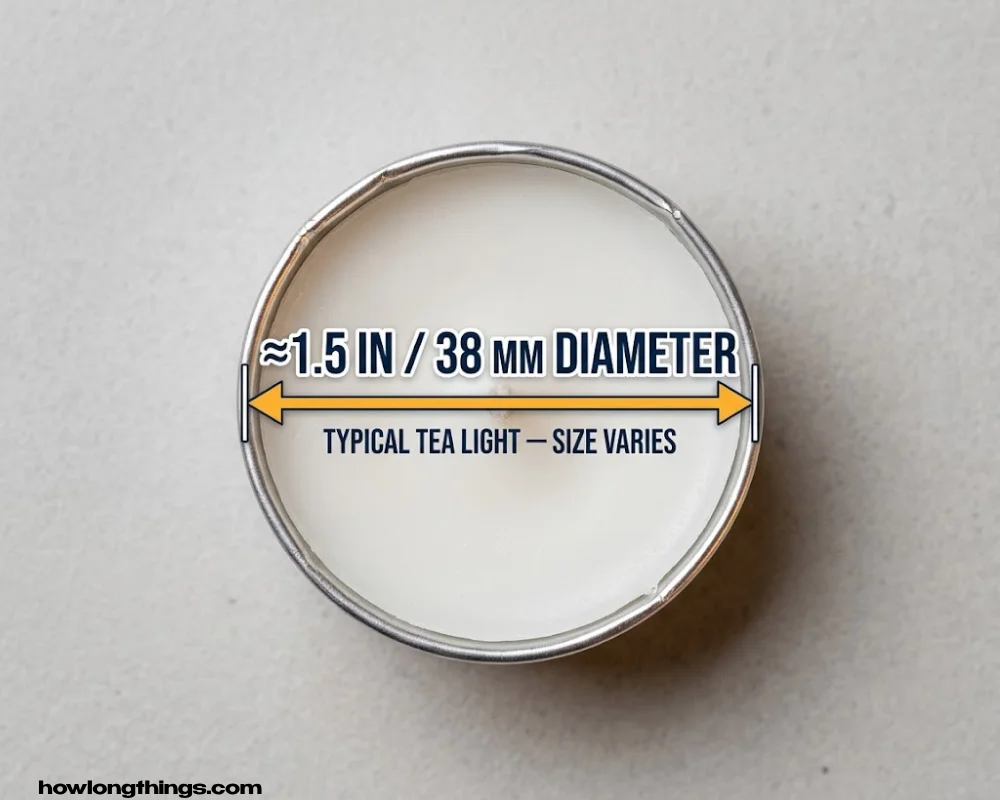
Tea Light Candle A standard tea light candle measures about 2.4 inches across its aluminum cup. This is a diameter measurement rather than a length, which makes it a useful example of how 2.4 inches applies to round objects too.
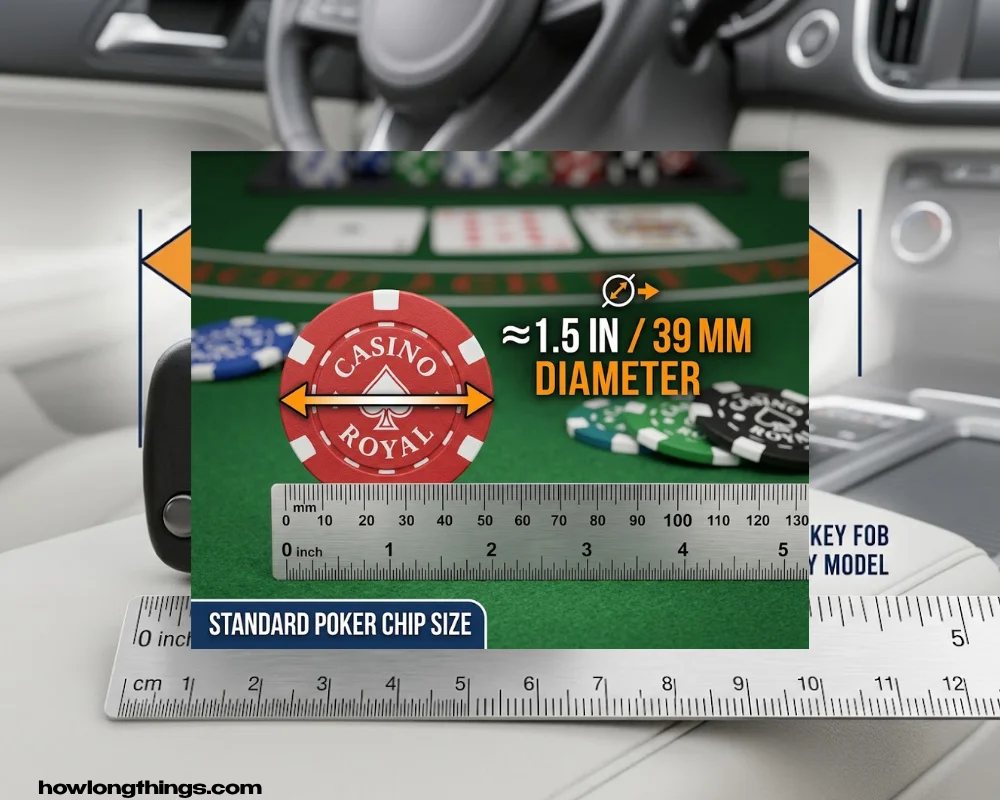
Poker Chip A casino-style poker chip typically measures 2.4 inches in diameter. This size is standard across most poker chip trays and racks, so a poker chip is a reliable go-to comparison if you play cards regularly.
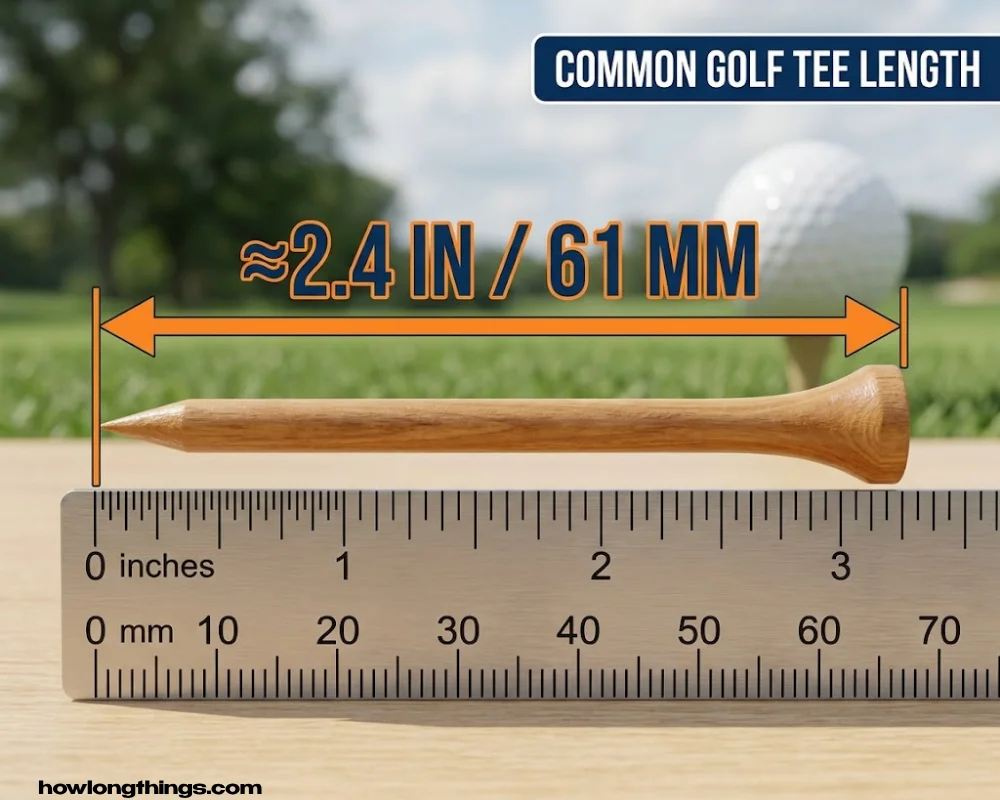
Golf Tee A standard golf tee runs close to 2.4 inches long. Golfers use different tee heights depending on the club, but this length is common for a mid-range tee used with irons.
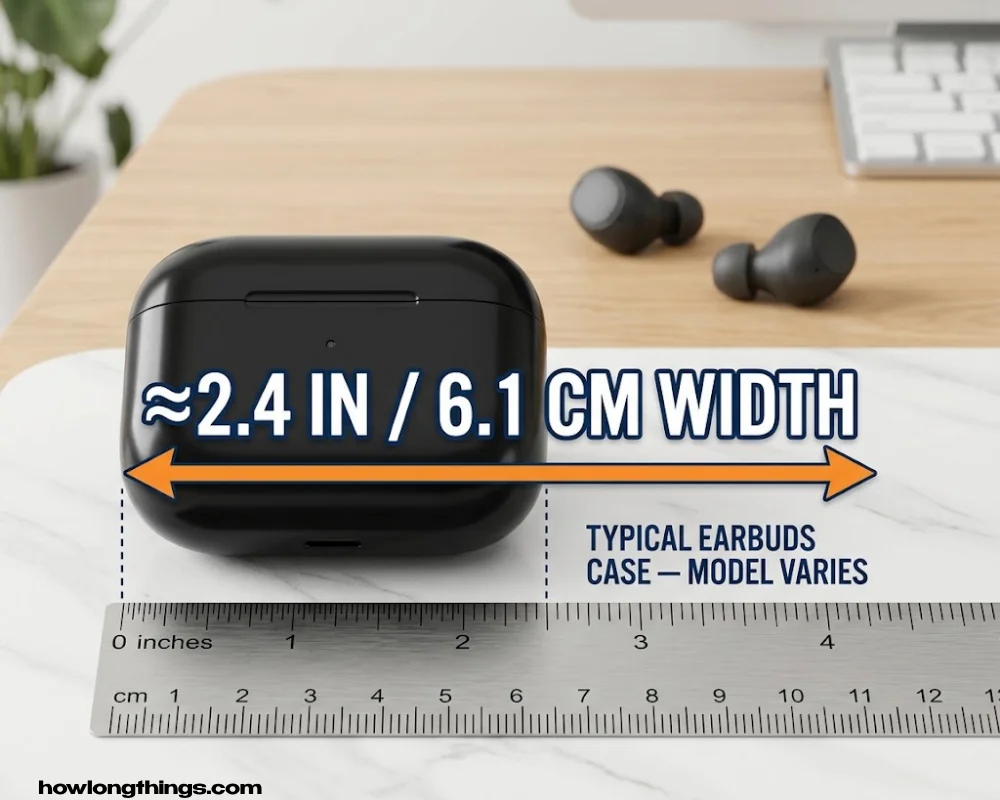
AirPods Case The width of a typical wireless earbuds case comes in around 2.4 inches, depending on the brand and generation. It’s a size most people carry daily, which makes it an easy mental bookmark.
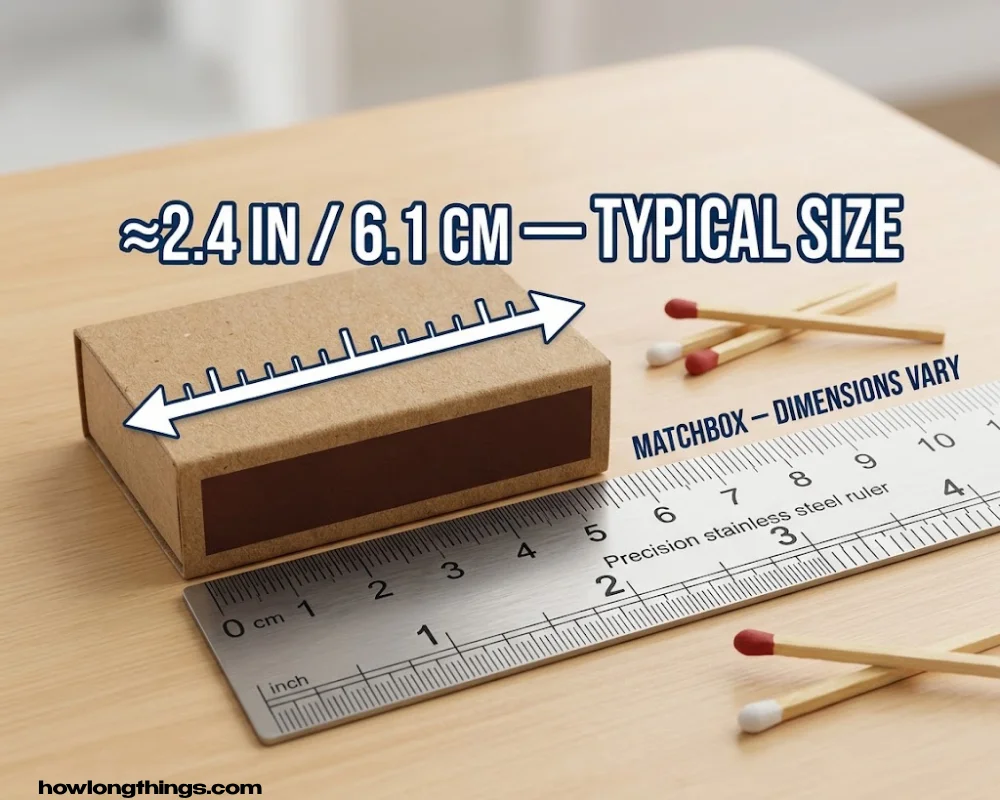
Matchbox A standard matchbox measures roughly 2.4 inches along its longer edge. Like the eraser, it’s a small, universally recognized object that makes size comparisons intuitive.
Sometimes it helps to compare a measurement to a nearby, rounder number instead of an object.
How big is two inches visually?
Two inches is close to the width of a standard matchbox lying flat, or about the length of a large paperclip stretched out. 2.4 inches is only 0.4 inches longer than 2 inches — a difference of about the width of a pencil.
How big is 2 cm visually?
Two centimeters is roughly the width of a standard AA battery’s diameter, or about the size of a large button. Since 2.4 inches equals 6.096 cm, 2 cm is significantly shorter — a little under a third of the full 2.4-inch length.
How wide is 2.4 inches?
As a width measurement, 2.4 inches is close to the width of a smartphone held vertically, or slightly wider than two stacked AA batteries side by side. It’s a size that fits comfortably in one hand.
Why Precise Measurements Like 2.4 Inches Matter
Small measurements like 2.4 inches show up more often than people expect. Online shopping listings use precise dimensions so buyers know exactly what will arrive a mismeasured phone case or charging cable can mean a frustrating return. In DIY and home projects, a difference of even a few tenths of an inch can affect whether a shelf bracket, drawer liner, or picture frame fits properly.
Manufacturers also rely on standardized sizing. The AA battery example above works because IEC 60086 keeps every battery from every brand within the same tight size range, so devices designed around that measurement work reliably. Jewelry sizing, packaging design, and shipping calculations depend on this same kind of precision a small rounding error at scale can add up to real cost or wasted material.
Understanding a measurement like 2.4 inches isn’t just trivia. It’s the kind of detail that keeps everyday products, tools, and purchases working the way they’re supposed to.
FAQs About 2.4 Inches
How big is two inches visually?
Two inches is about the length of a large paperclip stretched flat, or the width of a standard matchbox. It’s roughly 0.4 inches shorter than 2.4 inches.
What does 2.4 inches look like on a tape measure?
It falls just past the 2 3/8-inch mark, a bit before the 2 1/2-inch line on a standard tape measure.
Where is 2.4 inches on a ruler?
Between the 2-inch and 3-inch marks, about 4/10 of the way past the 2-inch line closer to 2 than to 3.
How wide is 2.4 inches?
About the width of a smartphone held vertically, or slightly wider than two AA batteries placed side by side.
How big is 2 cm visually?
Around the width of a large button or an AA battery’s diameter noticeably shorter than the full 6.096 cm (2.4 inches) length.
What does 2.4 mean in inches?
It simply means 2 whole inches plus four-tenths (0.4) of an additional inch, equal to 6.096 centimeters when converted.
Final Thoughts
2.4 inches may seem like an oddly specific number, but it’s a size you likely encounter every day from the AA battery in your remote to the lipstick tube in your bag. Now that you can picture it on a ruler, a tape measure, and against familiar objects, you’ll never need to second-guess this measurement again.
Elizabeth Queen is a Owner and consumer research writer at HowLongThings.com, specializing in product lifespan, durability, and everyday household research. She’s passionate about helping readers make smarter, longer-lasting buying decisions.