Trying to picture how long is 7 inches really is? You’re not alone. Most people don’t carry a ruler in their pocket, so a number on a screen doesn’t mean much on its own.
The good news is that 7 inches shows up all around you — in your kitchen drawer, your bathroom, and even your hand. Once you connect it to a few familiar objects, you’ll never have to guess again.
Table of Contents
How Long Is 7 Inches?
Seven inches equals 17.78 centimeters. That’s also 177.8 millimeters, 0.583 feet, or 0.178 meters. This conversion isn’t an estimate — 1 inch is defined as exactly 2.54 centimeters, a standard locked in internationally back in 1959.
Here’s the quick math: 7 × 2.54 = 17.78 cm. Simple as that.
Unit
Value
Inches
7 in
Centimeters
17.78 cm
Millimeters
177.8 mm
Feet
0.583 ft
Meters
0.178 m
Yards
0.194 yd
Keep this table handy. It’s the base number every comparison below builds on.
19 Real-Life Examples of Things That Are 7 Inches Long
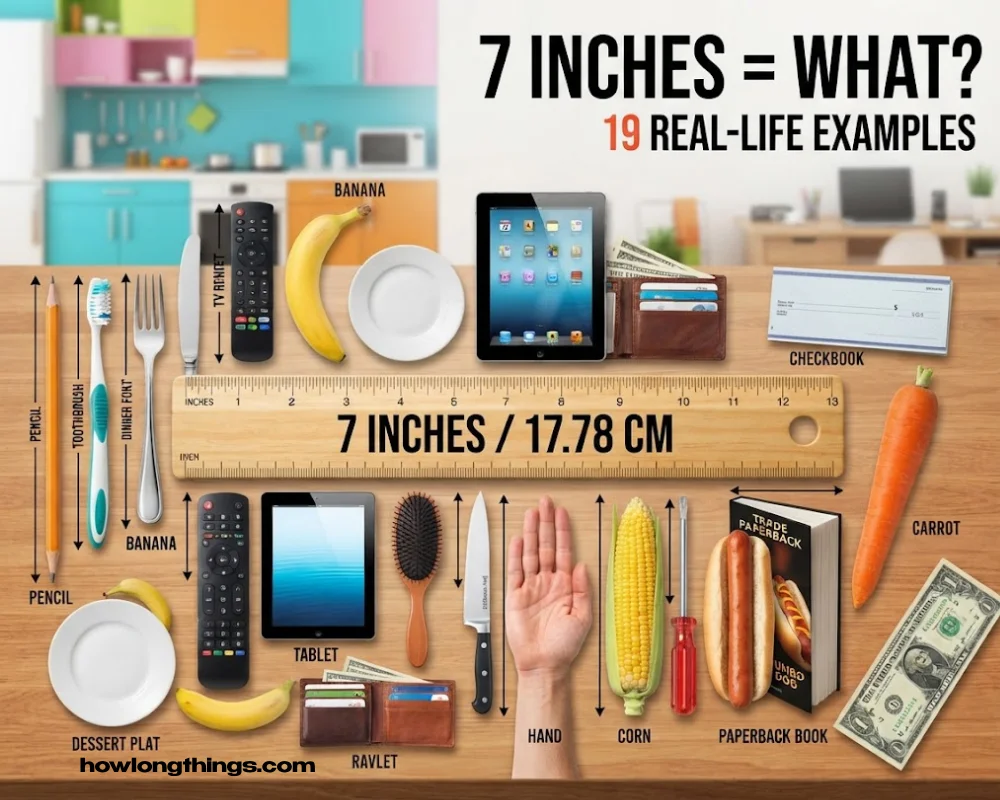
Numbers stick better when they’re tied to something you can picture. Below are 19 everyday objects that are close to 7 inches long, ranging from your kitchen to your own hand.
A wooden pencil.
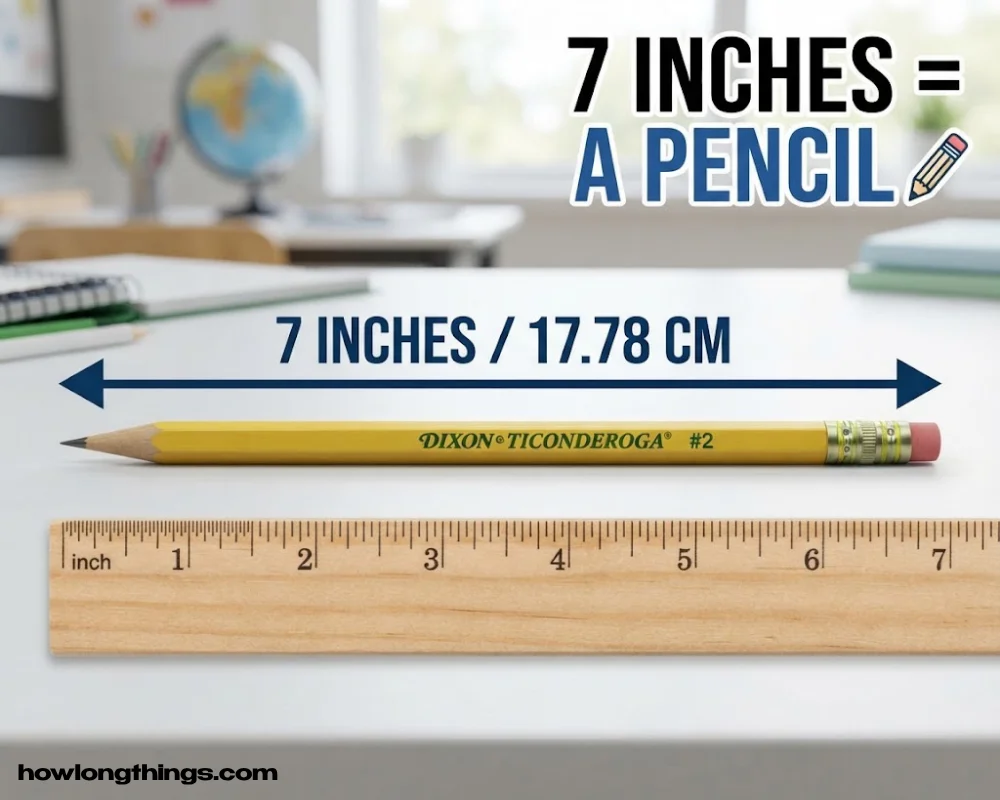
A brand-new, unsharpened #2 pencil measures right around 7 inches from tip to eraser. This has been the standard length for classroom and office pencils for well over a hundred years. Because pencils sit in nearly every junk drawer, backpack, and pencil cup, they make one of the easiest go-to references for what 7 inches looks like. Lay one flat next to anything you’re trying to measure, and you’ve got an instant visual guide.
An adult toothbrush.
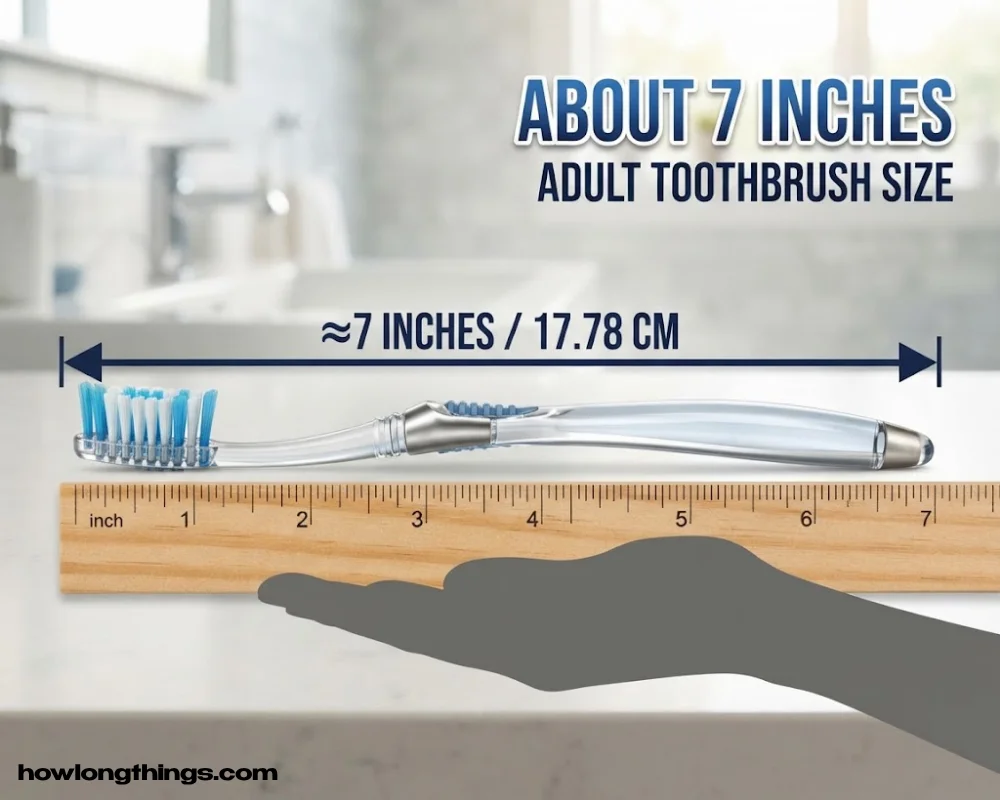
Most adult toothbrushes run close to 7 inches from the base of the handle to the tip of the bristles. That length is designed on purpose — it lets the brush reach your back molars without your hand bumping into your face. Since most people hold one every morning and night, it’s a measurement you’re already familiar with, even if you never thought about it that way. Next time you brush, notice how close it feels to a full hand’s length.
A dinner fork.
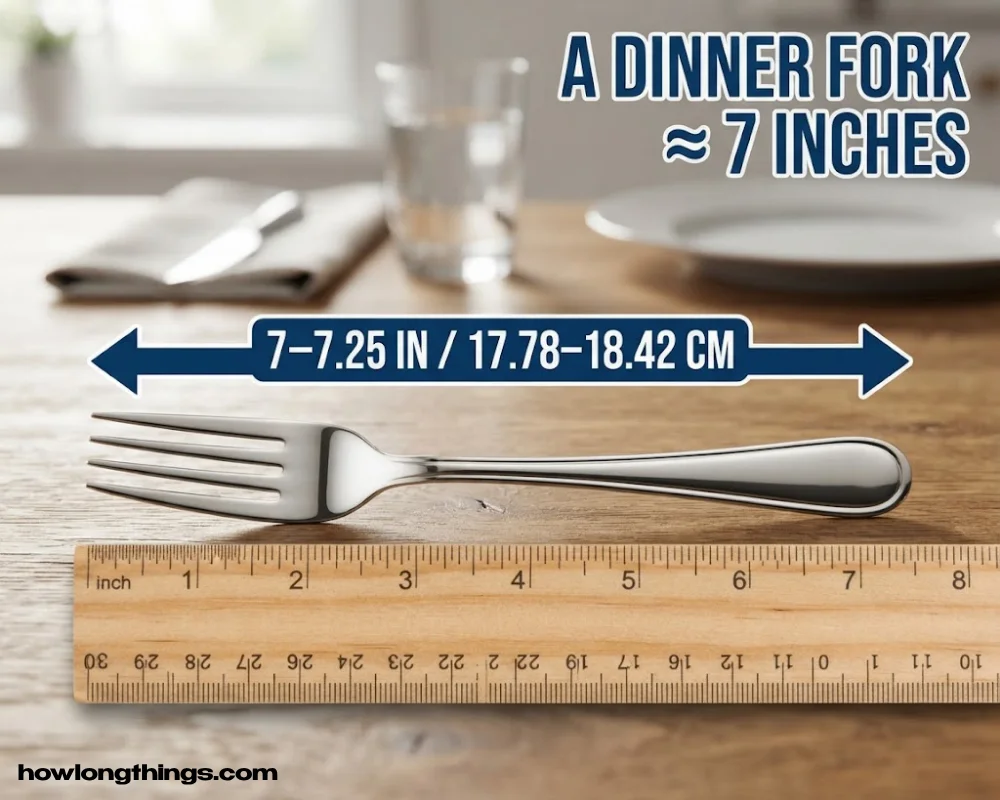
A standard stainless-steel dinner fork typically measures about 7 to 7.25 inches long. That size balances comfortable handling with enough reach to manage a full plate. Because flatware sits in every American kitchen drawer, it’s one of the fastest 7-inch comparisons you can grab without leaving the house. Set one down next to a phone or notebook and the length becomes obvious right away.
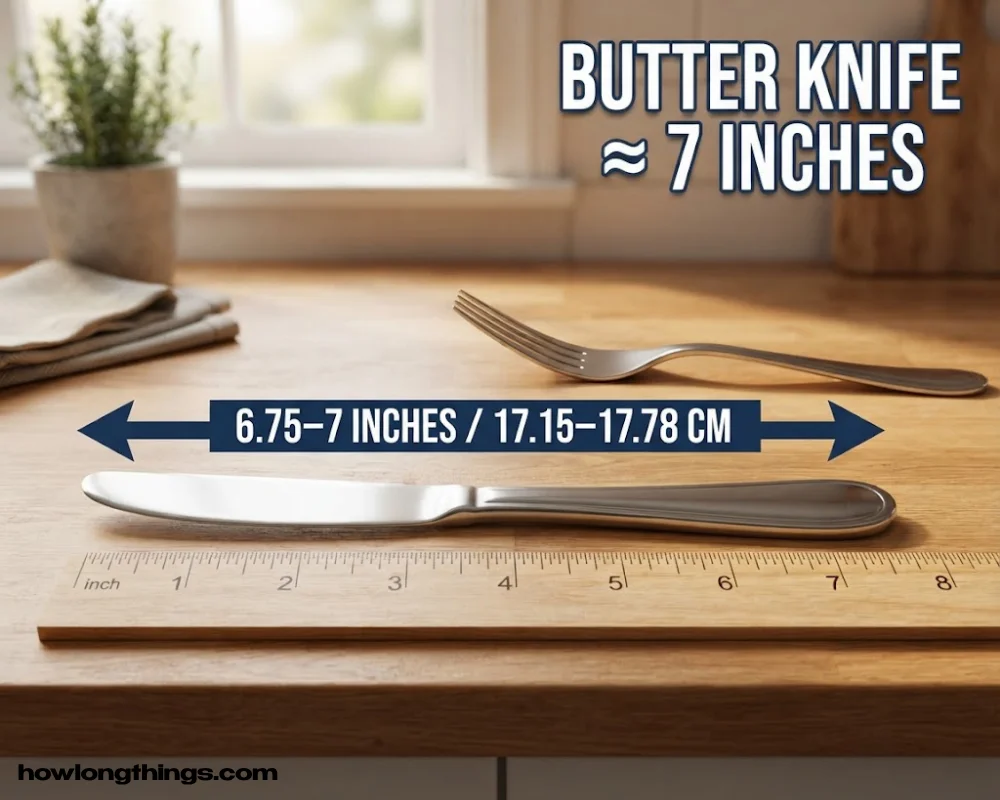
A butter knife.
Slightly shorter than a dinner fork, a butter knife usually falls between 6.75 and 7 inches. It’s built for spreading, not cutting, so manufacturers keep the blade compact and the handle balanced. You’ll find one in nearly every flatware set sold in the U.S., which makes it a dependable everyday reference. Hold it next to a smartphone and you’ll see the two are nearly the same length.
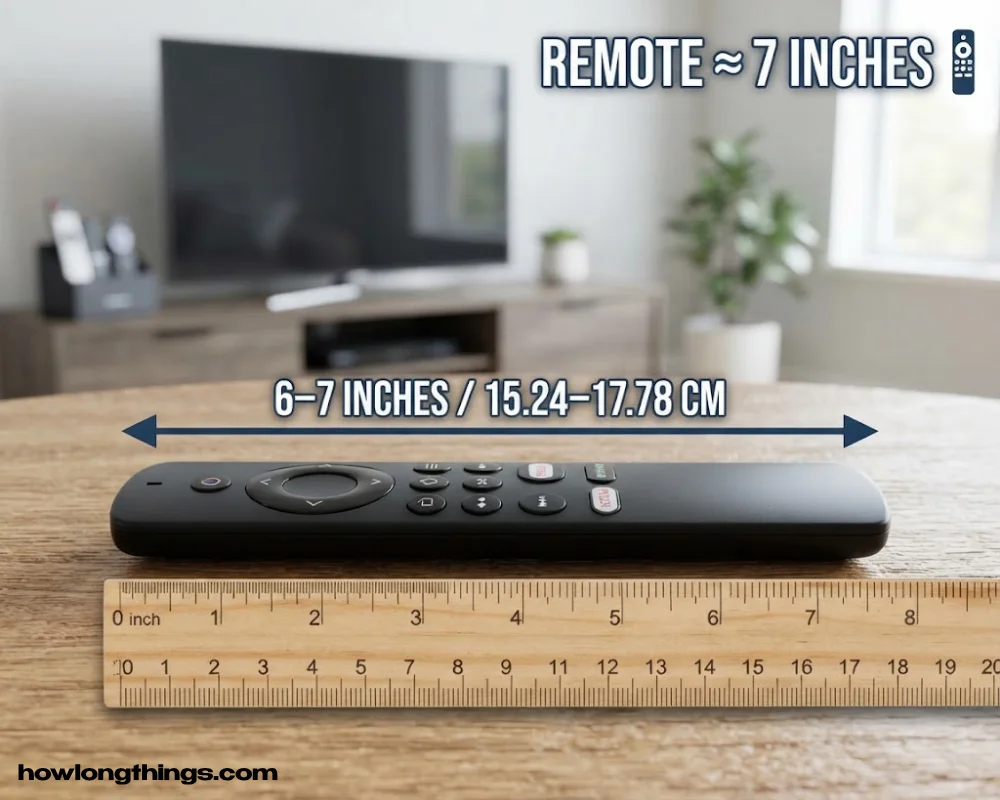
A TV remote control.
Larger streaming and cable remotes commonly land between 6 and 7 inches long. That size fits comfortably in an adult hand while still leaving room for a full row of buttons. Since remotes get picked up dozens of times a day in most households, their length becomes second nature without you ever measuring it. If yours has a slim design, it’s likely sitting right around this mark.
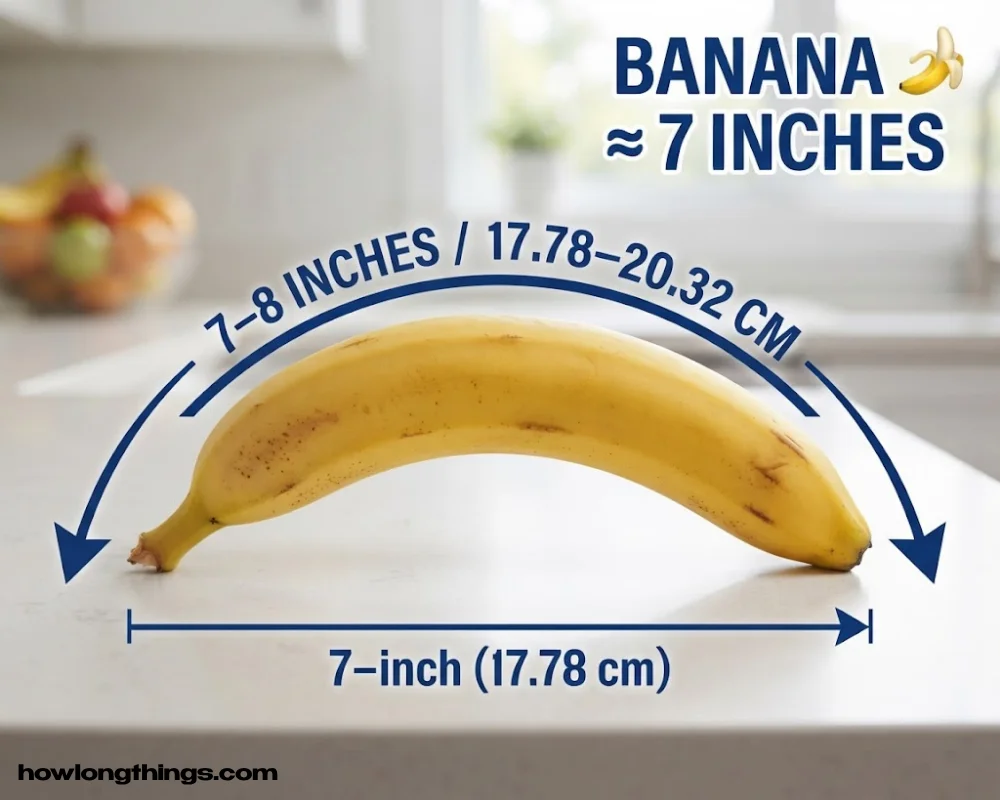
A medium-to-large banana.
A banana with some size to it, not a small one, typically measures 7 to 8 inches along its curve. Because bananas are one of the most common fruits in American kitchens, they double as a natural, food-based way to picture length. The gentle curve also shows how 7 inches looks on something that isn’t perfectly straight. Next grocery run, take a second to notice the length before you peel one.
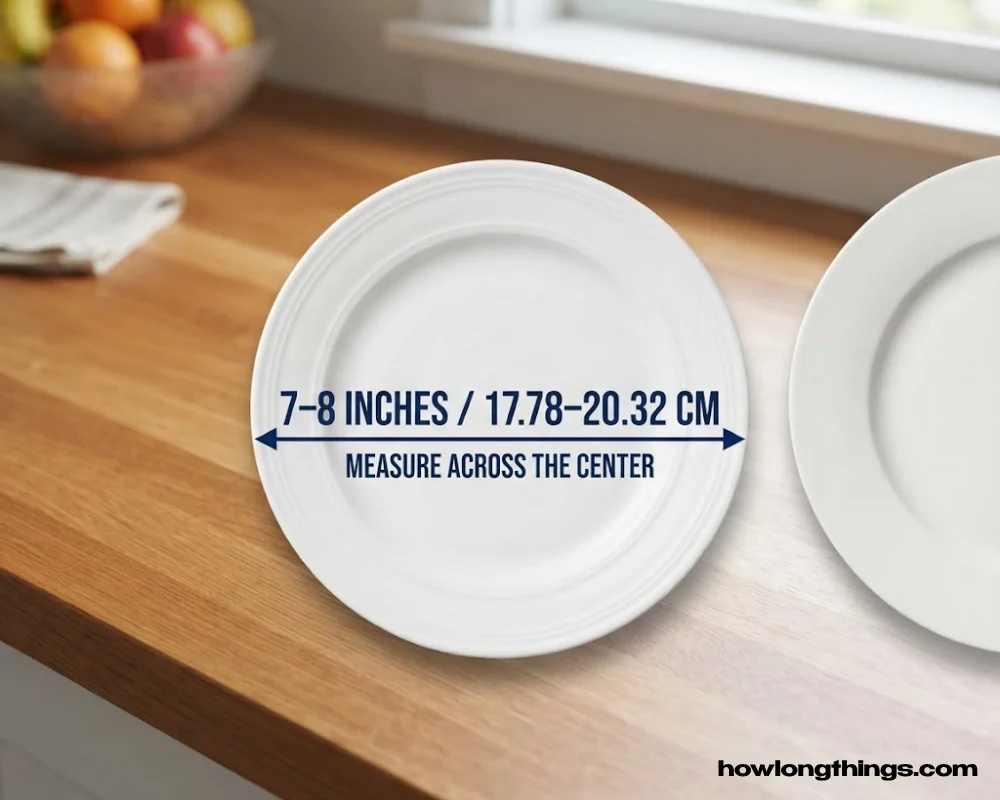
A dessert or salad plate.
Small plates used for appetizers, salads, or dessert usually measure 7 to 8 inches across. That’s noticeably smaller than a standard 10 to 11-inch dinner plate, which is exactly why they’re used for lighter portions. Because plates are round, they give you a way to picture 7 inches as a diameter, not just a straight line. Set one on the counter and measure across the middle to see it for yourself.
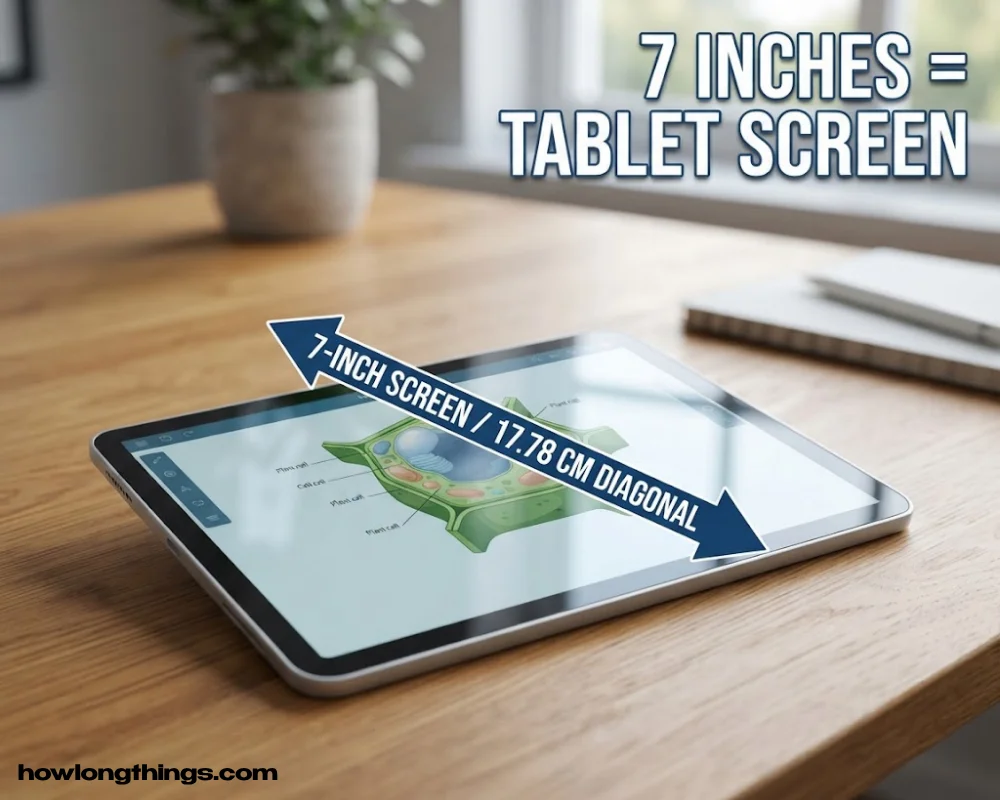
A 7-inch tablet screen.
Compact tablets and e-readers are often sold specifically with 7-inch screens, measured diagonally from corner to corner. This size hits a sweet spot — big enough to read comfortably, small enough to hold in one hand or slip into a bag. Because the screen size is printed right on the box, it’s one of the most literal, no-guesswork examples of 7 inches you can buy. If you own one, you’re holding a labeled 7-inch object every time you pick it up.
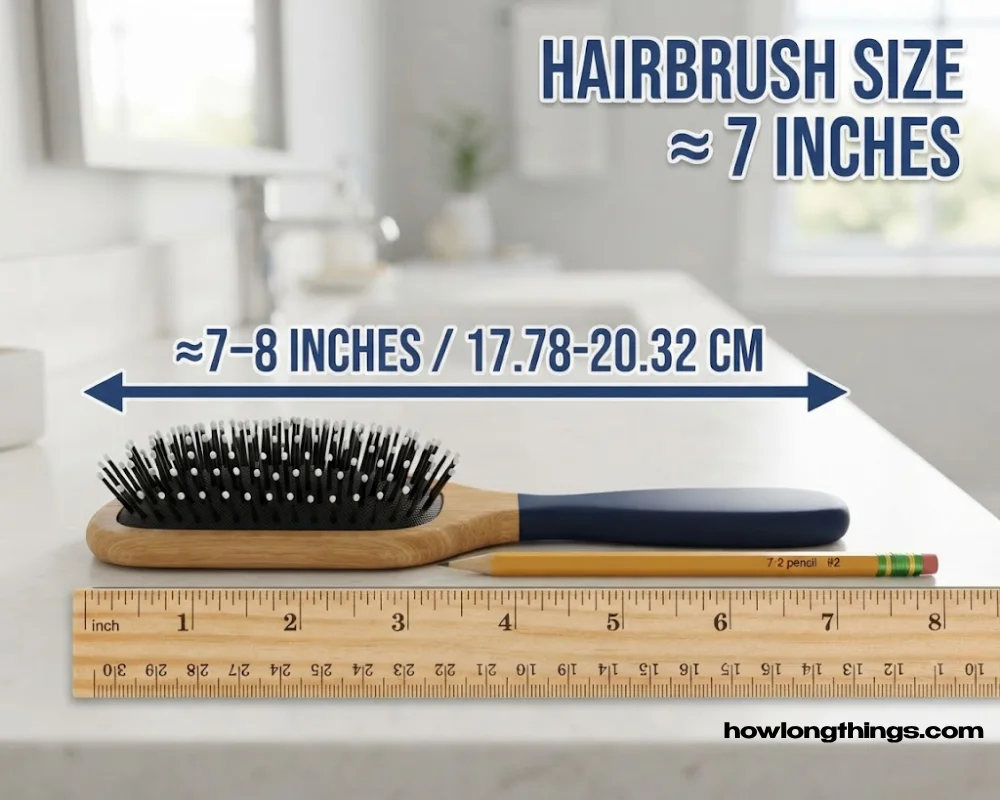
A paddle hairbrush.
Many compact and travel-sized hairbrushes measure 7 to 8 inches from the top of the bristle head to the end of the handle. That size makes them easy to pack without sacrificing a full brushing surface. Since hairbrushes get handled daily, most people already have a rough sense of their size without realizing it. Lay one flat on a counter next to a pencil and the two will line up almost evenly.
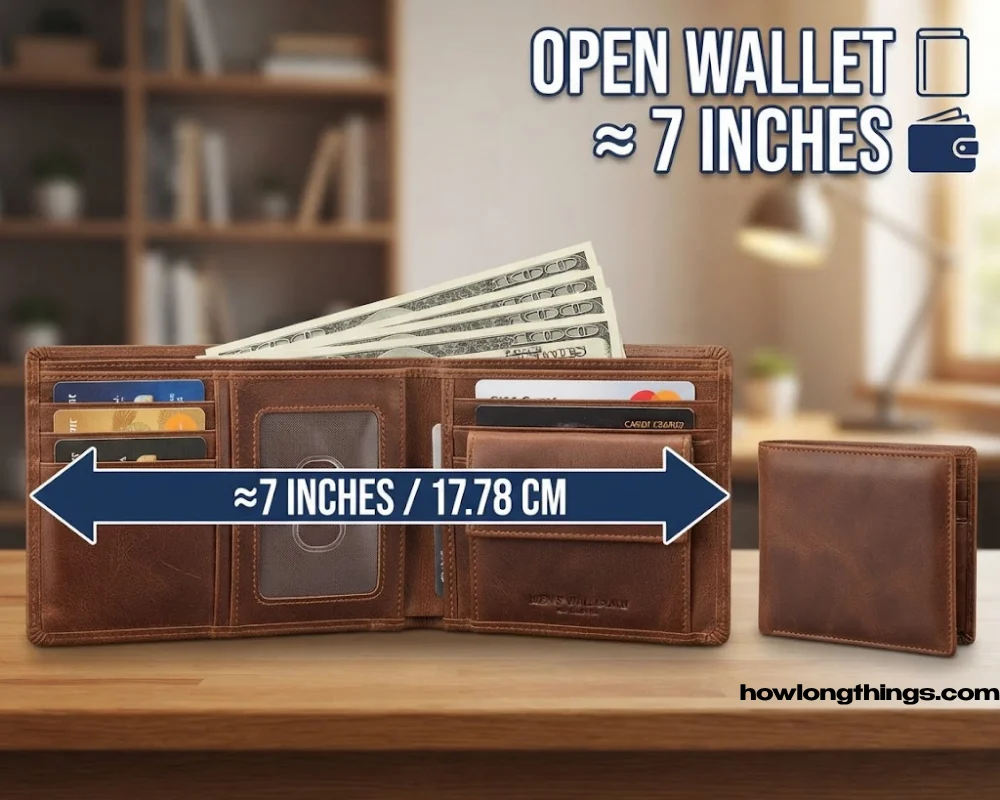
A men’s bifold wallet, opened flat.
Folded, a wallet fits in a back pocket. Unfolded, it typically stretches close to 7 inches across. That extra width is what allows room for card slots, a bill compartment, and sometimes a coin pocket. Because wallets are carried constantly, their open length is a surprisingly useful, always-on-you reference for this measurement. Open yours next to a ruler once, and you’ll remember the size for good.
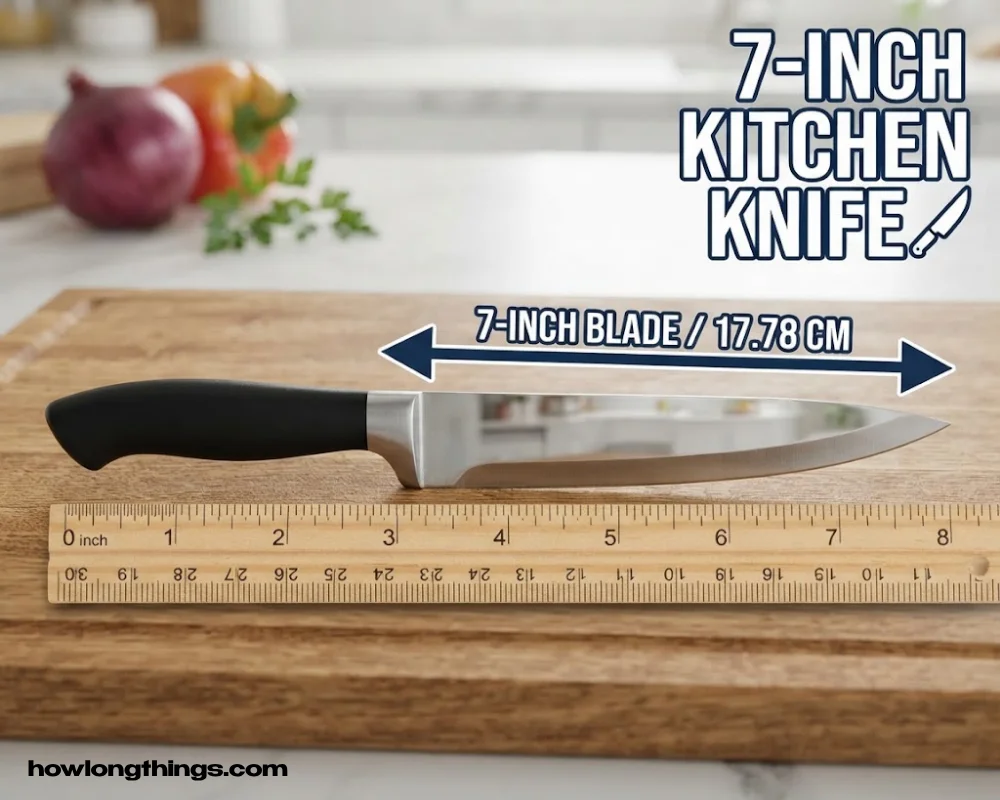
A 7-inch kitchen utility knife.
Unlike a full chef’s knife, which usually runs 8 inches or longer, a mid-size utility or santoku knife blade is commonly sold at exactly 7 inches. Cooks reach for this size for tasks that are too big for a paring knife but don’t need a full chef’s blade — slicing sandwiches, trimming meat, or breaking down smaller vegetables. Because it’s a named product size, it’s one of the most precise 7-inch examples on this whole list. Check the packaging on a kitchen knife set and you’ll likely spot this exact number.
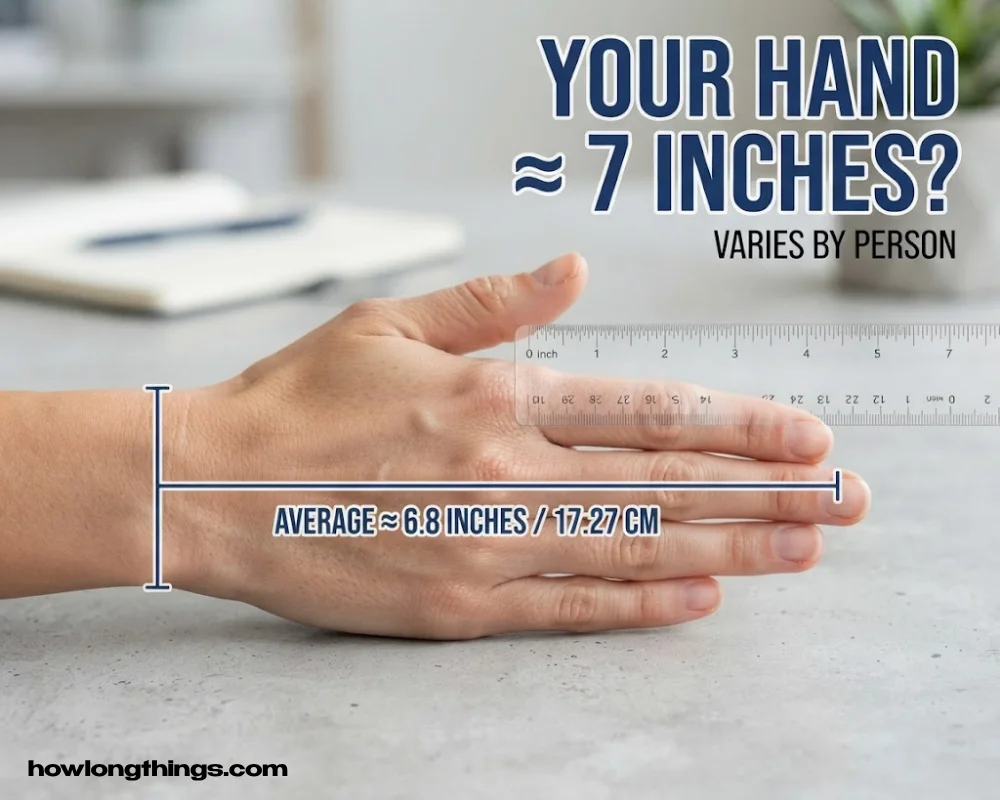
The length of an average adult woman’s hand.
According to hand-size data reviewed by Medical News Today, the average adult female hand — measured from the wrist crease to the tip of the middle finger — comes in at about 6.8 inches. That’s remarkably close to 7 inches, making your own hand one of the most personal measuring tools you own. Hand size naturally varies with height and genetics, so this is an average, not a rule. Still, it’s a fast way to answer “is 7 inches long for a hand?” without ever touching a tape measure.
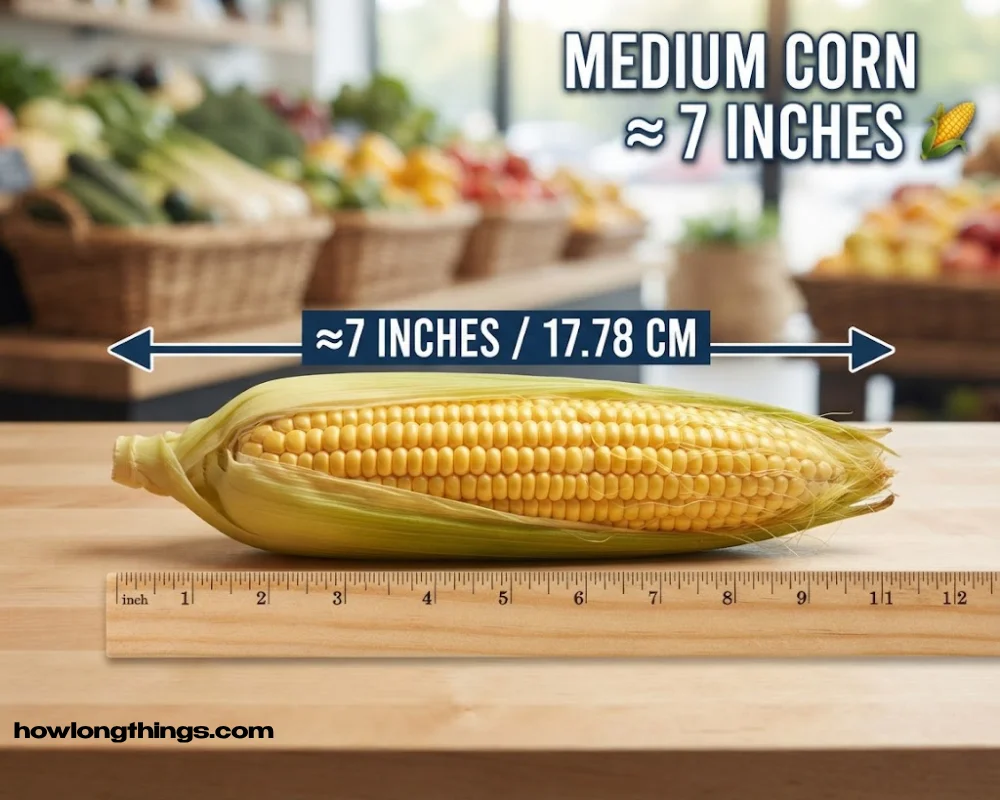
A medium ear of corn.
Husked, a medium ear of sweet corn typically measures around 7 inches. Corn varies more than most produce depending on the variety and how it was grown, but a mid-size ear from a grocery store lands close to this mark more often than not. Because it’s an object you can hold in one hand, it works well as a natural, curved comparison rather than a flat, rigid one. It’s also a good reminder that 7-inch objects aren’t limited to tools and electronics.
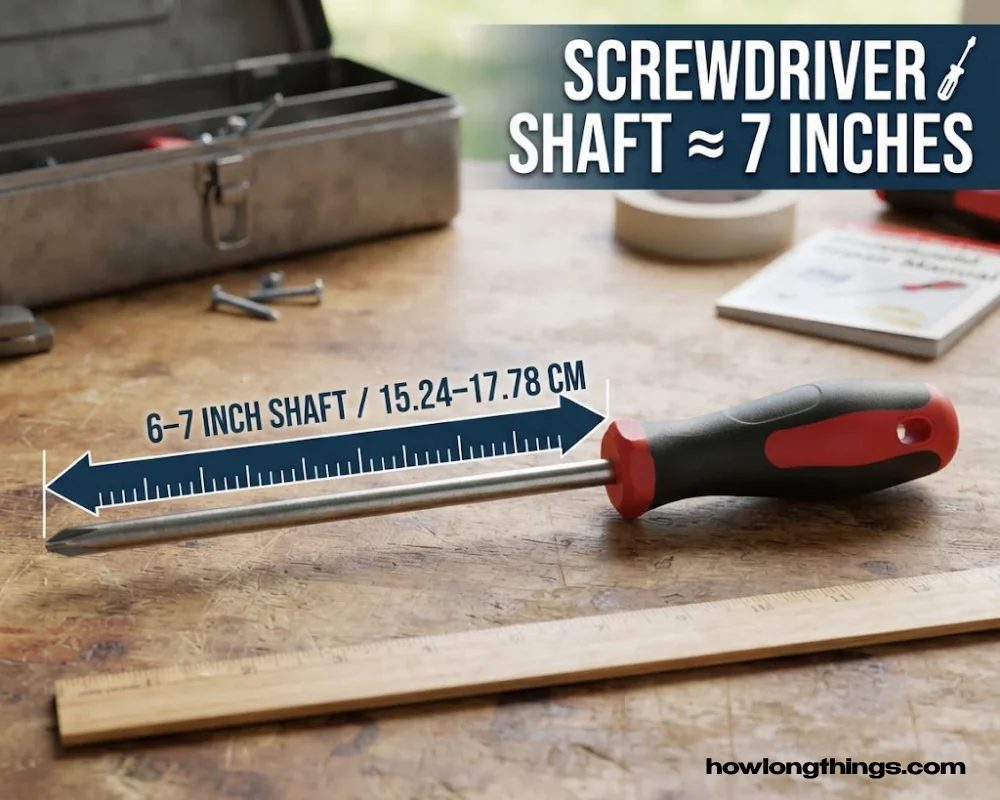
A medium Phillips-head screwdriver.
The metal shaft on a medium-duty screwdriver commonly measures 6 to 7 inches, not counting the handle. That length gives enough reach for household repairs — tightening hinges, assembling furniture, or working inside a cabinet — without becoming awkward to control. Anyone with even a small toolbox at home has likely handled one this size already. It’s a practical reference if you’re picturing measurements for a DIY or repair project.
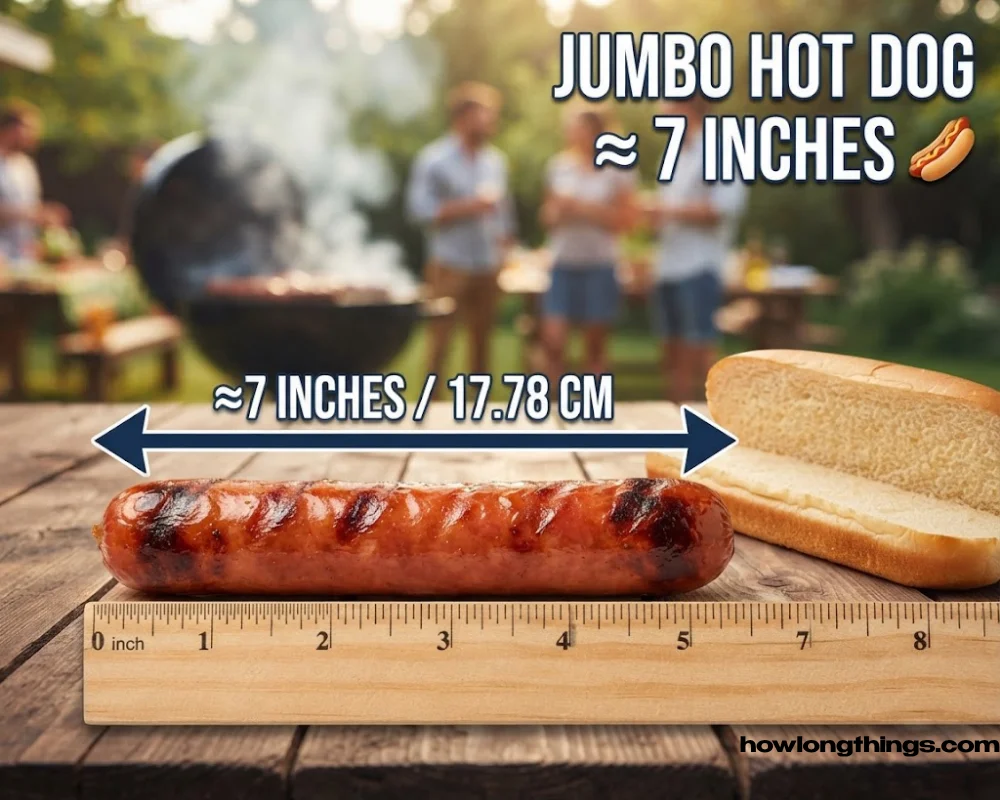
A jumbo or quarter-pound hot dog.
Standard hot dogs run closer to 6 inches, but jumbo and quarter-pound styles are commonly sold at closer to 7 inches, matching the length of a hoagie-style bun. Because grilling and cookouts are such a common part of American life, food-based comparisons like this one tend to stick in memory better than abstract numbers. It’s also a fun, low-stakes way to picture length while doing something as ordinary as making lunch. Next cookout, take a quick look before it hits the bun.
A trade paperback novel.
Many trade paperbacks — the slightly larger format used for popular fiction and nonfiction — measure close to 7 inches in height, a bit taller than mass-market paperbacks. That size balances comfortable reading with something that still fits easily into a bag. If you own a bookshelf, there’s a good chance several books on it fall right around this height. Stand one up next to a ruler and check for yourself.
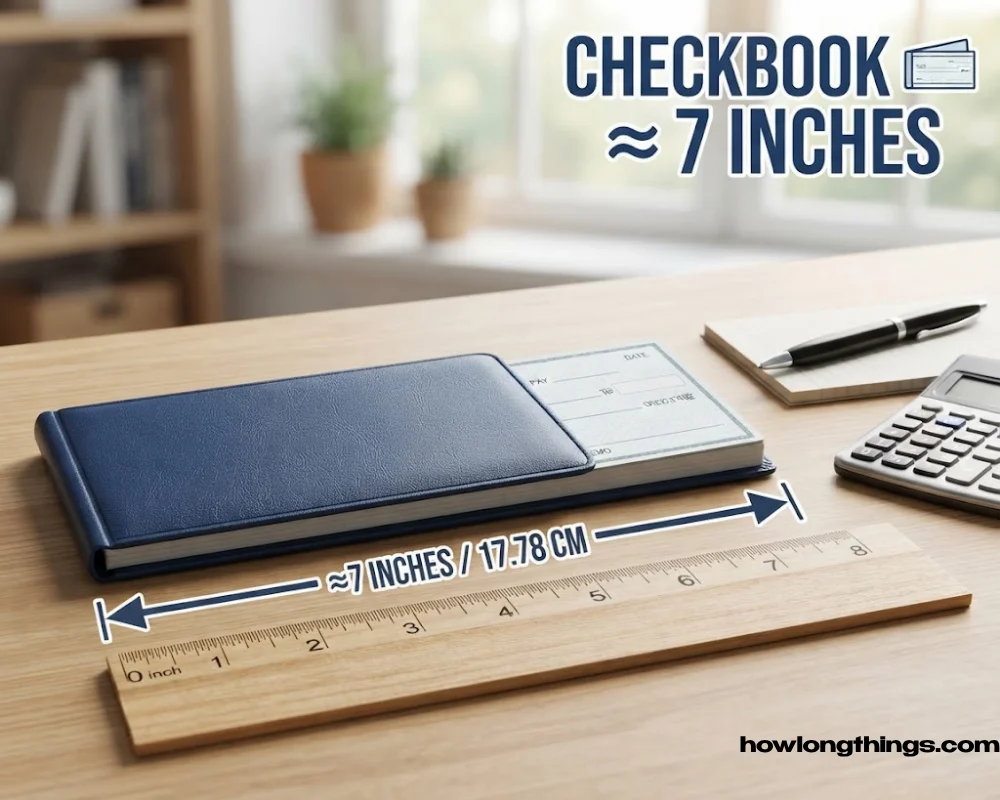
A closed business checkbook.
A standard personal checkbook, closed, commonly measures close to 7 inches along its longer edge. Fewer people write paper checks these days, but the size has stayed consistent for decades because it’s built around a standard check dimension. If you or a family member still has one in a drawer, it’s a handy, already-in-the-house comparison. It’s also a good example of a measurement that hasn’t changed even as habits around it have.
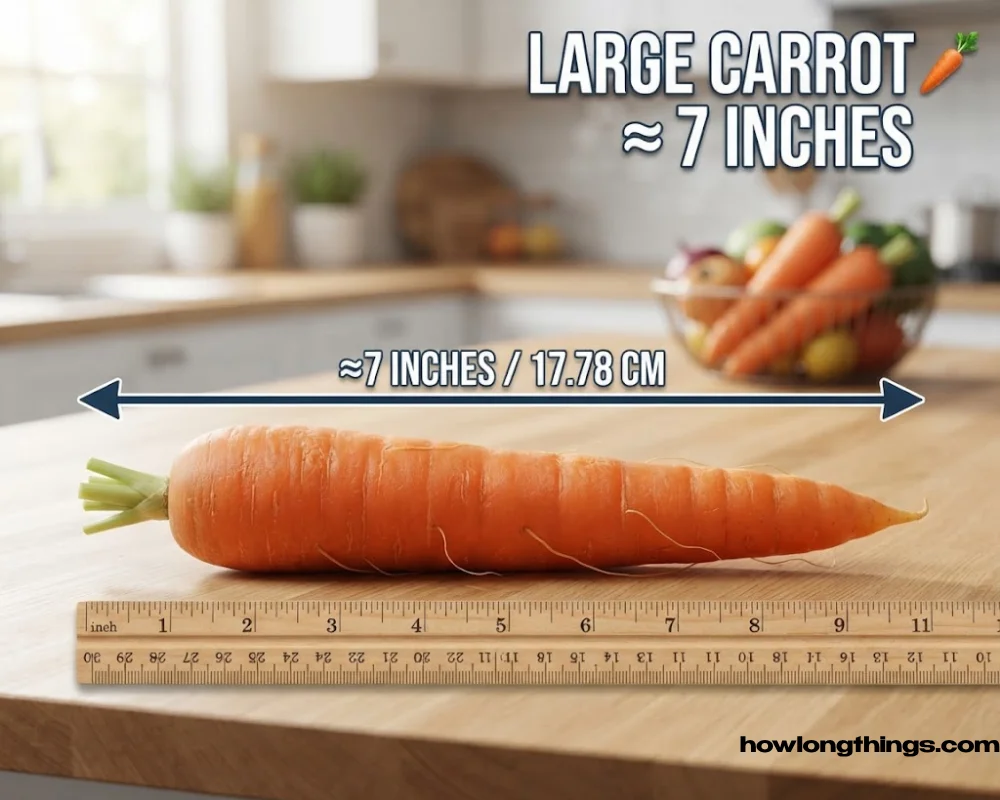
A large carrot.
Grocery-store carrots on the larger end of the size range often reach close to 7 inches, sometimes a little more depending on the variety and growing conditions. Because carrots are sold loose or bagged in nearly every produce section, they’re an easy, no-cost way to compare length while you’re already shopping. Their tapered shape also shows how a straight-line measurement can look different on a naturally curved object. Grab one from the crisper drawer and lay it next to a ruler to see how close it lands.
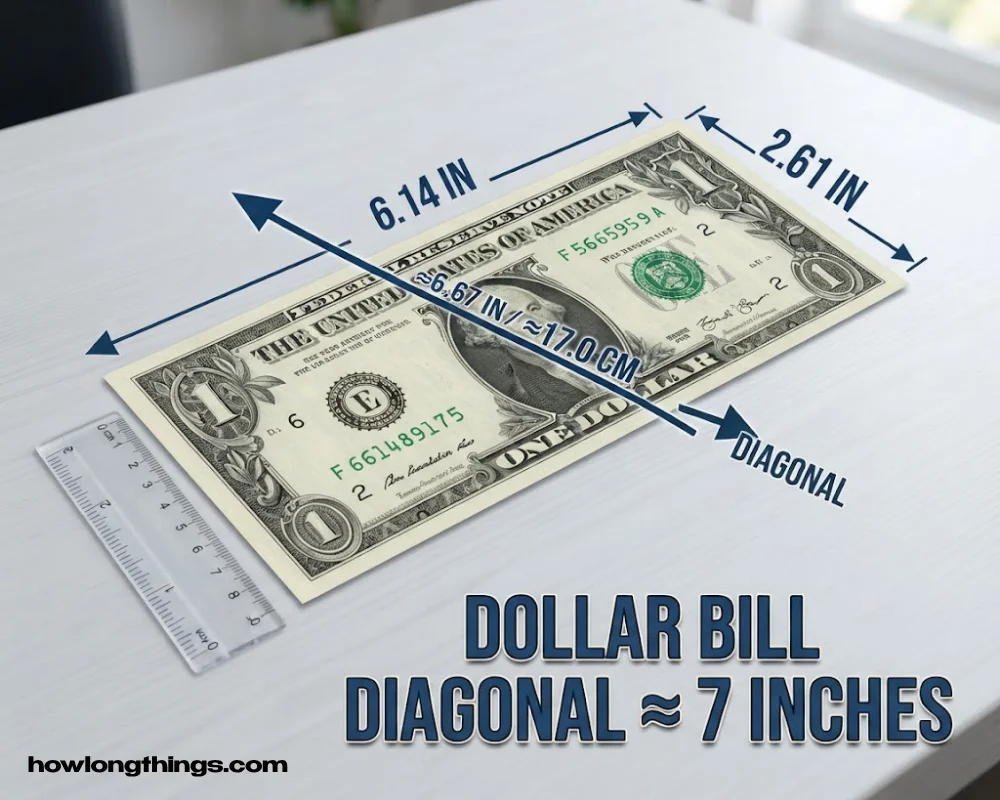
A dollar bill, measured diagonally.
A U.S. bill measures 6.14 by 2.61 inches straight across, but measured corner to corner — on the diagonal — it stretches to nearly 7 inches. It’s not a perfect match, but it’s a genuinely useful trick: fold a bill’s diagonal into your mental measuring toolkit, and you’ve always got a “ruler” in your wallet. This is one of the more overlooked comparisons, since most size guides only measure a bill’s straight edges. Try it yourself next time you’ve got cash on hand.
Numbers alone don’t always click, so here’s some context. Seven inches is a little more than half of a standard 12-inch ruler and noticeably shorter than a full sheet of printer paper, which measures 11 inches on its long side. It’s also close to three-quarters the height of a standard smartphone box.
There’s actually a practical reason 7 inches shows up so often in product design. Ergonomics research on grip and reach has shaped everyday tools — remotes, brushes, knives, toothbrushes — around lengths that fit comfortably in an average adult hand. That’s not a coincidence; it’s decades of usability testing landing on a size that simply works.
This also connects back to hand size. Since the average adult woman’s hand runs about 6.8 inches and the average man’s hand runs closer to 7.6 inches, a 7-inch object sits almost exactly between the two — which is likely one reason it turns up so consistently in tools meant for a general audience, not just one hand size.
How to Measure 7 Inches Without a Ruler
No measuring tape nearby? These quick references will get you close:
Grab a pencil. An unsharpened one is almost exactly 7 inches.
Use your dinner fork. Standard forks land right around this length.
Check your hand. If you’re a woman, your hand length is likely close to 7 inches already.
Pull out your wallet. Opened flat, it stretches close to 7 inches wide.
Picture your toothbrush. Base to bristle tip, it’s a reliable everyday match.
None of these will replace an actual ruler for precise work, but for a quick visual check, they’ll get you within a fraction of an inch almost every time.
Common Mistakes People Make With 7-Inch Measurements
A few mix-ups come up again and again with this measurement, especially while shopping online.
Confusing screen size with device size. A “7-inch tablet” refers to the diagonal screen measurement, not the total width or height of the device. The tablet itself will always be larger than 7 inches once you account for bezels and the frame around the screen.
Assuming food-package sizes are exact. Product names like a “6-inch sub” or “large” produce sizing are marketing shorthand, not guaranteed measurements. Actual length can vary by several tenths of an inch or more.
Skipping the diagonal-versus-straight distinction. This trips people up on more than screens — wallets, envelopes, and boxes are sometimes labeled by their diagonal rather than their straight-edge length, which can throw off your expectations if you’re shopping for something that needs to fit a specific space.
Double-checking product dimensions before buying, rather than relying on a size name alone, avoids most of these surprises.
FAQs About 7 Inches
What is an example of 7 inches?
A standard unsharpened pencil, a dinner fork, or an adult toothbrush are all everyday objects that measure close to 7 inches long.
How does 7 inches look like?
Picture something slightly longer than half a standard 12-inch ruler — roughly the length of a TV remote or a dessert plate laid across its widest point.
How big is 7 inches long?
Seven inches equals 17.78 centimeters, or about 0.58 feet. It’s considered a medium, hand-friendly length, common in tools, utensils, and personal-care items.
Is 7 inches long for a hand?
It’s close to average. The typical adult female hand measures about 6.8 inches from wrist to middle fingertip, while the average adult male hand runs closer to 7.6 inches, so 7 inches sits right in that everyday range.
How can I measure 7 inches without a ruler?
Use a pencil, a dinner fork, an opened wallet, or your own hand length if you’re a woman — all of these commonly measure close to 7 inches and work well as quick visual guides.
Conclusion
Once you connect a number like 7 inches to things you already touch every day — a pencil, a fork, your own hand — it stops being abstract. You’ve now got nearly 20 different ways to picture this length, so the next time you’re shopping, building, or just curious, you won’t need a ruler to know roughly what you’re looking at.
Elizabeth Queen is a Owner and consumer research writer at HowLongThings.com, specializing in product lifespan, durability, and everyday household research. She’s passionate about helping readers make smarter, longer-lasting buying decisions.