You’re halfway through a recipe, and it calls for 3 oz of milk. Your measuring tools only show cups. How many cups is 3 oz, exactly?
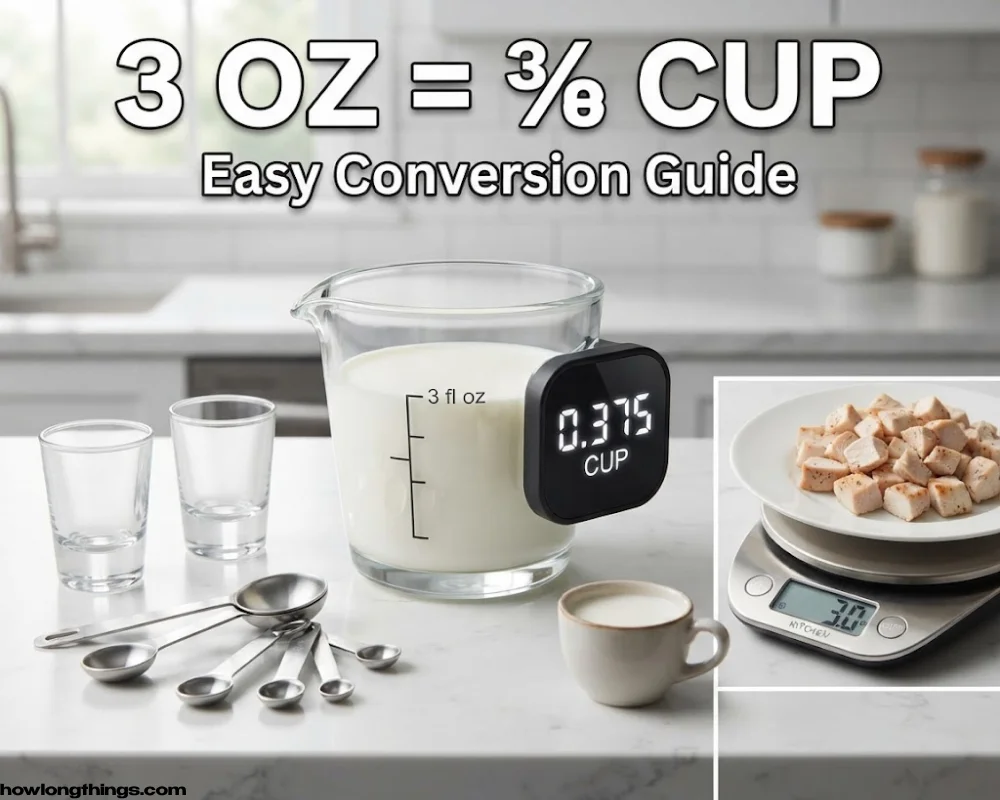
Here’s the short version: 3 fluid ounces equals 0.375 cups, or 3⁄8 of a cup. Below, we’ll break down the math, show you 8 real-world ways to picture that amount, and clear up a mix-up almost nobody talks about.
Table of Contents
How Many Cups Is 3 Oz? Quick Answer
3 oz is equal to 0.375 cups. You can also write that as 3⁄8 of a cup, or 37.5% of a full cup. All three numbers mean the exact same thing.
The math behind it is simple. One cup always equals 8 fluid ounces. So to convert ounces to cups, you divide the ounces by 8. For 3 oz, that’s 3 ÷ 8 = 0.375.
Want to go the other way? Multiply cups by 8 to get fluid ounces. Here’s a quick chart for reference:
Fluid Ounces
Cups
1 oz
0.125
2 oz
0.25
3 oz
0.375
4 oz
0.5
6 oz
0.75
8 oz
1
16 oz
2
This conversion works for any liquid — water, milk, oil, or juice. One cup stays fixed at 8 fl oz across every U.S. recipe.
Is 3 Oz Fluid or Dry? Why It Matters
Here’s something most conversion charts skip entirely: 3 oz doesn’t always mean the same thing.
If you’re measuring a liquid, 3 fluid ounces reliably equals 0.375 cups every time. That’s because fluid ounces measure volume — how much space something takes up.
But if you’re measuring a dry or solid ingredient, like chicken, shredded cheese, or flour, “ounces” usually means weight, not volume. And weight doesn’t convert the same way volume does.
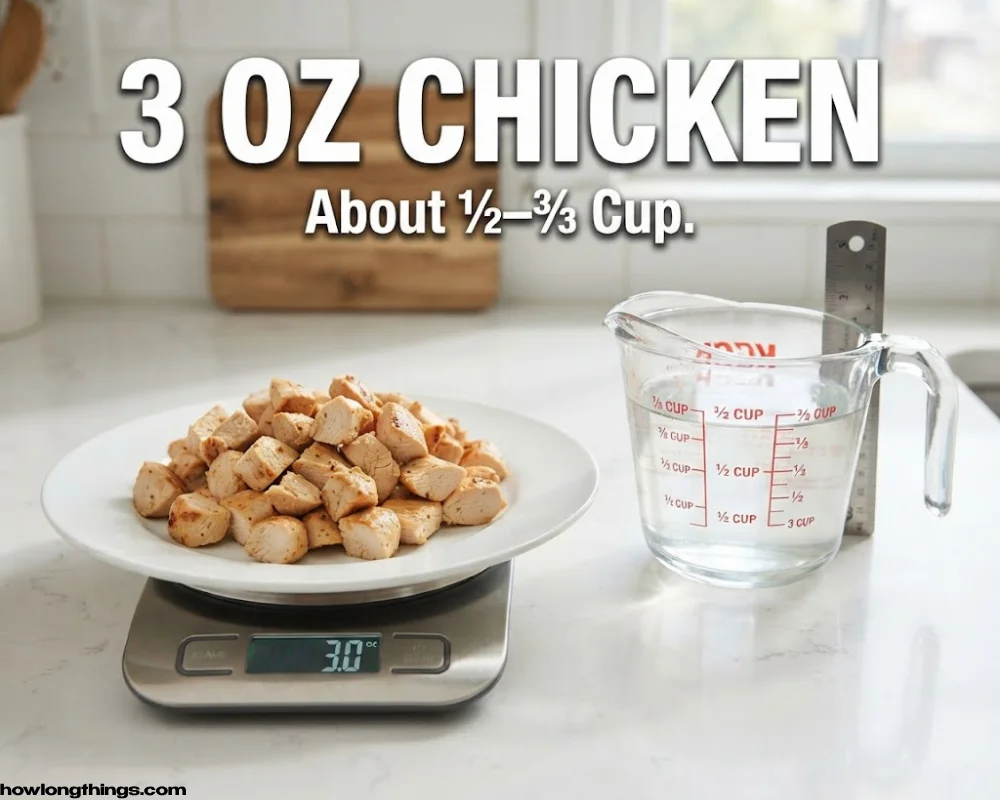
Take cooked, diced chicken as an example. 3 ounces of chicken weighs 85 grams, but it fills roughly ½ to ⅔ of a cup — not 0.375 cups. Why? Because how tightly the chicken is packed, chopped, or shredded changes how much space it takes up, even though the weight stays the same.
This distinction matters most in the kitchen. If a recipe says “3 oz of butter,” that’s weight. If it says “3 oz of milk,” that’s volume. Mixing the two up is one of the most common measuring mistakes home cooks make.
8 Real-World Examples to Measure 3 Oz
Numbers on a page are one thing. Picturing them is another. Here are 8 everyday references that show you exactly what 3 oz looks like, without pulling out a scale.
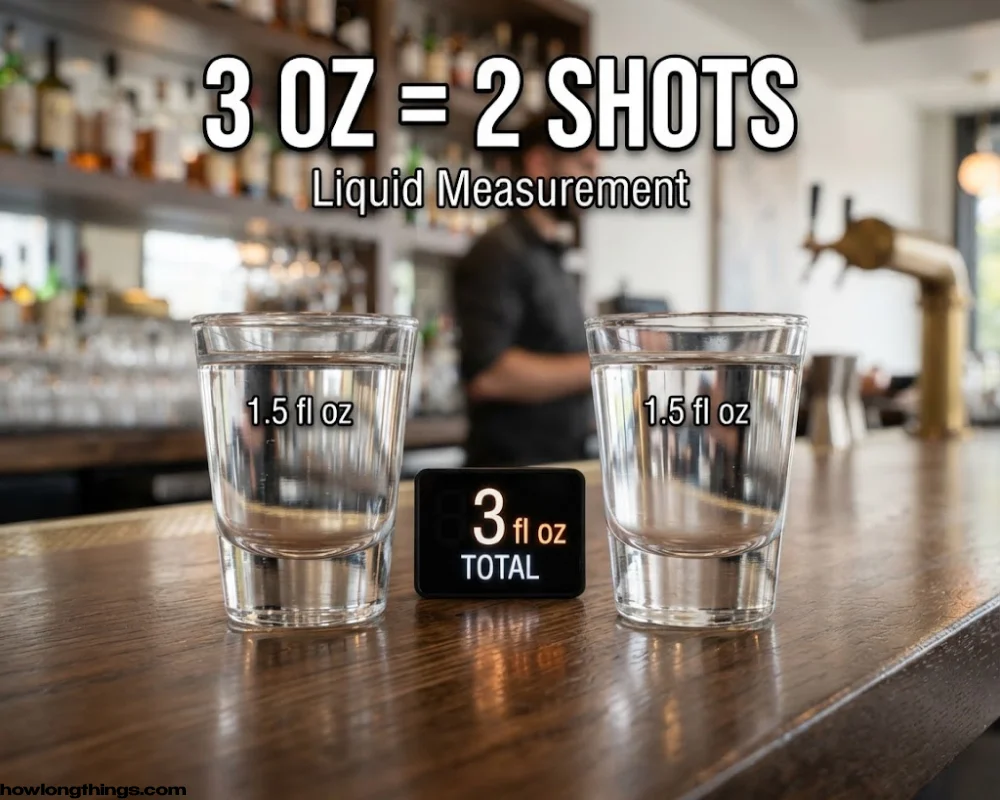
A Standard Shot Glass
A typical shot glass holds about 1.5 fl oz, so 3 oz equals two full shot glasses. Bartenders use this exact reference when free-pouring cocktails, since most standard pours are measured in single or double shots.
Six Tablespoons of Liquid
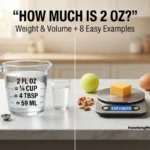
One tablespoon equals 0.5 fl oz, which means 6 tablespoons add up to exactly 3 oz. This is a handy trick if you only have measuring spoons on hand instead of a cup.
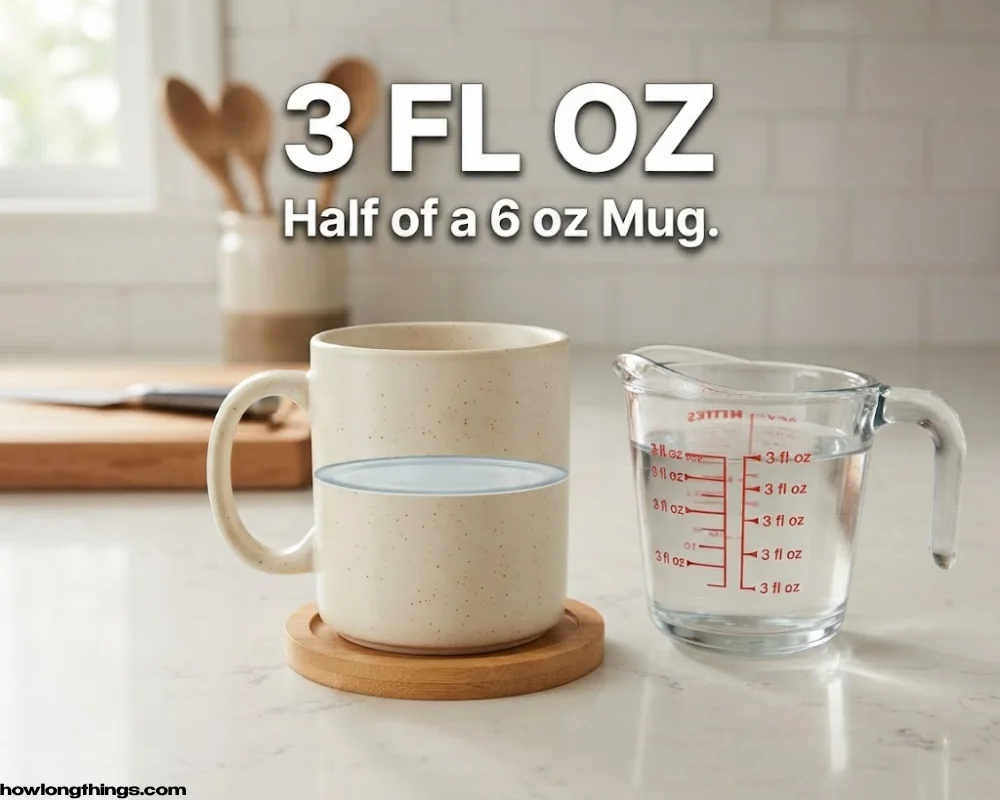
Half a Standard Coffee Mug
A typical coffee mug holds around 6 to 8 fl oz. Filling it about halfway gives you a rough visual for 3 fluid ounces — close enough for casual cooking, though not precise enough for baking.
A Small Yogurt Cup
Individual yogurt cups sold in grocery stores commonly come in a 5.3 oz or 6 oz size. A little more than half of one of these containers lands you right around 3 ounces.
3 Ounces of Cooked, Diced Chicken
As covered above, this is where the fluid-vs-dry distinction really shows up. 3 oz of cooked, diced chicken measures about ½ to ⅔ of a cup, not 0.375 cups, because chicken is measured by weight, not liquid volume.
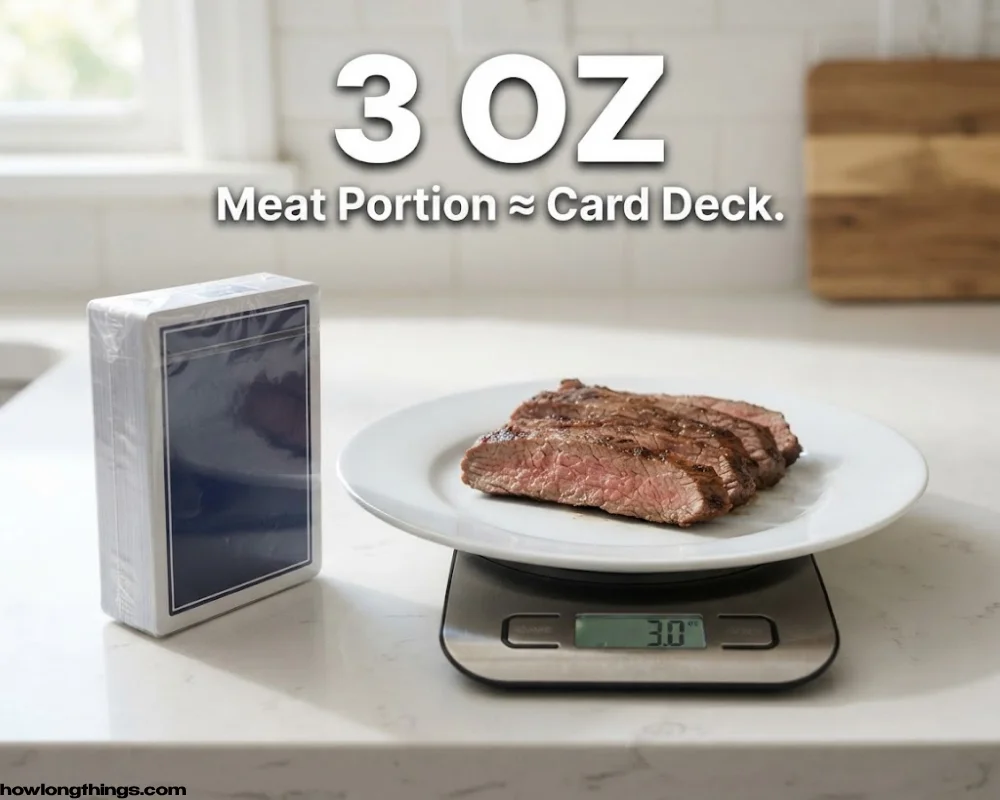
A Deck of Playing Cards
This classic visual trick comes from portion-control guides. A 3-ounce serving of meat is roughly the same size and thickness as a standard deck of playing cards — no scale needed.
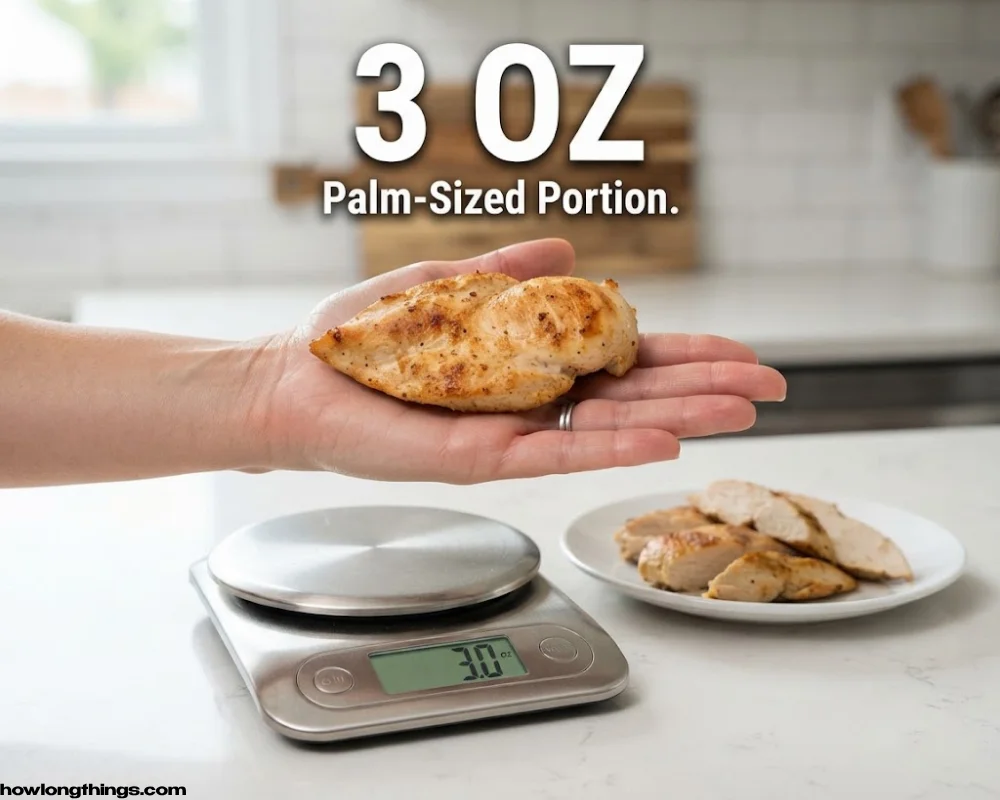
The Palm of Your Hand
For an average-sized adult, the palm of your hand — not including fingers — is close to a 3-ounce portion of chicken, meat, or fish. It’s an imperfect but genuinely useful gauge when you’re cooking without tools.
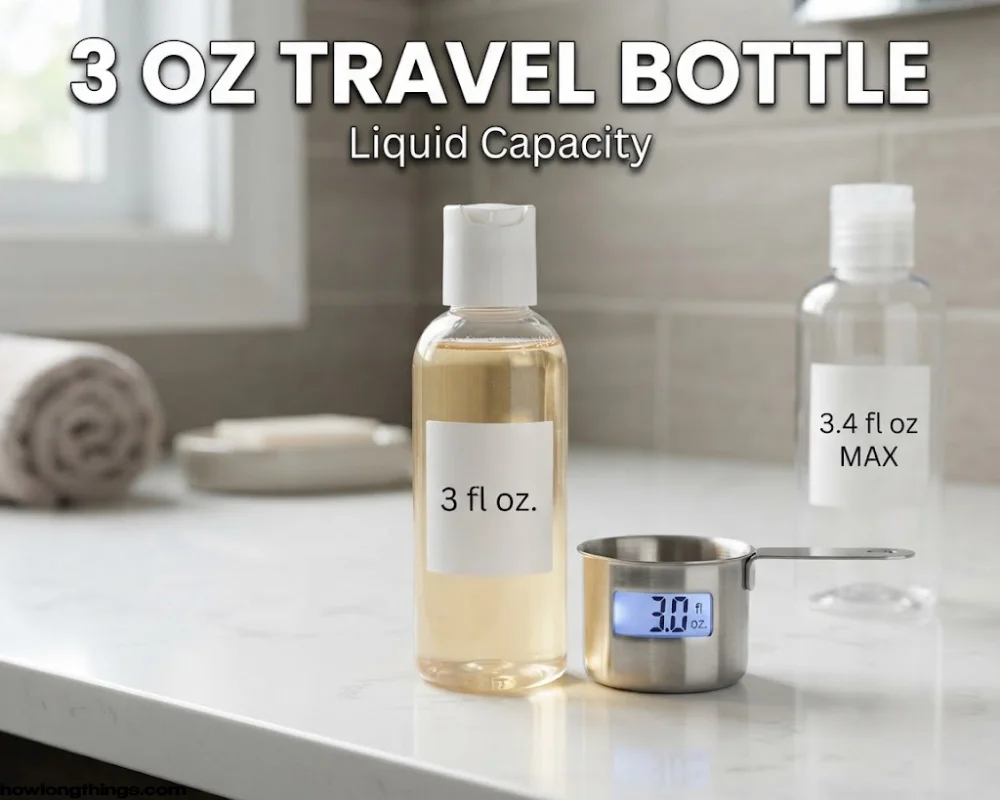
A Travel-Size Toiletry Bottle
Airport security limits carry-on liquids to 3.4 oz per container, which is why most travel-size shampoo and lotion bottles are bottled at 3 oz. If you’ve ever packed a carry-on, you’ve already held this exact amount in your hand.
Here’s a fact that surprises most people: a “cup” isn’t one universal measurement.
In the United States, recipes and food labels use the legal cup, defined as exactly 240 milliliters. Most kitchen measuring cups sold in the U.S. are calibrated to this standard.
There’s also the customary cup, which is slightly smaller at 236 milliliters — technically half of a liquid pint. The difference is tiny, but it explains small inconsistencies between older cookbooks and modern ones.
Step outside the U.S., and things shift again. Most other countries use the metric cup, equal to 250 milliliters — noticeably larger than the American version. Japan uses its own traditional cup, fixed at exactly 200 milliliters, still used today for measuring rice and sake.
Even a “coffee cup” isn’t a real cup measurement at all — it typically holds just 118 milliliters, less than half of a standard U.S. cup. If you’ve ever wondered why a “cup of coffee” never seems to match your measuring cup, this is why.
FAQs About 3 Oz to Cups
Is 3 oz equal to 1/3 cup?
Not quite. 3 oz equals 0.375 cups, while 1/3 cup equals about 2.67 oz. The two are close, but 3 oz is slightly more than 1/3 cup.
Is 3oz half a cup?
No. Half a cup equals 4 fl oz. 3 oz is smaller than half a cup, landing at 0.375 cups instead of 0.5.
Is 3 oz 1/4 cup?
No, 3 oz is larger than 1/4 cup. A quarter cup equals 2 fl oz, so 3 oz is one full fluid ounce more than that.
How can I measure 3 oz?
Use 6 tablespoons, two standard shot glasses, or a liquid measuring cup filled to the 0.375 mark. For solid foods like meat, compare the portion to a deck of playing cards or the palm of your hand.
Is 3 oz equivalent to 1 cup?
No. One full cup equals 8 fl oz, so 3 oz is well under half of a cup — specifically, 0.375 of one.
How much is 3 oz equal to a cup?
3 oz equals 0.375 cups, or 3⁄8 of a cup. That’s the fixed conversion for any fluid, from water to cooking oil.
Conclusion
3 fluid ounces equals 0.375 cups, or 3⁄8 of a cup — a simple ratio that holds true for any liquid you’re measuring. Just remember: that math only applies to fluid ounces. When a recipe calls for 3 oz of a solid ingredient like chicken or cheese, you’re dealing with weight, not volume, and the cup measurement will vary.
Elizabeth Queen is a Owner and consumer research writer at HowLongThings.com, specializing in product lifespan, durability, and everyday household research. She’s passionate about helping readers make smarter, longer-lasting buying decisions.