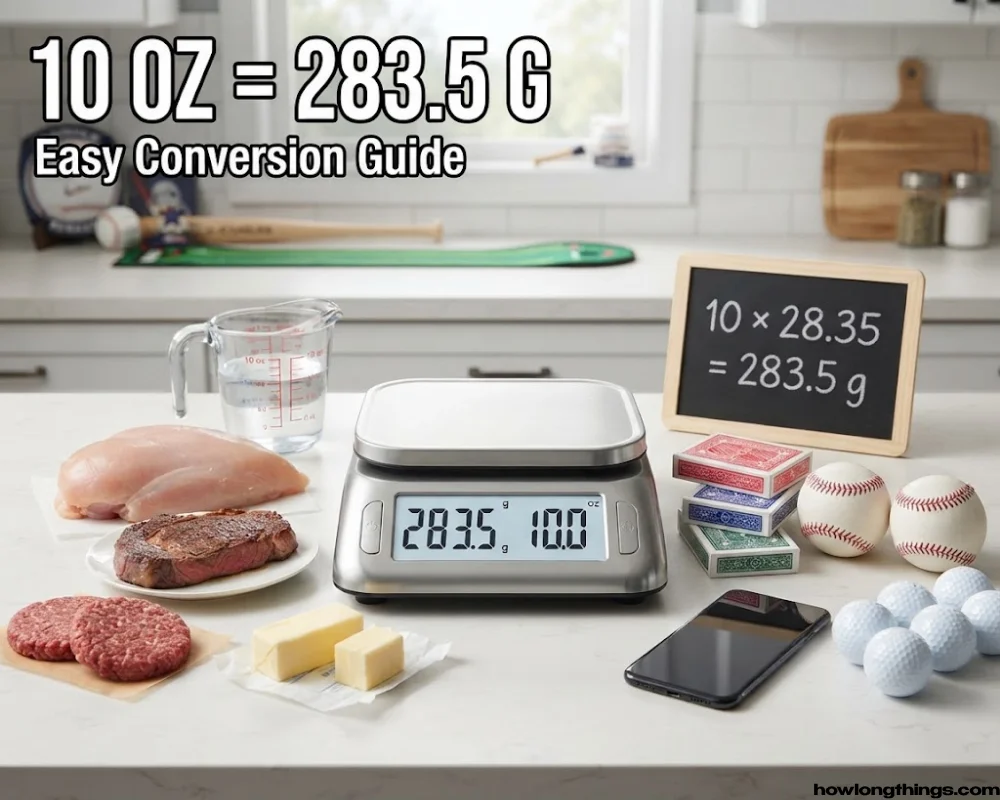
If a recipe calls for 10 oz and your scale only reads grams, you don’t need to guess. 10 oz equals 283.5 grams, and this guide breaks down exactly how that number works.
Whether you’re baking, shipping a package, or just curious, this post covers the math, the kitchen shortcuts, and the mix-ups people run into with oz to grams conversions.
Table of Contents
How Many 10oz in grams? (Quick Answer)
10 oz is 283.5 grams. That’s the number you’ll use for almost everything — recipes, nutrition labels, shipping weights.
At full precision, 10 oz to grams comes out to 283.495231 grams. Most kitchen scales and recipe sites round this to 283.5 g, and that’s accurate enough for cooking or baking.
Some cooking charts round even further, down to 280 grams, for simplicity. This rounded figure works fine for everyday recipes where a gram or two won’t change the outcome.
So which number should you use? For baking and general cooking, 283.5 g is the standard. For scientific work or anything requiring precision measurement, use the full 283.495231 g.
⚠ This calculator needs JavaScript to run, and it hasn't started yet. If the page has fully loaded and you still see this message, a caching/performance plugin on this WordPress site (commonly WP Rocket's “Delay JavaScript execution,” Autoptimize/Perfmatters JS optimization, or Cloudflare “Rocket Loader”) is likely blocking or delaying this script. Add an exclusion for this block/script in that plugin's settings, then reload.
MEASUREMENT TOOL
Unit Converter
Convert length, weight, temperature, currency and 15 more categories — instantly, free, no sign-up.
About Length Conversion
Length is a measure of distance. In the International System of Units (SI), the base unit for length is the meter, while imperial and US customary systems primarily use the inch, foot, yard, and mile. This tool converts instantly between all common metric and imperial length units.
Object & Container Dimensions
Common everyday items and their typical size, for quick real-world reference.
Sizes are typical/standard values and can vary slightly by brand or manufacturer.
Frequently Asked Questions
How accurate is this converter?
This tool uses internationally defined conversion factors (SI and NIST standards) and calculates results to 10 significant digits, so results are suitable for everyday, academic, and professional use.
Can I convert in both directions?
Yes. Use the swap button between the two fields to instantly reverse the conversion direction.
Is this converter free to use?
Yes, this converter is completely free, works on any device, and requires no sign-up or download.
How long is 6 inches, 12 inches, or other common lengths?
Use the Popular Searches row above while on the Length tab — tap any inch or foot value (like 6 in, 12 in, 24 in, 36 in) to see it instantly converted to centimeters and other units, alongside a full reference table.
Rates for currency update live via a public exchange-rate feed. All other conversions are calculated locally in your browser.
How to Convert 10 Oz to Grams (Step-by-Step)
Converting ounces to grams isn’t complicated once you know the conversion factor. It’s the same formula every time, no matter the number of ounces.
Ounces to Grams Formula
The formula is simple: grams = ounces × 28.349523125.
This number, 28.349523125, is the exact weight of one avoirdupois ounce in grams. It’s fixed by international agreement, so it never changes.
For 10 oz, the math looks like this: 10 × 28.349523125 = 283.49523125, rounded to 283.5 grams. The National Institute of Standards and Technology confirms this exact ounce-to-gram conversion factor as part of the U.S. customary-to-metric standard.
Grams to Ounces Formula
Going the other direction is just as easy: ounces = grams ÷ 28.349523125.
So if you have 283.5 grams and want ounces, divide by 28.349523125 to get back to 10 oz. This reverse formula is handy when a package or ingredient is labeled in grams but you think in ounces.
A quick shortcut for grams to ounces: multiply the gram figure by 0.035274. It gets you the same result without doing division in your head.
10 Oz to Grams in the Kitchen (Cooking & Baking Use)
Cooking is where most people actually need this conversion. Recipes from outside the U.S. almost always list ingredients in grams, not ounces.
10 Oz to Cups by Ingredient
Here’s the catch: cups measure volume, not weight. That means 10 oz of flour and 10 oz of butter don’t fill the same cup.
10 oz of flour is roughly 2.25 cups, since a cup of all-purpose flour weighs about 125 grams. 10 oz of granulated sugar comes to about 1.4 cups, because sugar is denser than flour and packs about 200 grams per cup.
10 oz of butter works out to close to 1.25 cups, using the standard 227 grams per cup for butter. 10 oz of water is about 1.2 cups, since water is the one ingredient where fluid ounces and weight ounces line up almost exactly.
How to Measure 10 Oz Using a Digital Kitchen Scale
A digital kitchen scale removes all the guesswork from ingredient measuring. It’s the most accurate way to hit exactly 283.5 grams, or any weight, every single time.
Start by placing an empty bowl on the scale. Press the “tare” or “zero” button so the scale resets to 0 with the bowl’s weight subtracted out.
Then add your ingredient until the display reads 283.5 g (or 283 g if you’re rounding). This method works for flour, sugar, meat, or anything else a recipe calls for by weight.
8 Real-Life Examples of 10 Oz (283.5 Grams)
Numbers on a scale are one thing — seeing what 10 oz actually looks like helps it stick. Here are eight everyday comparisons that make the 10 oz to grams conversion easier to picture.
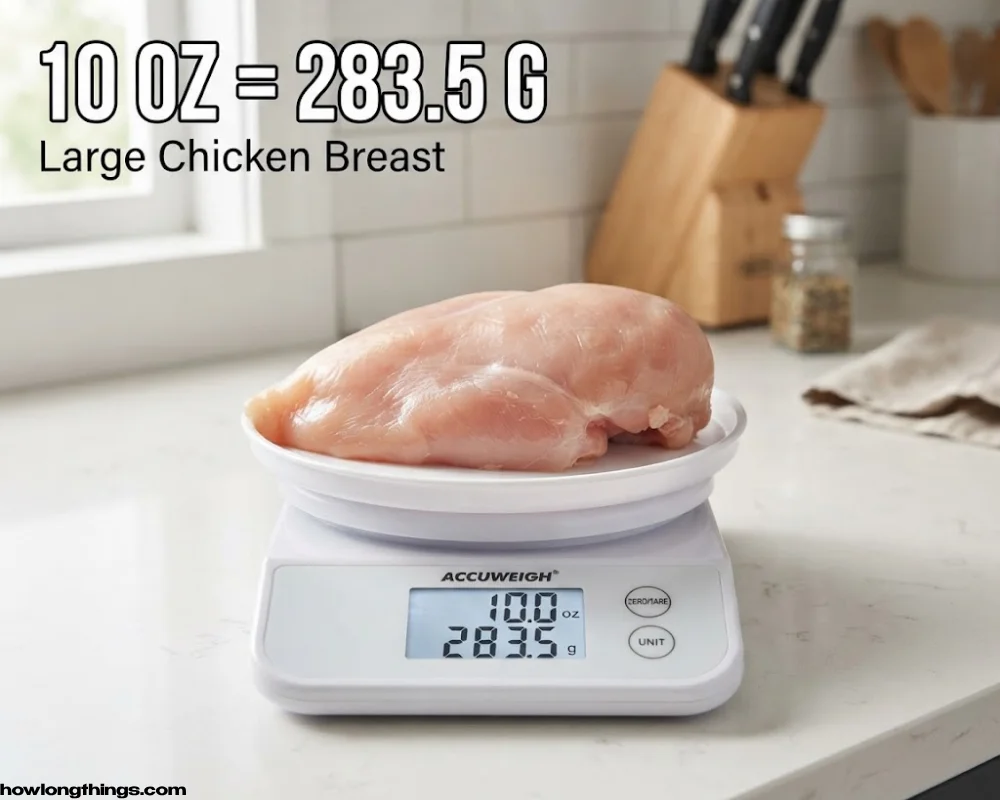
A Large Chicken Breast
A single large, raw chicken breast typically weighs close to 10 oz, or 283.5 grams. This is a common portion size in recipes meant to serve two people.
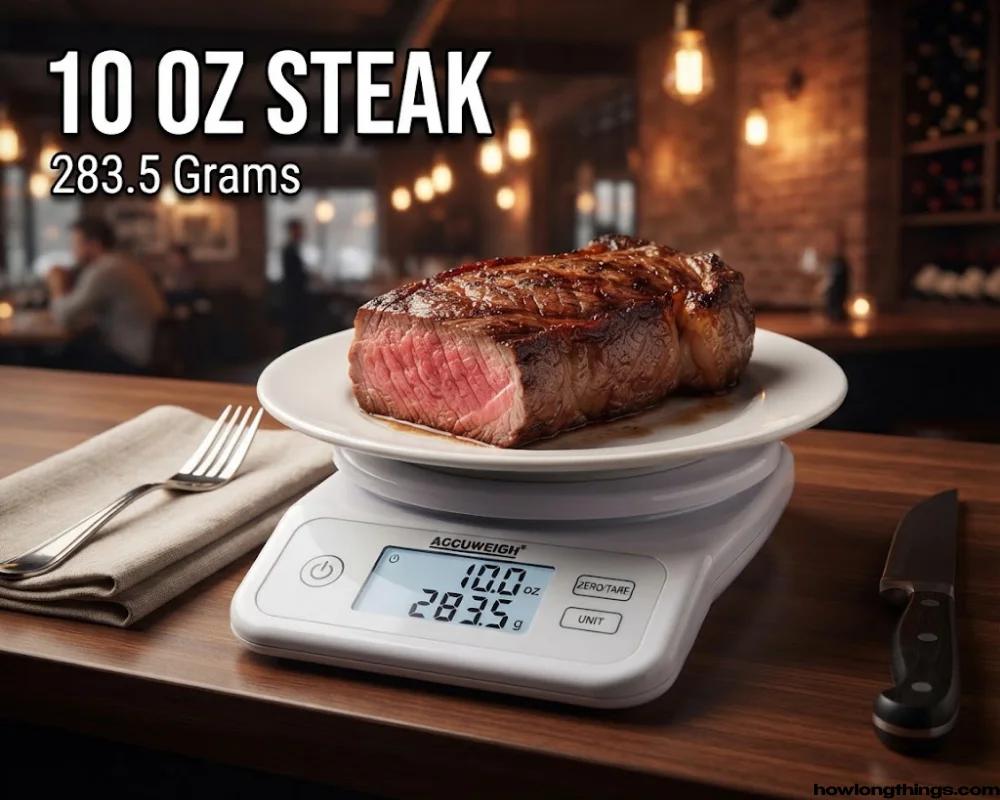
A Restaurant-Style Steak
Many steakhouses serve a “petite” cut around 10 oz, making it one of the most common steak portion sizes. That’s the same 283.5 grams you’d measure on a kitchen scale at home.
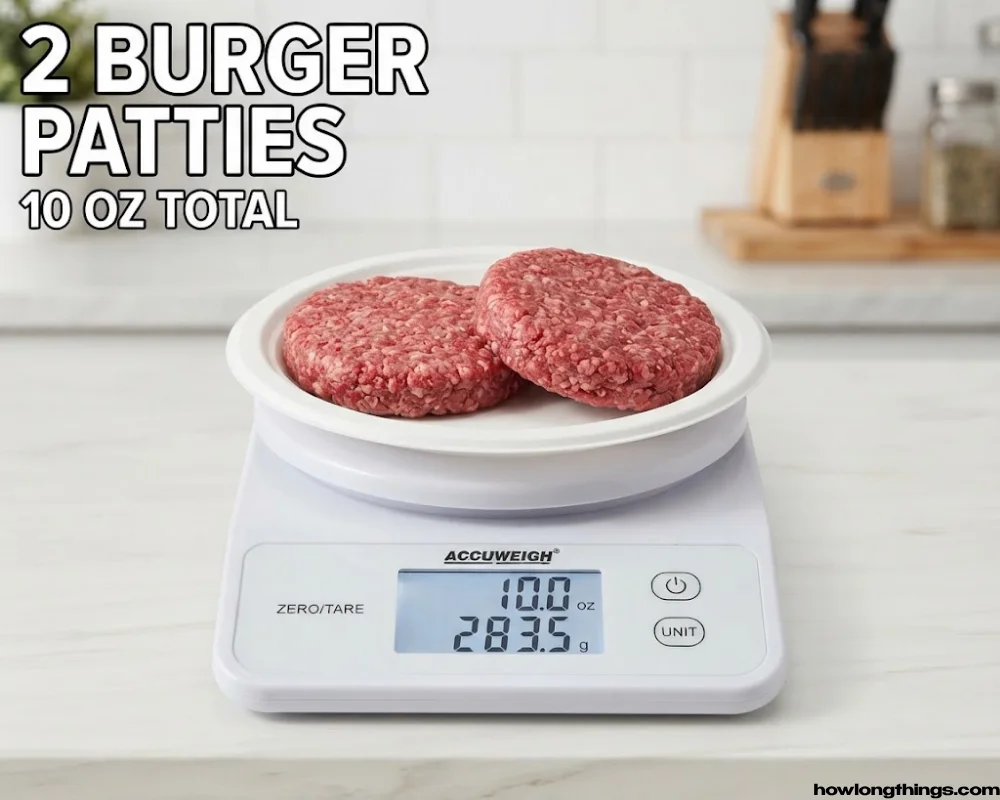
Ground Beef for Two Burger Patties
10 oz of ground beef splits neatly into two 5 oz patties, a popular size for homemade burgers. This makes the conversion useful for portioning meat before grilling.
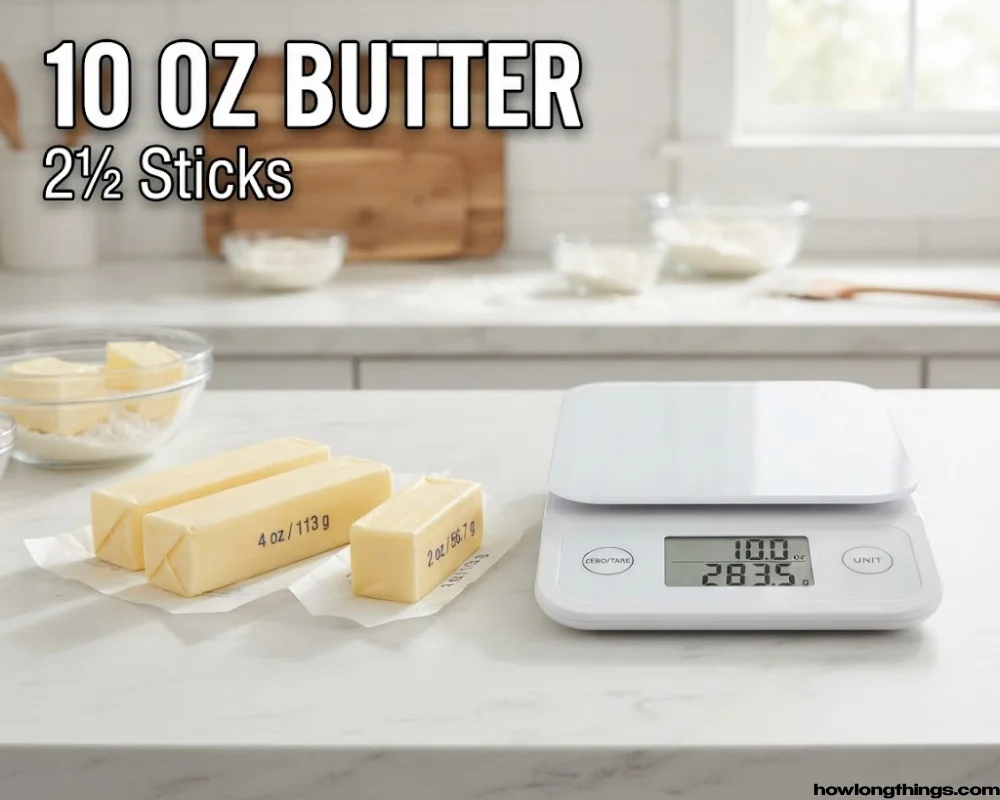
Two and a Half Sticks of Butter
A standard U.S. stick of butter weighs 4 oz (113 grams), so 10 oz comes out to about two and a half sticks. This comparison is especially useful when a baking recipe lists butter in grams instead of sticks.
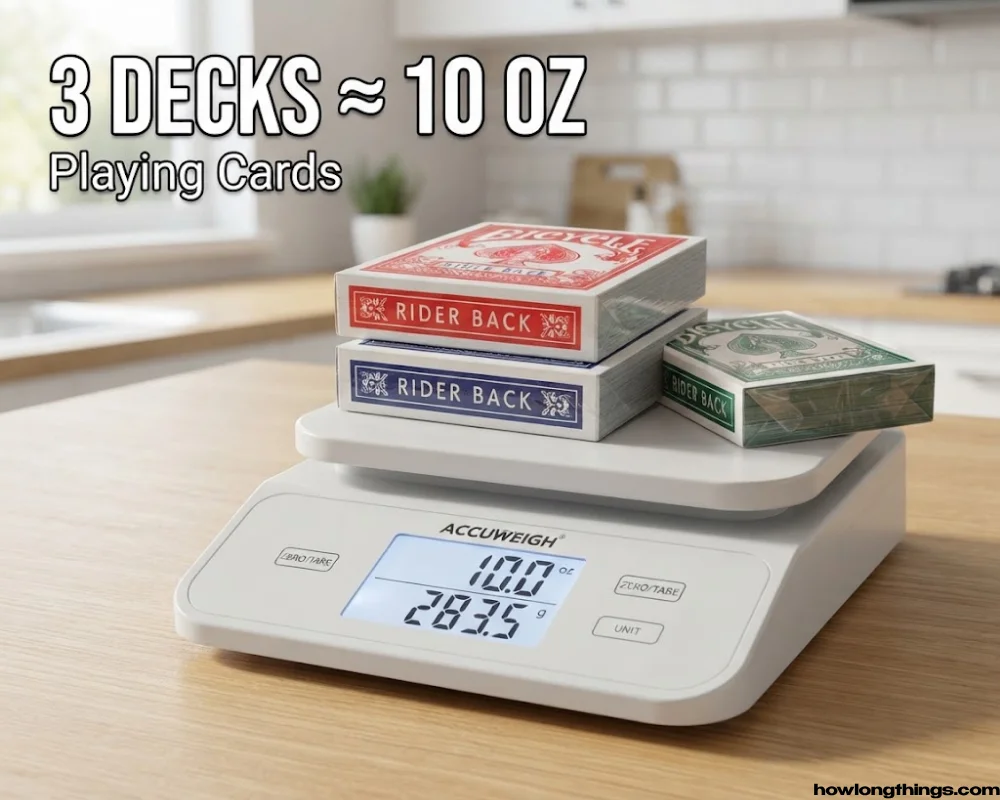
About Three Decks of Playing Cards
A standard deck of playing cards weighs roughly 3.5 oz (99 grams). Stack three decks together and you’re close to the same weight as 10 oz, or 283.5 grams.
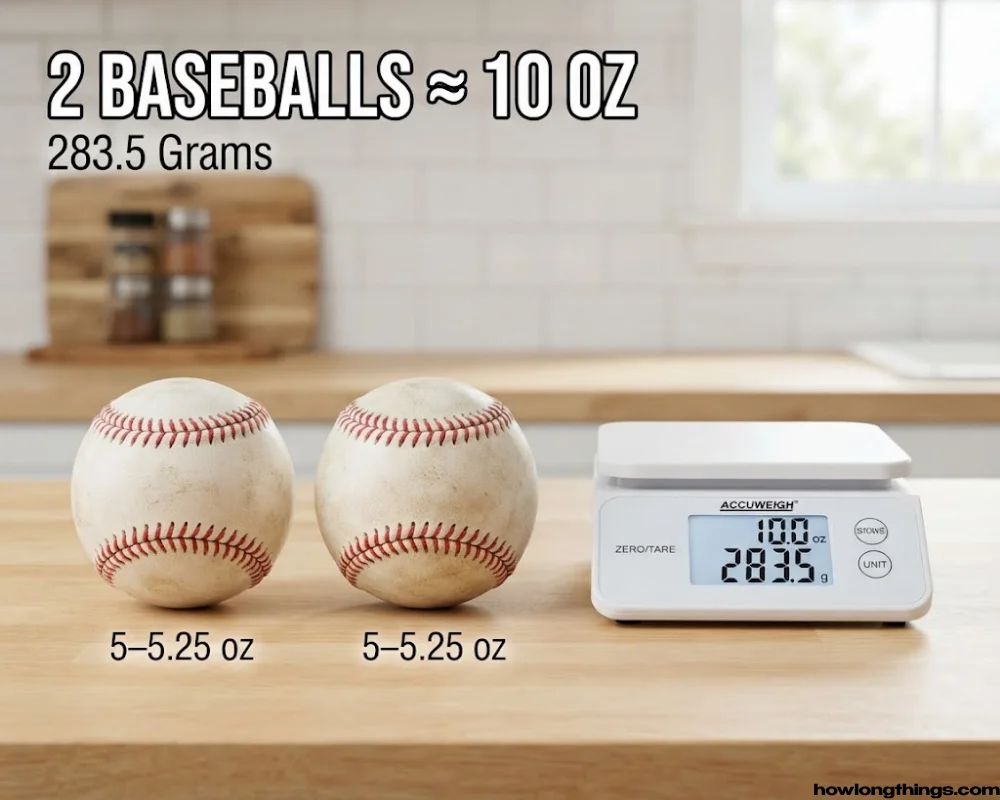
Close to Two Baseballs
An official baseball weighs between 5 and 5.25 oz (about 142 to 149 grams). Two baseballs together land right around 10 oz, giving a tangible sense of the weight.
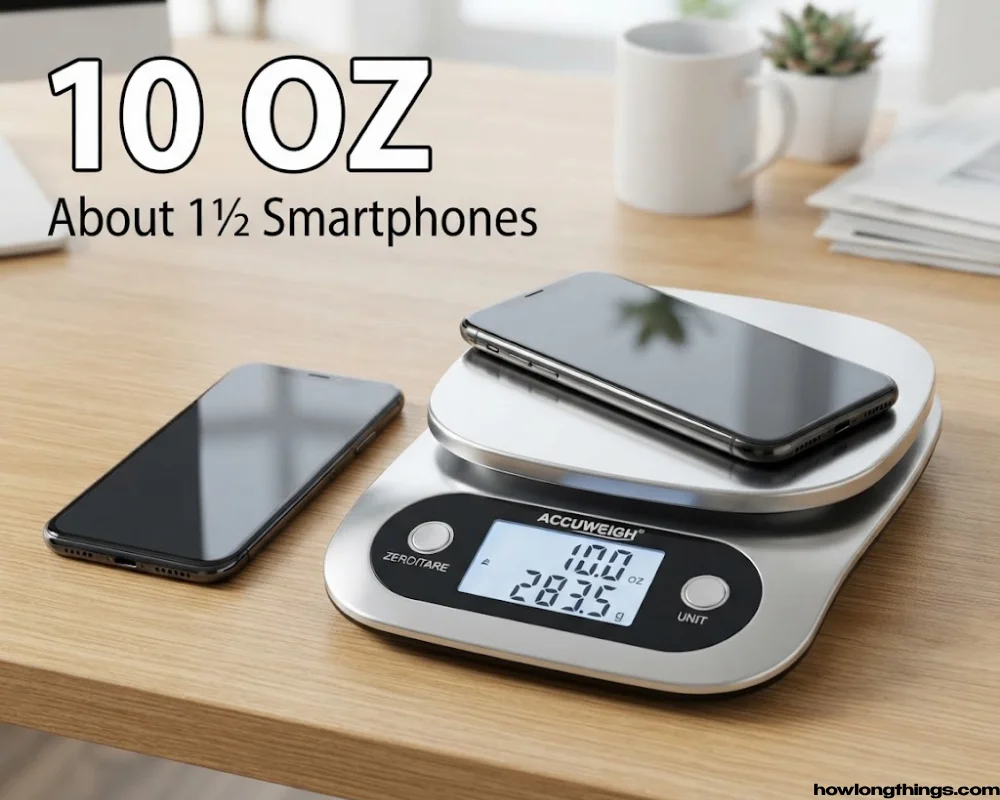
Heavier Than One Smartphone
Most modern smartphones weigh between 5.5 and 7 oz (roughly 156 to 200 grams). That means 10 oz is noticeably heavier than a single phone, closer to one and a half.
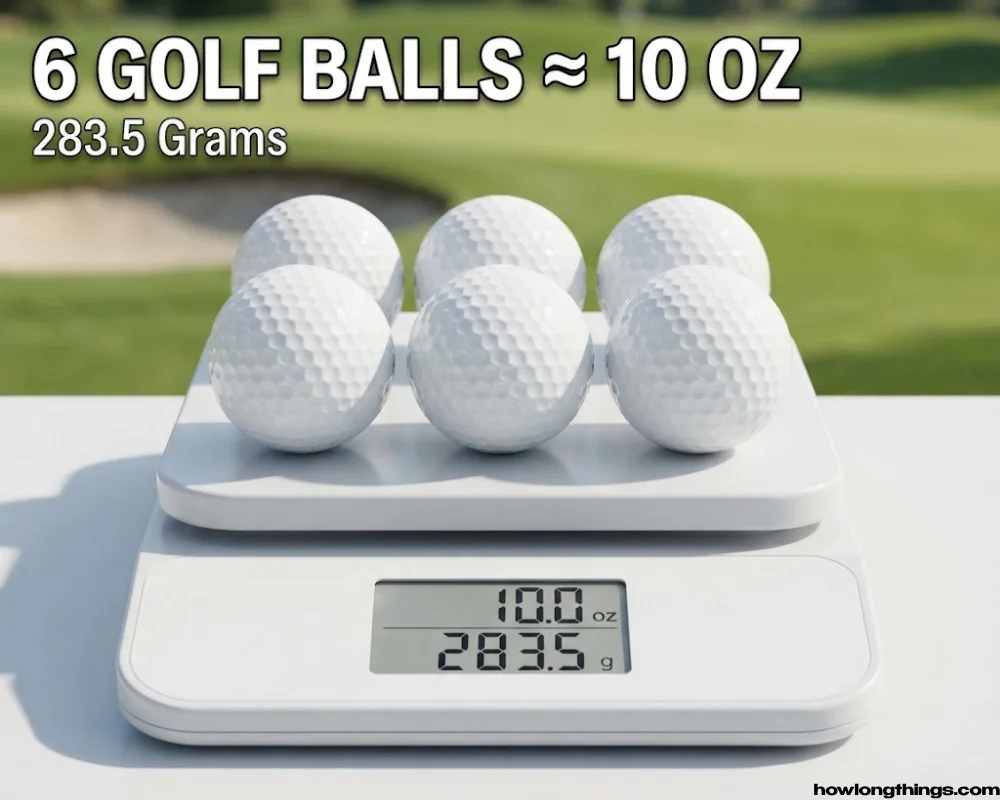
About Six Golf Balls
A regulation golf ball weighs up to 1.62 oz (45.9 grams). It takes roughly six golf balls to reach 10 oz, or 283.5 grams — a handy comparison for a small, dense object.
Not all “ounces” mean the same thing, and this trips up a lot of people. Knowing the difference matters more than the conversion math itself.
Avoirdupois Ounce vs. Troy Ounce
The ounce used in cooking, and the one this whole article is about, is the avoirdupois ounce (28.349523125 g). It’s the standard weight unit in U.S. recipes, groceries, and shipping.
The troy ounce is a different, heavier unit (about 31.1 grams) used only for precious metals like gold and silver. If you ever see “troy oz” on a coin or bar, that’s not the same measurement as a cooking ounce.
Weight Ounces vs. Fluid Ounces
A weight ounce measures mass — how heavy something is. A fluid ounce measures volume — how much space a liquid takes up.
These two aren’t interchangeable. 10 fluid ounces of water happens to weigh close to 10 weight ounces, but 10 fluid ounces of honey or oil weighs something different entirely, since density varies by ingredient.
This is exactly why “is 10 oz the same as 1 cup?” doesn’t have one simple answer. It depends on whether you’re measuring a liquid by volume or a solid ingredient by weight.
10 Oz to Grams Conversion Chart
A quick reference table makes it easy to check nearby values without doing the math each time.
Ounces
Grams
5 oz
141.75 g
8 oz
226.8 g
9 oz
255.15 g
10 oz
283.5 g
11 oz
311.84 g
12 oz
340.19 g
15 oz
425.24 g
For round numbers further out: 1 oz = 28.35 g, 20 oz = 566.99 g, 50 oz = 1,417.5 g, and 100 oz = 2,835 g.
In other weight units, 10 oz also equals about 0.2835 kilograms, 0.625 pounds, and 283,495 milligrams. Handy if a recipe or shipping label uses a different unit entirely.
FAQs About 10 Oz to Grams
How much is 10 oz in grams?
10 oz equals 283.5 grams (283.495231 g at full precision). This is based on the fixed conversion rate of 28.349523125 grams per avoirdupois ounce.
Is 10 oz the same as 1 cup?
No. A standard U.S. cup holds 8 fluid ounces by volume, so 10 fl oz is more than a cup. By weight, 10 oz of a solid ingredient like flour or sugar also doesn’t equal exactly 1 cup, since weight-to-volume depends on the ingredient’s density.
Is 10 oz 1 kg?
No. 10 oz is only about 0.28 kilograms, a little more than a quarter of a kilogram. A full kilogram is closer to 35.3 ounces.
Is 10 ounces 250 grams?
Not quite. 10 ounces is 283.5 grams, about 33.5 grams more than 250 grams. To get exactly 250 grams, you’d need roughly 8.8 ounces.
Is 1 ounce 1 kg?
No, not even close. 1 ounce is about 28.35 grams, while 1 kilogram is 1,000 grams — a kilogram weighs roughly 35 times more than an ounce.
Is 100 grams 10 oz?
No. 100 grams equals about 3.5 ounces, far less than 10 oz. To reach 10 oz, you’d need close to 283.5 grams, nearly three times as much.
Conclusion
Knowing that 10 oz equals 283.5 grams takes the guesswork out of recipes, shipping, and everyday measuring. Keep the formula (ounces × 28.349523125) handy, and you can convert any weight in seconds.
Elizabeth Queen is a Owner and consumer research writer at HowLongThings.com, specializing in product lifespan, durability, and everyday household research. She’s passionate about helping readers make smarter, longer-lasting buying decisions.