Struggling to picture 9 inches in your head? You’re not alone. Numbers on a screen rarely feel real until you connect them to something you can touch.
This guide turns 9 inches into everyday objects you already know. No ruler needed just your memory and a few common items from your kitchen, desk, or wallet. After visit this article you will be able to guide that how long is 9 inches.
Table of Contents
What Does 9 Inches Look Like? Quick Answer & Conversions
9 inches equals 22.86 cm, 0.75 feet, 228.6 mm, or 0.2286 meters. That’s the short answer.
To picture it fast: 9 inches is roughly the length of a standard dollar bill (6.14 inches) plus about three extra inches. Or think of a large kitchen knife, blade included.
Unit
Value
Inches
9 in
Centimeters
22.86 cm
Feet
0.75 ft
Millimeters
228.6 mm
Meters
0.2286 m
The math behind this is simple. One inch equals 2.54 cm exactly, a standard set by the International Yard and Pound Agreement of 1959. So 9 × 2.54 = 22.86 cm. This isn’t a rounded estimate — it’s the fixed, official conversion used worldwide.
Why does 9 inches show up so often? It’s a common size in product design. Small tablets, subway sandwiches, dinner plates, and paperback books frequently land near this mark, because it fits comfortably in the human hand and field of view.
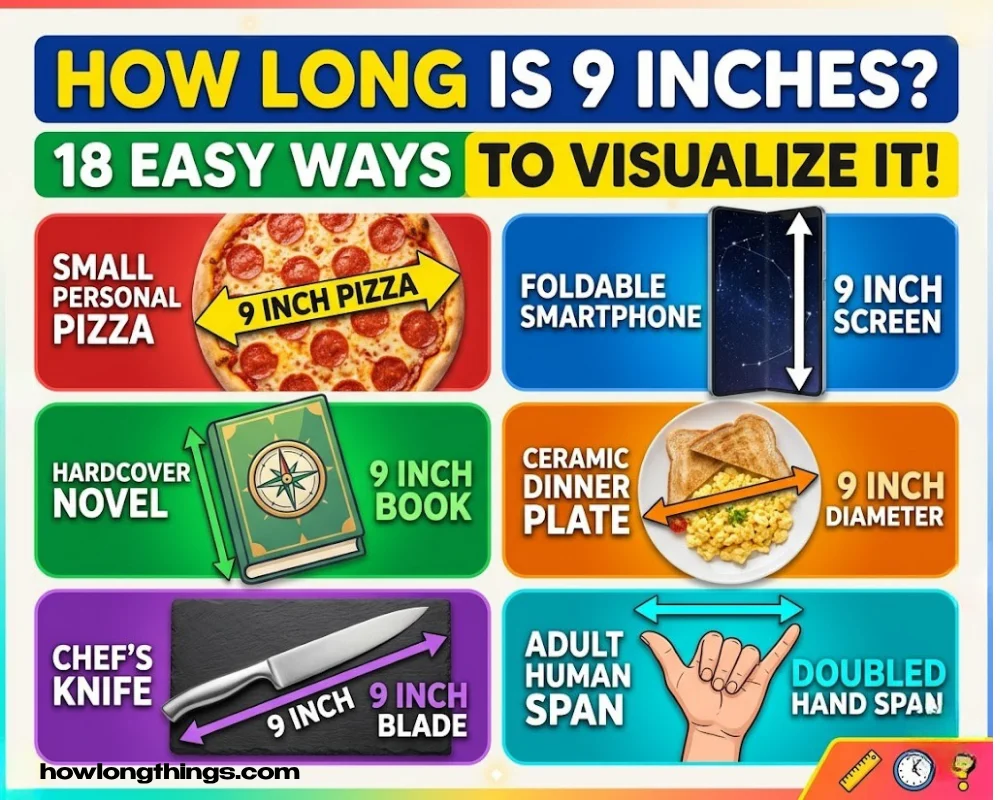
18 Everyday Things That Are 9 Inches Long
Here are 18 real-world items close to 9 inches in length. Each one gives you a different way to lock the size into memory.
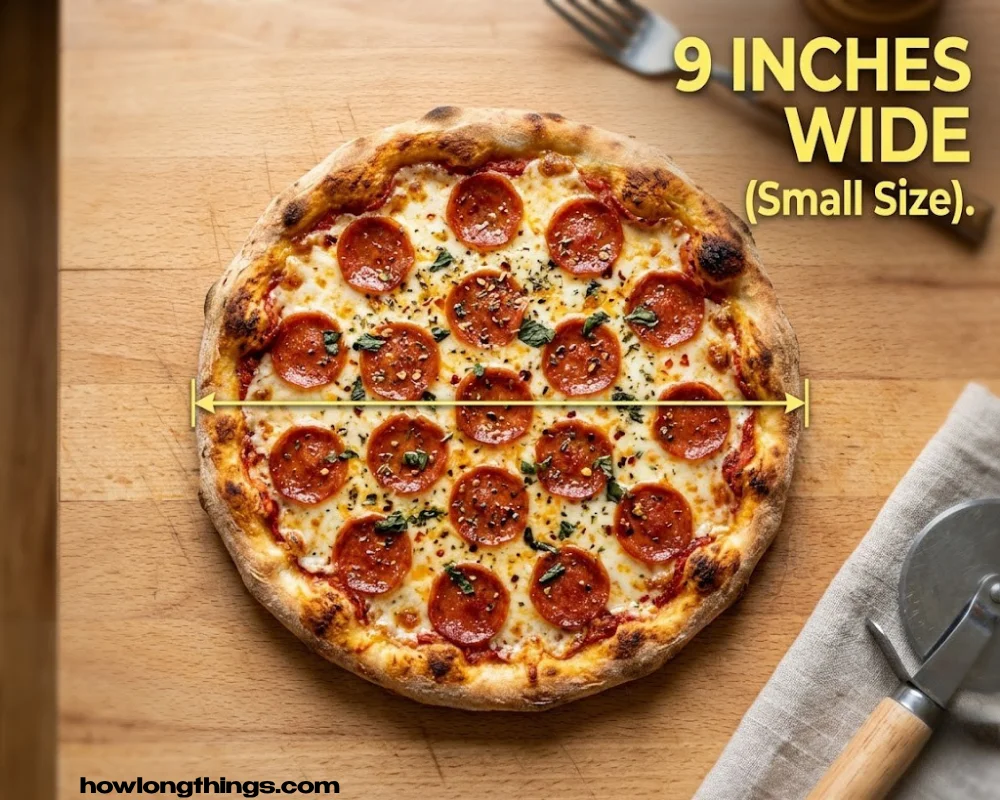
A 9-inch personal pizza: the small size at most pizzerias, sized for one person.
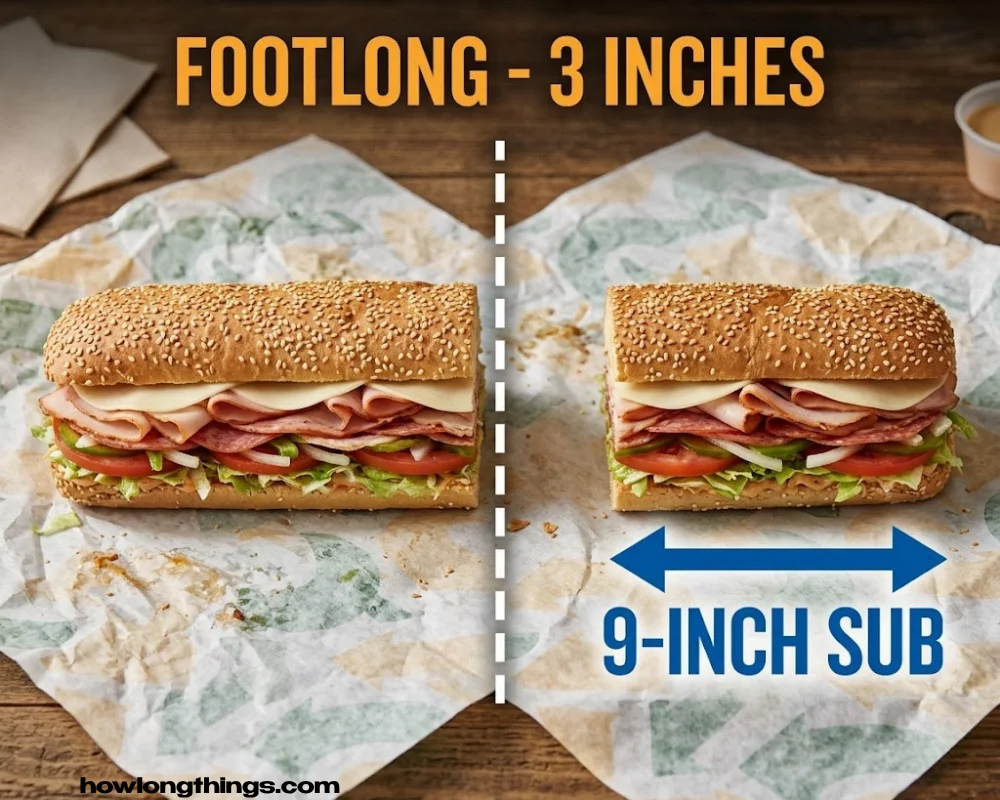
A foot-long sub, minus three inches: picture a Subway sandwich, then trim off a third.
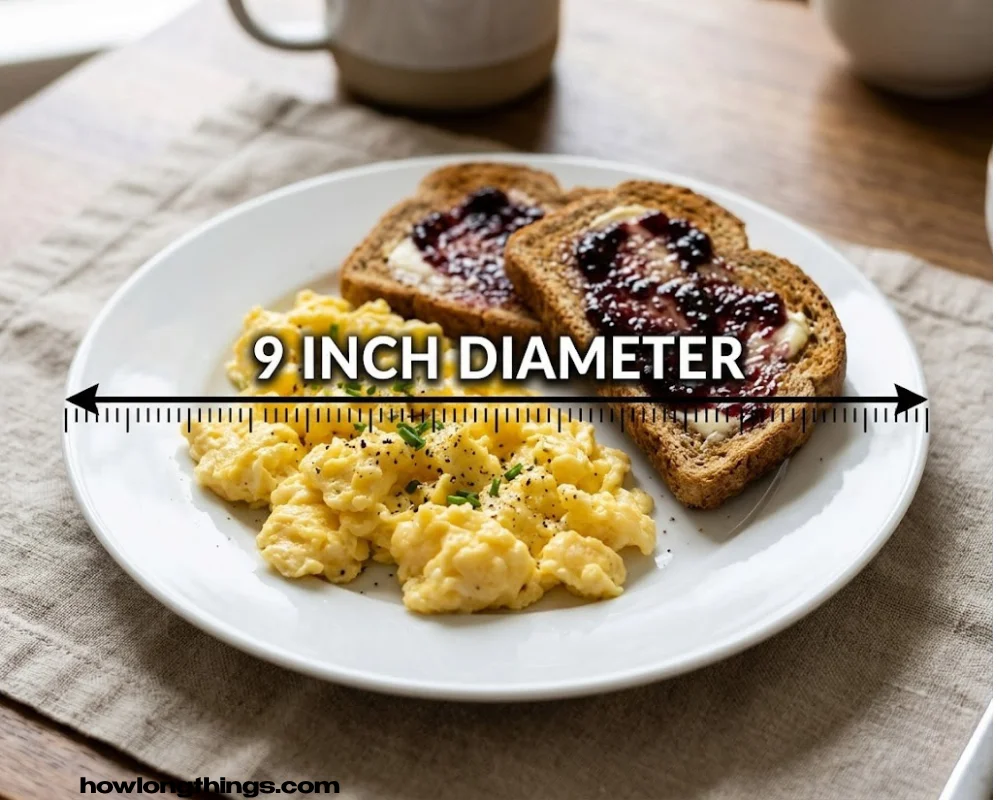
A standard dinner plate: most plates measure 9 to 10 inches across.
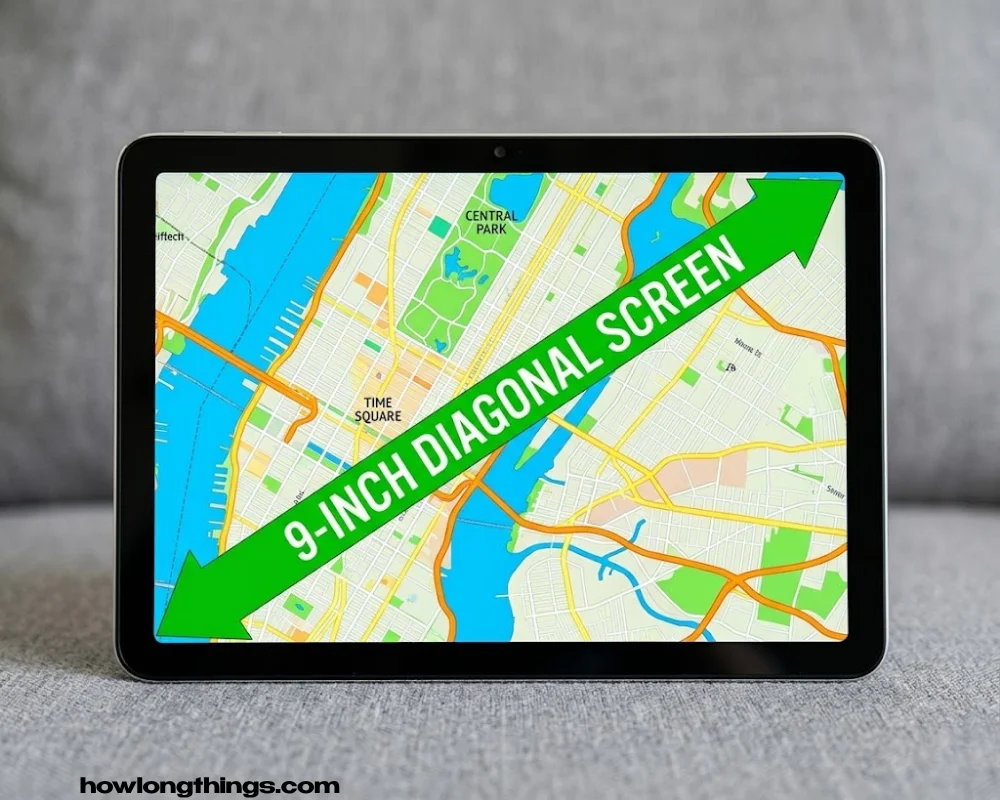
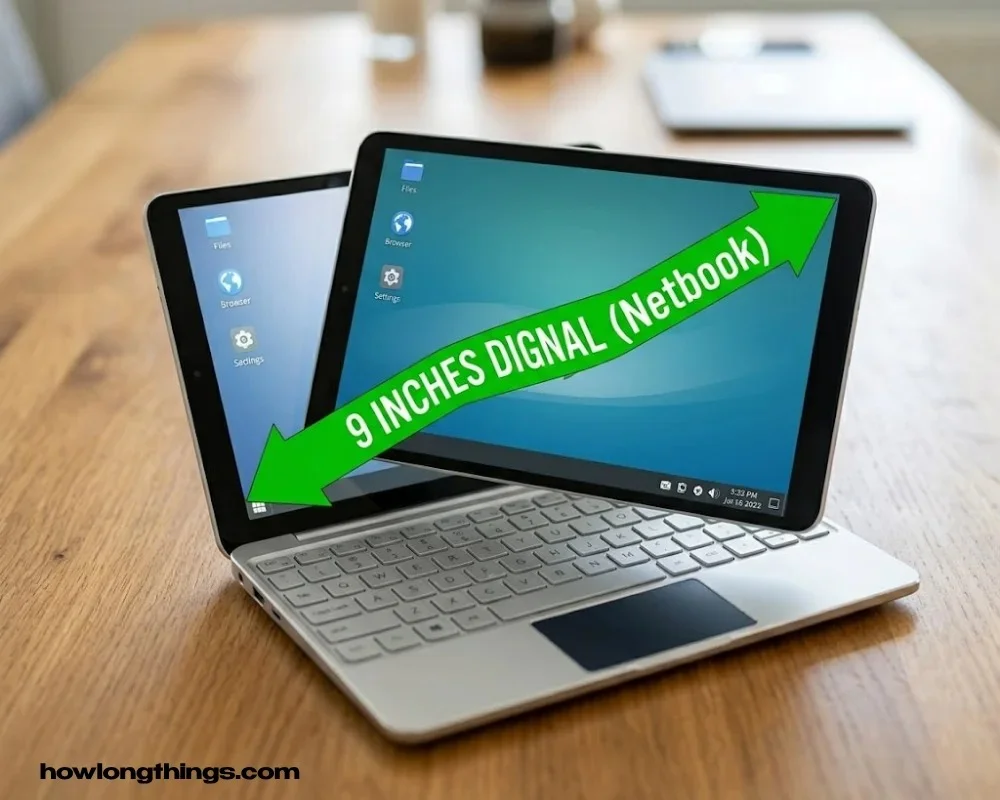
A small tablet screen : many mini tablets measure their diagonal around 9 inches.
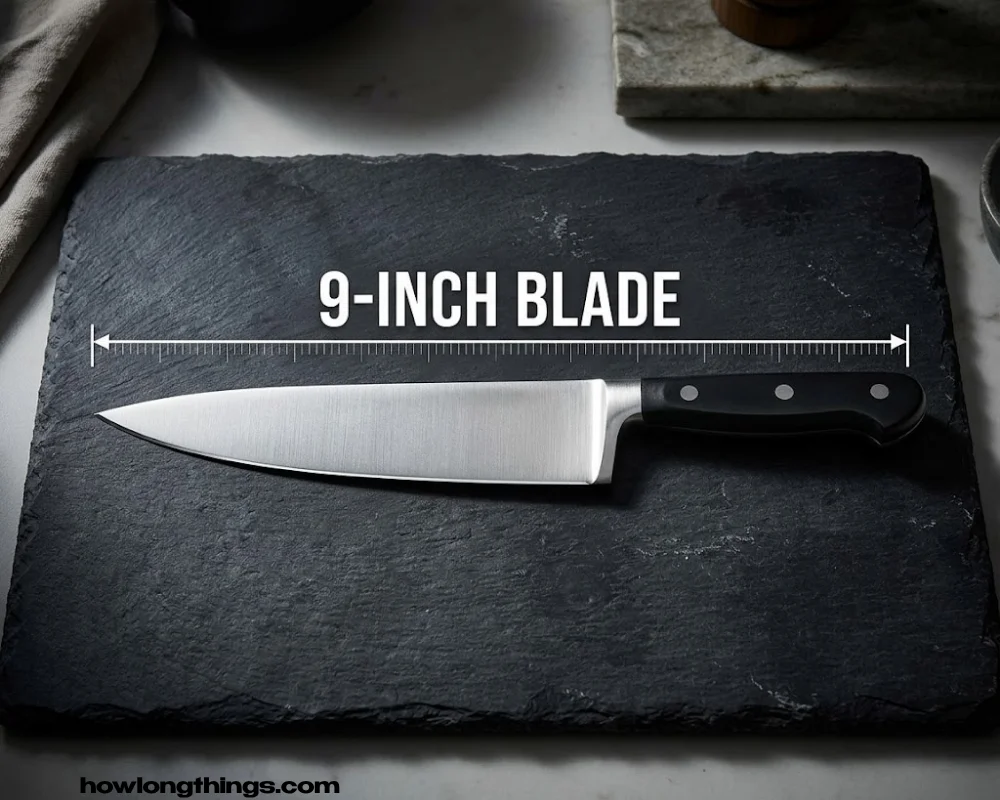
A large kitchen knife : chef’s knives with 9-inch blades are common in professional kitchens.
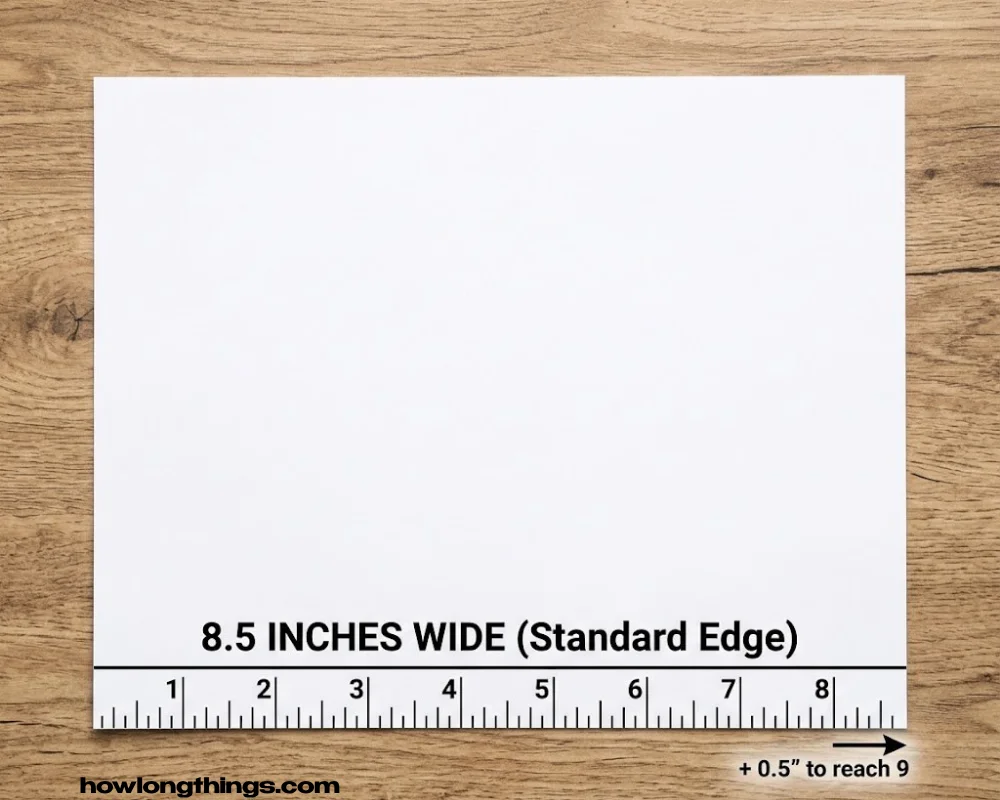
A sheet of paper’s short edge, plus half an inch : US letter paper is 8.5 inches wide.
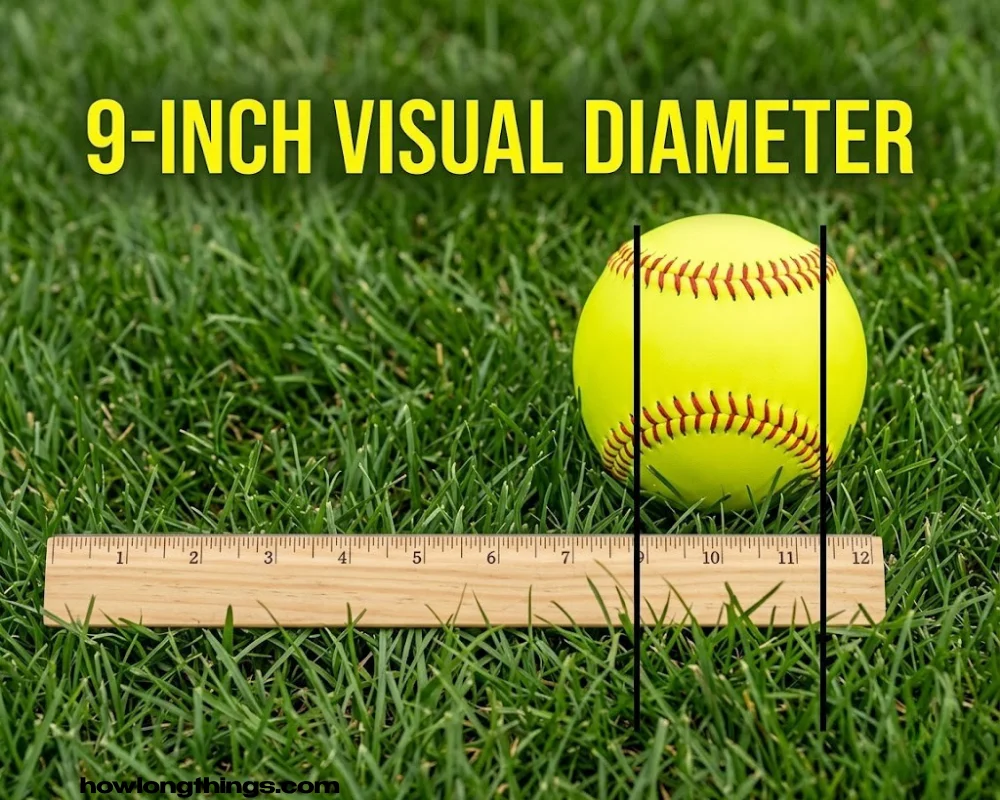
A softball : regulation softballs have a circumference near 12 inches, but their diameter sits close to this range when compared side by side.
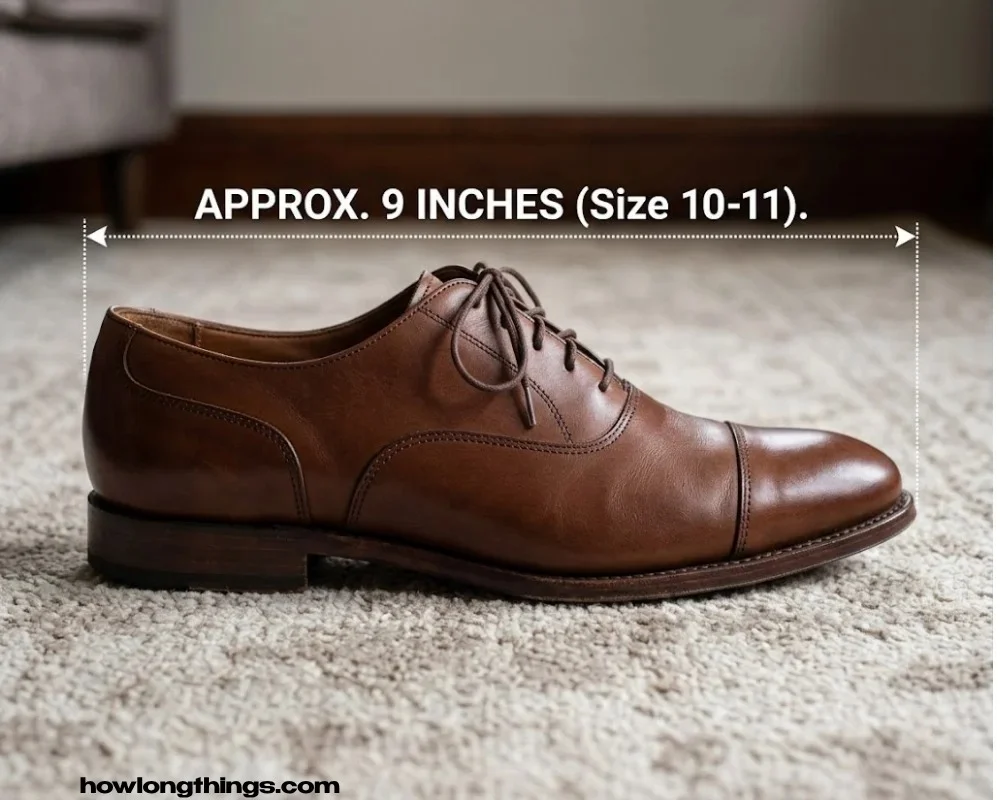
A men’s dress shoe, size 10-11 : average shoe length runs close to 9-10 inches.
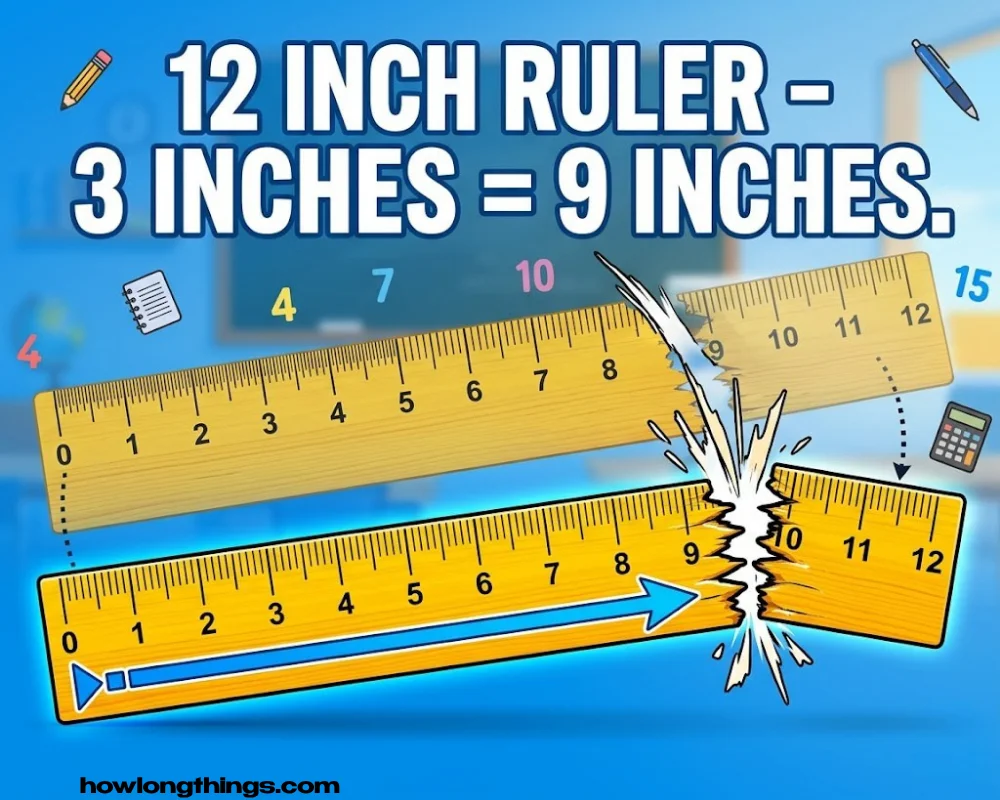
A standard ruler, minus three inches : most classroom rulers measure 12 inches.
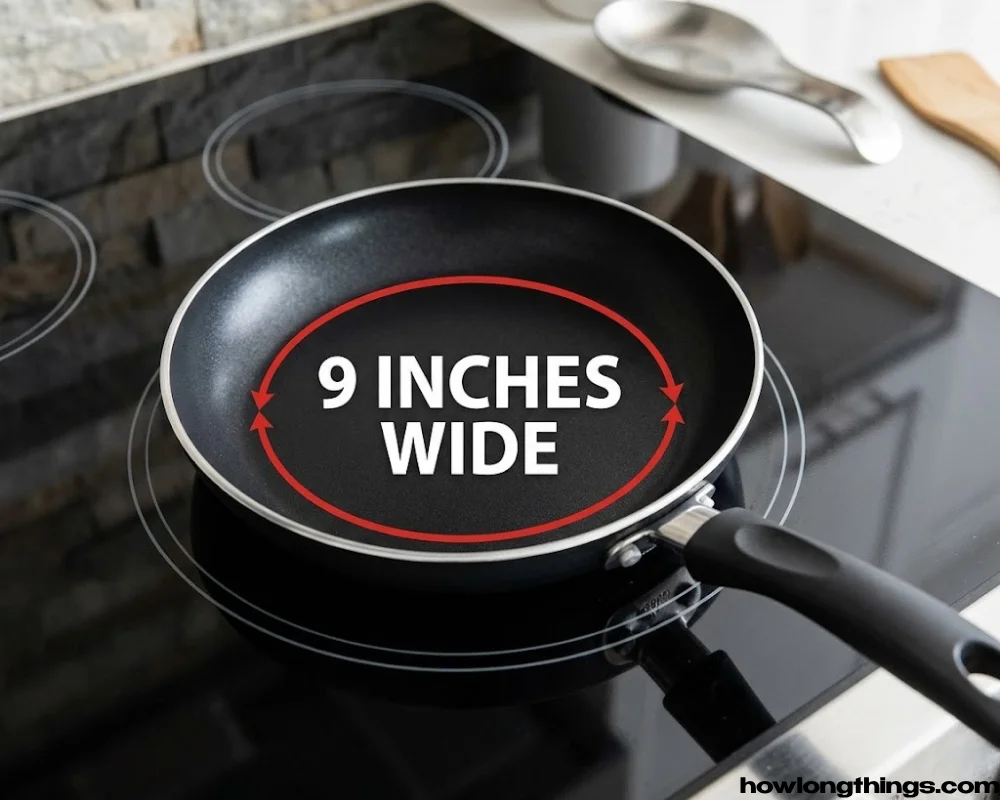
A small skillet : an 8- or 9-inch frying pan is a common kitchen staple.
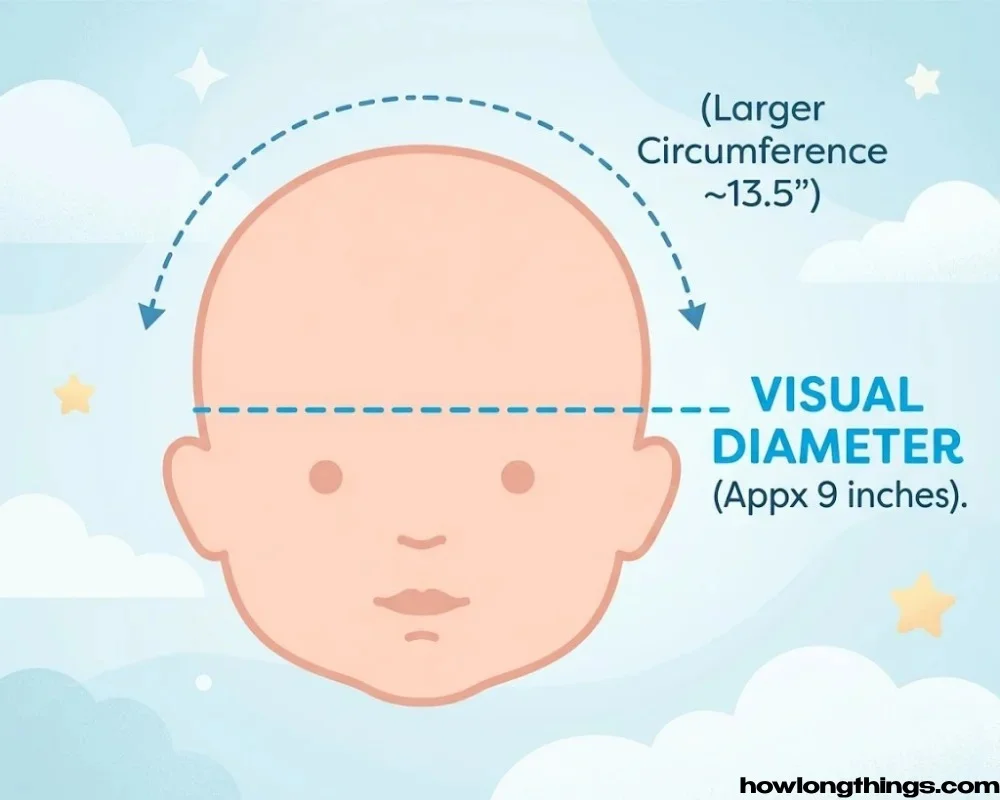
A newborn baby’s head circumference : average newborn head circumference is roughly 13.5 inches, but the diameter across is closer to 9 inches.
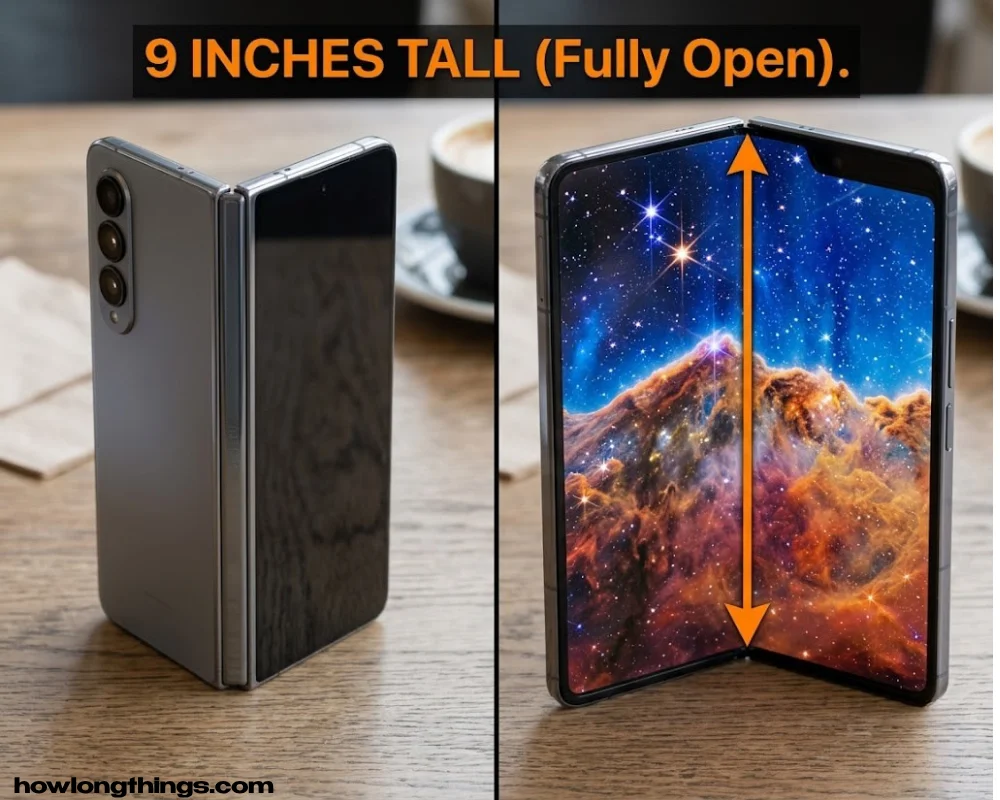
A large smartphone, unfolded : some foldable phones stretch near this length when open.
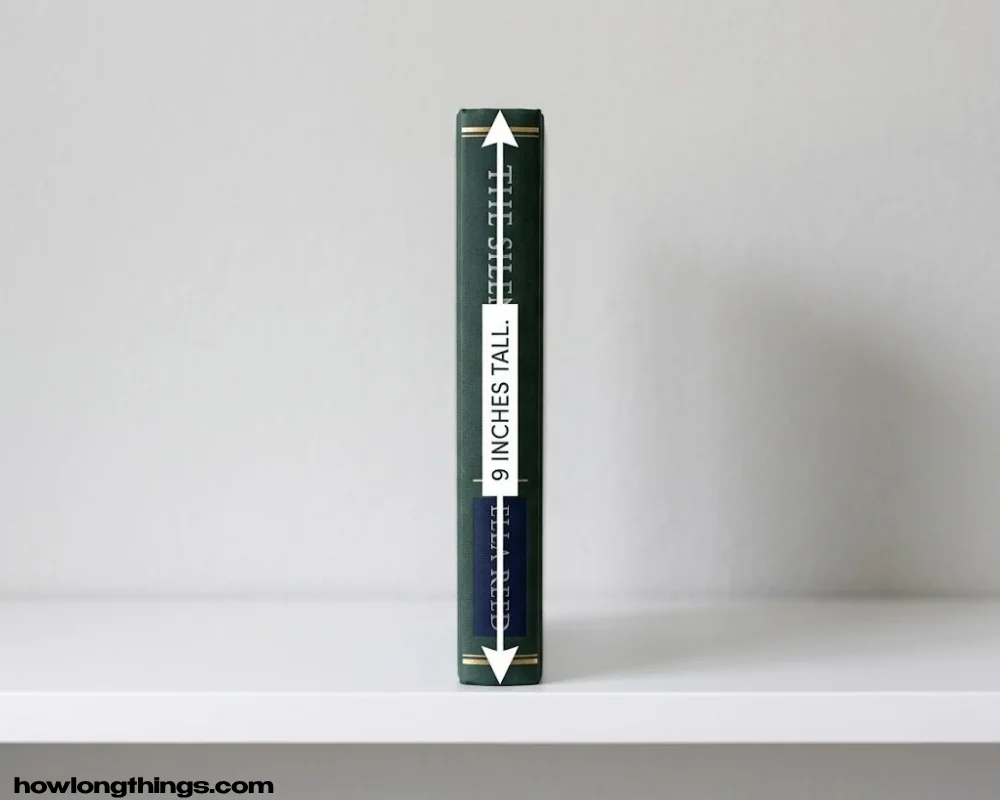
A hardcover novel : many hardcover books measure about 9 inches tall.
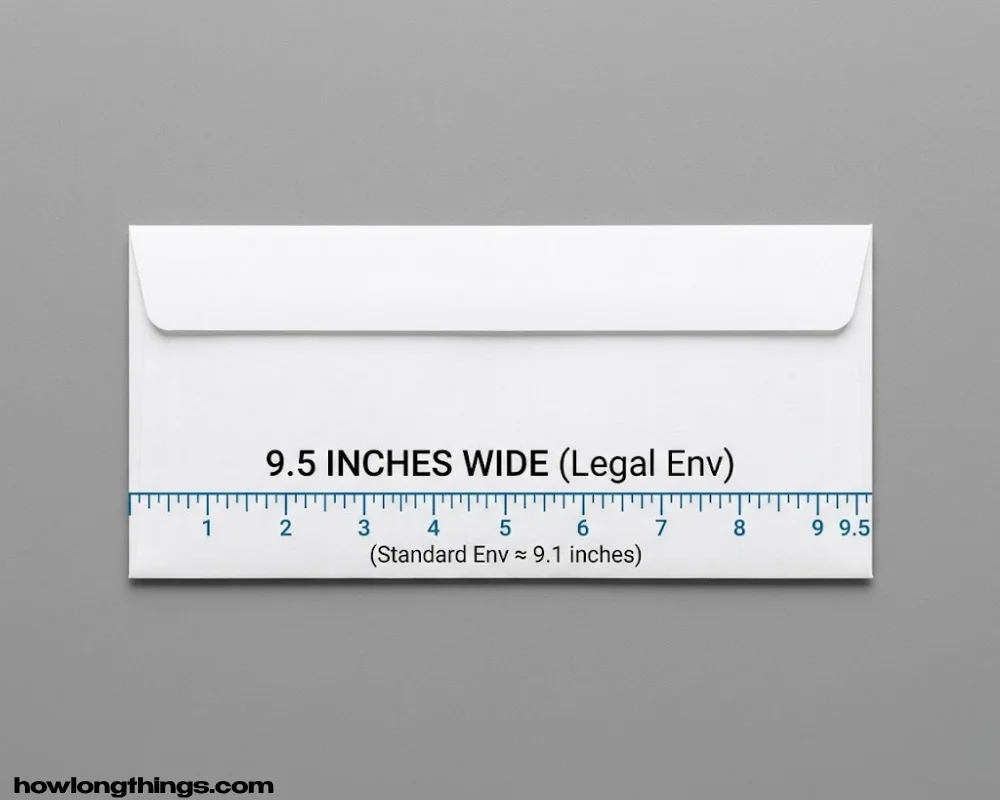
A standard envelope : legal-size envelopes run close to 9 inches wide.
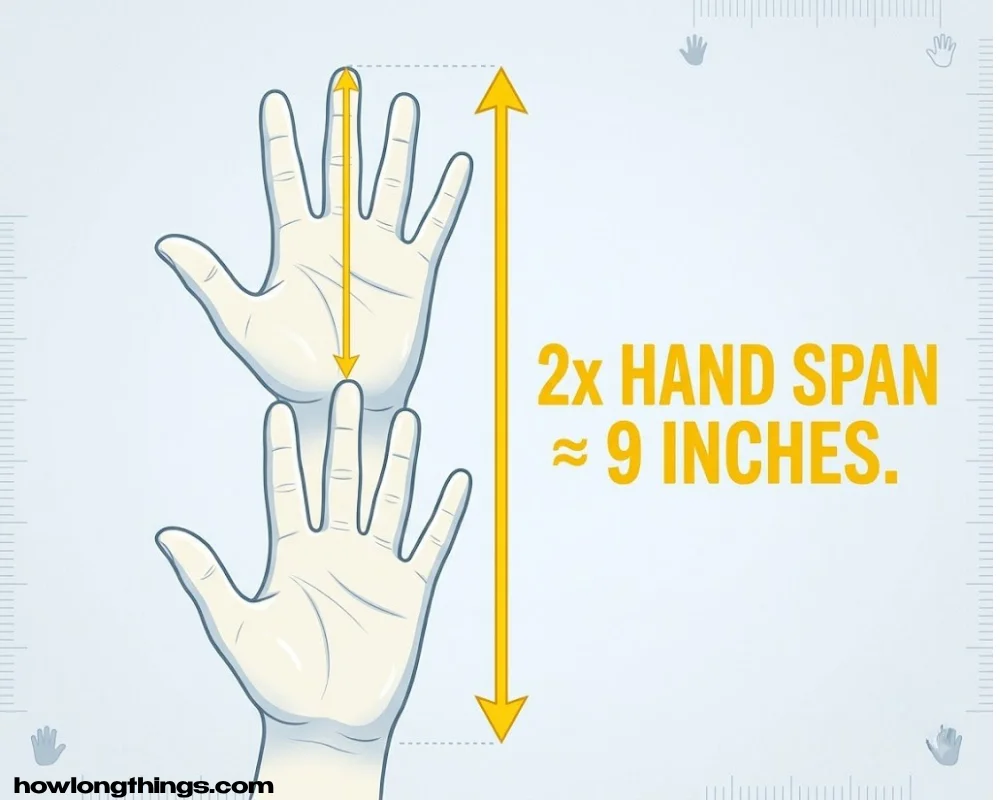
A adult human hand span, doubled : the average adult hand span is 7-8 inches; two stacked estimates land near 9.
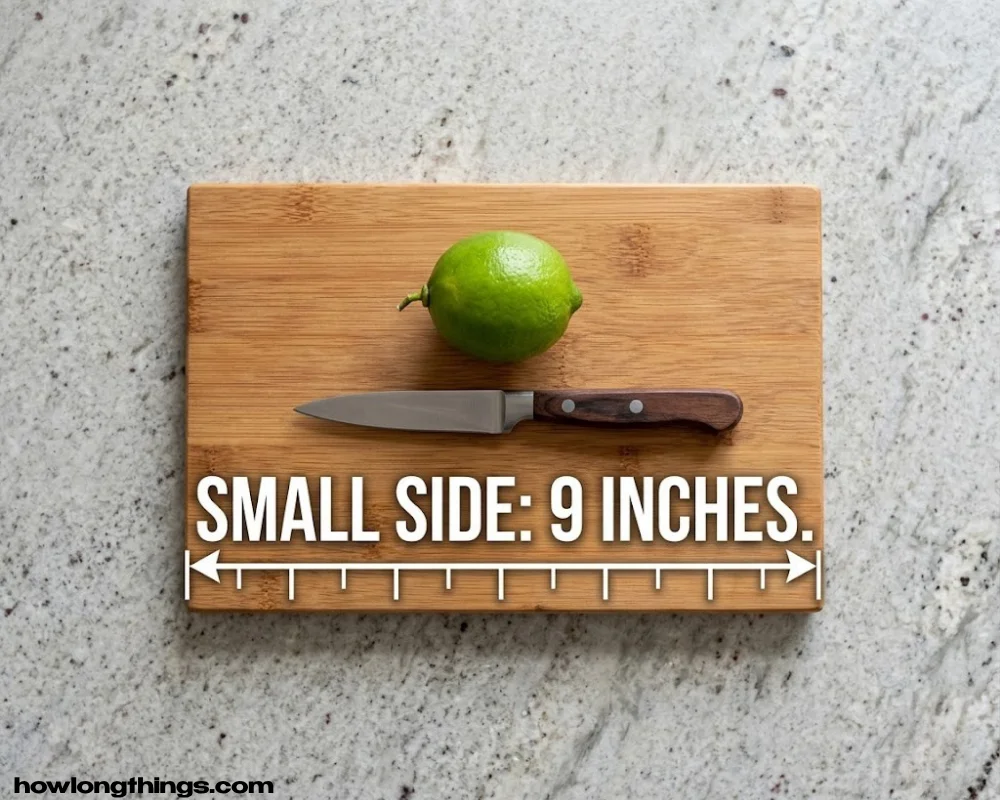
A small cutting board : compact cutting boards for one-off kitchen tasks often measure 9 inches on the short side.
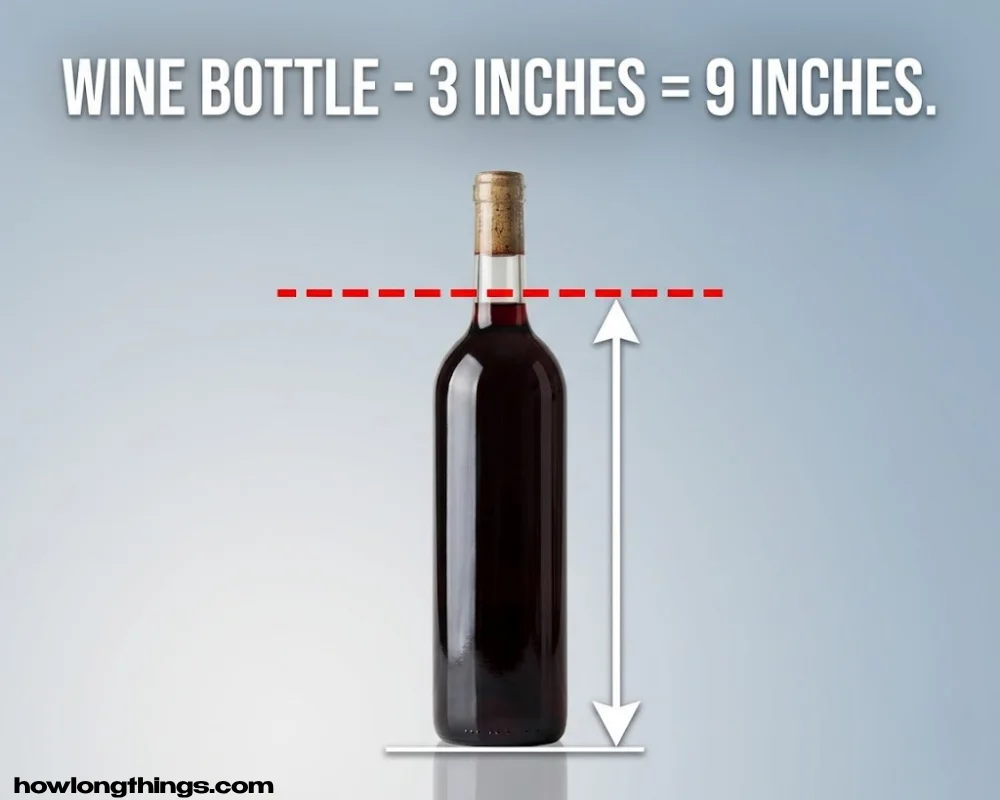
A wine bottle, minus three inches : standard wine bottles stand about 12 inches tall.
A laptop’s screen, measured diagonally on smaller models : 9-inch and 10-inch netbooks were once a popular compact size.
These comparisons work because your brain remembers shapes and objects far better than raw numbers. Anchoring an abstract measurement to something familiar — a plate, a knife, a book — makes the size stick.
Seeing 9 inches next to close measurements helps build a mental scale. Here’s how it stacks up:
Length
How It Compares to 9 Inches
6 inches
3 inches shorter
8 inches
1 inch shorter
9 inches
Exact match
10 inches
1 inch longer
12 inches (1 foot)
3 inches longer
This kind of side-by-side view is especially useful for furniture shopping, packaging, or DIY projects, where an inch or two can change whether something actually fits.
How to Measure 9 Inches Without a Ruler
No measuring tape handy? Your own body works as a surprisingly accurate backup tool.
Use your hand span. The average adult hand, from thumb tip to pinky tip when stretched wide, measures about 7 to 8 inches. Add one more finger-width, and you’re close to 9 inches.
Count finger widths. The average adult finger is close to 1 inch wide at the base knuckle. This is a rough guide, not an exact science — finger size varies by person — but it’s a handy field estimate.
Use a sheet of paper. A standard US letter sheet is 8.5 inches wide. Add roughly the thickness of your thumb, and you’ve reached 9 inches.
Use a dollar bill twice, loosely. A US dollar bill is 6.14 inches long. It won’t give you an exact 9-inch mark, but paired with a rough half-length estimate, it gets you in the ballpark for quick, no-tools checks.
None of these tricks replace a real tape measure for precise work. But for a fast, practical estimate, they’re reliable enough for everyday situations.
FAQs
How does 9 inches look like?
Picture a large kitchen knife blade, a small tablet screen, or a personal-size pizza. All of these sit close to 9 inches in length.
How long is 9 inches example?
A standard dinner plate, measuring 9 to 10 inches across, is one of the clearest real-world examples of this length.
What does 9 inches compare to?
It’s slightly longer than a standard sheet of paper’s width (8.5 inches) and about three inches shorter than a 12-inch ruler.
How long is 1 inch in fingers?
One inch is roughly the width of an average adult’s thumb or finger at the base knuckle. It’s a common, informal way to estimate small measurements without tools.
Is 2 fingers an inch?
Not quite. Two average adult fingers placed side by side usually measure closer to 1.5 to 2 inches, depending on finger size, so it can vary from person to person.
Final Thoughts
9 inches doesn’t have to stay an abstract number. From a kitchen knife to a dinner plate, everyday objects make this length easy to picture and remember. Next time you need a quick size check, you’ve got 18 real-world anchors to reach for.
Elizabeth Queen is a Owner and consumer research writer at HowLongThings.com, specializing in product lifespan, durability, and everyday household research. She’s passionate about helping readers make smarter, longer-lasting buying decisions.