Pick up a beer can and you’re holding a piece of engineering. Every beer can dimension — height, diameter, even the curve near the top — follows a standard that manufacturers have refined for decades.
This guide covers the real beer can dimensions used across the US today, how they convert to metric, what those odd three-digit can codes mean, and why the size in your hand matters more than you’d think.
Table of Contents
Official Beer Can Dimensions (Height, Diameter & Volume)
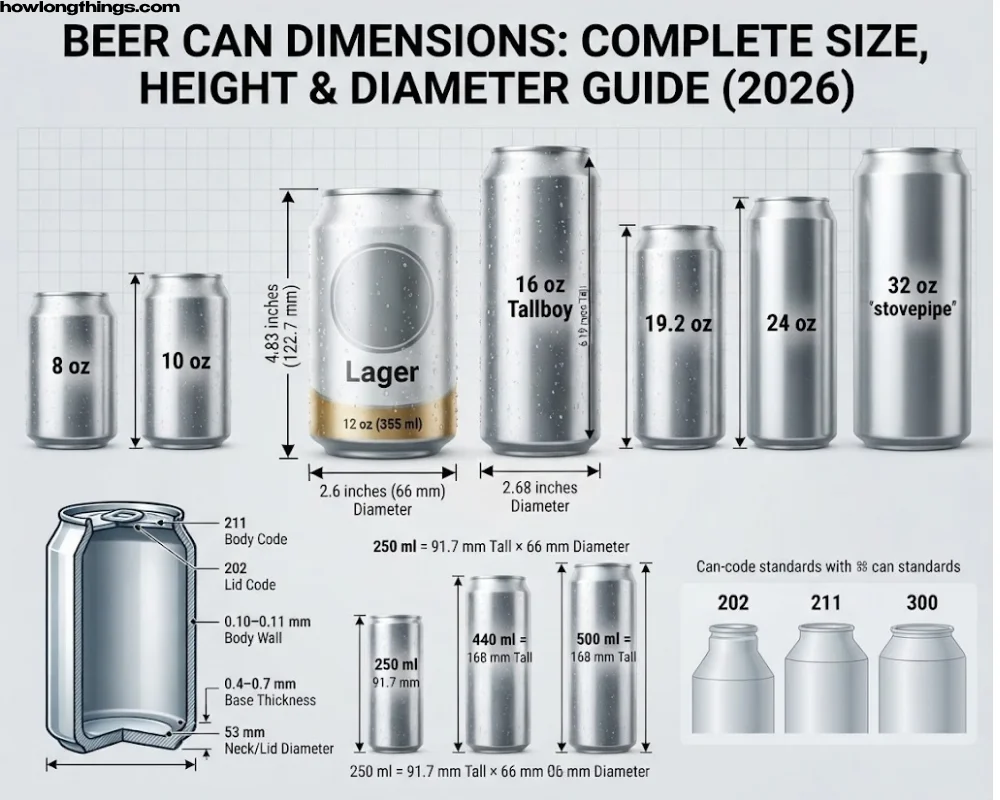
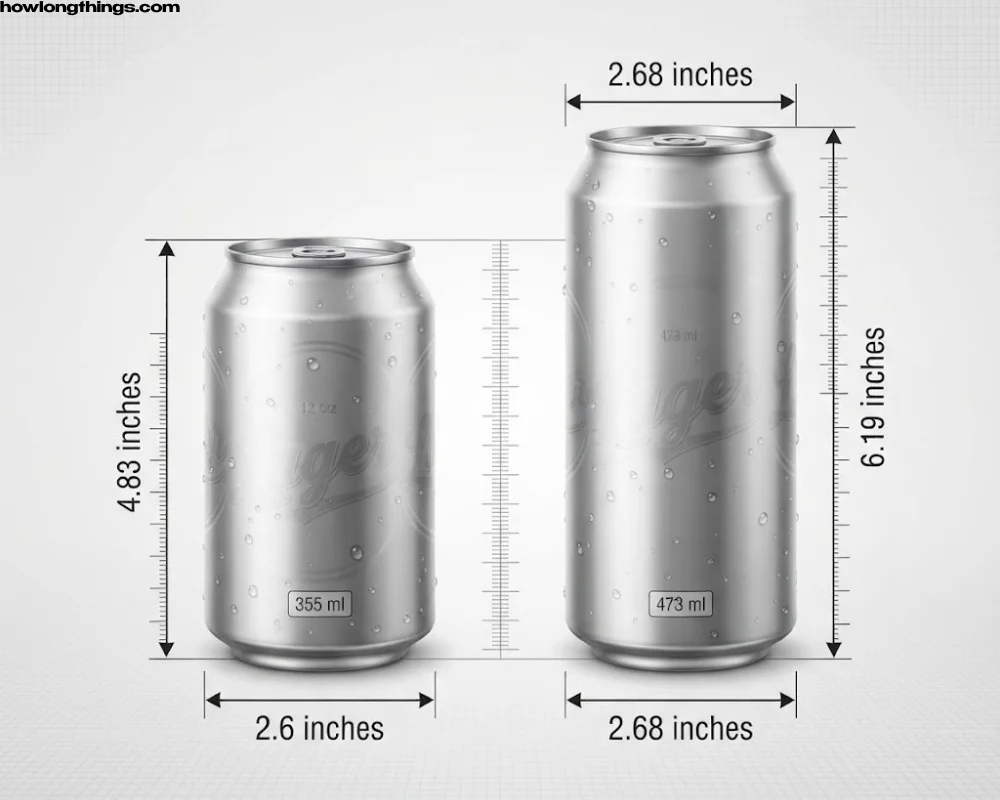
The standard 12 oz beer can measures about 4.83 inches tall and 2.6 inches in diameter. That’s the shape most American drinkers picture when they hear “beer can.”
The 16 oz tallboy stretches taller without getting much wider — around 6.19 inches tall, with a diameter close to 2.68 inches. More liquid, same footprint on the shelf.
Quick comparison:
- 12 oz standard: 4.83 in tall × 2.6 in diameter (355 ml)
- 16 oz tallboy: 6.19 in tall × 2.68 in diameter (473 ml)
Notice the pattern? Diameter barely changes between sizes. Height does almost all the work. That’s intentional — it lets breweries use the same filling and seaming equipment across multiple can sizes without retooling the whole line.
Beer Can Sizes by Volume (8 oz to 32 oz)
US breweries don’t stop at one size. Here’s how the lineup breaks down, from smallest to largest:
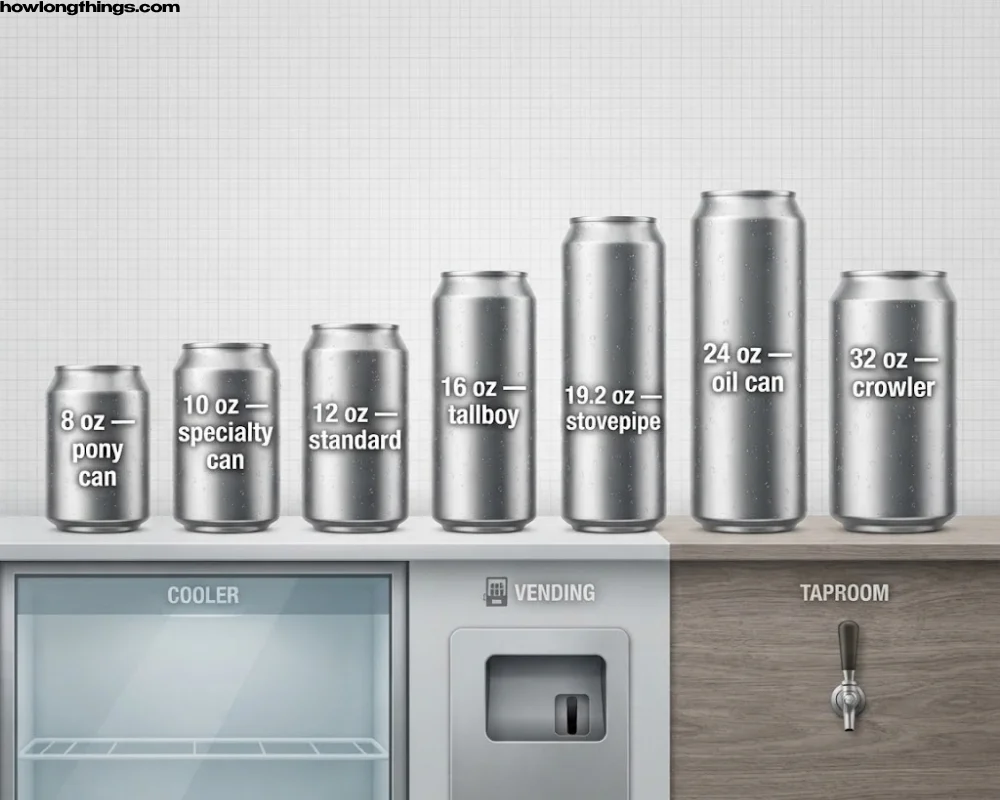
- 8 oz “pony can”: a mini format, often used for high-ABV beers or portion control
- 10 oz specialty can: a slimmer profile, popular for wellness drinks and lower-calorie beers
- 12 oz standard: the industry default — familiar, stackable, and compatible with nearly every cooler and vending machine in the country
- 16 oz “tallboy”: a full-pint pour, common in craft beer
- 19.2 oz “stovepipe”: taller still, often sold as a single-serve option at gas stations and convenience stores
- 24 oz “oil can”: a bulky, high-volume format favored by malt liquors and value beers
- 32 oz “crowler”: a sealed, to-go format breweries fill fresh at the taproom counter
The 12 oz can didn’t become standard by accident. It matches a typical serving size for a 5% ABV beer, fits neatly on distributor shelves, and works with nearly every piece of canning equipment on the market.
Beer Can Dimensions in ML, CM & MM (Metric Conversion Chart)
If you’re sourcing cans internationally, or just prefer metric, here’s the breakdown:
| Size | Volume | Height | Diameter |
| 8.3 oz | 250 ml | 91.7 mm (9.17 cm) | 66 mm (6.6 cm) |
| 12 oz | 355 ml | 122.7 mm (12.27 cm) | 66 mm (6.6 cm) |
| 14.9 oz | 440 ml | ~168 mm (16.8 cm) | 66 mm (6.6 cm) |
| 16.9 oz | 500 ml | 168 mm (16.8 cm) | 66 mm (6.6 cm) |
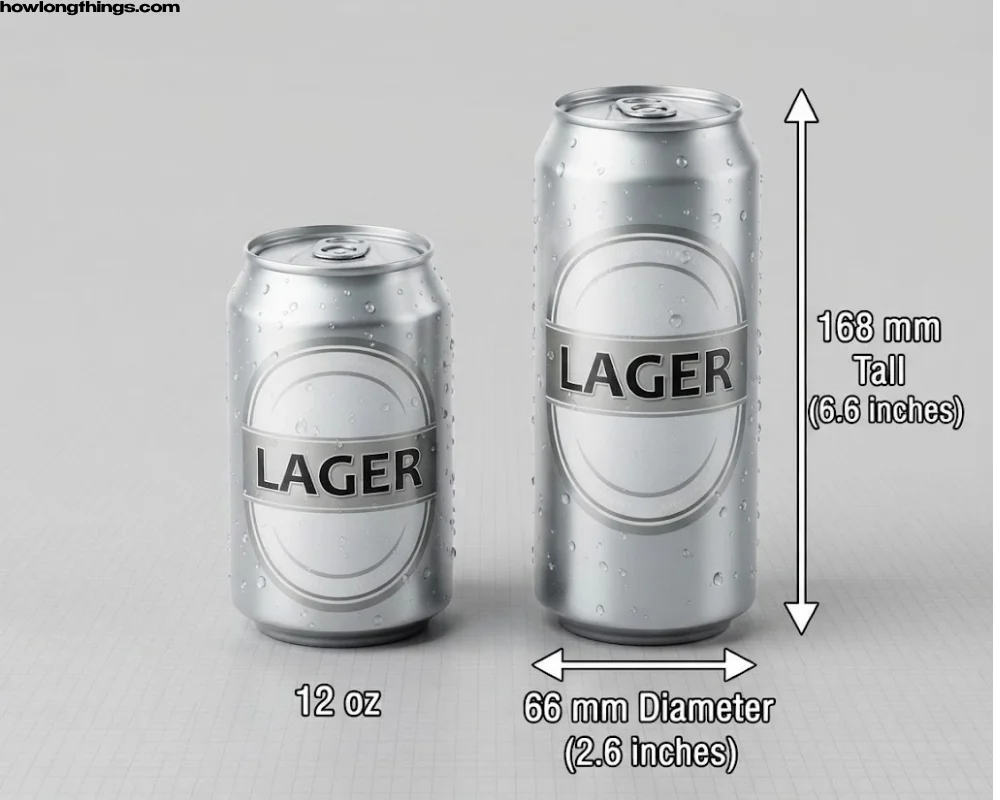
How big is a 500ml can of beer? It stands about 168 mm tall (6.6 inches) with a 66 mm diameter (2.6 inches) — noticeably taller than a standard 12 oz can, but the same width.
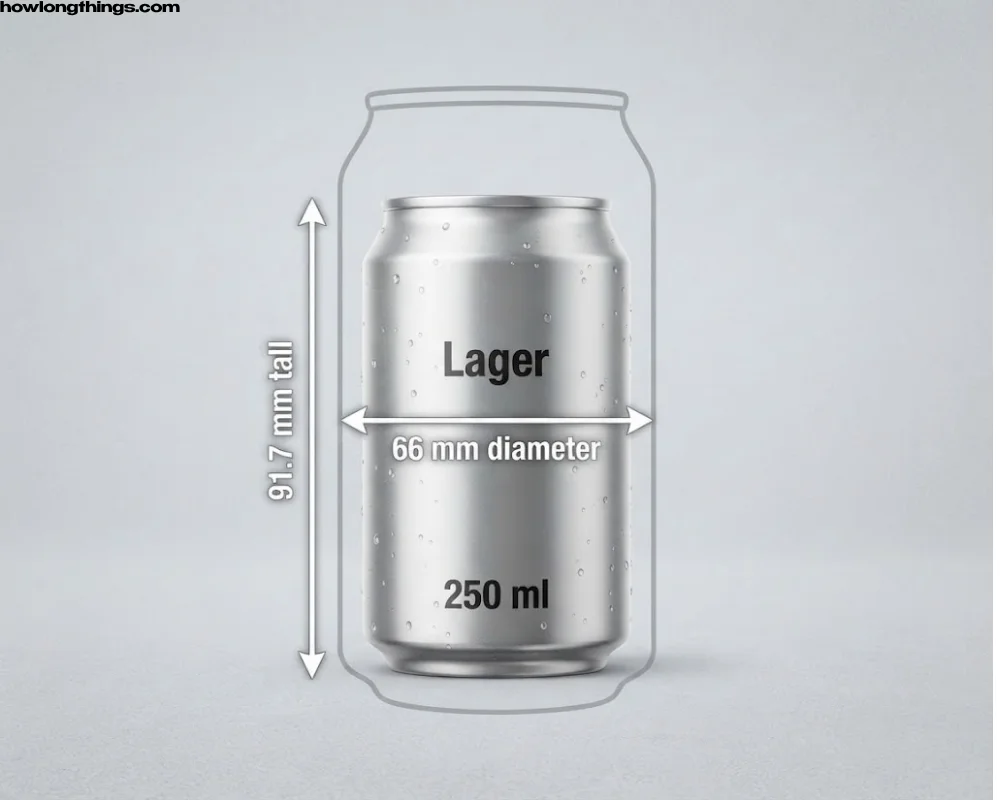
What are the dimensions of a 250ml can? Roughly 91.7 mm tall with the same 66 mm diameter shared across the standard can family.
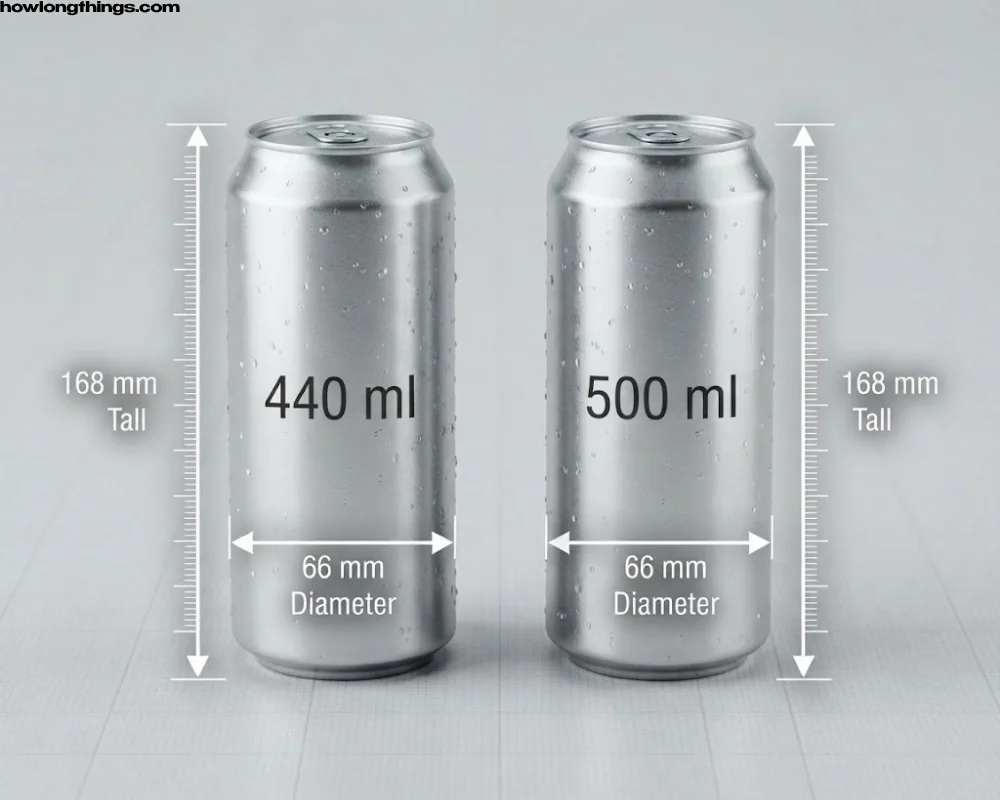
What are the dimensions of a 440mL can? Around 168 mm tall, close to the 500ml can in height, with the same 66 mm diameter.
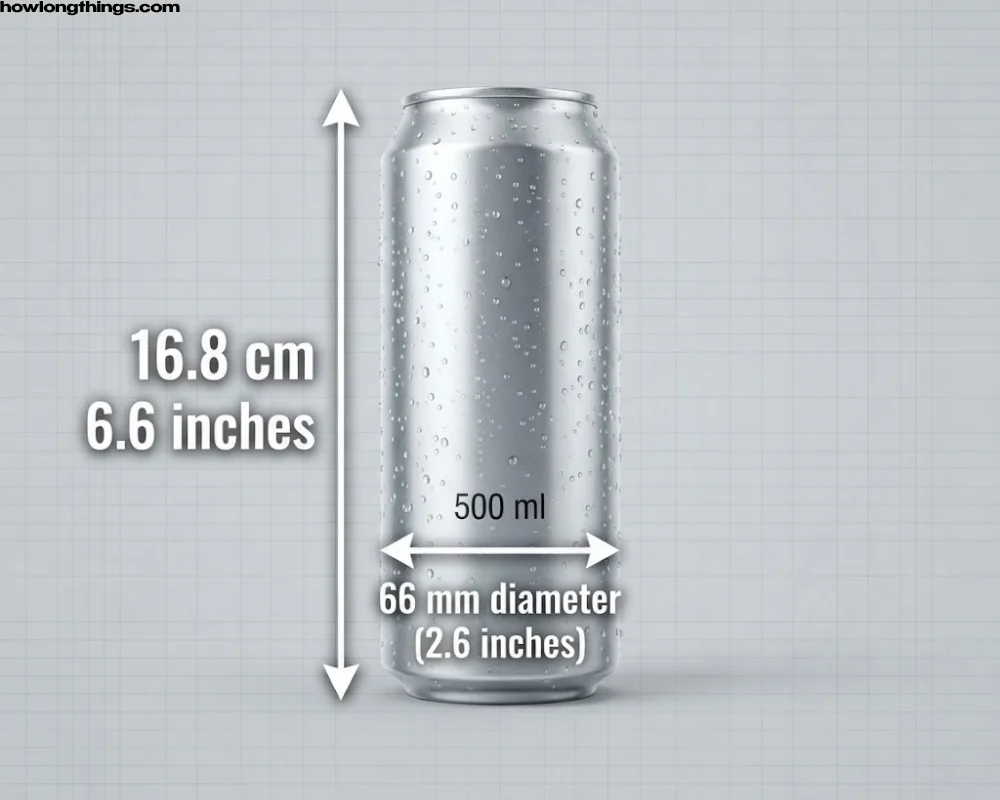
How tall is a 500ml can? About 16.8 cm, or roughly 6.6 inches — a size you’ll see often on imported and European-style lagers.
Must Visit: White Claw Can Dimensions: Easy Size, Height & Diameter Guide (2026)
Understanding Can Codes and Diameter Standards
Here’s something most guides skip entirely: the packaging industry doesn’t talk in plain inches. It uses can codes — three-digit numbers that describe diameter in inches and sixteenths of an inch.
Take the code “211.” Read it as 2 inches plus 11 sixteenths — that’s the standard body diameter for most 12 oz and 16 oz cans. The code “202” refers to the neck and lid diameter (2 inches plus 2 sixteenths), which is why nearly every standard can — regardless of height — uses the same 202 lid.
Larger formats like the 32 oz crowler often step up to a “300” diameter, giving the can a wider base to match its bulkier volume.
This coding system exists so manufacturers like Ball Corporation, Crown Holdings, and Ardagh Group can produce cans and lids that fit together no matter which factory made them. A 202 lid from one supplier will seal a 202 can from another — that interchangeability keeps the entire beverage industry running smoothly.
How a Can Is Built, Zone by Zone
A can isn’t one uniform thickness of metal. Manufacturers vary the aluminum gauge across five distinct zones, each doing a different structural job.
- Body wall: drawn and “ironed” from a flat disc of aluminum. Starting stock runs about 0.30 mm thick, ironed down to roughly 0.10–0.11 mm in the finished wall — thinner than a sheet of paper in places.
- Base: thicker than the wall, typically 0.4–0.7 mm depending on the zone, since it has to resist internal pressure and support stacked cans in shipping. The dome shape (curved slightly inward) is what lets such thin metal handle that load.
- Neck: the tapered section that narrows the body to meet the lid. Cans neck down in as many as 11 gradual stages, each too subtle to see with the naked eye, which prevents the metal from wrinkling.
- Flange: the top edge, flared outward at roughly a 12° angle, where the lid gets crimped on. Flange thickness with lacquer coating runs about 0.15–0.16 mm.
- Lid (end): made from a stronger, more magnesium-rich alloy than the body, since it needs to flex without cracking when scored for the pull-tab. Despite being the smallest piece, the lid can account for up to 25% of a can’s total weight.
Since the 1960s, the standard lid diameter has shrunk from 60 mm down to about 54 mm industry-wide. That sounds small, but across the roughly 100 billion cans produced globally each year, it saves an estimated 90 million kilograms of aluminum annually.
Full Spec Sheet: Standard 355 ml / 12 oz Can
| Dimension | Measurement |
| Outside body diameter | ~66 mm (2.60 in) — can code “211” |
| Neck / lid diameter | ~53 mm (202 end) |
| Finished can height | 122.7 mm (4.83 in) |
| Body wall thickness | ~0.10–0.11 mm |
| Base wall thickness | 0.4–0.7 mm (zone-dependent) |
| Flange width | ~2.1 mm |
| Flange angle | ~12° |
| Internal pressure resistance | 6.2 bar minimum (90 PSI) |
| Column strength | 675–1,000 N minimum (varies by can) |
| Finished can weight (body + end) | ~13–14 g total |
Common Beer Can Sizes: Full Manufacturer Specs
| Size | Can code | Outside diameter | Finished height | Nominal weight |
| 200 ml slim | 202/200/200 | 53.4 mm max | 111.2 mm | ~9.2 g |
| 250 ml slim | 202/200/200 | 53.4 mm max | 134.0 mm | ~8.1–9.4 g |
| 330 ml sleek | 206.5/200/200 | 58.1 mm max | 145.4 mm | ~9.6 g |
| 355 ml standard | 211/202/200 | 66 mm max | 122.7 mm | ~13–14 g |
| 473 ml (16 oz) | 211/202/200 | 66 mm max | ~157 mm | ~15 g |
| 500 ml standard | 211/202/200 | 66 mm max | 168 mm | ~16 g |
Weights and exact heights shift slightly by manufacturer and can-wall gauge — these are industry-typical figures, not fixed constants.
Structural Numbers That Rarely Get Published
- Internal pressure resistance: 6.2 bar / 90 PSI minimum — carbonated beverages can push a sealed can well past atmospheric pressure, especially if the can warms up.
- Column strength: 675–1,000+ Newtons minimum, depending on can size — this is what lets empty cans stack on pallets several layers high without crushing.
- Material: body stock is a 3000-series aluminum alloy (roughly 99% aluminum with manganese, magnesium, and iron); end stock uses a different, more magnesium-rich alloy so it can flex without cracking when scored.
- Interior coating: a sprayed epoxy lacquer lines the inside, separating the beverage from bare aluminum. Without it, acidic drinks would pick up a metallic taste and slowly corrode the can.
Why Beer Can Dimensions Matter (Branding, Shipping & Compatibility)
Size isn’t just a technical detail. It shapes decisions breweries make every day.
Label space and shelf appeal depend heavily on can shape. A taller, slimmer can gives designers more vertical room for artwork and stands out visually next to shorter, squatter cans — which is part of why so many craft breweries lean toward tallboys and sleek formats.
Vending machines, coolers, and fridge packs are all built around standard diameters. A can that’s even a few millimeters off the 202 or 211 spec might not fit existing equipment, which is exactly why the industry sticks so closely to these codes.
Shipping weight and pallet efficiency matter more than most drinkers realize. A taller, narrower can uses more aluminum per ounce of liquid than a shorter, wider one — small differences that add up fast once you’re shipping millions of units.
Homebrew and crowler filling setups also depend on standard sizing. Most seaming machines at taprooms are calibrated for 300-diameter crowlers, which is why that size dominates fresh-fill counters nationwide.
FAQs About Beer Can Dimensions
How big is a 500ml can of beer?
A 500ml beer can measures about 168 mm (6.6 inches) tall with a diameter of roughly 66 mm (2.6 inches).
What are the dimensions of a 250ml can?
A 250ml can stands around 91.7 mm (9.17 cm) tall, with the same standard 66 mm diameter used across most beer can sizes.
What are the dimensions of a 440mL can?
A 440ml can is approximately 168 mm tall, close in height to a 500ml can, with a matching 66 mm diameter.
How tall is a 500ml can?
About 16.8 cm, or roughly 6.6 inches — noticeably taller than a standard 12 oz (355 ml) can.
How tall is a 500ml beer bottle?
A 500ml beer bottle typically stands around 9 to 9.5 inches (23 to 24 cm) tall, though this varies more by manufacturer than cans do, since bottle molds aren’t standardized the same way can codes are.
Final Thoughts
From the pocket-sized 8 oz pony can to the 32 oz crowler, every beer can dimension in the US traces back to a small set of standardized codes — 202, 211, and 300 — that keep production, shipping, and shelf space running efficiently across the entire industry.

Elizabeth Queen is a Owner and consumer research writer at HowLongThings.com, specializing in product lifespan, durability, and everyday household research. She’s passionate about helping readers make smarter, longer-lasting buying decisions.