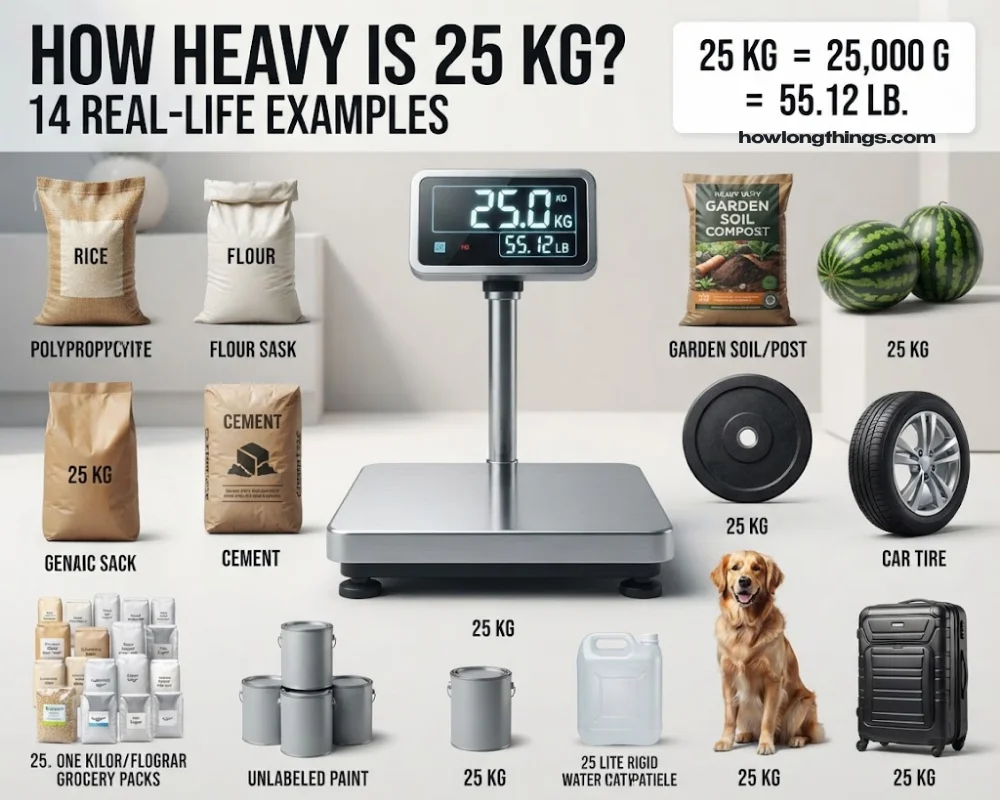
25 kg heavy is a number most people have already carried without thinking twice about it. A rice bag, a packed suitcase, a bag of dog food — all of these land right around this exact weight.
This guide turns 25 kilograms into 14 real, familiar comparisons, plus clear answers on lifting difficulty, size, and a few common weight-related questions tied to this number.
Table of Contents
Is 25 kg Very Heavy? Quick Conversion & Answer
25 kg equals 55.12 pounds. Here’s the full breakdown:
Unit
Value
Kilograms
25 kg
Grams
25,000 g
Pounds
55.12 lb
Ounces
881.85 oz
Stone
3.94 st
So, is 25 kg very heavy? For a short lift, no. Most healthy adults handle this weight without much strain for a quick carry. The difficulty shows up during sustained lifting, an awkward grip, or repeated handling throughout the day.
Here’s a simple way to picture where 25 kg sits compared to other common weights:
Weight
How It Compares to 25 kg
5 kg
5 times lighter
10 kg
Less than half
15 kg
10 kg lighter
20 kg
5 kg lighter
25 kg
Reference weight
30 kg
5 kg heavier
50 kg
Exactly double
25 kg is two and a half times heavier than 10 kg, and exactly half of 50 kg. This kind of side-by-side comparison makes the number far easier to picture than a raw conversion alone.
Is 25 kg Heavy to Lift? What Affects the Difficulty
Is 25 kg heavy to lift? The honest answer depends on three things: your lifting experience, the object’s shape, and how the weight is distributed.
A suitcase with a handle and wheels feels far lighter than the same 25 kg packed into a loose sack you have to hug against your chest. This is because distributed weight spreads the strain across your whole body, while concentrated weight puts all the pressure on your hands and forearms.
For safe lifting, keep the load close to your body, bend at the knees rather than the waist, and avoid twisting while carrying anything close to this weight. These small adjustments matter more than raw strength when handling a load like this regularly.
Here’s a clean mental shortcut: one liter of water weighs almost exactly one kilogram. That means 25 liters of water, a little over 6.6 U.S. gallons, weighs almost precisely 25 kg. It’s one of the most scientifically reliable comparisons you can make.
14 Real-Life Things That Weigh 25 kg
Here are 14 objects and comparisons that land right around 25 kilograms.
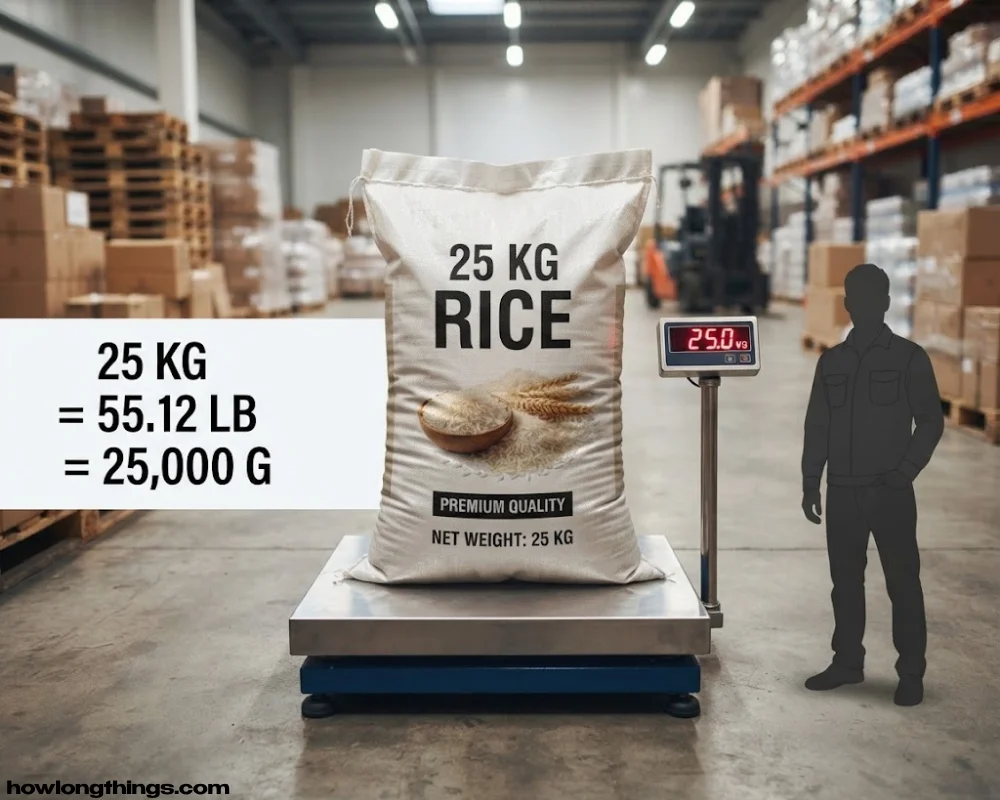
25 kg Rice Bag
A full rice bag sold at this exact weight is one of the most direct, no-guesswork examples on this list. Grocery stores and bulk suppliers commonly package rice in 25 kg sacks for households and restaurants. Anyone who has lifted one off a store shelf already knows this weight by feel.
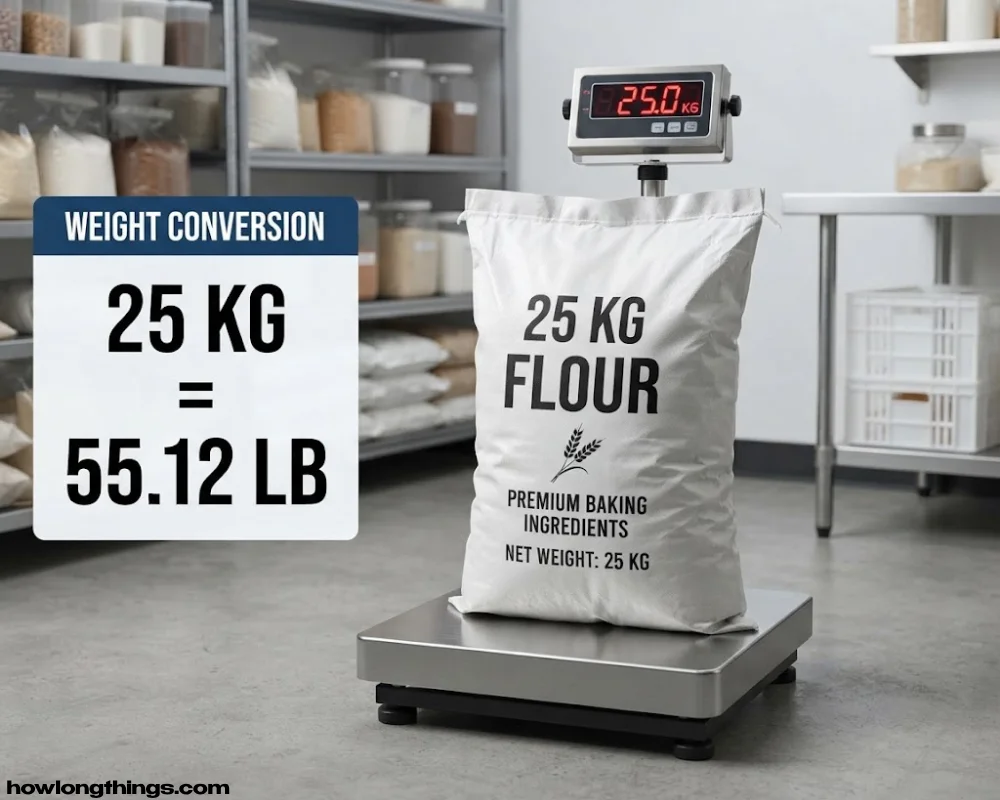
25 kg Flour Bag
Bulk flour bags are commonly sold at this same 25 kg size, especially for bakeries and large households. The dense, shifting powder inside makes the bag awkward to grip evenly. Carrying one any real distance quickly reminds you exactly how heavy 25 kg feels.
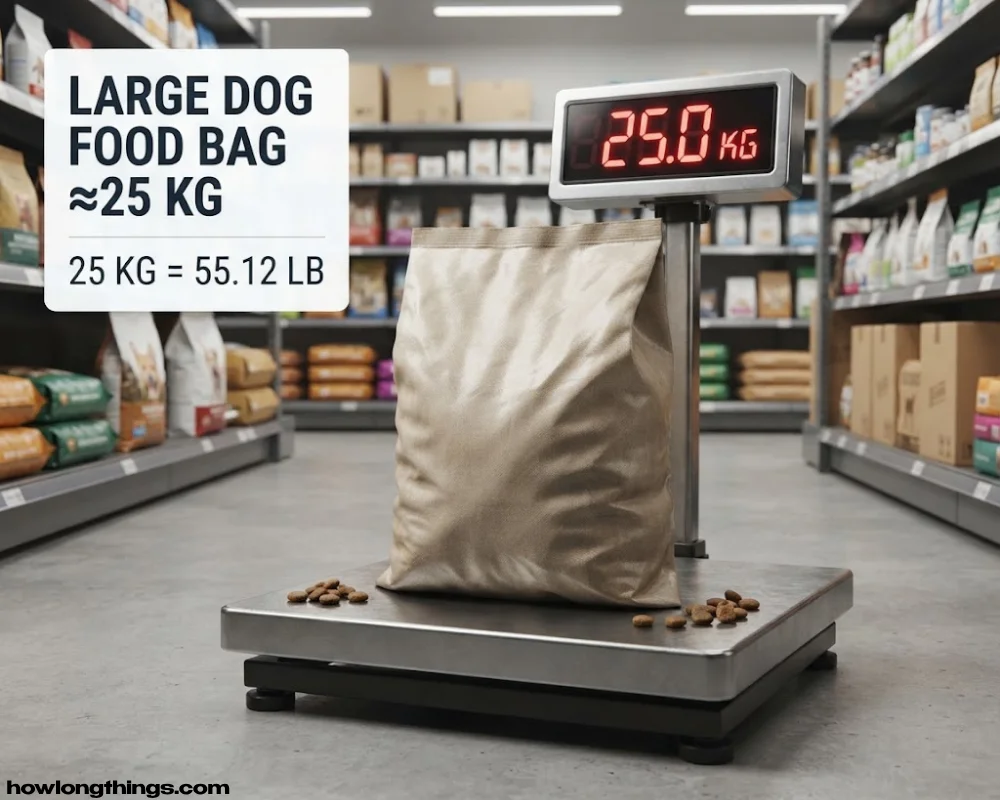
Large Bag of Dog Food
A large dog food bag, especially for bigger breeds, often reaches close to 25 kg once fully packed. The kibble shifts inside the bag as you move, which makes the load feel less stable than a solid object of the same mass. Millions of pet owners handle this exact weight during a routine grocery run.
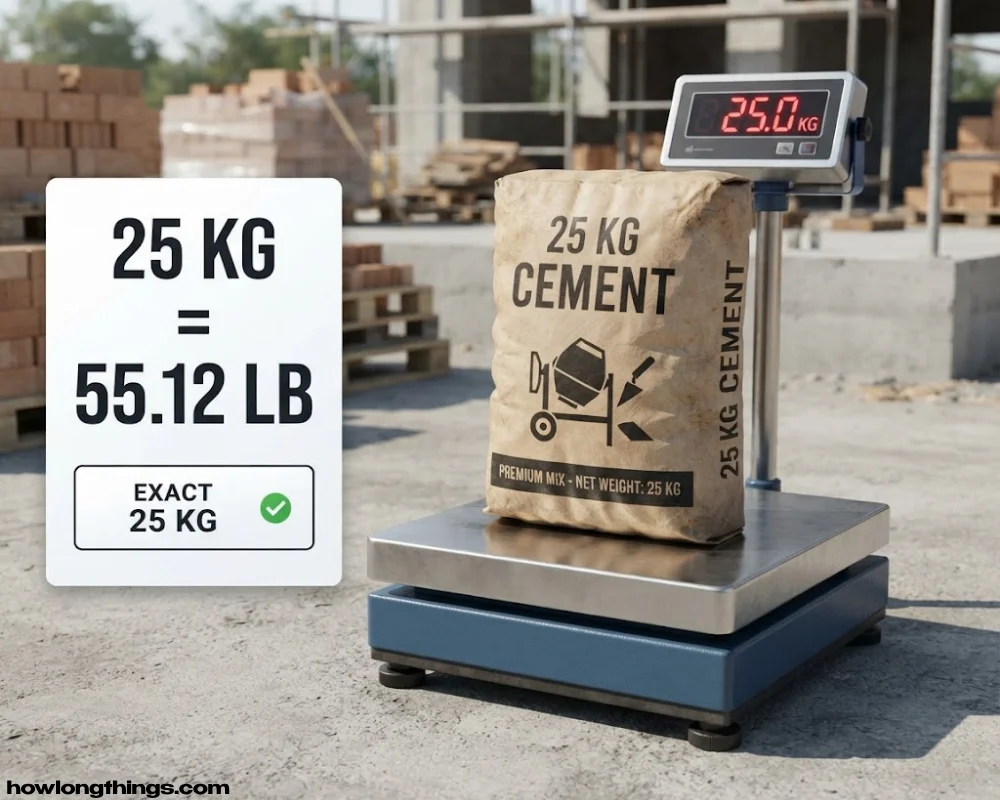
Bag of Cement
A standard bag of construction cement is commonly sold at 25 kg, a size used constantly on job sites and DIY projects. Though the bag itself looks compact, the densely packed powder inside makes it feel far heavier than its size suggests. Builders lift this exact weight dozens of times during a single project.
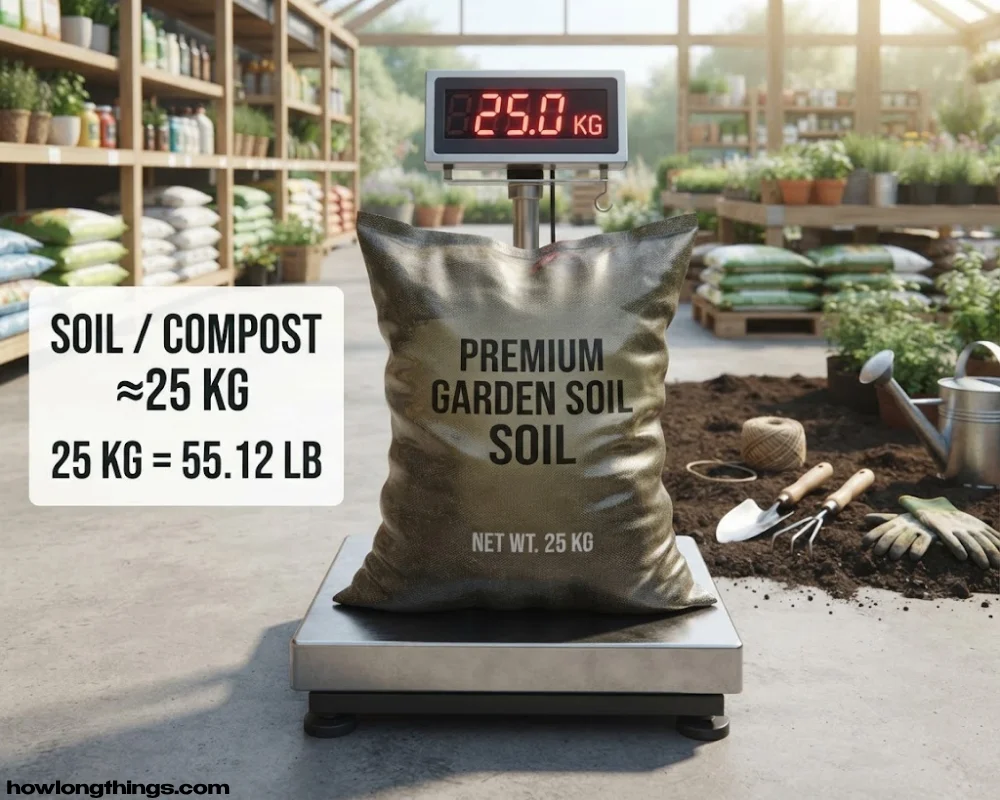
Bag of Soil or Compost
Large bags of garden soil or compost often weigh close to 25 kg, especially the bulk sizes sold for landscaping. Their bulky, spread-out shape makes them easier to carry than a dense object of the same weight, since the mass isn’t concentrated into one small area. Gardeners handling raised beds encounter this weight frequently each spring.
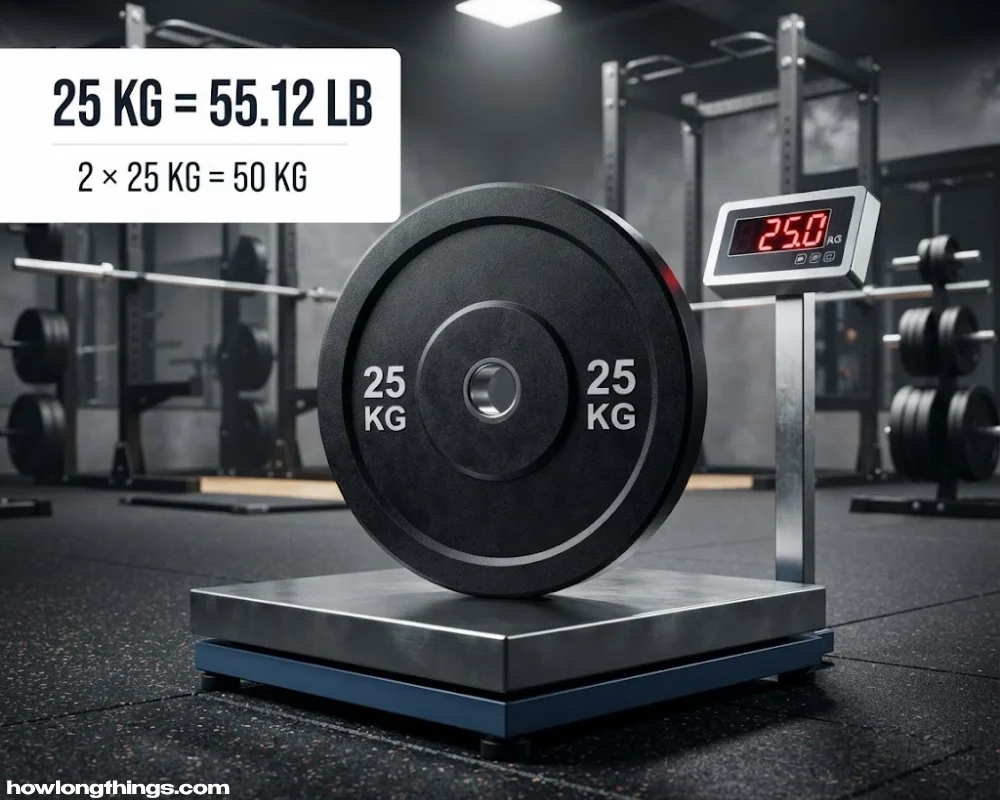
Olympic Weight Plate
A single Olympic weight plate stamped at 25 kg is the cleanest gym reference on this list, since it hits the number with zero rounding. Its flat, rigid shape concentrates the entire mass into a compact area, which is exactly why lifters use it as a serious strength benchmark. Loading two of these onto a barbell puts a lifter at 50 kg plus the bar itself.
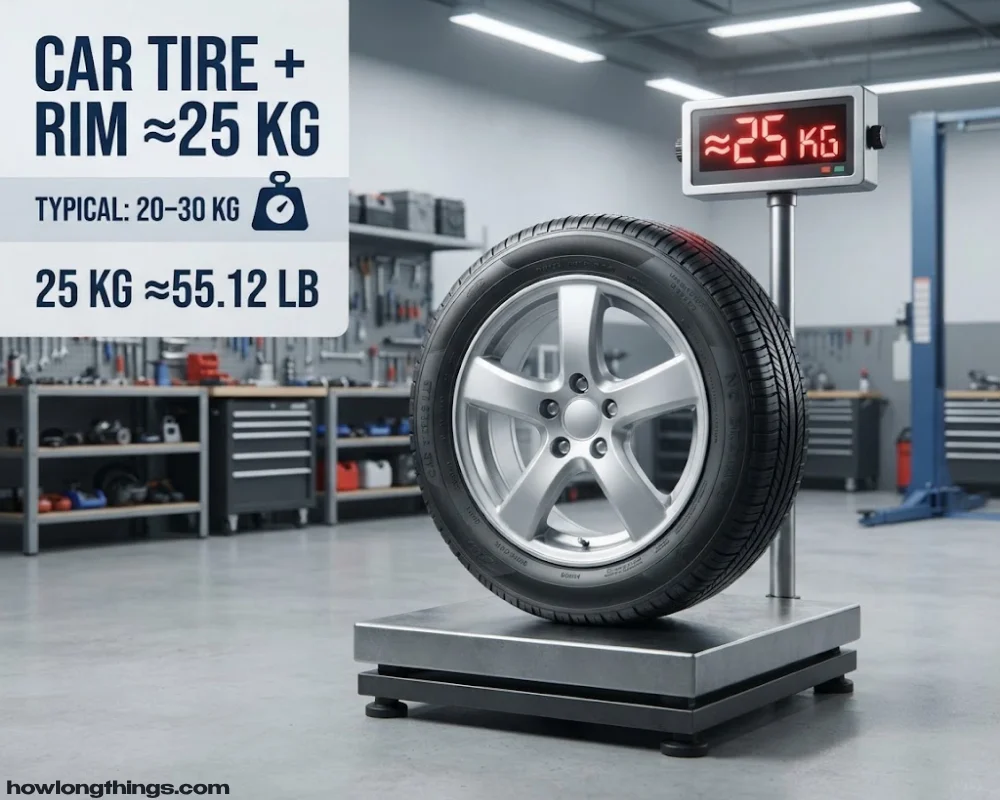
Car Tire With Rim
A car tire mounted on its rim commonly weighs between 20 and 30 kg, depending on the vehicle, with many landing right at 25 kg. The round, handle-less shape makes it awkward to grip compared to a compact object of the same mass. Anyone who has swapped a tire in a driveway has felt this weight firsthand.
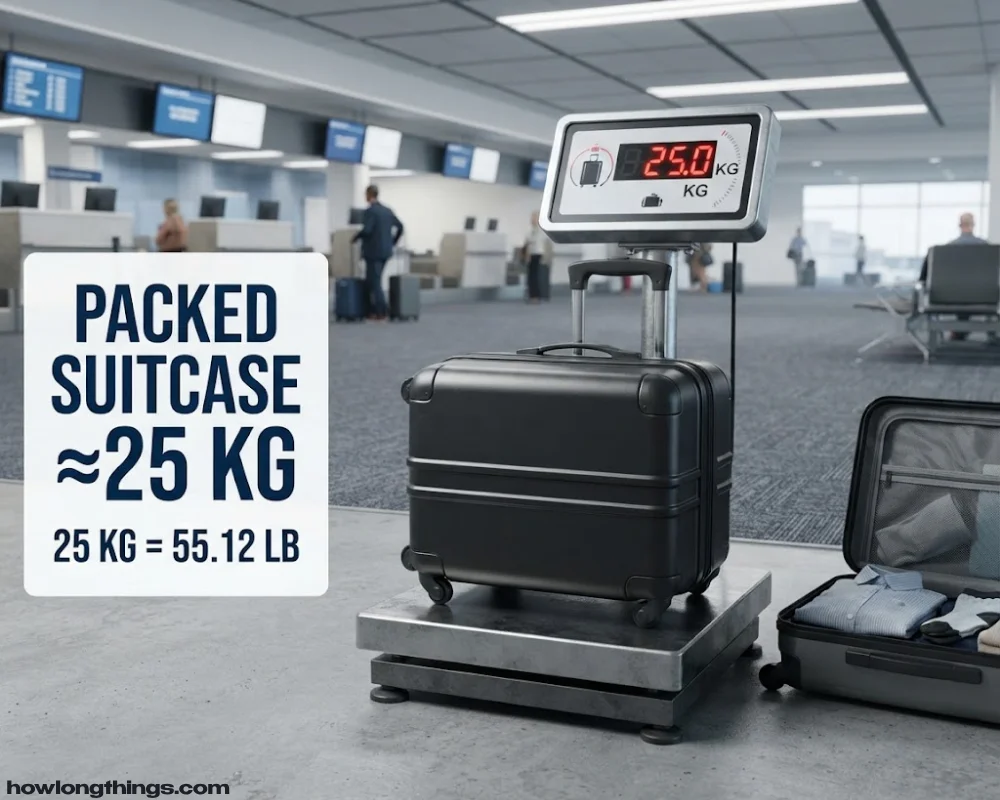
Heavy Packed Suitcase
A large suitcase packed for an extended trip commonly reaches 20 to 25 kg, right at many international checked baggage limits. Airlines routinely weigh bags at this exact threshold, which is why travelers pay close attention to this number before a flight. Wheels help, but lifting one into an overhead bin still demands real effort.
Medium-Sized Dog
Many medium dog breeds land close to 25 kg as fully grown adults, though the exact number varies by breed, age, and body condition. According to breed-standard guidelines from the Fédération Cynologique Internationale, a healthy adult Dalmatian typically weighs between 27 and 32 kg, placing it just above this reference point. Lifting a dog this size onto an exam table takes real, deliberate effort.
25 Liters of Water
This is the most precise entry on the entire list. One liter of water weighs almost exactly one kilogram, a fact built directly into the metric system’s original design. Fill a container with 25 liters, and you get almost exactly 25 kg, with no rounding or estimation required.
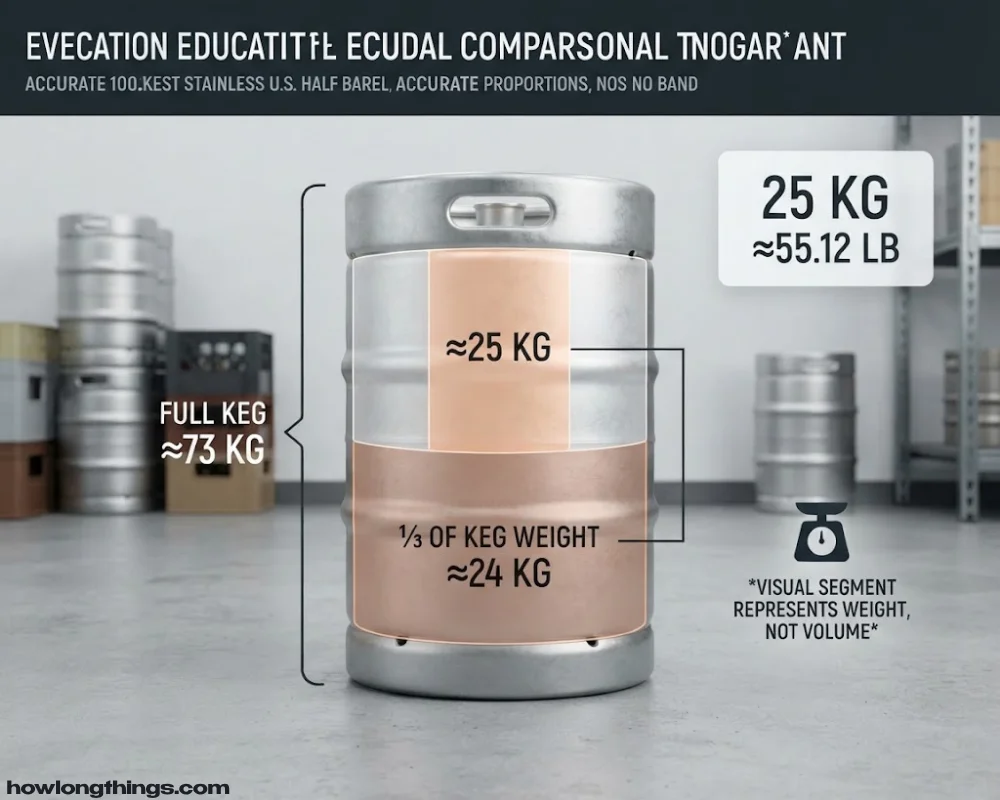
Roughly a Third of a Full Beer Keg
A standard U.S. half-barrel beer keg, fully loaded with draft beer, weighs close to 73 kg including the steel container itself. A third of that total lands right around 25 kg, giving bartenders and event planners a practical, real-world reference for partial keg weight during setup or transport.
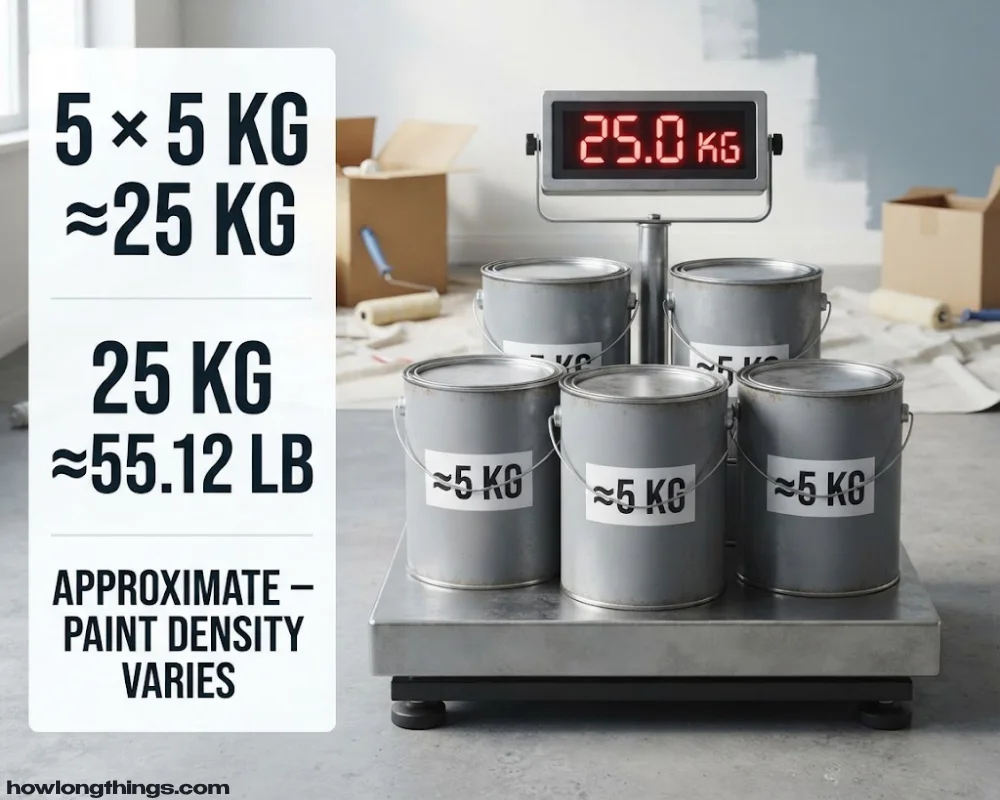
Five Gallons of Paint
A single gallon of paint weighs close to five kilograms on average, excluding the container. Multiply that by five, and the total lands almost exactly at 25 kg, a common quantity for painting an entire room or a small home exterior section. Carrying several cans at once strains the arms fast, since handles only help so much with this much combined weight.
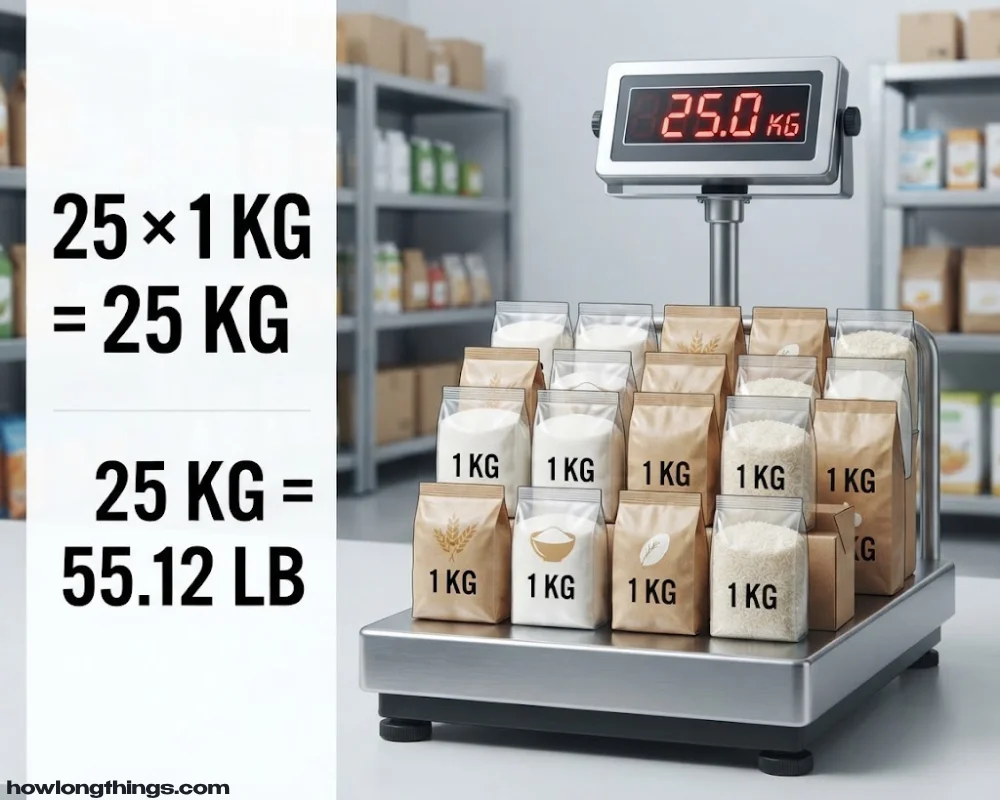
Twenty-Five 1 kg Grocery Packs
Picture 25 separate grocery items, each weighing exactly one kilogram, like a bag of sugar or a small carton of items. Stack them together, and the combined total equals exactly 25 kg. This comparison is especially useful for building a stronger intuitive sense of how weight accumulates in small, everyday increments.
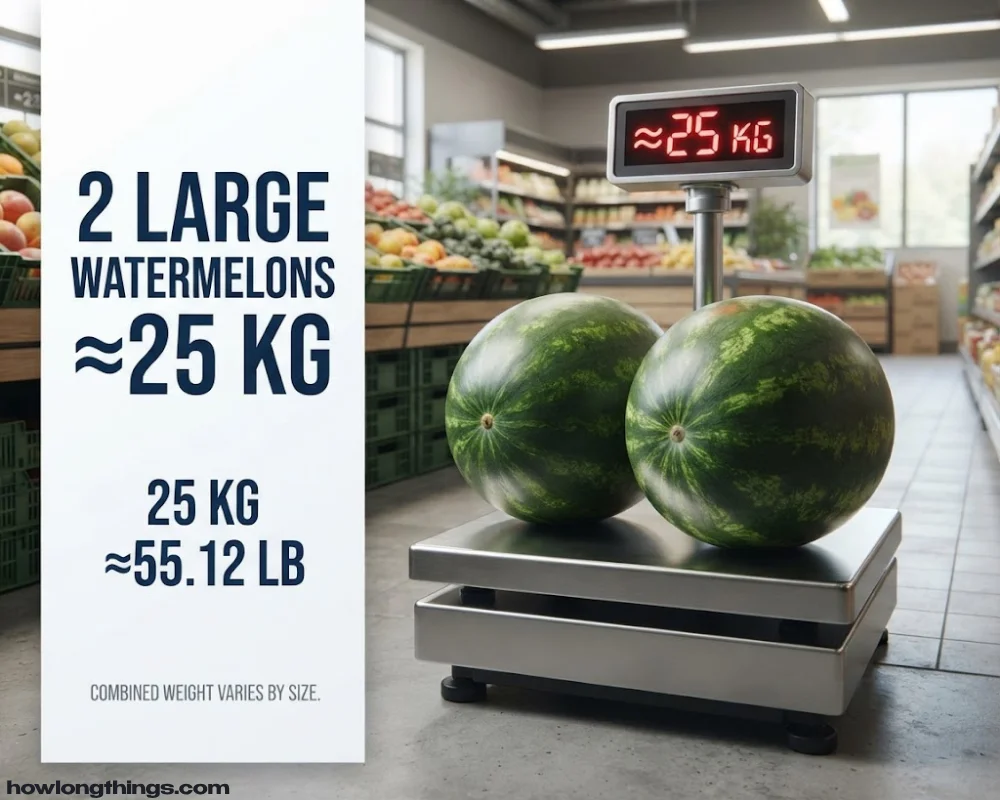
Two Large Watermelons
Two very large watermelons together commonly weigh between 20 and 25 kg, depending on size and variety. The exact number varies more than with packaged goods, but it still offers a fast, visual way to estimate this weight without a scale. This comparison works especially well for anyone picturing produce at a grocery store.
Must Visit:
What Does 25kg Weight Look Like? Size vs. Density
What does 25kg weight look like? The honest answer depends entirely on density, not just the number itself. A compact, dense object like a weight plate or a bag of cement looks small for its weight. A bulky object like a soil bag or a packed suitcase looks far larger while weighing the exact same amount.
A useful visual anchor: 25 kg is roughly the size of a large travel cooler packed completely full, or two large watermelons stacked together. Density decides how compact something feels in your hands, while volume decides how large it looks sitting on the ground.
This same concept applies to is 25kg a big weight loss. Losing 25 kg of body weight is a significant amount for most adults, and it represents a meaningful, noticeable physical change over time. Because body fat is considerably less dense than solid materials like metal or packed powder, 25 kg of fat takes up more visible space than 25 kg of a compact object like a weight plate.
For is 25 kg good for a 10 year old, general pediatric growth data offers useful context. According to typical CDC growth chart ranges, many 10-year-olds weigh between 28 and 32 kg, which places 25 kg slightly below the common average for that age. This is general reference information only, not a medical assessment, and any specific concern about a child’s growth is best discussed directly with a pediatrician.
FAQs About 25 kg Heavy
Is 25 kg very heavy?
Not for a short lift. Most healthy adults handle 25 kg without serious strain briefly. It becomes genuinely heavy during sustained carrying or repeated lifting throughout the day.
Is 25 kg heavy to lift?
It depends on your experience, the object’s shape, and how the weight is distributed. A 25 kg suitcase with wheels feels far lighter than a loose sack of the same weight.
How heavy is a 25kg example?
A 25 kg rice bag or flour bag is one of the most direct, exact examples, since both are commonly packaged at that precise weight with no rounding involved.
What does 25kg weight look like?
It depends on density. A compact item like a weight plate looks small for its weight, while a bulky item like a soil bag looks much larger while weighing the exact same amount.
Is 25kg a big weight loss?
Yes, for most adults, losing 25 kg represents a significant and noticeable amount of body weight lost over time.
Is 25 kg good for a 10 year old?
It sits slightly below the typical average, since many 10-year-olds weigh between 28 and 32 kg based on general growth chart data. Individual variation is normal, and a pediatrician is the right resource for specific concerns.
Conclusion
25 kg heavy is no longer just an abstract figure. From a rice bag to a slice of a full beer keg, these 14 comparisons make the weight easy to picture in everyday American life. Remember the core number — 25 kg equals 55.12 lbs — and you’ll recognize it instantly the next time it shows up on a luggage scale, a gym plate, or a bag of dog food.
Elizabeth Queen is a Owner and consumer research writer at HowLongThings.com, specializing in product lifespan, durability, and everyday household research. She’s passionate about helping readers make smarter, longer-lasting buying decisions.