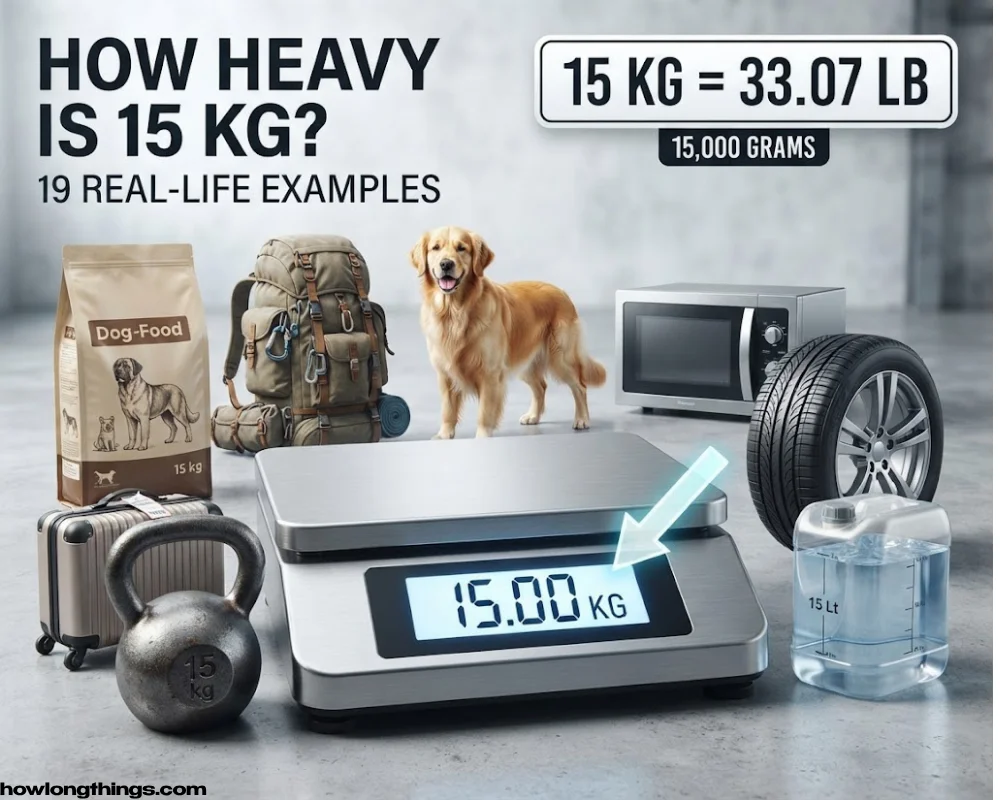
Numbers on a scale don’t mean much until you connect them to something real. 15 kg heavy sounds abstract, but once you picture a kettlebell, a toddler, or a packed suitcase, the weight suddenly makes sense.
This guide breaks down 15 kilograms into 19 everyday objects you already know. By the end, you’ll never have to guess how heavy 15 kg actually feels again.
Table of Contents
Is 15 kg Very Heavy? Quick Conversion & Answer
15 kg equals 33.07 pounds. That’s the exact figure, not a rounded guess. Here’s the full breakdown:
Unit
Value
Kilograms
15 kg
Grams
15,000 g
Pounds
33.07 lb
Ounces
529.11 oz
Stone
2.36 st
Metric Tons
0.015 t
So is 15 kg very heavy? For a quick lift, no. Most healthy adults can pick up 15 kg without strain. The problem shows up during sustained carrying. Hold it one-handed, or walk with it for more than a few minutes, and your grip strength and forearm endurance give out long before your overall body strength does. This is a basic principle of human biomechanics: short bursts of lifting rely on raw muscle power, but carrying something for distance depends on stamina in smaller muscle groups like the forearms and fingers. That’s why a 15 kg suitcase feels fine across a parking lot but exhausting across an entire airport terminal.
One more thing worth clearing up: 15 kg is not 30 pounds. This mix-up happens all the time in casual conversation. A kilogram measures mass, while a pound measures weight, which is a force shaped by gravity. On Earth, the two units don’t convert on a clean 2:1 ratio — 15 kg actually equals 33.07 lbs. According to the National Institute of Standards and Technology, the kilogram is defined by a fixed physical constant, not by comparison to pounds, which is why the conversion isn’t a round number. Keep this in mind when you’re packing a bag or loading weight plates.
19 Real-Life Things That Weigh 15 kg
Here are 19 objects that land at or near the 15 kg mark, grouped so you can find the comparison that fits your situation.
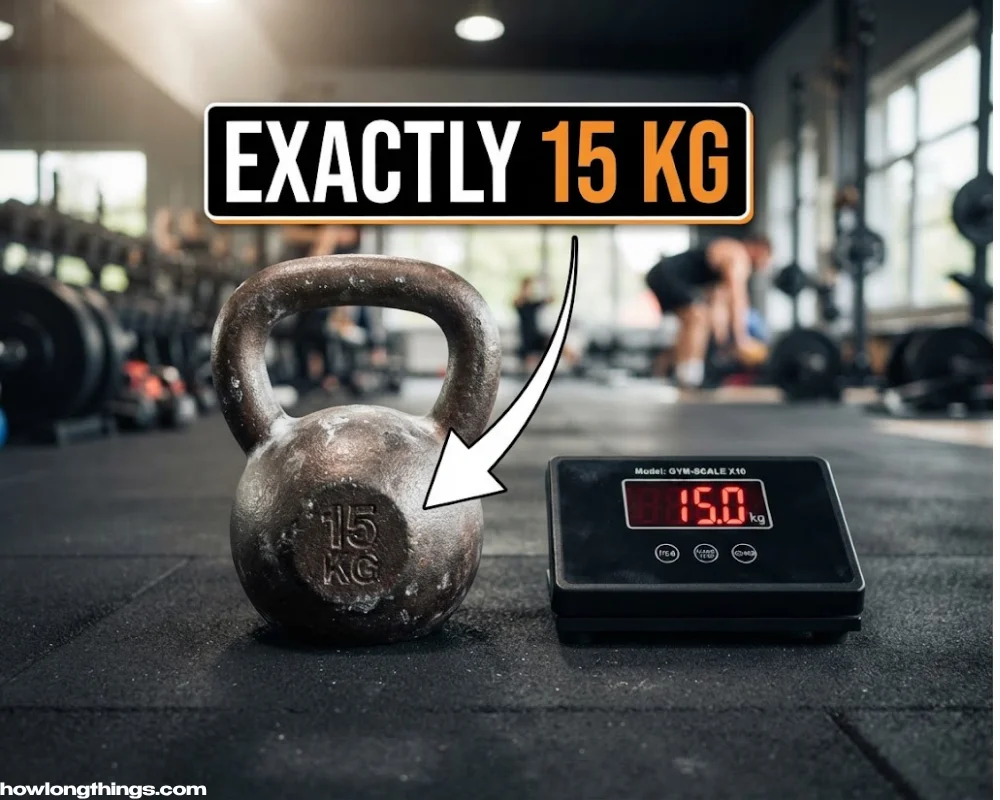
15 kg Kettlebell
A cast-iron kettlebell stamped with “15 kg” weighs exactly that, down to the gram. It’s the go-to weight for lifters moving past beginner training into intermediate swings, goblet squats, and Turkish get-ups. If you want zero guesswork about what 15 kg feels like, this is the cleanest reference available.
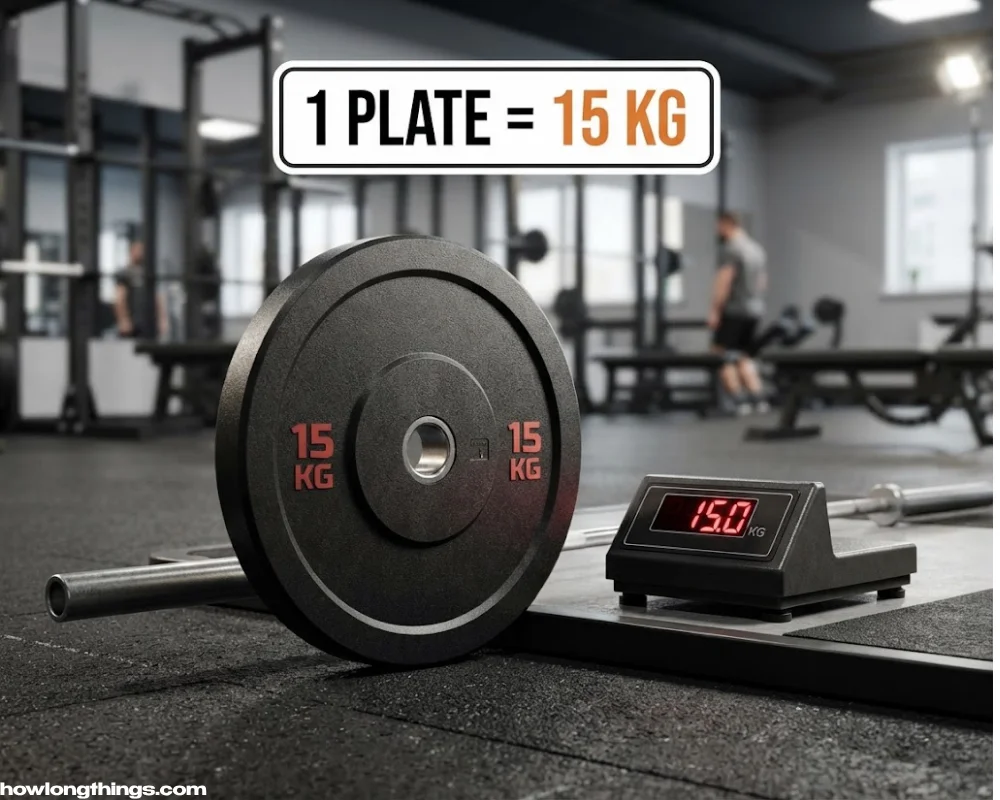
Olympic Weight Plate
A single 15 kg Olympic plate is flat, dense, and compact compared to a kettlebell. Two of them loaded on a barbell add up to 30 kg, a common starting point for beginner squats and deadlifts. The flat shape concentrates the mass into a small area, which makes it feel denser in your hands than bulkier objects of the same weight.
Large Bag of Dog Food
Bulk dog food bags from brands like Purina are commonly sold in 15 kg, or 33-pound, sizes at U.S. pet stores. Millions of pet owners lift this exact weight every month during a grocery run. The shifting grain inside the bag makes it feel less stable than a solid object of the same mass.
Loaded Overnight Hiking Backpack
A backpack packed for an overnight trail trip typically lands between 10 and 15 kg. Because the load is distributed across both shoulders and the hips, it feels far more manageable than a single dense object of the same weight. This is a good example of how weight distribution changes perceived effort, even when the number on the scale stays the same.
Packed Checked Airline Suitcase
Budget carriers such as Spirit and Frontier commonly cap checked baggage at 15 kg (33 lbs). A medium hardshell suitcase, packed with a week’s worth of clothes and shoes, routinely lands right at that ceiling. Lifting one off a baggage carousel is one of the most common real-world encounters with this exact weight.
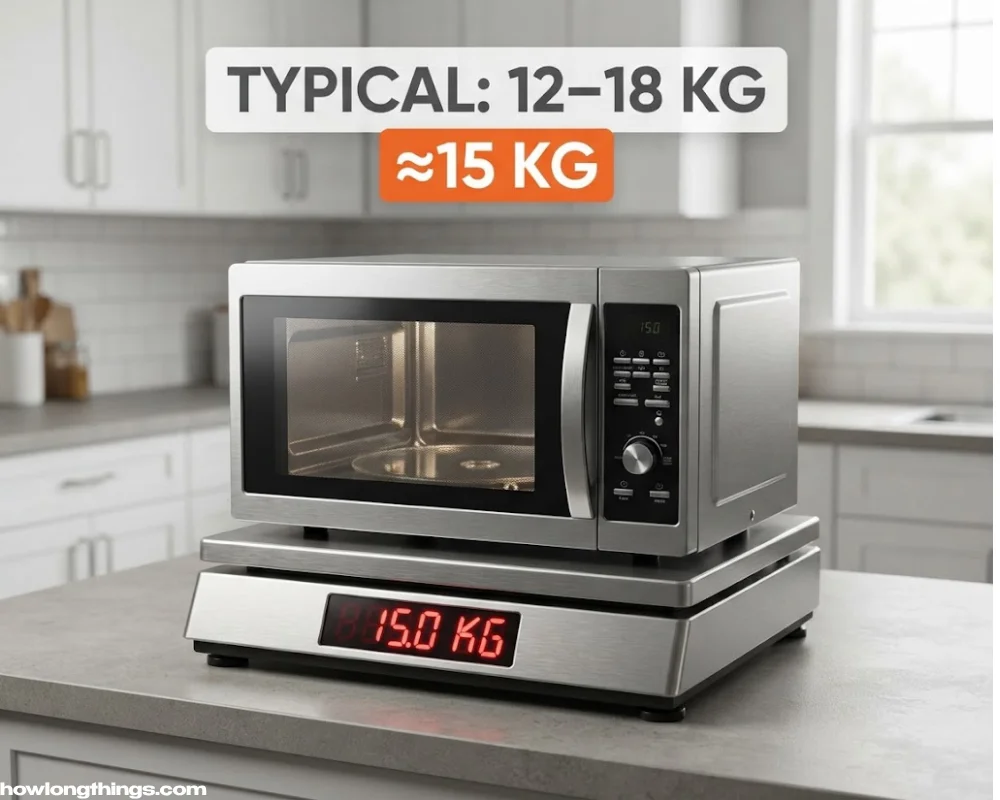
Countertop Microwave Oven
A standard countertop microwave from brands like Toshiba or Panasonic usually weighs between 12 and 18 kg. Mid-size models land almost exactly at 15 kilograms, thanks to the steel casing, internal magnetron, and glass turntable. That awkward, top-heavy grip when repositioning one is your body registering the weight before your brain even reads the label.
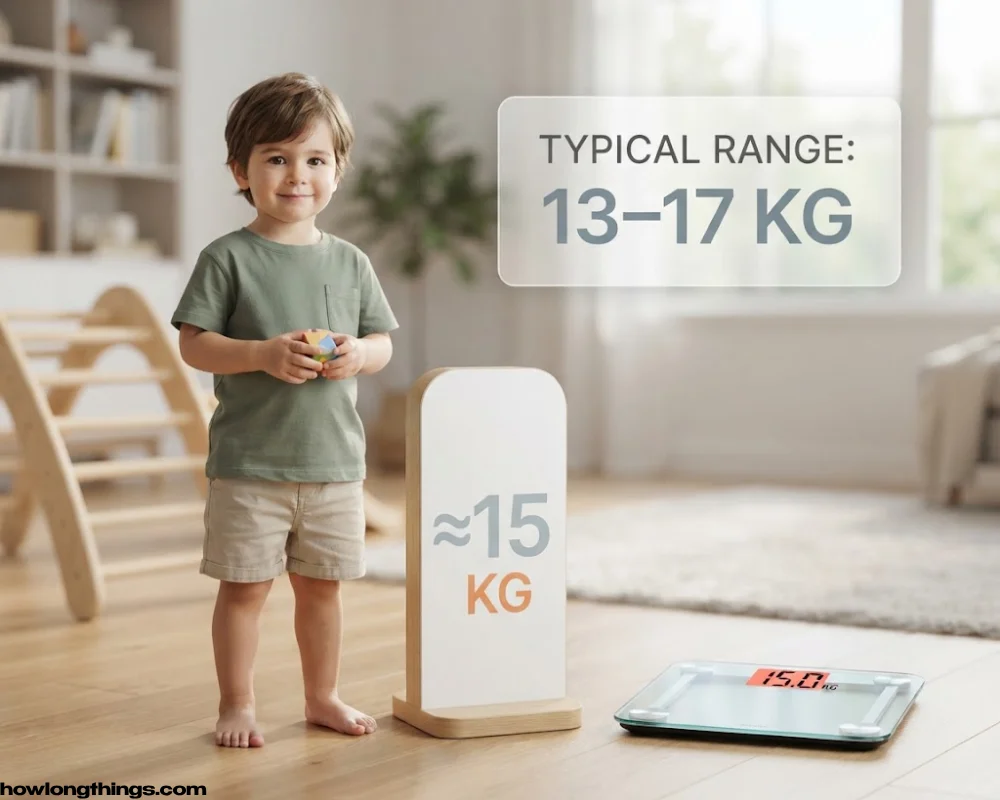
Average 3 to 4-Year-Old Toddler
According to CDC pediatric growth charts, children between 3 and 4 years old typically weigh between 13 and 17 kg, with 15 kg sitting near the midpoint. This makes the average toddler one of the most relatable living weight references on this list, since parents carry this exact load through airports and parking lots on a daily basis.
Medium-Sized Dog
Breeds like the Beagle or Cocker Spaniel reach a healthy adult weight of 12 to 18 kg, with plenty landing right at 15 kg. Veterinarians classify dogs in this range as needing two-handed support when lifted onto an exam table. It’s a familiar, instinctive weight for any pet owner who has carried a dog up a flight of stairs.
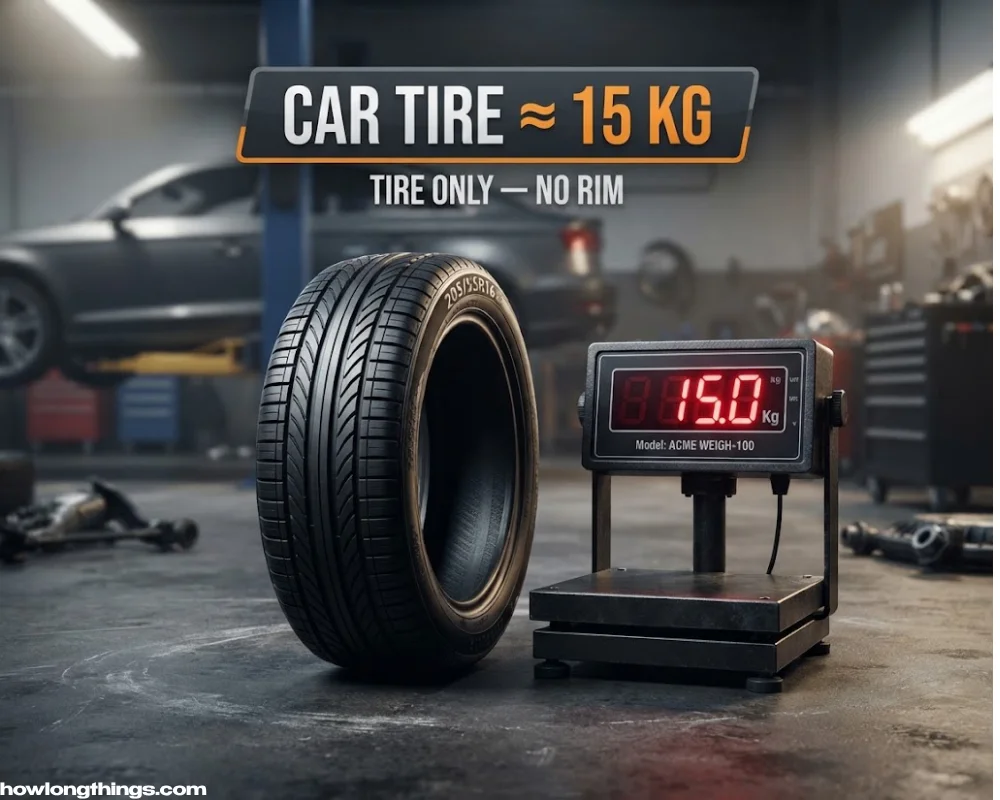
Car Tire Without Rim
A standard passenger car tire, stripped of its rim, weighs close to 15 kg on mid-size sedans like the Toyota Camry or Honda Accord. The round shape has no natural handle, which makes it far more awkward to carry than a compact object of the same mass. Anyone who has swapped a tire in a driveway knows this weight by feel alone.
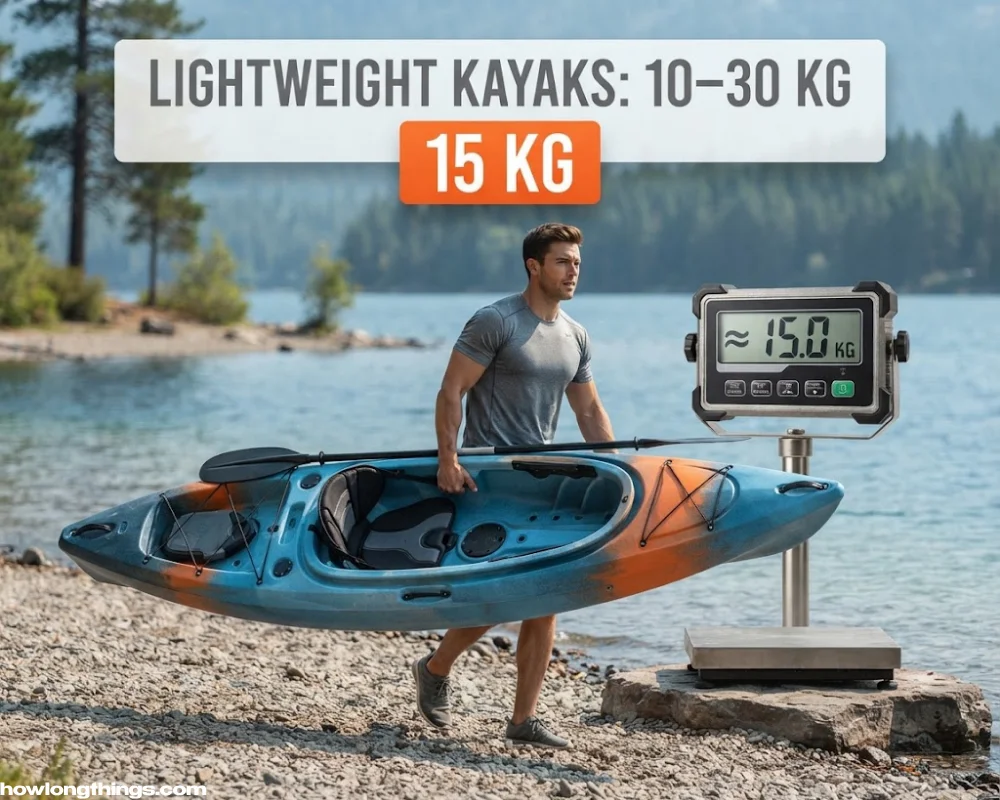
Recreational Kayak
Lightweight sit-on-top kayaks weigh anywhere from 10 to 30 kg, with entry-level models often sitting near 15 kg. The long, unbalanced shape makes it feel heavier than a compact object of the same mass, since the weight is spread across several feet rather than concentrated in your hands.
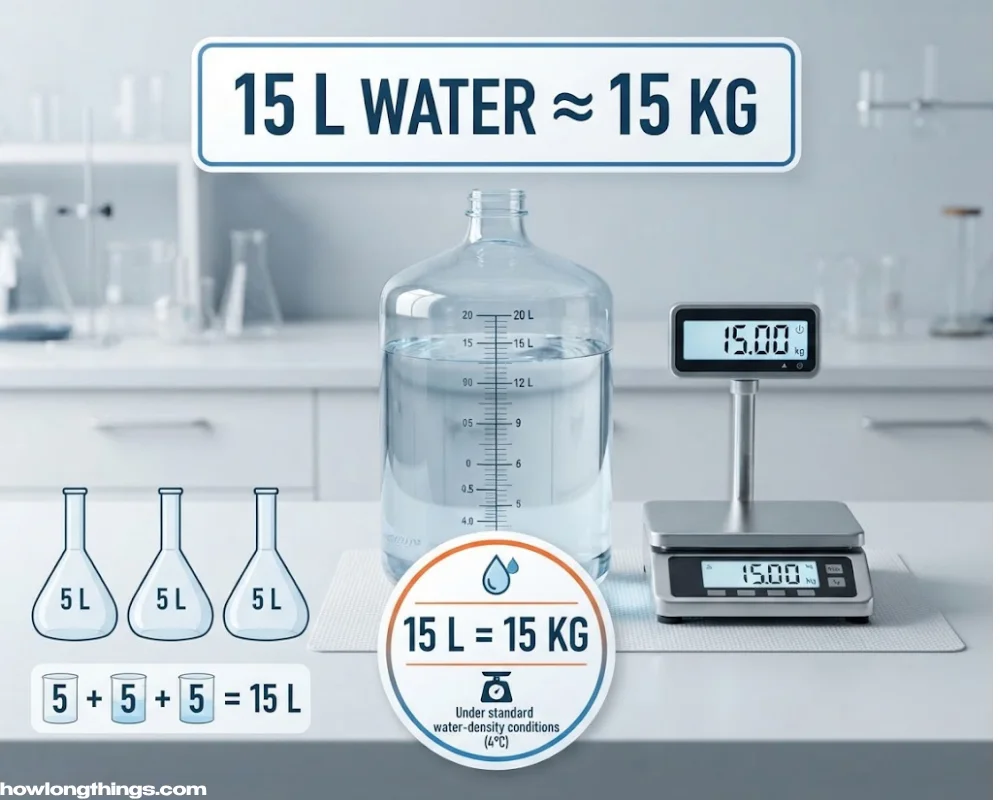
15 Liters of Water
This is the most scientifically exact entry on the list. One liter of pure water weighs exactly one kilogram at standard temperature and pressure, a fact confirmed by the metric system’s original definition. Fill a container with 15 liters, roughly 4 U.S. gallons, and you have precisely 15 kg with zero rounding involved.
Small Bag of Cement
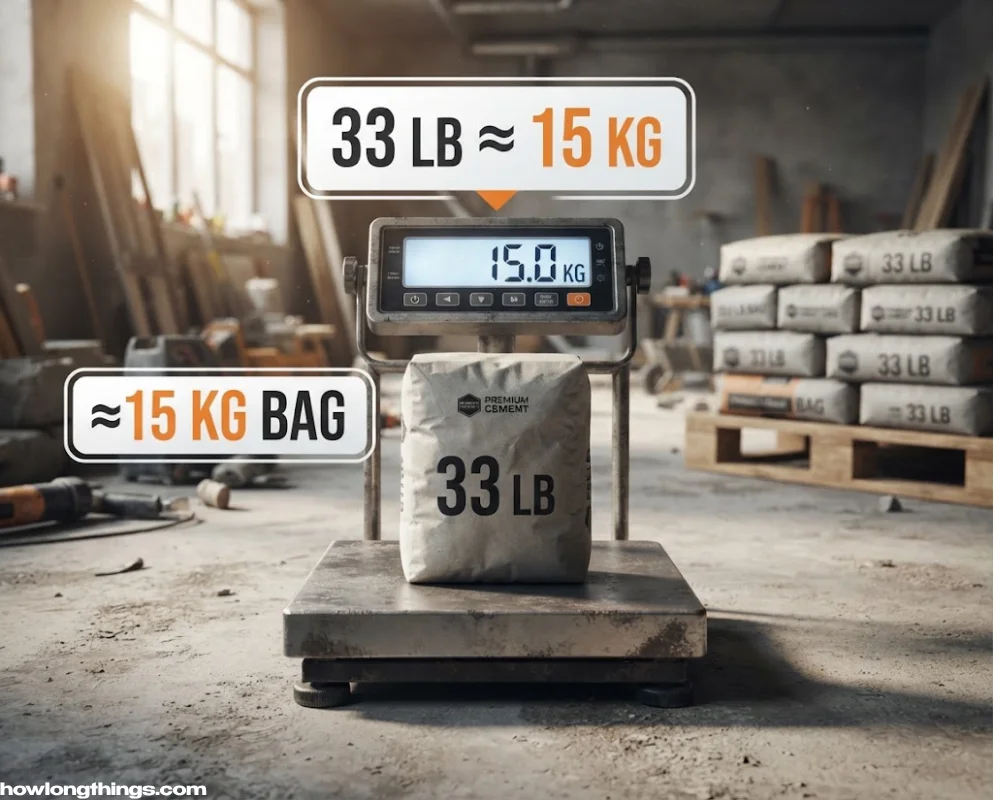
A compact cement bag sold at hardware stores like Home Depot or Lowe’s is commonly packaged at 33 lbs, which lands almost exactly at 15 kg. The dense, compacted powder inside leaves no doubt about the weight the moment you lift it off a pallet.
Carry-On Bag Plus Laptop Backpack
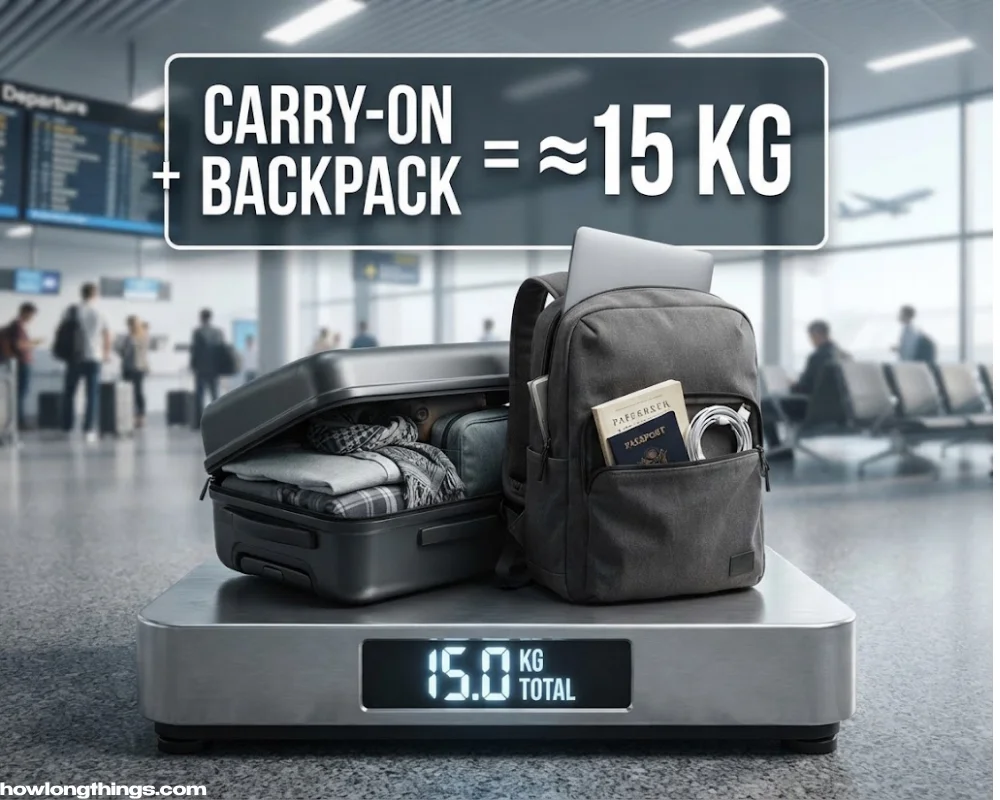
A loaded 15-inch laptop backpack typically weighs 6 to 7 kg on its own. Add a stuffed carry-on suitcase, and the combined total reaches close to 15 kilograms, a familiar load for business travelers and college students moving through U.S. airports.
Small Empty Propane Tank
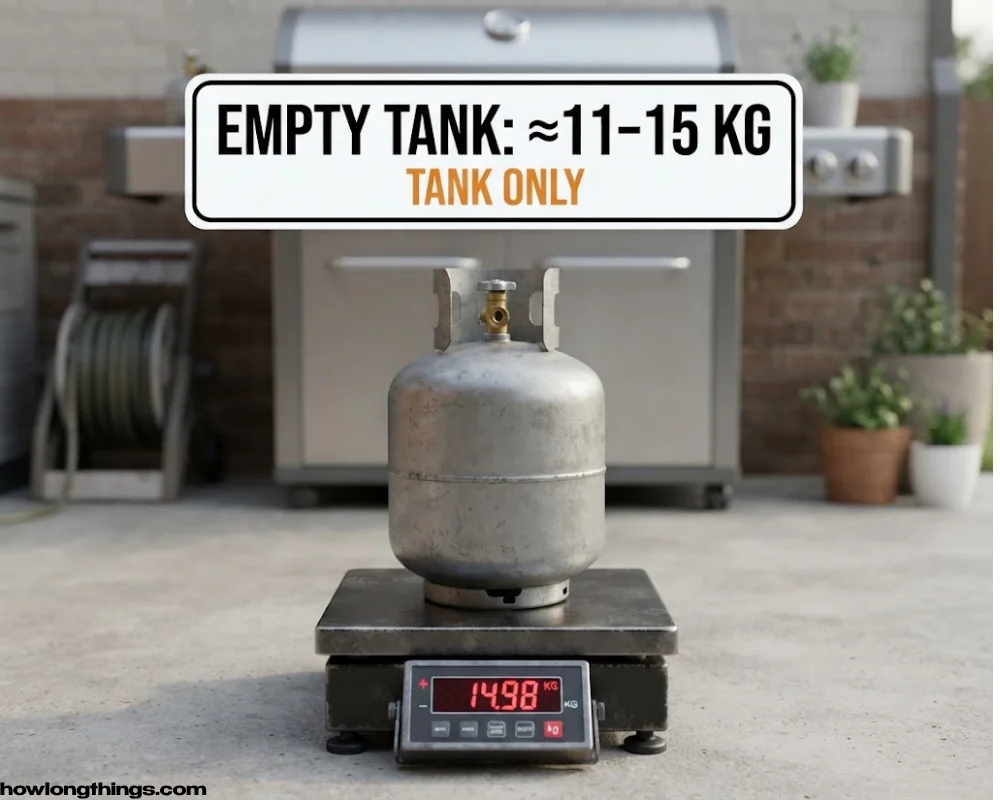
A standard backyard grill propane tank weighs between 11 and 15 kg when completely empty. Nearly all of that weight comes from the thick steel shell, not the gas itself, which is why an empty tank still feels surprisingly heavy.
Stand Mixer
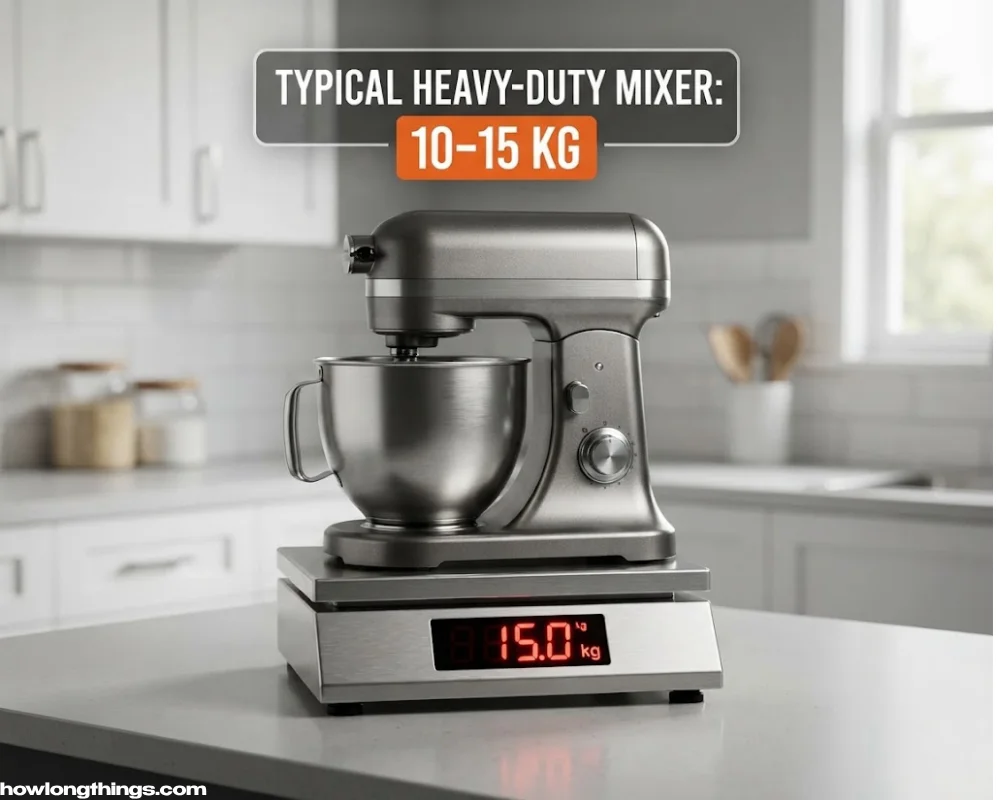
A heavy-duty countertop stand mixer, the type used for bread dough and stiff batters, commonly weighs between 10 and 15 kg. The cast-metal housing and motor account for most of the mass, which is why these appliances feel far heavier than their compact size suggests.
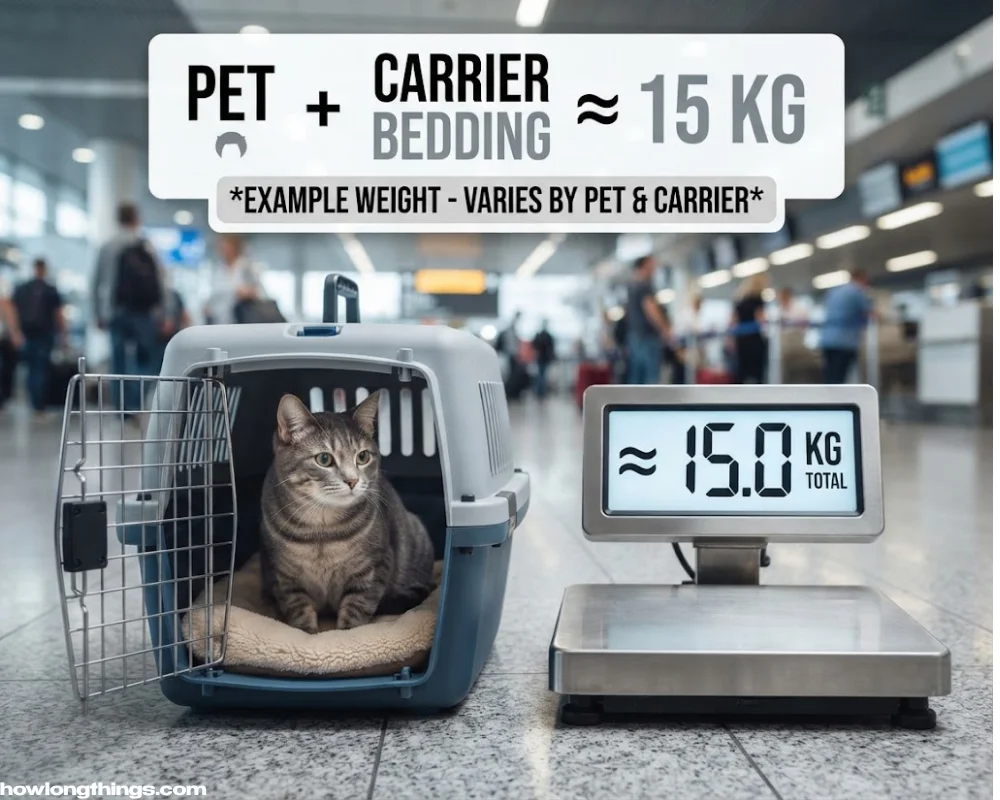
Pet Carrier With a Cat or Small Dog Inside
A hard-sided pet carrier loaded with a cat or small dog for a flight often reaches close to 15 kg once you add the animal, bedding, and carrier weight together. Airlines that allow pets in cabin typically enforce a combined weight limit near this mark.
Bag of Water-Softener Salt
A standard bag of water-softener salt, sold at most U.S. hardware and grocery stores, commonly weighs around 15 kg (or roughly 40 lbs in some sizes). Homeowners refilling a softener tank lift this weight regularly, often without realizing how it compares to more familiar references like a kettlebell.
Full 5-Gallon Bucket of Paint or Joint Compound
A 5-gallon bucket filled with paint or joint compound typically weighs between 20 and 25 kg when completely full, but a bucket filled about two-thirds of the way lands close to 15 kg. Contractors and DIY homeowners handle this exact range constantly during renovation projects.
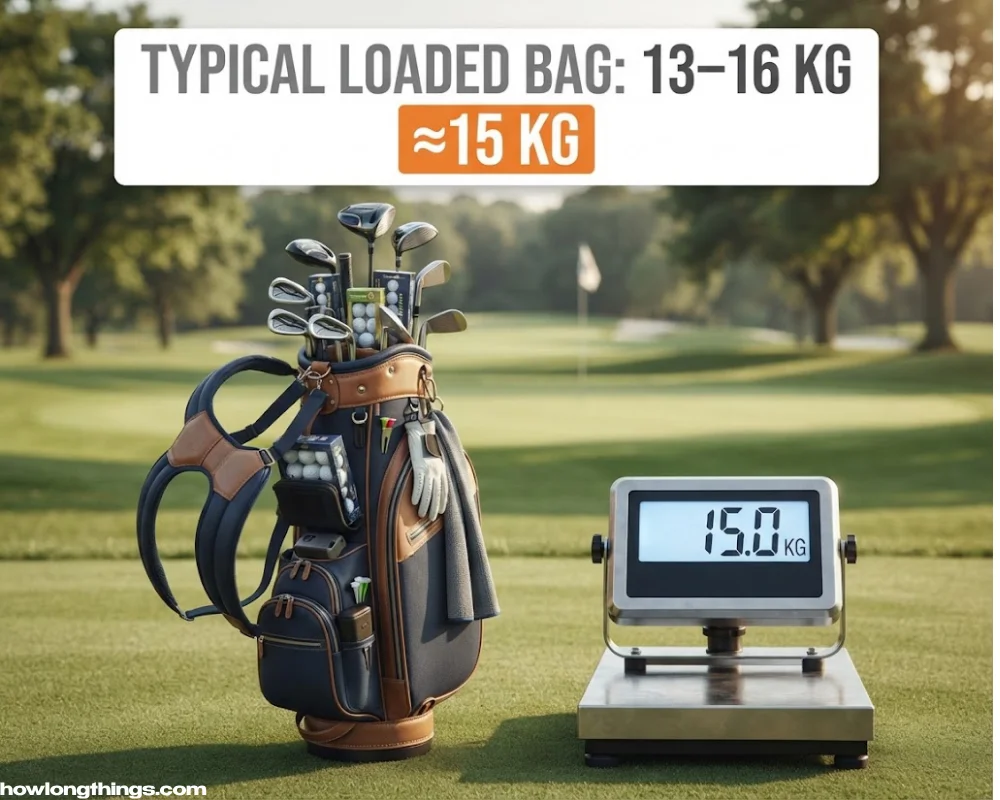
Fully Loaded Golf Bag
A golf bag packed with a full set of 14 clubs, balls, and accessories typically weighs between 13 and 16 kg. Carrying one across 18 holes is a slow, cumulative encounter with this weight, since the strap concentrates the load on one shoulder for hours at a time.
Weight and size are not the same thing, and this is where most explanations fall short. A dense object, like a weight plate or a bag of cement, packs 15 kg into something you could hold close to your chest. A bulky object, like a hiking backpack or a kayak, spreads that same mass across a much larger surface area.
Picture it this way: 15 kg is roughly the size of two large watermelons, or a medium cooler filled about halfway with ice and drinks. Density decides how compact the object feels. A dense, small item concentrates the weight into your grip and feels harder to manage in short bursts. A spread-out item feels more manageable over time, even though the scale reads the exact same number.
This connects directly to a simpler question: how much does 1 kg weigh? One kilogram equals roughly the weight of a liter of water, a basic building block worth remembering. Multiply that single, easy-to-picture unit by 15, and you get the full range of examples covered above.
FAQs About 15 kg Heavy
Is 15 kg very heavy?
Not for a short lift. Most healthy adults handle 15 kg without much effort for a brief carry. It becomes genuinely heavy during sustained carrying, one-handed lifting, or repeated reps over time.
How heavy is a 15kg example?
The clearest example is a 15 kg kettlebell, since it’s labeled to the exact number with no rounding. Other close matches include a medium dog, a packed checked suitcase, or a large bag of dog food.
What does 15kg of weight look like?
It depends on density. A compact object like a weight plate or cement bag looks small despite the weight. A bulkier object like a loaded backpack or kayak looks much larger while weighing exactly the same.
What does 15 kg weigh?
15 kg equals 33.07 pounds, or 15,000 grams. It falls into the moderately heavy category, heavier than a small dumbbell but lighter than most major kitchen appliances.
What size is 15 kg?
There’s no fixed size, since size depends entirely on the object’s density. A dense item like a weight plate stays compact, roughly the size of a dinner plate, while a low-density item like a hiking backpack can be as large as a small suitcase.
How much does 1 kg weigh?
One kilogram weighs about the same as a liter of water, a fact rooted in the original metric system definition. It’s a useful baseline unit for scaling up to heavier weights like 15 kg.
Conclusion
15 kg heavy isn’t just a number anymore. From a kettlebell to a fully loaded golf bag, you now have 19 real, tangible ways to picture this exact weight in everyday American life. Remember the core figure — 15 kg equals 33.07 lbs — and the next time it shows up on a scale, a suitcase tag, or a gym plate, you’ll know exactly what you’re holding.
Elizabeth Queen is a Owner and consumer research writer at HowLongThings.com, specializing in product lifespan, durability, and everyday household research. She’s passionate about helping readers make smarter, longer-lasting buying decisions.