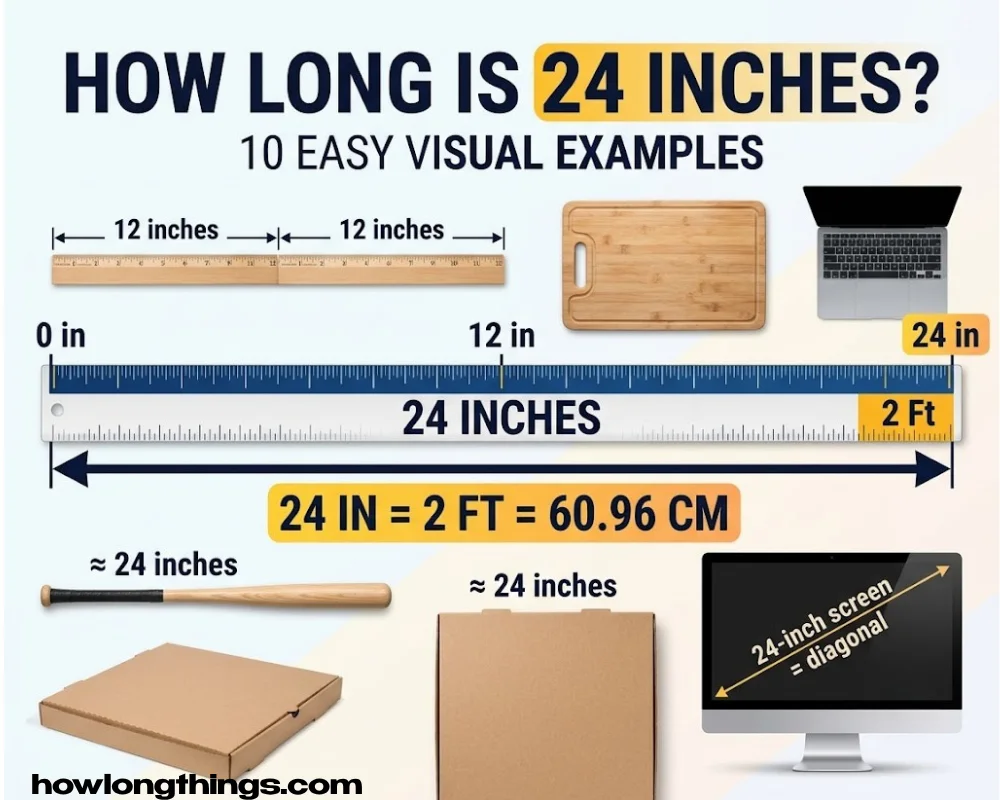
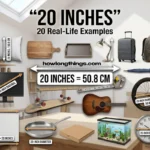
Twenty-four inches is one of the easiest lengths to remember, yet most people still can’t picture it correctly. That’s because 24 inches equals exactly 2 feet — a fact that’s simple on paper but harder to visualize in real life.
This visual guide fixes that. Below, you’ll find the exact conversion, 10 real objects that measure 24 inches, and simple no-tool tricks to visualize this length anywhere.
Table of Contents
How Long Is 24 Inches? (Quick Answer With Conversions)
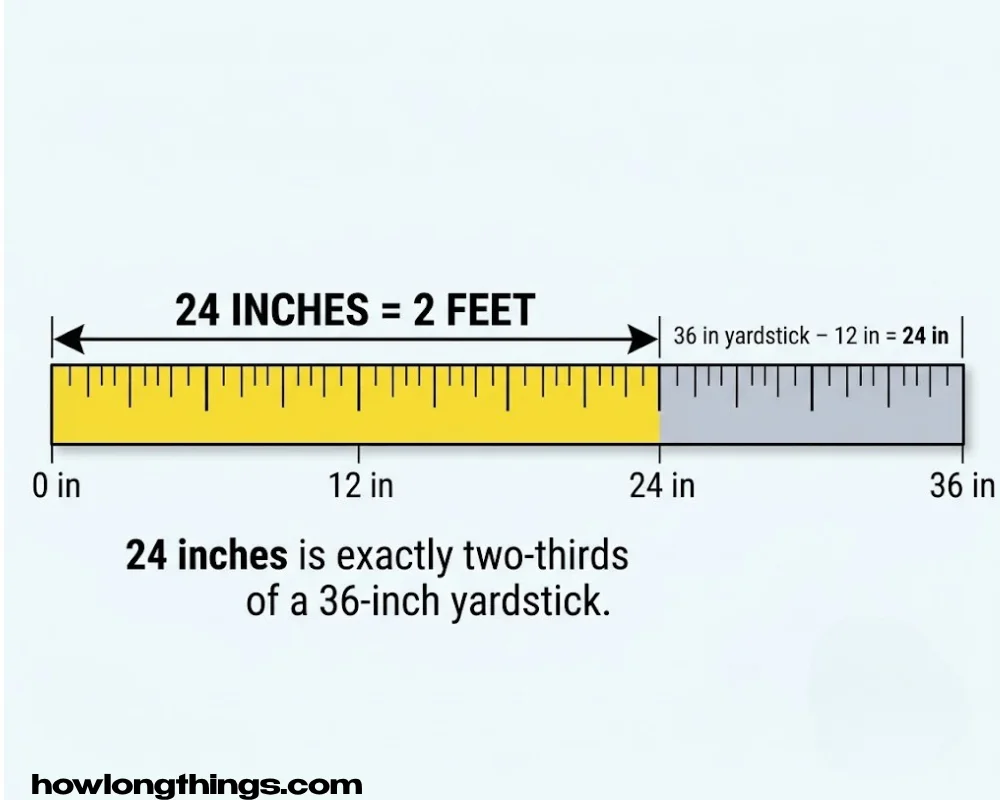
24 inches equals 2 feet, exactly. Since 12 inches make one foot, dividing 24 by 12 gives a clean, whole number — no rounding needed. That’s part of why this measurement is so easy to lock into memory.
In centimeters, 24 inches equals 60.96 cm. The formula is simple: multiply inches by 2.54, the fixed international conversion rate defined by NIST since 1959. In yards, 24 inches equals 0.67 yards, or two-thirds of a yardstick.
Unit
Value
Inches
24 in
Feet
2 ft
Centimeters
60.96 cm
Yards
0.67 yd
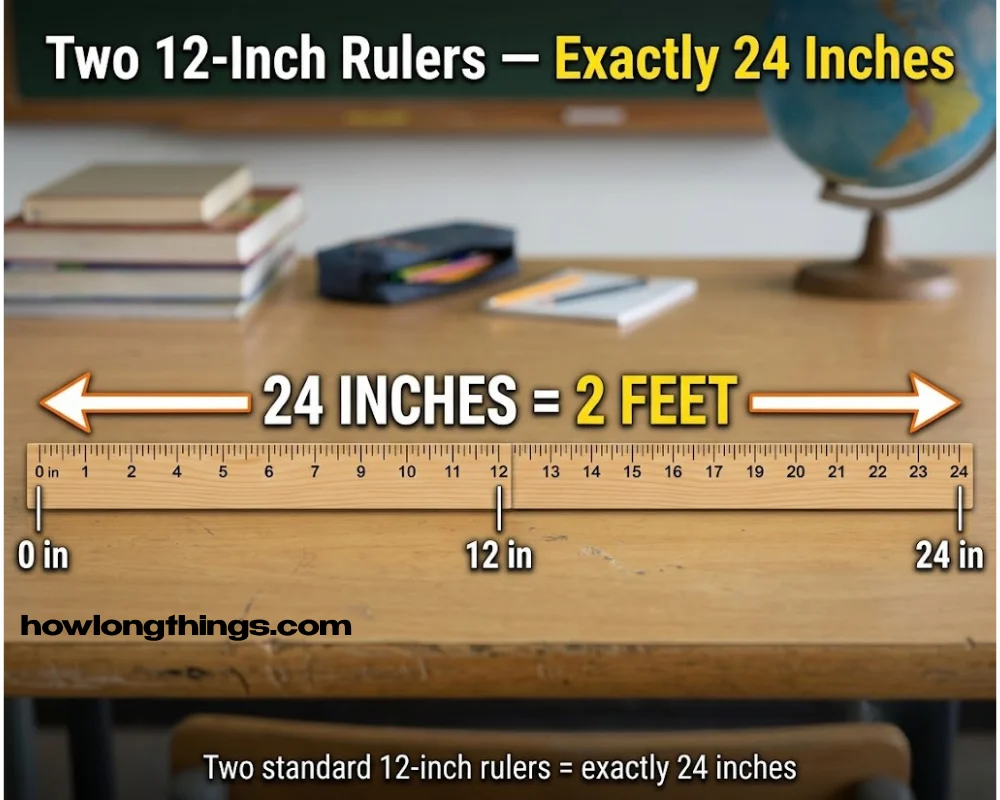
So what does 24 inches look like in practical terms? Picture two standard 12-inch rulers placed end to end. Or think of a yardstick with the last third folded away — what remains is your 24-inch reference.
10 Everyday Things That Are 24 Inches Long (Visual Examples)
Numbers are forgettable. Objects aren’t. Here are 10 everyday items that measure close to 24 inches, each one a fast mental anchor for this exact length.
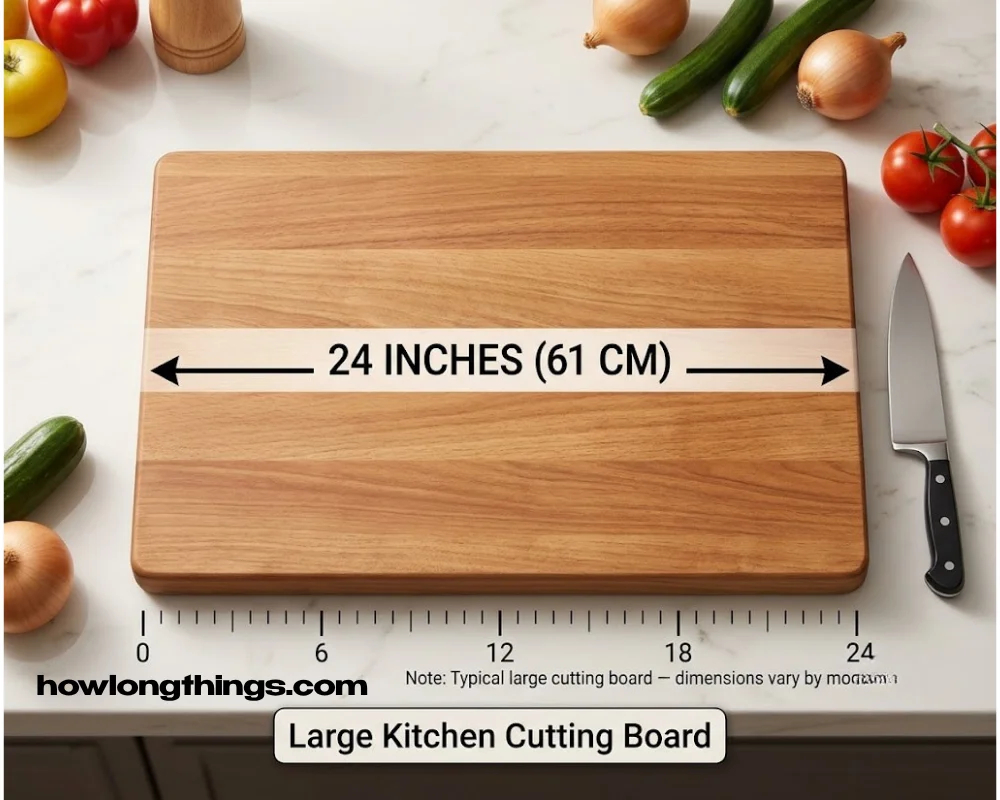
A Large Kitchen Cutting Board
A big wooden cutting board typically runs close to 24 inches long. Home cooks and professional chefs favor this size because it leaves enough surface area to prep meat, vegetables, and sides without everything overlapping.
Two 12-Inch Rulers, End to End
Line up two standard rulers, tip to tip, and you get a precise 24-inch span. It’s the most literal way to visualize this measurement, and it’s a common classroom trick for teaching feet-to-inches conversion.
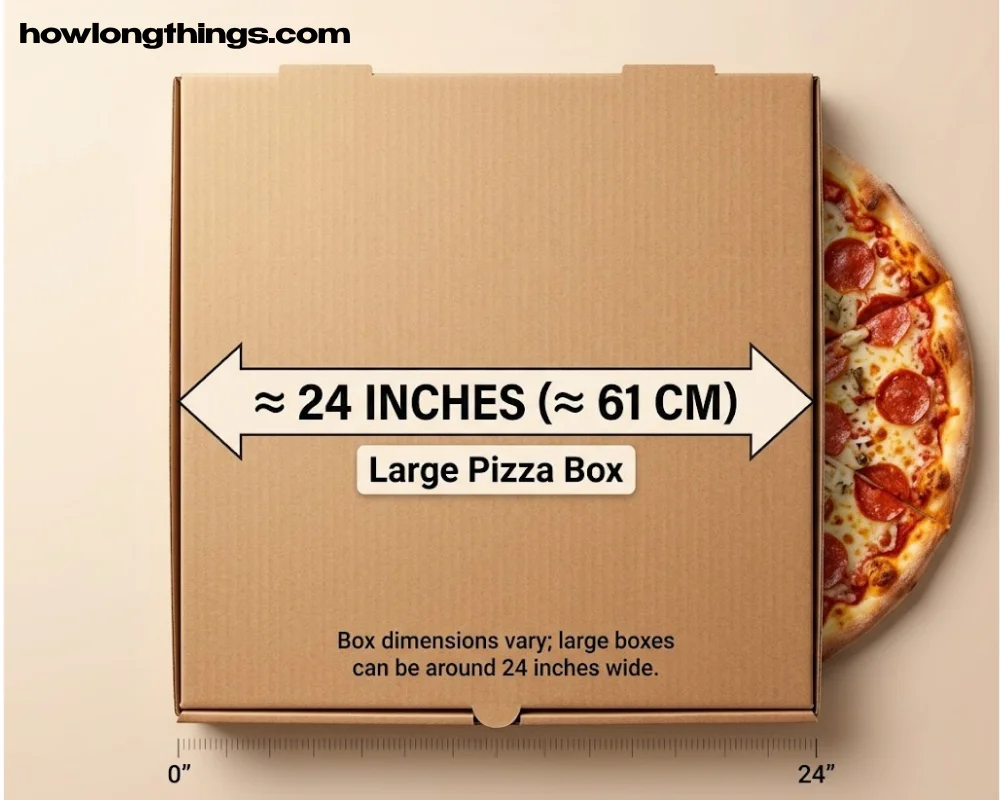
A Large or Extra-Large Pizza Box
Most large pizza boxes measure close to 24 inches across. These square boxes are sized to fit pizzas in the 20 to 22-inch range, with a little extra room built in for crust and easy handling.
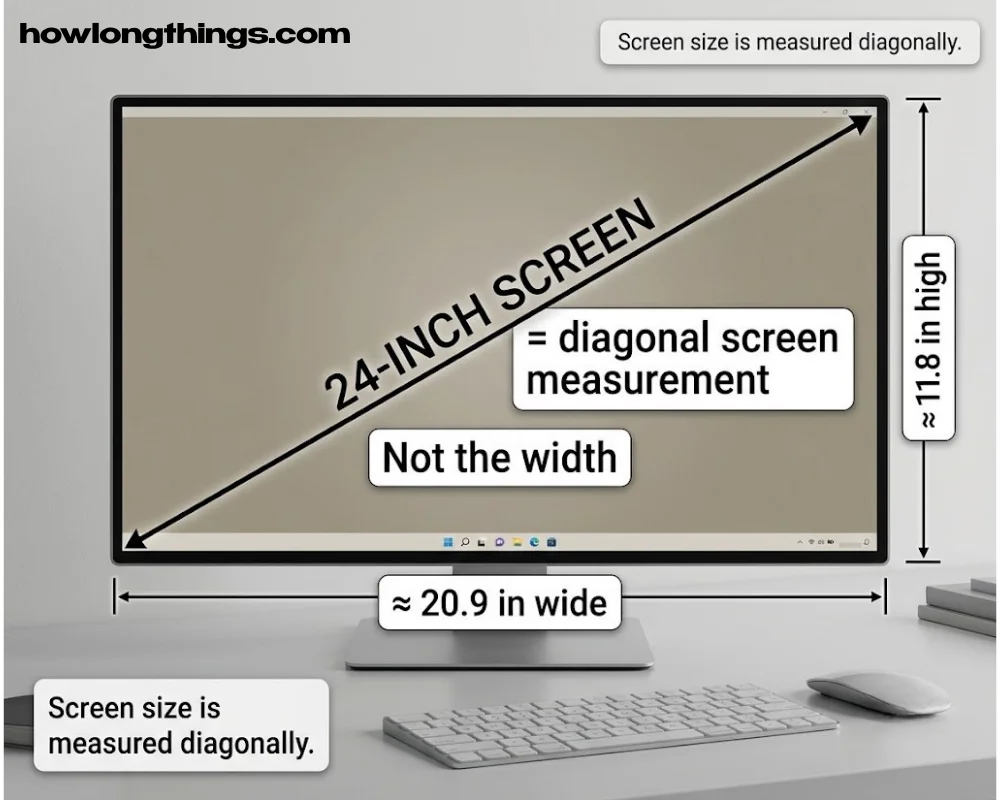
A 24-Inch Computer Monitor
A 24-inch monitor is one of the most popular desktop screen sizes sold in the U.S. That number refers to the diagonal measurement, though — the actual width runs closer to 20 to 21 inches, with a height around 12 to 13 inches for a standard widescreen panel.
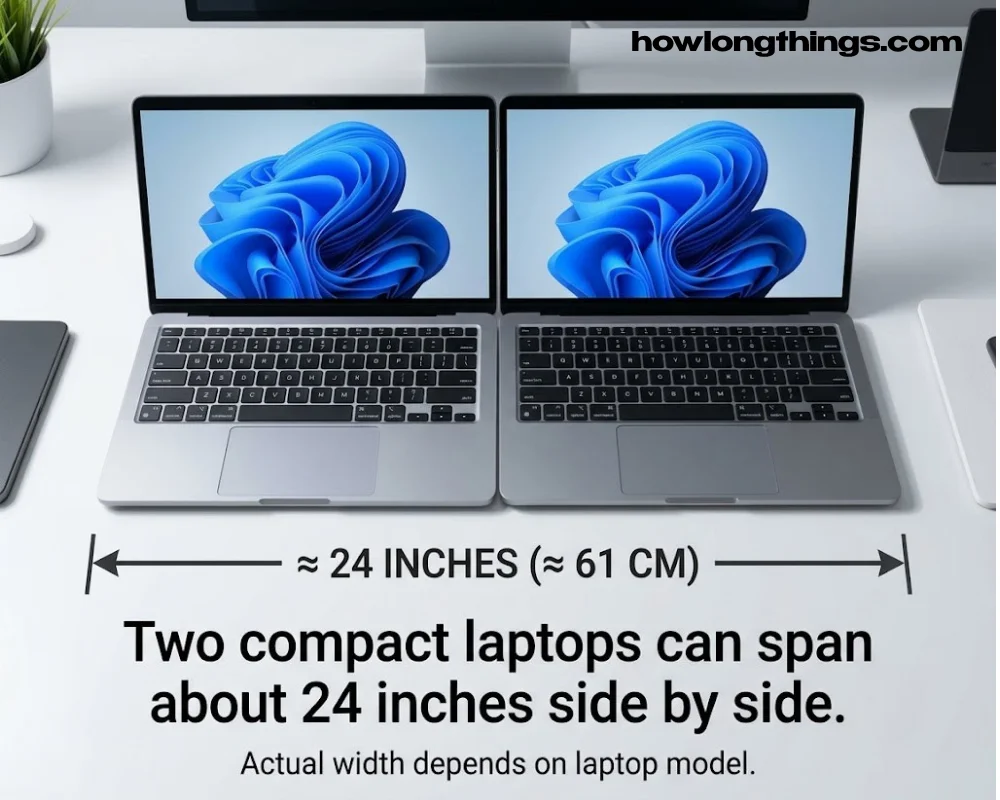
Two Laptops Placed Side by Side
Line up two average laptops, and the combined width lands close to 24 inches. A 13-inch MacBook Pro measures just under 12 inches wide, so two of them side by side come remarkably close to this exact mark.
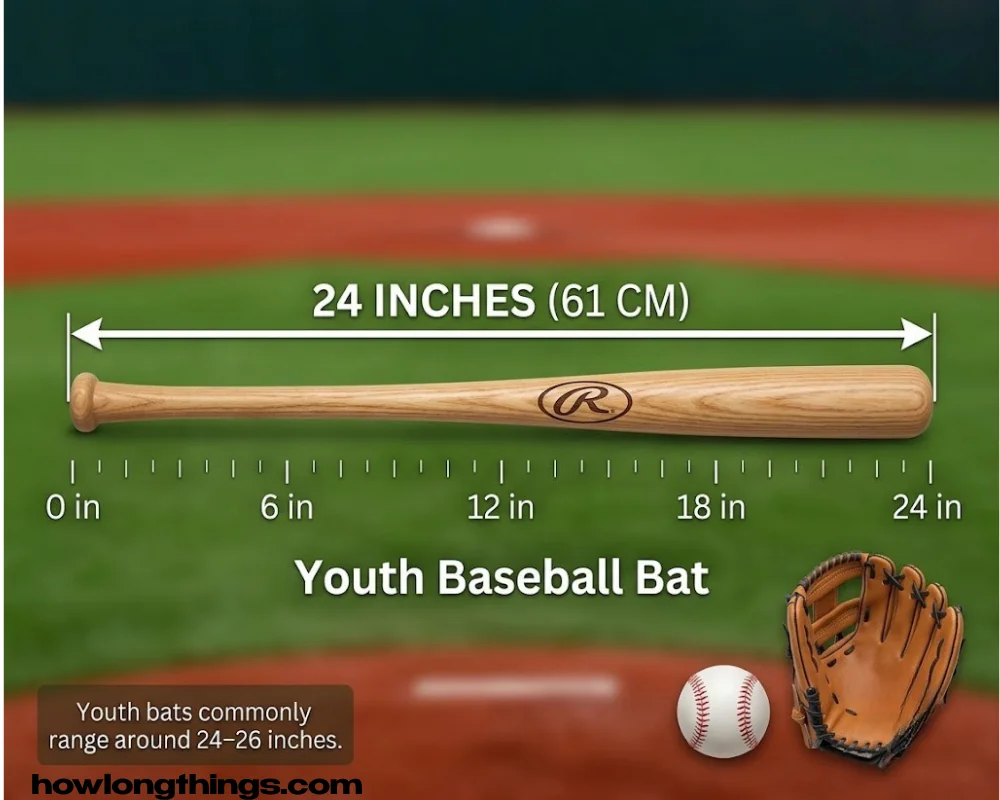
A Youth Baseball Bat
Youth baseball bats typically measure 24 to 26 inches long. Younger players, often between ages 7 and 8, use bats at the shorter end of that range, since a lighter, shorter bat gives them better control at the plate.
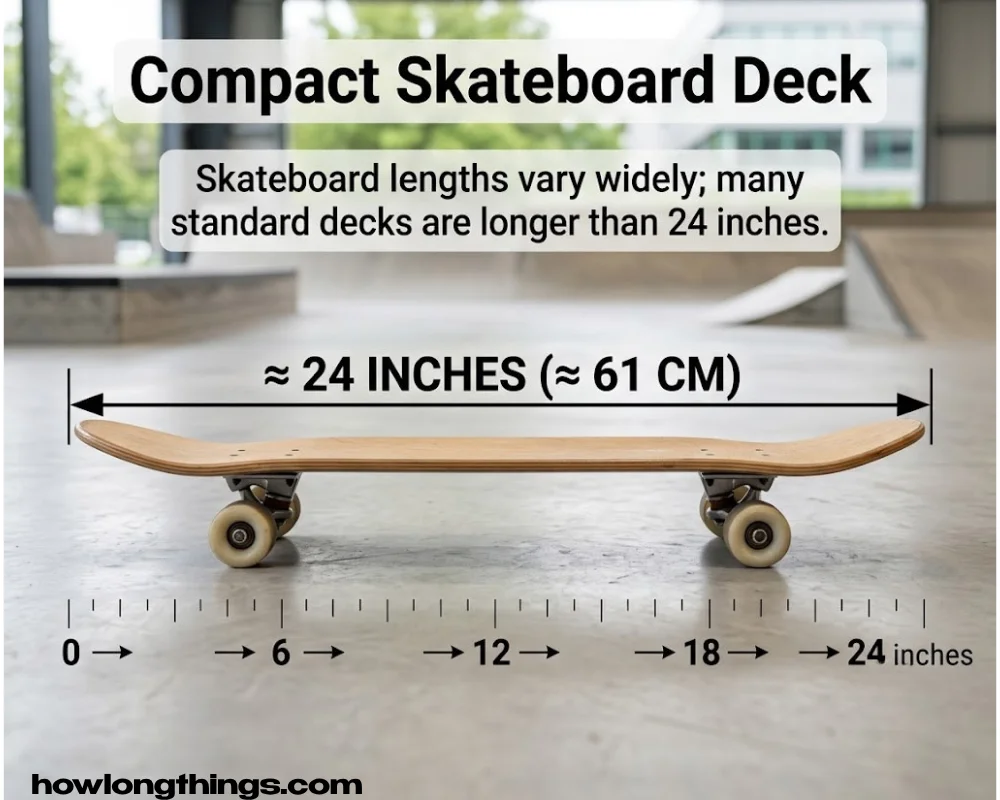
A Standard Skateboard Deck
Most skateboard decks run close to 24 to 32 inches, with entry-level and cruiser-style decks often landing right around 24 inches. That length keeps the board maneuverable while still giving riders enough platform for stable footing.
A Bath Towel’s Long Edge
A standard bath towel’s longer edge often measures close to 24 inches wide (with the length running much longer). This width is designed to wrap comfortably around an average adult torso without excess bulk.
A Two-Thirds Length Yardstick
Picture a full yardstick, then mentally chop off the final third. What’s left equals 24 inches exactly, making the yardstick one of the most direct visual tools for this measurement, even without doing any math.
An Acoustic Guitar’s Body
The body length of many acoustic guitars, from the base to the top curve, measures close to 24 inches. Guitar makers rely on tight, consistent measurements like this one to keep tone and resonance predictable across instruments.
How to Visualize 24 Inches Without a Tape Measure
No measuring tape nearby? A few reliable, tool-free tricks can get you close.
How to visualize 24 inches starts with your own arm. For most adults, the distance from the elbow to the fingertips comes close to 24 inches — not exact, but a fast field estimate when precision isn’t critical.
Another option: stack two sheets of standard letter paper lengthwise. Letter paper measures 11 inches long, so two sheets plus a small gap land close to 24 inches — a handy trick if you’re working at a desk.
A yardstick offers the most direct shortcut. Since a yard equals 36 inches, measuring two-thirds of a yardstick’s length gets you to 24 inches without any extra math.
For a fallback estimate, look at a standard interior door. Most U.S. interior doors measure 30 to 36 inches wide, according to typical residential building standards, so 24 inches is roughly two-thirds of that width — useful for quick visual comparisons at home.
One caution: body-based tricks like the forearm method vary from person to person. For anything that needs to fit precisely, cross-check with a second method before committing.
24 Inches Compared to Other Common Measurements
Seeing 24 inches next to its neighbors makes the scale click faster.
Measurement
Feet
Centimeters
Easy Reference Object
12 inches
1 ft
30.48 cm
One standard ruler
18 inches
1.5 ft
45.72 cm
A large skillet’s diameter
24 inches
2 ft
60.96 cm
Large cutting board
36 inches
3 ft
91.44 cm
A full yardstick
Is 24 inches small for a TV? By today’s standards, yes — a 24-inch screen sits well below the most common living-room sizes. According to display market data tracked by Statista, TVs in the 55-inch and larger range now dominate U.S. household sales, making 24-inch screens better suited for bedrooms, kitchens, dorm rooms, or as a secondary monitor rather than a main living-room display.
Common Mistakes People Make When Estimating 24 Inches
Even with solid reference points, a few errors show up again and again.
Confusing inches with centimeters is the most frequent one. Twenty-four inches (60.96 cm) is nearly two and a half times longer than 24 centimeters — mixing these up leads to real sizing mistakes, especially when shopping on sites that list dimensions in metric units.
Assuming a “24-inch” screen means 24 inches of width trips up plenty of shoppers. Since screen sizes are measured diagonally, the true width is always shorter than the number the product listing shows.
Relying only on rough eyeballing instead of a fixed reference object tends to undercount small distances. Sticking to standardized items, like two full rulers or a yardstick, gives a far more dependable result.
The fix is simple: check your estimate against two different methods, especially when a measurement needs to fit an exact space.
FAQs
Is 24 inches 2 feet tall?
Yes, 24 inches equals exactly 2 feet. This holds true whether you’re measuring height, length, or width — the unit conversion doesn’t change based on orientation.
What does 24 inches look like?
Twenty-four inches looks like two 12-inch rulers placed end to end, or a yardstick with its final third removed. It’s roughly the length of a large cutting board or a youth baseball bat.
What is 24 inches in feet?
24 inches equals 2 feet. To convert any inch measurement to feet, simply divide by 12 — a quick, dependable formula for everyday conversions.
Is 24 inches small for a TV?
Yes, by current standards. Most U.S. households now buy TVs in the 50-inch-plus range for main living spaces, which makes a 24-inch screen a better fit for smaller rooms, kitchens, or use as a secondary monitor.
How to visualize 24 inches?
The fastest way is picturing two standard rulers laid end to end, or measuring two-thirds of a yardstick. For a body-based estimate, the distance from an adult’s elbow to fingertips comes close, though it varies by person.
Conclusion
Twenty-four inches doesn’t have to stay an abstract number. Between the exact conversions above, the 10 real-world objects, and a few simple no-tool tricks, you now have everything you need to picture — or estimate — this length with confidence, no tape measure required.
Elizabeth Queen is a Owner and consumer research writer at HowLongThings.com, specializing in product lifespan, durability, and everyday household research. She’s passionate about helping readers make smarter, longer-lasting buying decisions.