Numbers on a scale don’t always click. You can read “500 grams” a hundred times and still not feel what that means. That’s the gap this guide closes.
Below, you’ll find the fastest conversions, 15 real objects that weigh about 500 grams, and simple tricks to measure it without a scale at all. Everything here is fact-checked, so you can trust the numbers.
Table of Contents
How Much Is 500 Grams? Quick Conversion Chart
Here’s the short answer: 500 grams equals 0.5 kilograms, or roughly 1.1 pounds (1.102 lb, to be exact). It’s also about 17.6 ounces, or 500,000 milligrams.
Unit
Equivalent
Kilograms (kg)
0.5 kg
Pounds (lb)
≈1.1 lb
Ounces (oz)
≈17.6 oz
Milligrams (mg)
500,000 mg
Cups (water)
≈2.1 cups
How Much Is 500 Grams to a Cup?
This depends entirely on what you’re measuring, since volume and weight aren’t the same thing. Here’s a breakdown for common kitchen ingredients:
Ingredient
Approx. Cups (for 500g)
All-purpose flour
≈4 cups
Granulated sugar
≈2.5 cups
White rice (uncooked)
≈2.5 cups
Butter
≈2.2 cups
Water
≈2.1 cups
Rolled oats
≈5.5 cups
Flour is light and airy, so it takes more cups to hit 500 grams. Sugar and rice are denser, so fewer cups get you there. Always weigh dry ingredients when a recipe calls for precision — cup measurements can vary by how tightly you pack the ingredient.
Is 500g Equal to 1kg?
No. 500 grams is exactly half of 1 kilogram, not the whole thing. A kilogram is the base unit of mass in the metric system, and since 2019 it’s been officially defined using the Planck constant, a fixed number from quantum physics, rather than a physical metal object locked in a vault, according to the National Institute of Standards and Technology. So if a recipe or shipping label says 1kg, you’re looking at double the weight covered in this guide.
Is 500g the Same as 1 lb?
Also no, and this mix-up trips people up constantly. One pound equals 454 grams, not 500. So 500 grams is about 46 grams heavier than a pound — close, but not identical. If you’re converting recipes from a US cookbook to metric or vice versa, that 46-gram gap can throw off a baking recipe if you’re not careful.
15 Everyday Things That Weigh 500 Grams
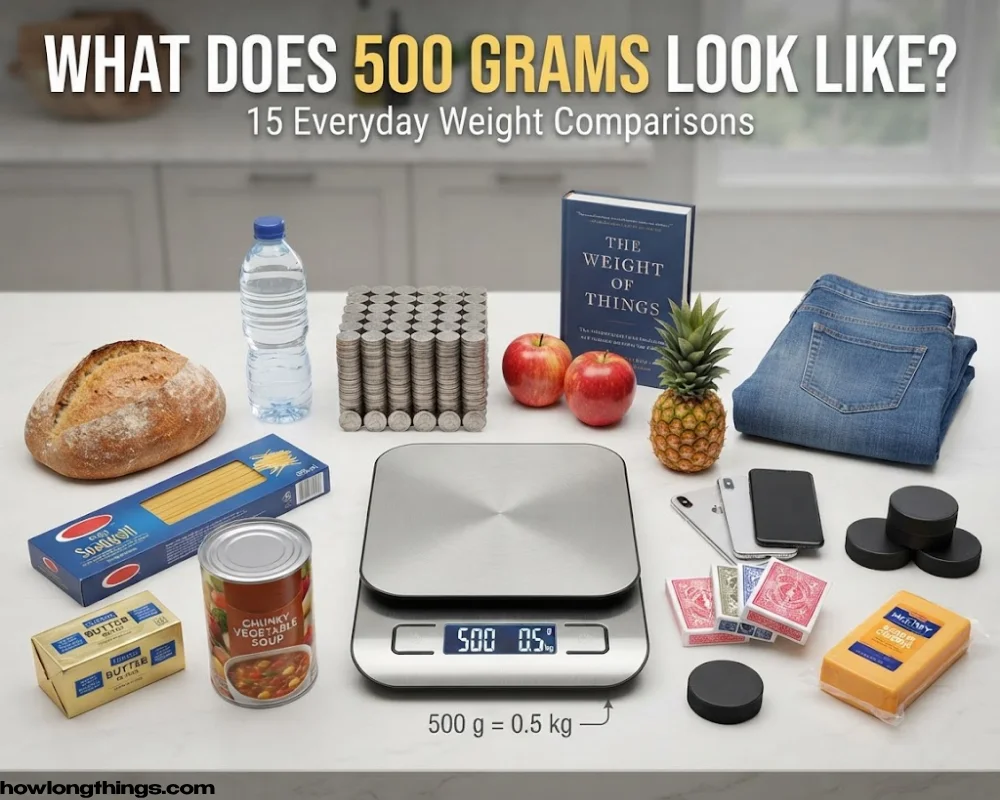
Numbers are one thing. Holding something is another. Here are 15 familiar objects that land right around the 500-gram mark, mixing kitchen staples with a few unexpected entries.
A Loaf of Bread
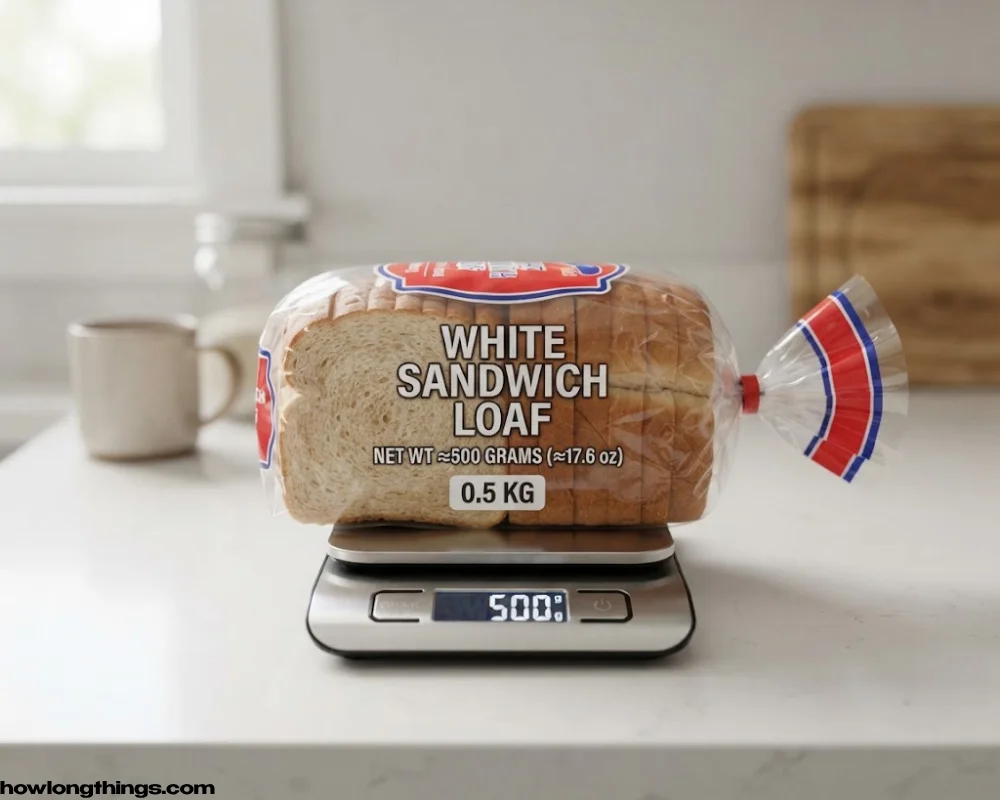
A standard store-bought loaf of sandwich bread weighs close to 500 grams, give or take 20 grams depending on the recipe. White bread typically runs 490 to 500 grams, while denser whole wheat or multigrain loaves push closer to 520 grams. Next time you’re at the grocery store, pick one up — that’s your 500-gram baseline.
A Full 500ml Water Bottle
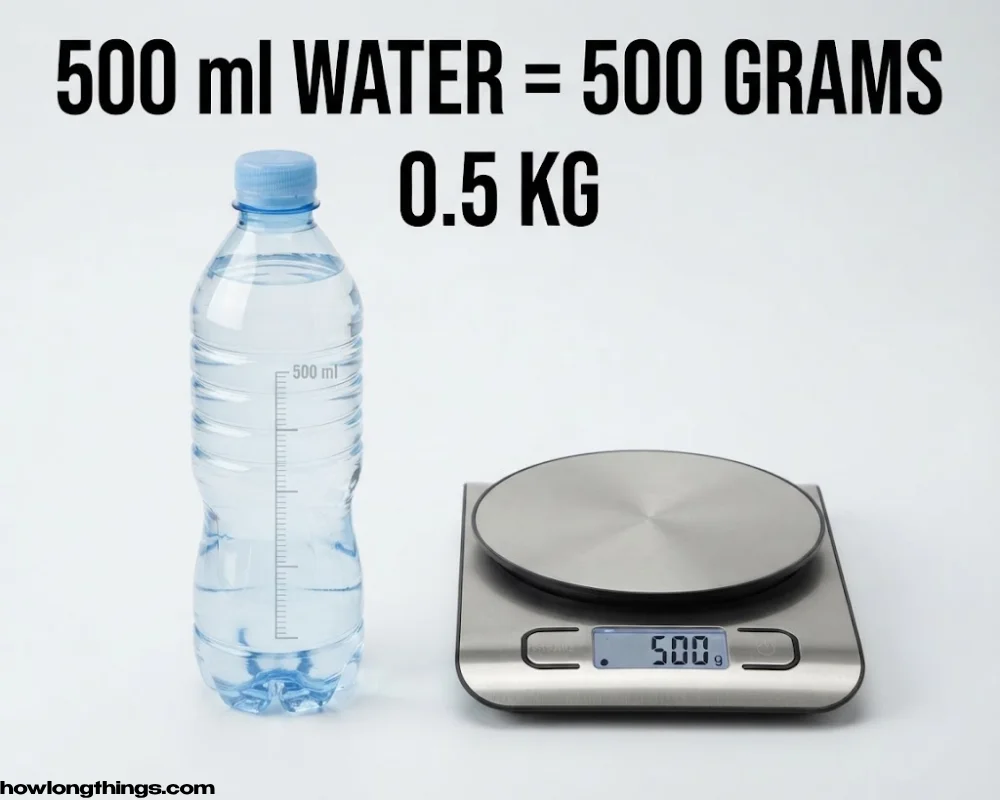
This is the single most reliable reference point on this list, and it’s not even close. Water has a density of exactly 1 gram per milliliter at standard temperature, so 500 milliliters of water weighs precisely 500 grams, no exceptions. Grab any full 500ml bottle — the size sold at gas stations and gyms everywhere — and you’re holding an exact match.
A Standard Box of Dried Pasta
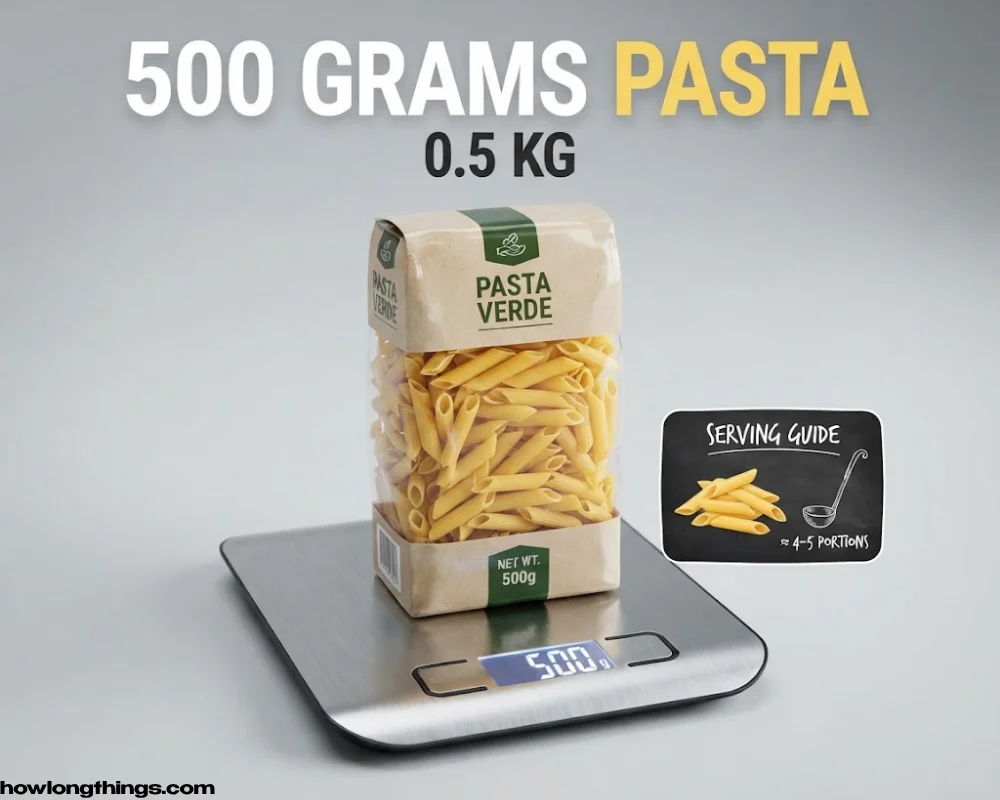
Most boxed pasta sold in the US, whether it’s spaghetti, penne, or rotini, comes packaged at 500 grams. That specific amount isn’t random. It’s the portion size that comfortably feeds four to five people as a main course, which is why manufacturers settled on it as the industry default.
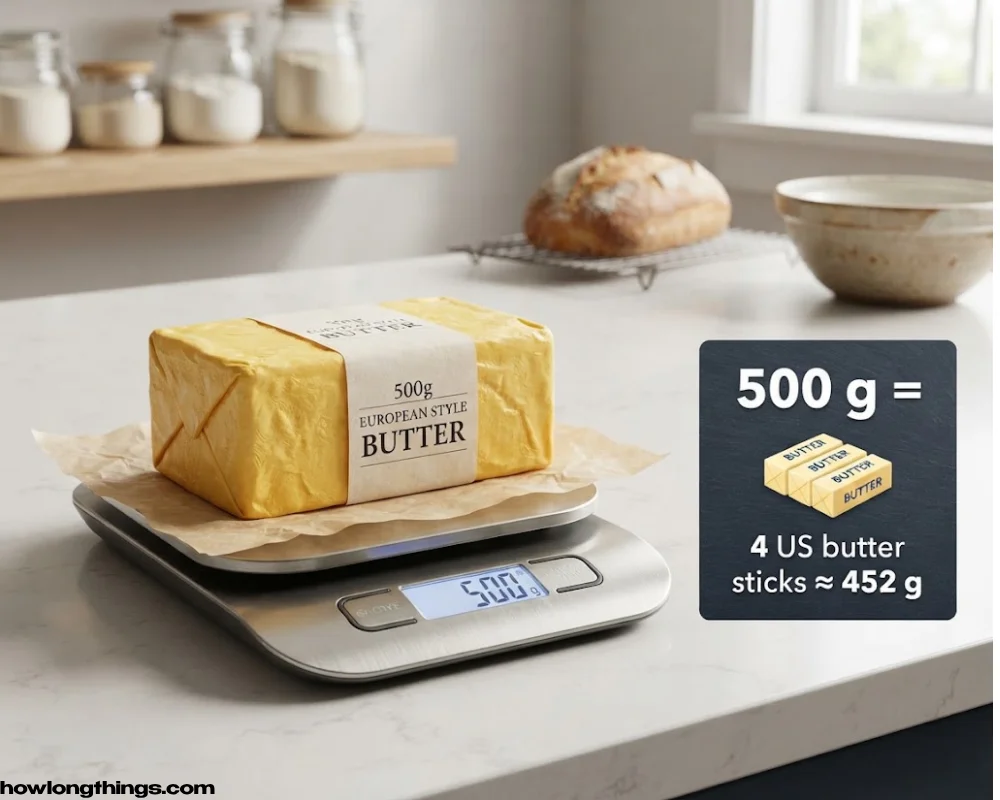
A Block of European-Style Butter
A single block of European-style butter, the kind sold as one solid brick rather than individual sticks, typically weighs 500 grams. That’s roughly equal to four American butter sticks, since each US stick runs about 113 grams. If you bake from European recipes, this conversion comes in handy often.
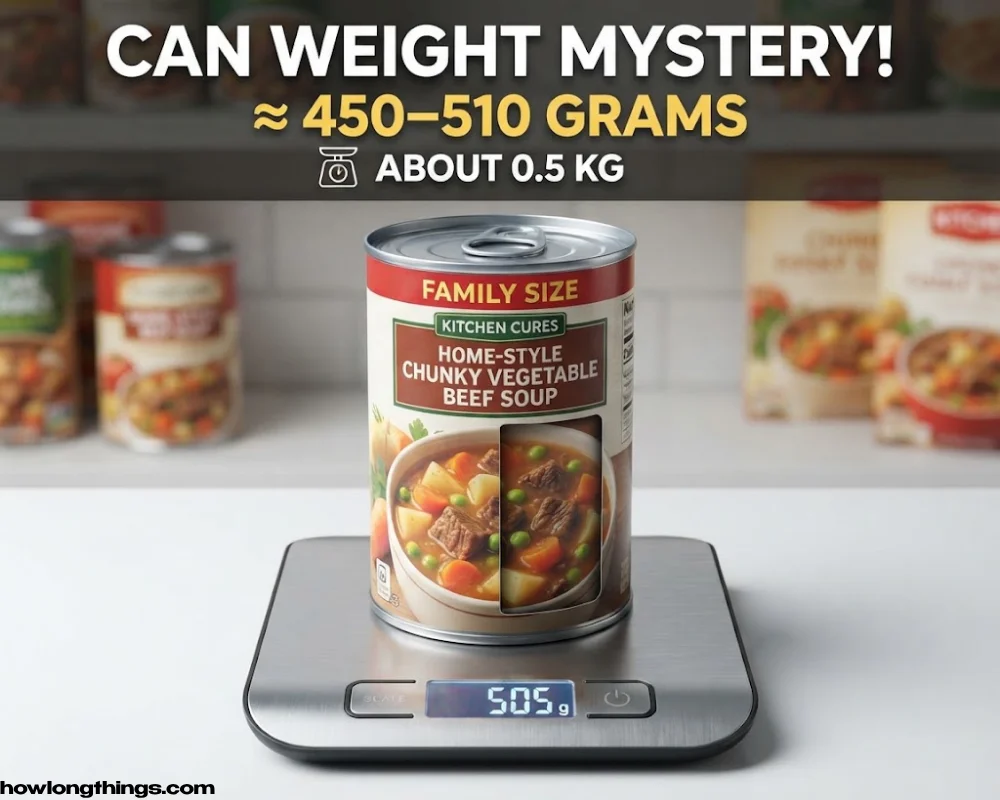
A Large Can of Soup
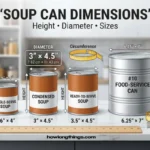
The bigger, family-size cans of soup or canned vegetables on grocery shelves usually land between 450 and 510 grams once you count the can itself. Ready-to-eat chunky soups and large vegetable cans are your best bet for this comparison. The combined weight of the metal shell and the contents inside naturally settles near the half-kilogram mark.
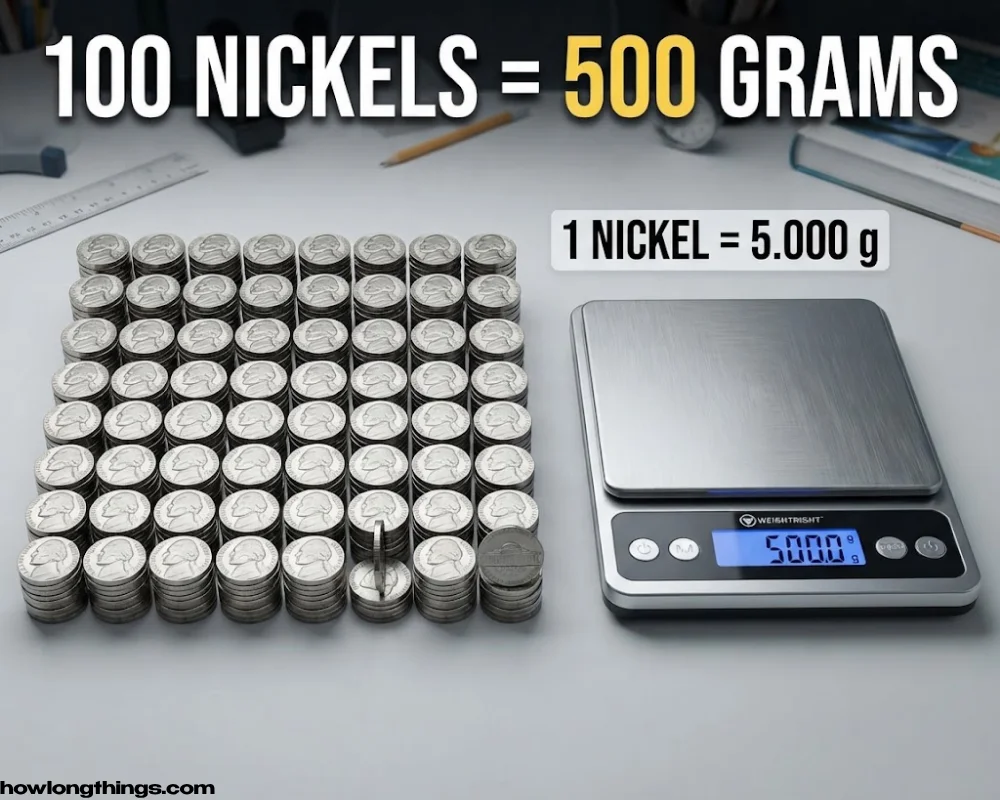
100 US Nickels
This is the most mathematically precise item on the whole list. Every US nickel is minted to weigh exactly 5.000 grams, a specification the US Mint has held consistent since 1965. Stack up 100 nickels, and you have a laboratory-accurate 500 grams — useful if you ever need to check whether your kitchen scale is telling the truth.
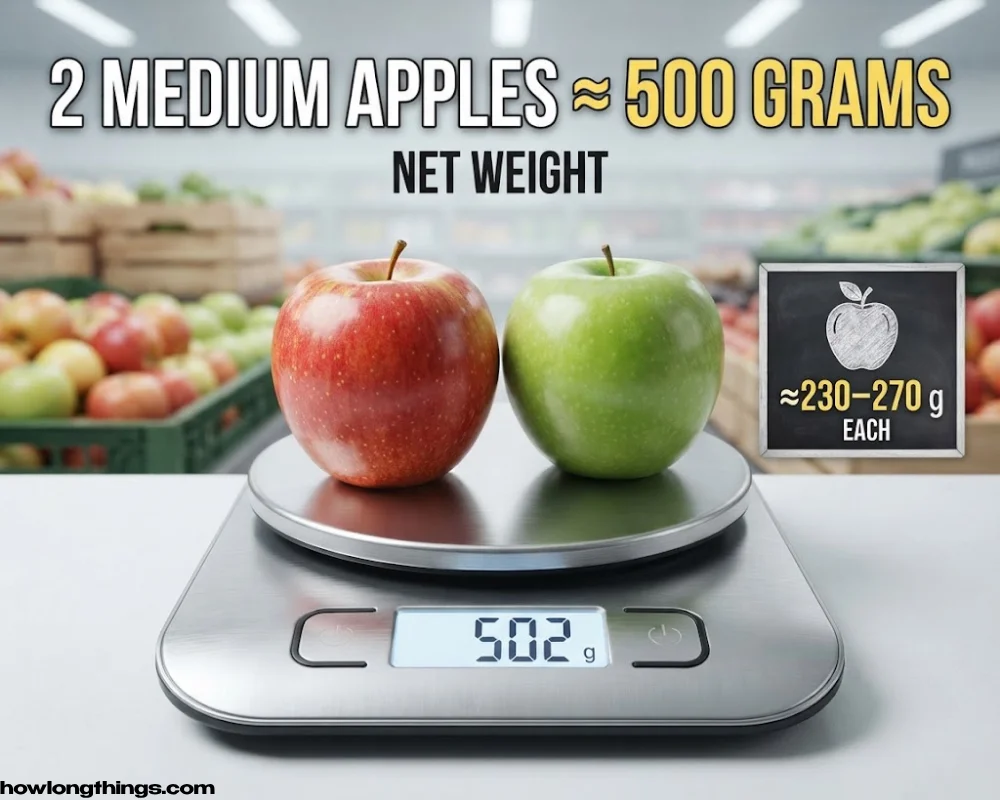
Two Medium Apples
Grab two medium apples from the fruit bowl and you’re within a few grams of 500. A single medium apple runs roughly 230 to 270 grams depending on the variety, with denser types like Honeycrisp and Granny Smith on the heavier end and Gala or Fuji apples running a bit lighter. Produce is one of the most natural weight references you’ll ever have on hand.
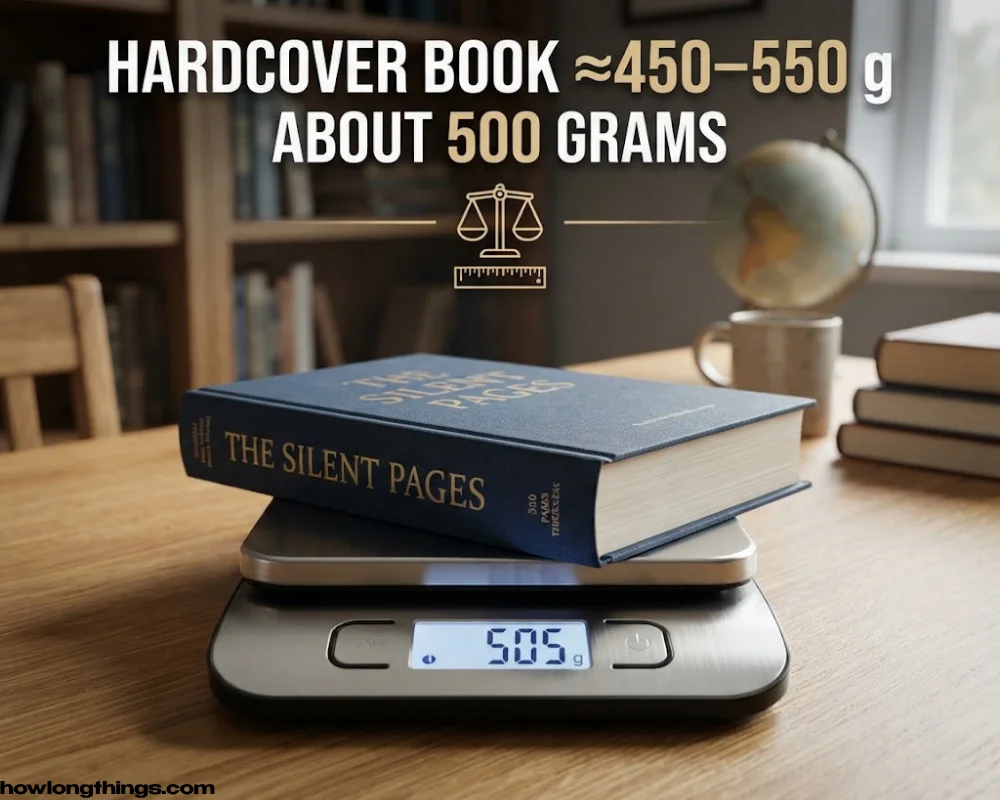
A Medium Hardcover Book
A standard hardcover novel, somewhere between 300 and 400 pages, usually weighs between 450 and 550 grams. Paper quality, binding, and cover material all shift the final number slightly. A typical trade fiction hardcover, the kind you’d find on a bestseller table, sits right in the middle of that range.
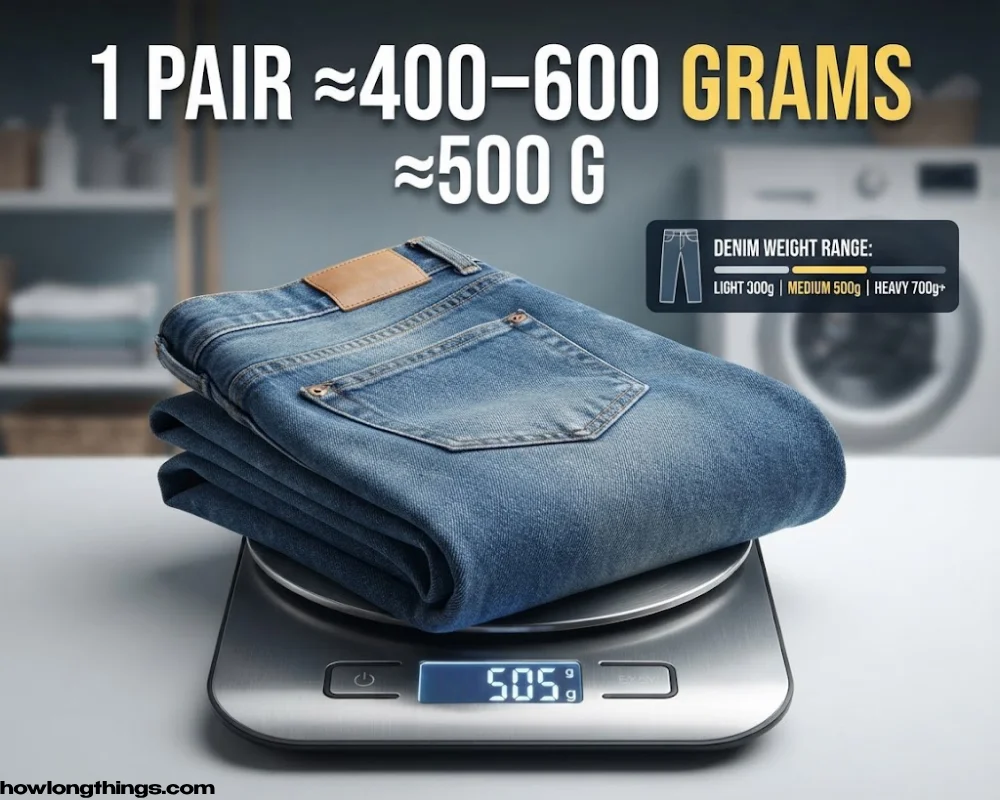
A Pair of Denim Jeans
A single pair of adult denim jeans in a medium size weighs somewhere between 400 and 600 grams, and mid-weight denim, the most common type sold in US stores, lands especially close to 500. It’s an easy comparison if you’re doing laundry and want a mental reference while you sort a load.
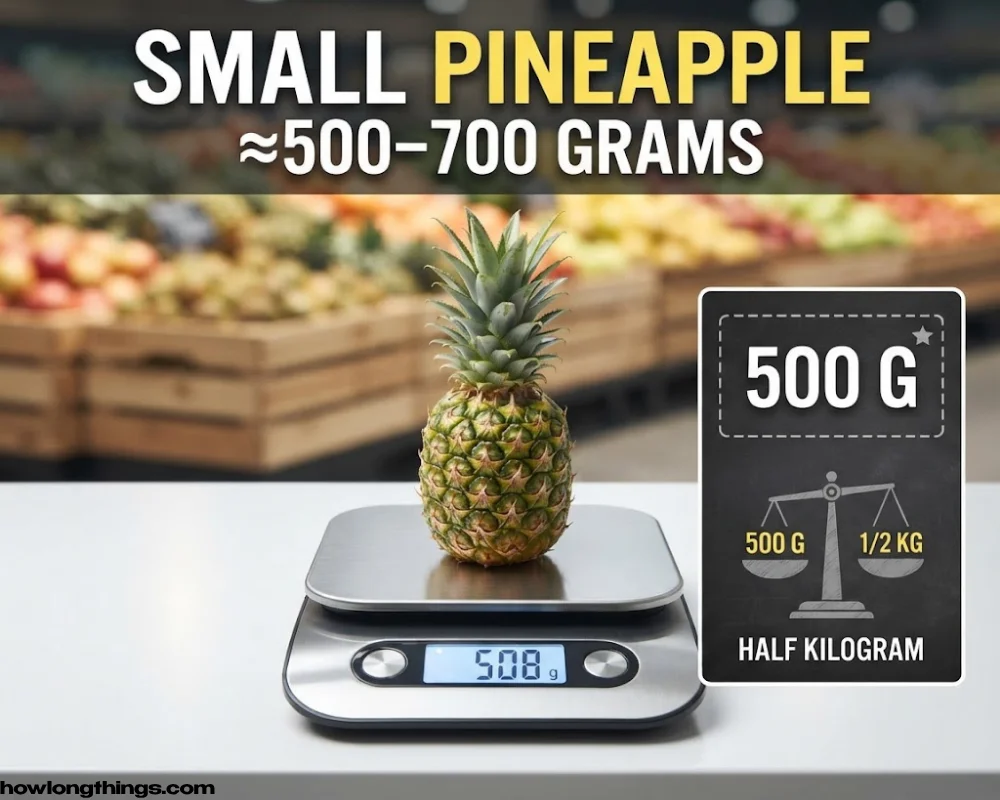
A Small Pineapple
A small to medium pineapple typically weighs between 500 and 700 grams, so the smallest ones you find in the produce aisle sit right at the target weight. It also happens to be one of the more memorable items on this list, since a pineapple’s heft is hard to forget once you’ve held one.
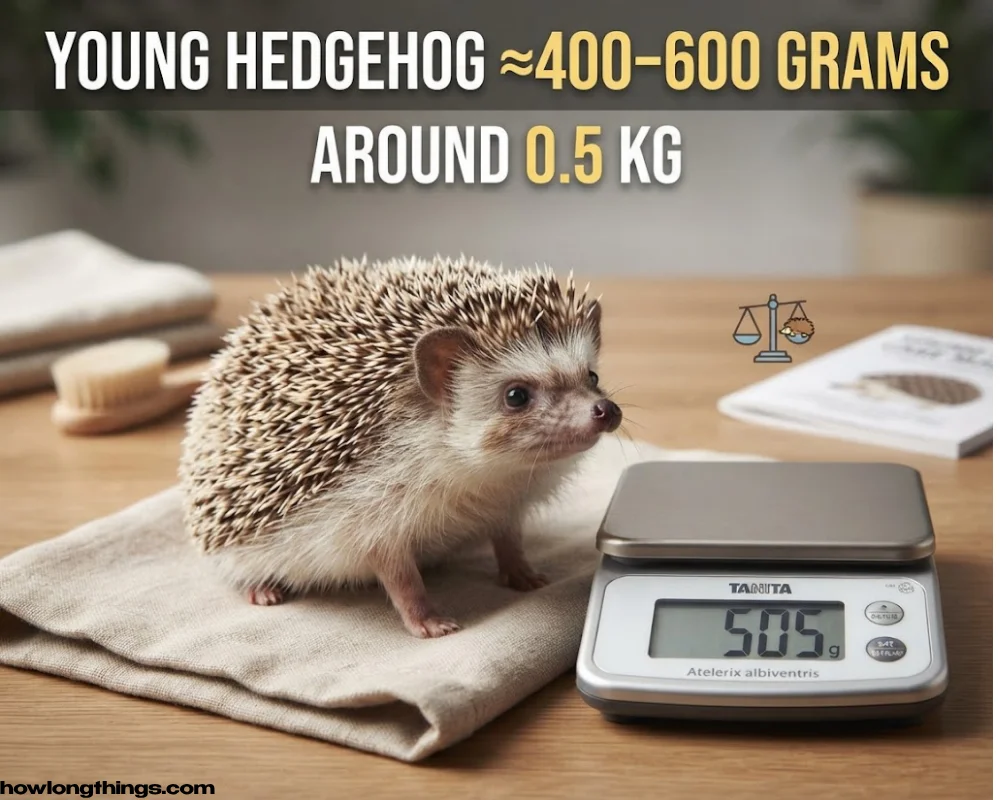
A Young Hedgehog
Here’s an unexpected one: a healthy young hedgehog typically weighs between 400 and 600 grams, with many landing right around the half-kilogram mark according to small-animal care guidelines. It’s a strange comparison, but it sticks in your memory precisely because it’s so specific.
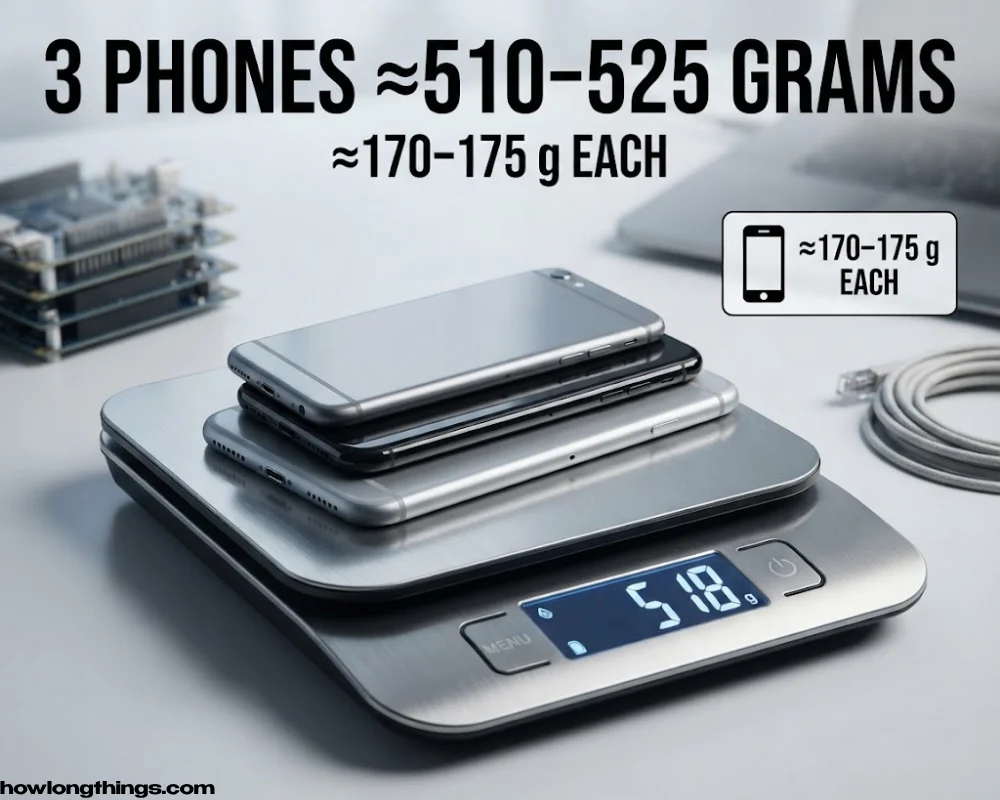
Three iPhones
A single modern iPhone weighs somewhere around 170 to 175 grams, depending on the model. Stack three of them together and you land at roughly 510 to 525 grams, which makes this a genuinely useful reference for anyone who spends more time around phones than produce.
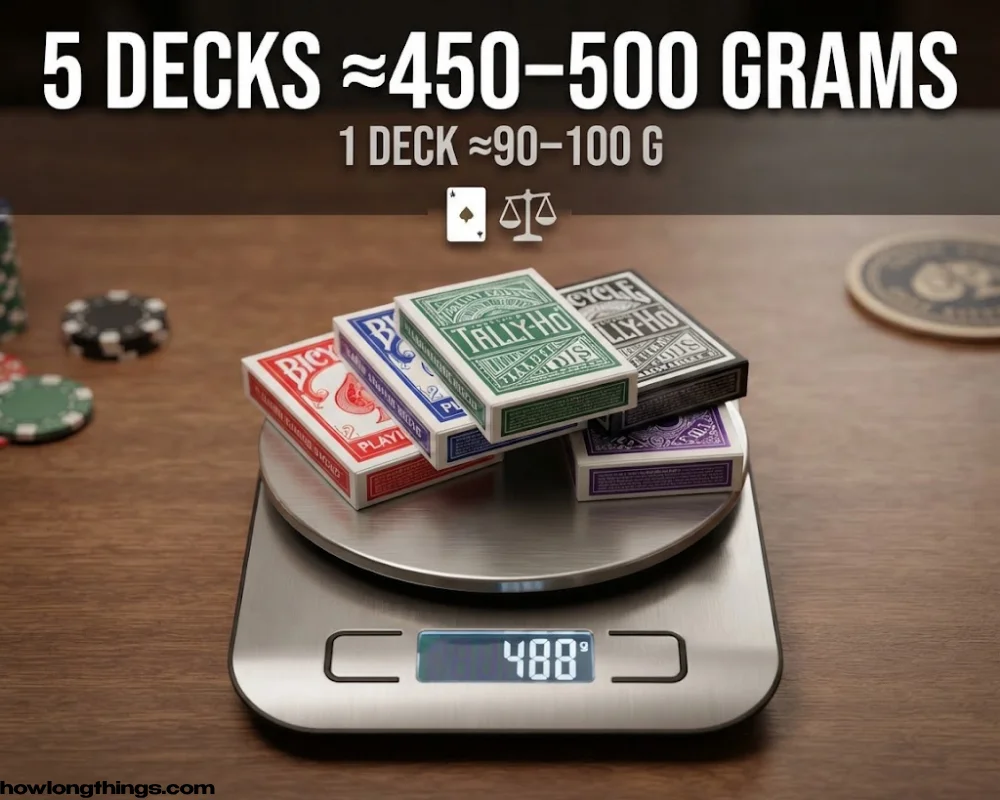
Five Decks of Playing Cards
A standard deck of playing cards weighs close to 90 to 100 grams. Five decks stacked together bring you to roughly 450 to 500 grams, which makes this an easy visual if you happen to have a game night stash lying around.
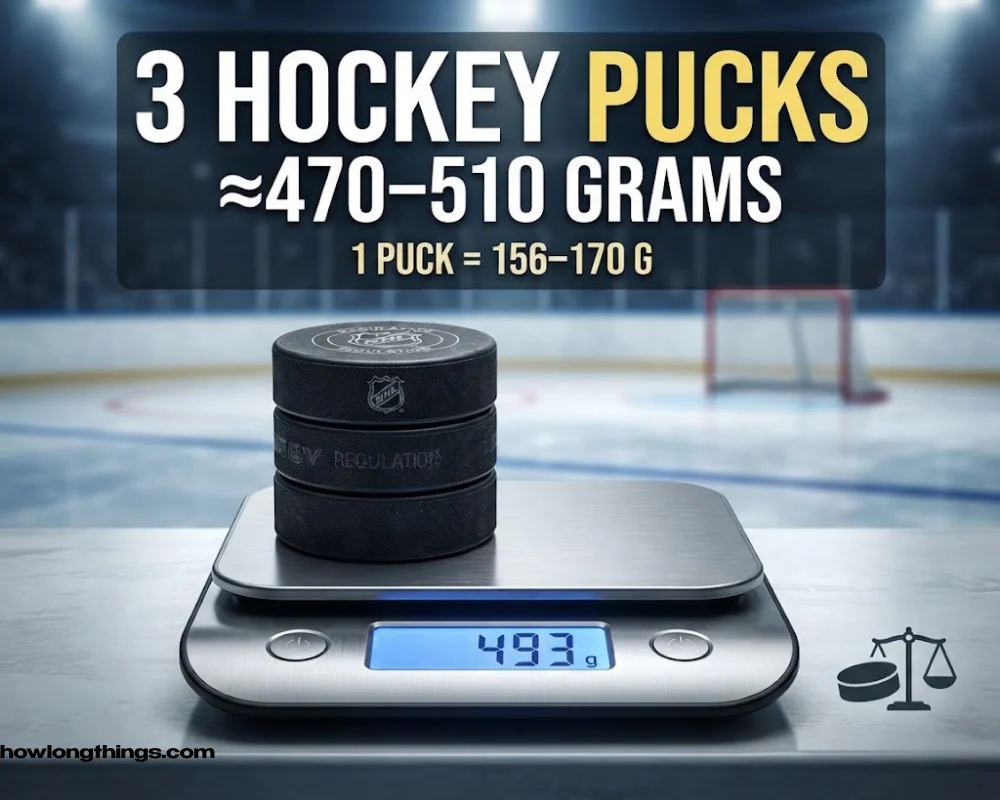
Three Hockey Pucks
An official regulation hockey puck weighs between 156 and 170 grams. Three of them together land somewhere between 470 and 510 grams, putting this squarely in the “close enough to picture accurately” category for any hockey fan.
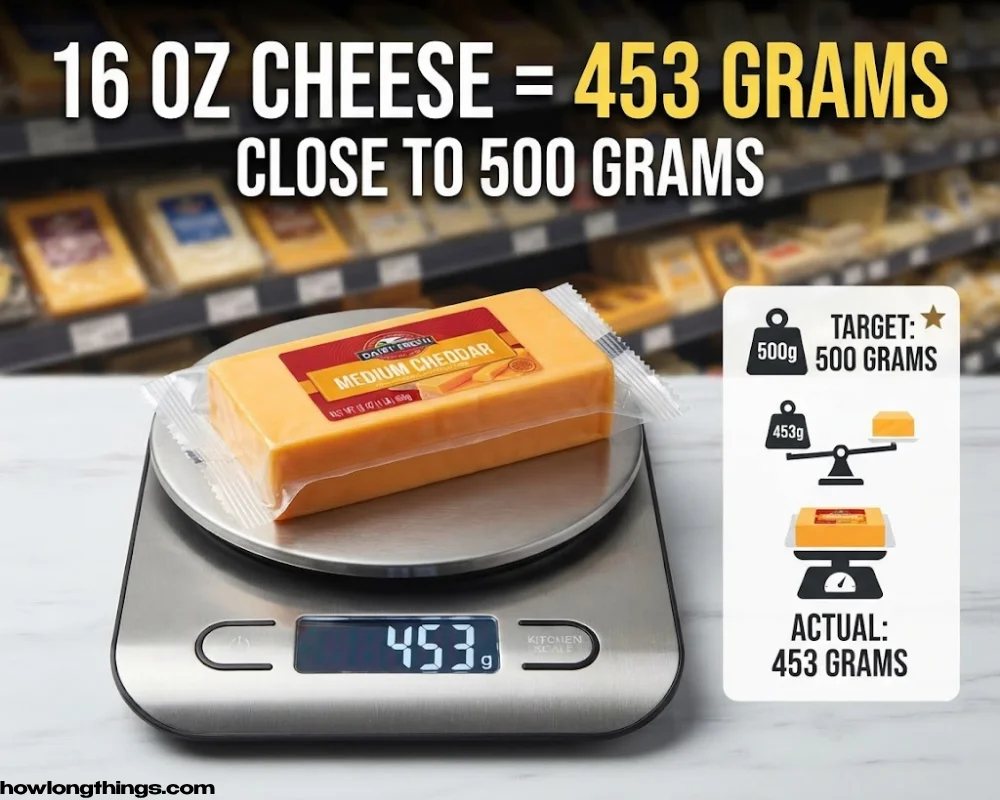
A Block of Cheese
A standard 16-ounce brick of cheese, the kind sold in nearly every US grocery store, weighs about 453 grams. It’s not an exact match, but it’s close enough that grabbing one off the shelf gives you a genuinely useful mental picture of what 500 grams feels like in your hand.
You don’t need a kitchen scale to estimate 500 grams accurately. A few low-tech tricks get you remarkably close.
Water method: Fill any container to the 500ml mark, or use a full 500ml bottle straight from the store. Since water weighs exactly 1 gram per milliliter, this method is essentially foolproof.
Coin method: Count out 100 nickels. Because each one is minted to a fixed 5-gram standard, this is the most precise non-scale method available to anyone in the US.
Food combo method: Combine familiar kitchen items you already have. A loaf of bread plus a handful of coins, or a full water bottle plus a small apple, can help you triangulate the weight even more precisely, since you’re stacking multiple known references together instead of guessing with just one.
500 Grams vs Other Common Weights
Context makes any single number easier to remember. Here’s where 500 grams sits on the broader scale:
100 grams — about the weight of a bar of soap or a medium apple
250 grams — half of 500g, close to one large apple or a small snack bag
500 grams — a loaf of bread, a pasta box, half a kilogram
1 kilogram — double 500g, roughly two bread loaves or 2.2 pounds
There’s also a practical, real-world angle worth knowing: 500 grams converts to about 17.6 ounces, which is just over the 16-ounce (1-pound) cutoff used by USPS Ground Advantage shipping. Packages under 16 ounces are priced in ounce-based tiers, while anything above that rounds up and gets billed by the pound. That half-ounce difference can quietly bump your shipping cost into a new pricing tier, so it’s worth weighing a package carefully before you print a label.
FAQs About 500 Grams
How much is 500 grams to a cup?
It depends on the ingredient. 500 grams of flour is about 4 cups, while 500 grams of sugar is closer to 2.5 cups, and 500 grams of water is about 2.1 cups. Density, not volume, drives the difference.
Is 500g equal to 1kg?
No. 500 grams is exactly half of 1 kilogram. A kilogram is 1,000 grams, so 500 grams only gets you halfway there.
Is 500g the same as 1 lb?
No. One pound equals 454 grams, so 500 grams is about 46 grams heavier than a pound, or approximately 1.1 pounds total.
How much is 500 grams equal to?
500 grams equals 0.5 kilograms, roughly 1.1 pounds, about 17.6 ounces, or 500,000 milligrams. It’s also the weight of a standard loaf of bread or a full 500ml water bottle.
How much is 500g visually?
Picture a full 500ml water bottle, a standard loaf of bread, or two medium apples sitting in your hand. Any of those gives you an accurate, no-scale mental image of exactly what 500 grams looks and feels like.
Conclusion
Half a kilogram shows up more often than you’d think — in your pantry, your mailbox, even your pocket. Once you’ve held a water bottle, a nickel roll, or a loaf of bread and connected it to that number, you’ll never need a scale to picture 500 grams again.
Elizabeth Queen is a Owner and consumer research writer at HowLongThings.com, specializing in product lifespan, durability, and everyday household research. She’s passionate about helping readers make smarter, longer-lasting buying decisions.