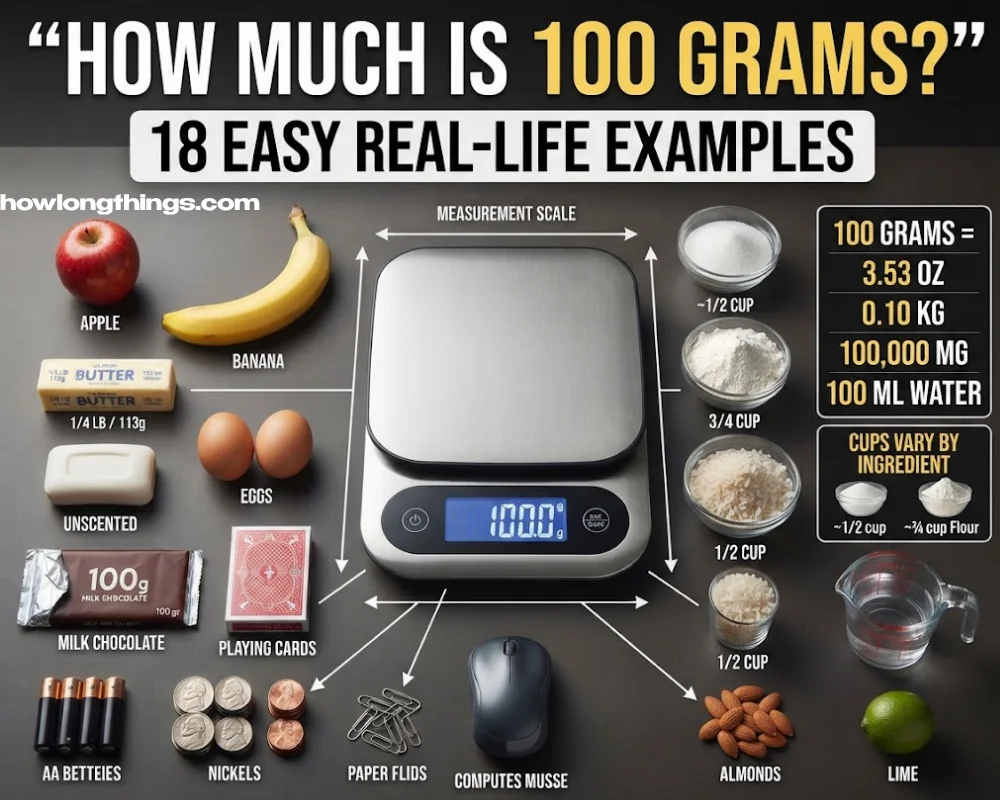
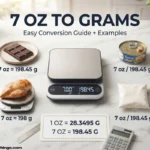
100 grams equals about 3.5 ounces, 0.1 kilograms, or roughly ½ cup depending on what you’re measuring. That’s the short answer. But grams show up everywhere — recipe cards, nutrition labels, shipping forms — and a single number rarely tells the whole story.
This guide breaks down exactly what 100 grams looks like using 18 everyday objects, shows you how to convert it into cups, ounces, and tablespoons, and gives you simple ways to measure it at home without a scale After reading this blog post you will be able to tell anyone how much is 100 grams.
Table of Contents
100 Grams to Cups, Ounces, Pounds and Other Units
A gram is a metric unit of mass, defined within the International System of Units (SI). One gram equals one-thousandth of a kilogram, which makes gram-to-kilogram math simple: just move the decimal point three places.
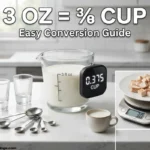
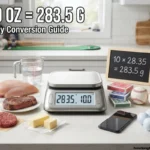
Ounces work differently. According to the National Institute of Standards and Technology, one ounce equals roughly 28.35 grams. Divide 100 by that number and you land on 3.53 ounces — close to the 3.5 oz figure most kitchen scales display.
Cups and spoons are trickier, because volume depends on density. A cup of flour weighs less than a cup of sugar, and both weigh far less than a cup of water. That’s why “100 grams to cups” doesn’t have one fixed answer — it depends on the ingredient.
Unit
Equivalent of 100g
Kilograms
0.1 kg
Ounces
3.53 oz
Pounds
0.22 lb
Milligrams
100,000 mg
Water
100 mL
All-purpose flour
~¾ cup
Granulated sugar
~½ cup
Tablespoons (varies by ingredient)
~6–7 tbsp
Teaspoons (varies by ingredient)
~20 tsp
Keep this table close by. It becomes the backbone for the conversions later in this guide, especially the cooking section.
18 Everyday Things That Weigh 100 Grams
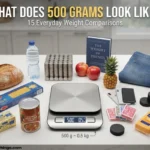
Numbers alone are abstract. Holding something familiar in your hand makes 100 grams click instantly. Below are 18 common objects — a mix of food, household items, and everyday tools — that land right around this weight.
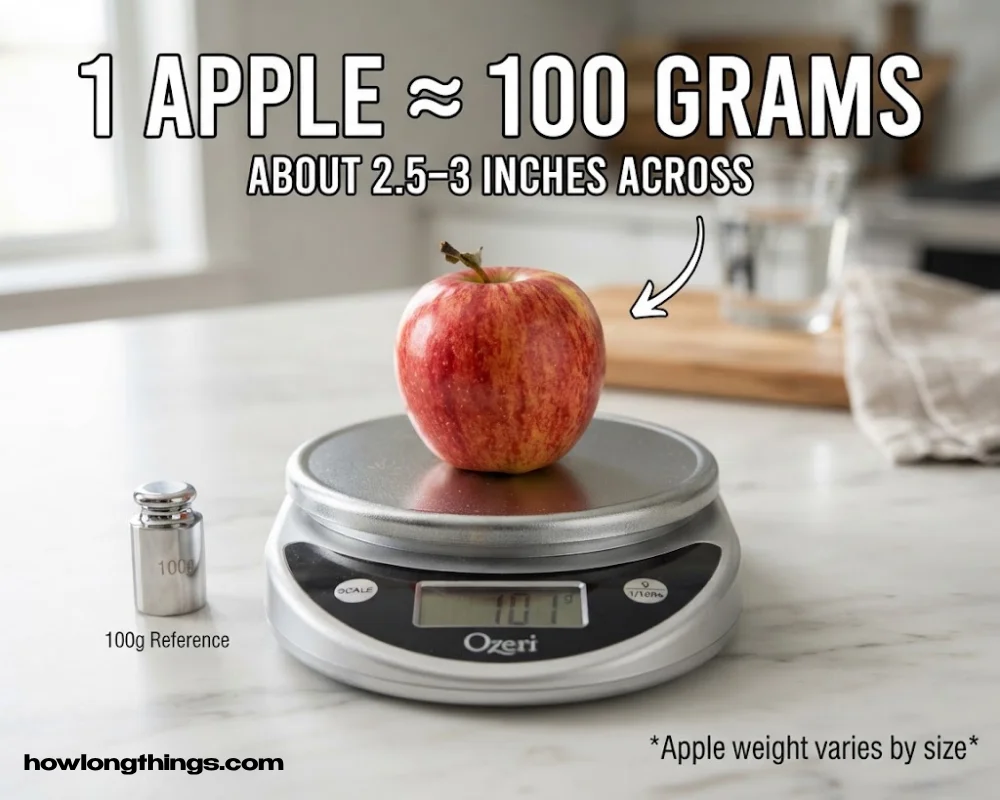
A Medium Apple
A typical apple weighs between 100 and 200 grams, so a smaller one sits right at the 100-gram mark. It’s about the size of your fist and roughly 2.5 to 3 inches across.
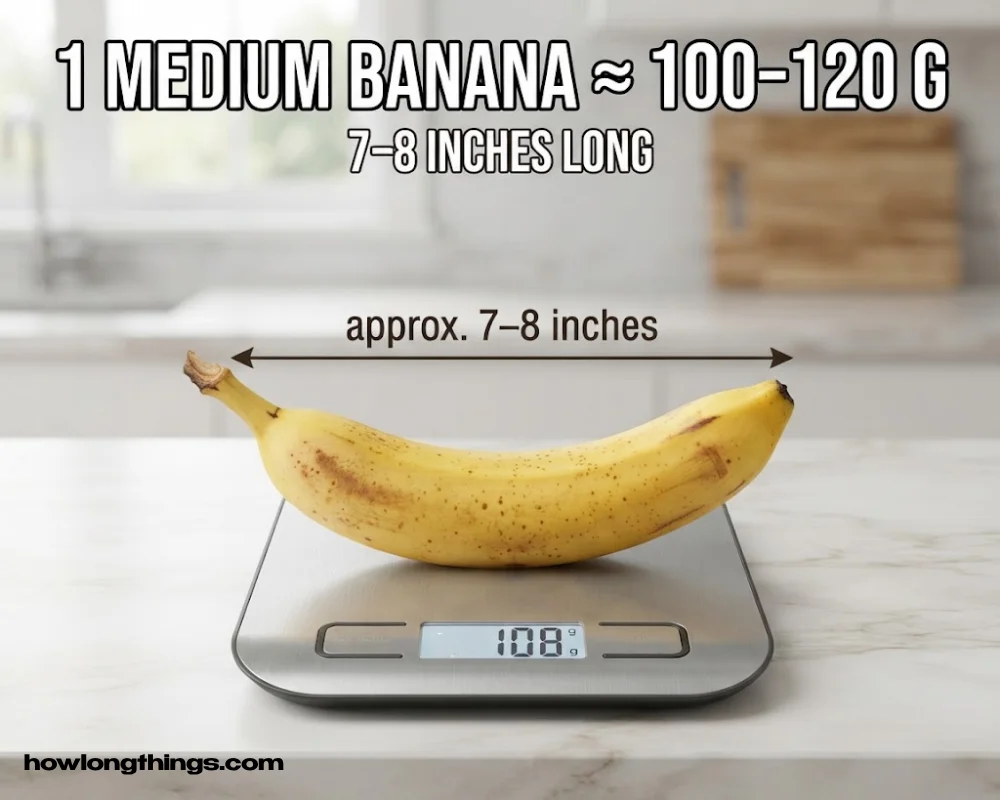
A Medium Banana
A banana measuring 7 to 8 inches usually weighs close to 100 to 120 grams. It’s one of the most widely eaten fruits on earth, which makes it a handy mental reference almost anywhere.
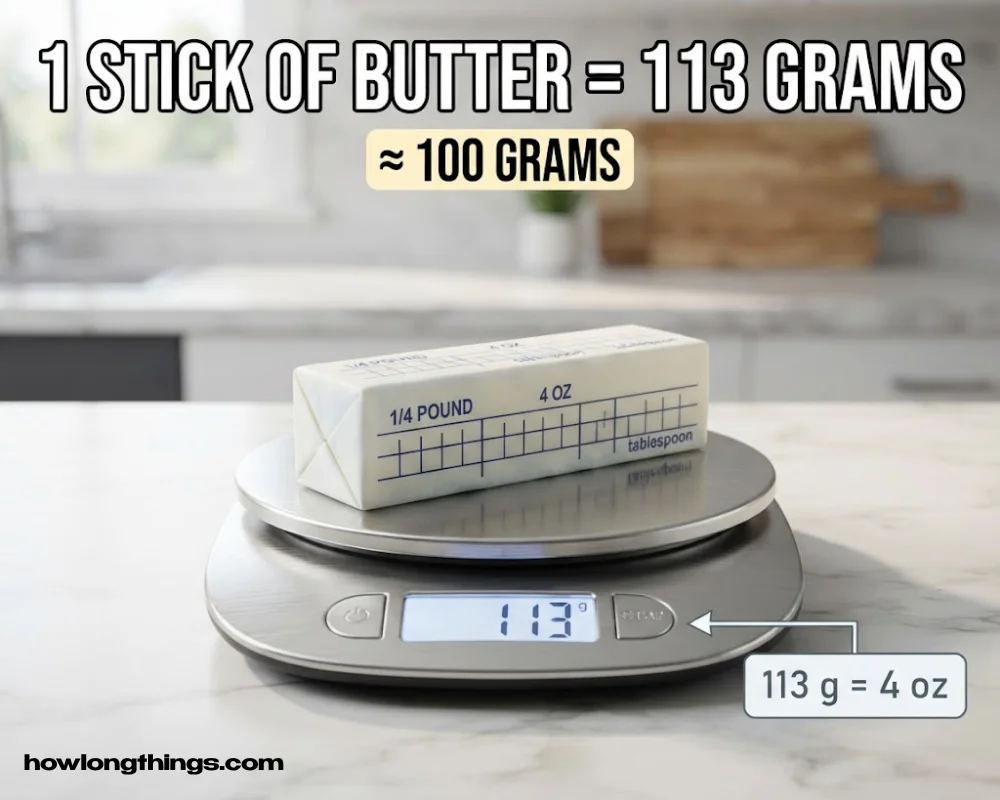
A Stick of Butter
One US stick of butter weighs 113 grams — slightly over 100g, but close enough to use as a quick comparison. The wrapper’s printed markings make it easy to visualize smaller portions too.
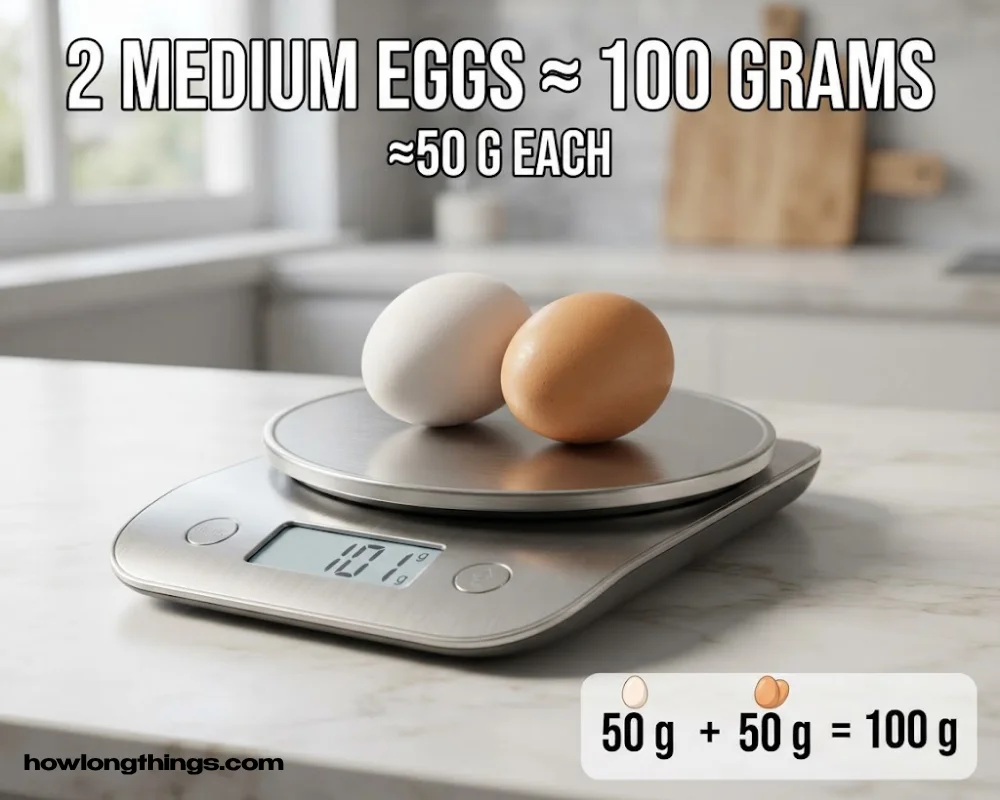
Two Medium Eggs
Two eggs, shell included, weigh around 100 grams combined, since a medium egg averages about 50 grams. This makes eggs a convenient protein reference for anyone tracking meals.
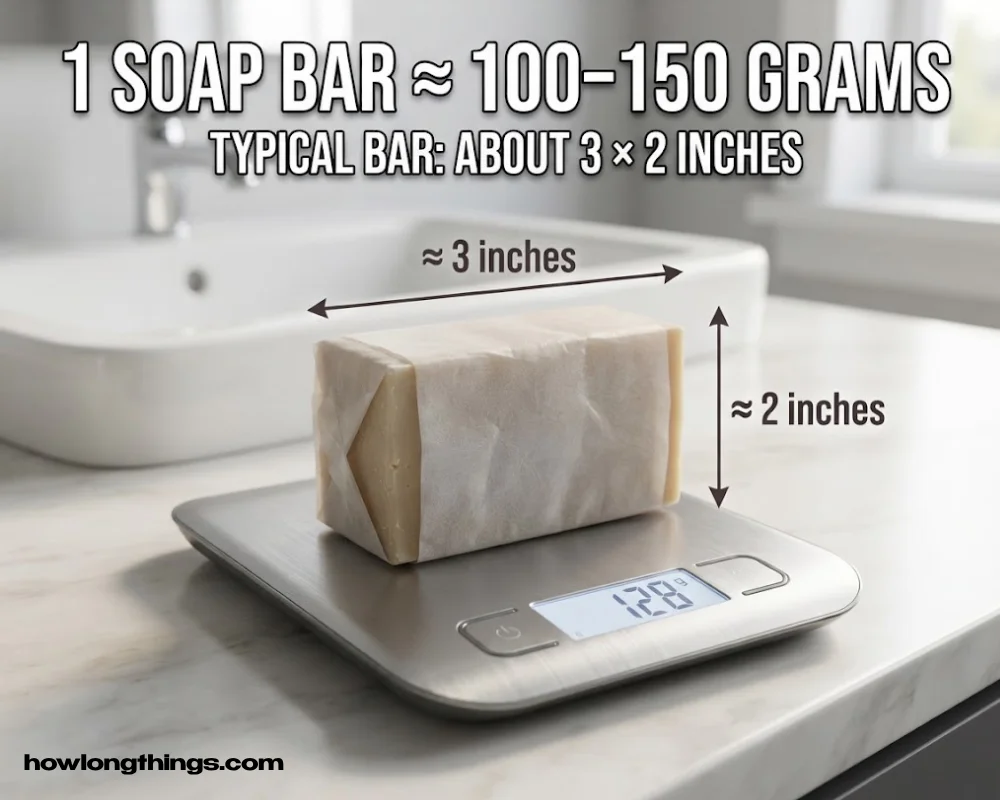
A Bar of Soap
A standard bathroom soap bar weighs 100 to 150 grams and measures roughly 3 by 2 inches. It’s a comparison almost every household already owns.
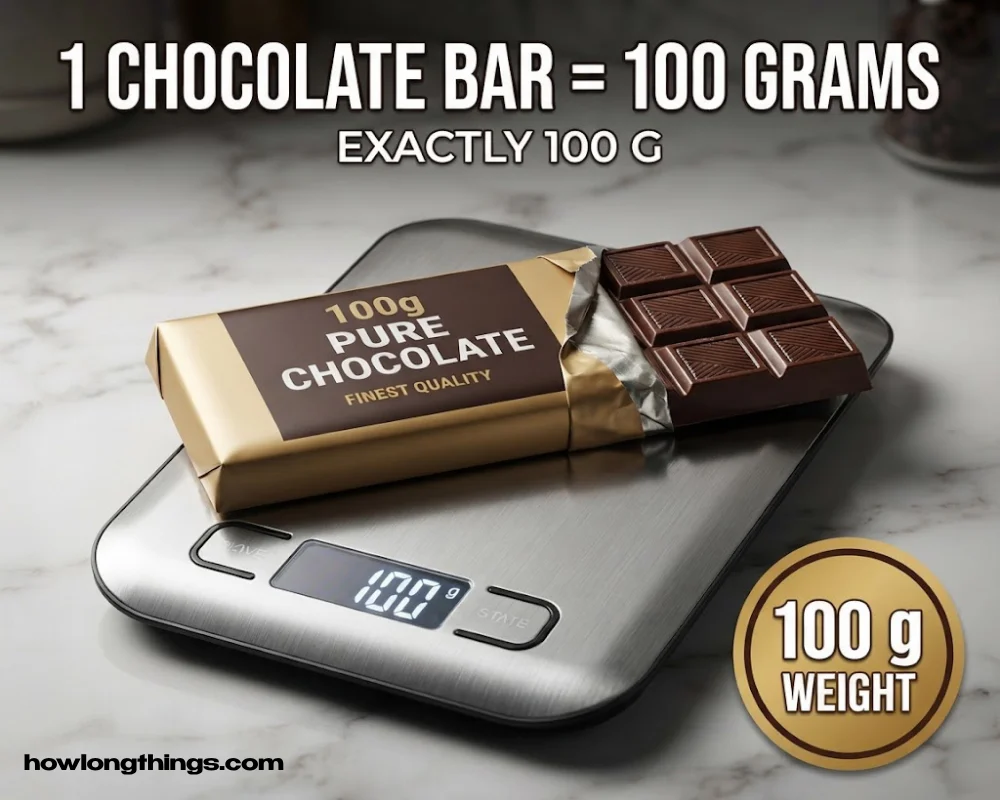
A 100-Gram Chocolate Bar
Many chocolate brands package bars in exactly 100-gram sizes because it’s considered a standard single serving. The weight is usually printed right on the wrapper.
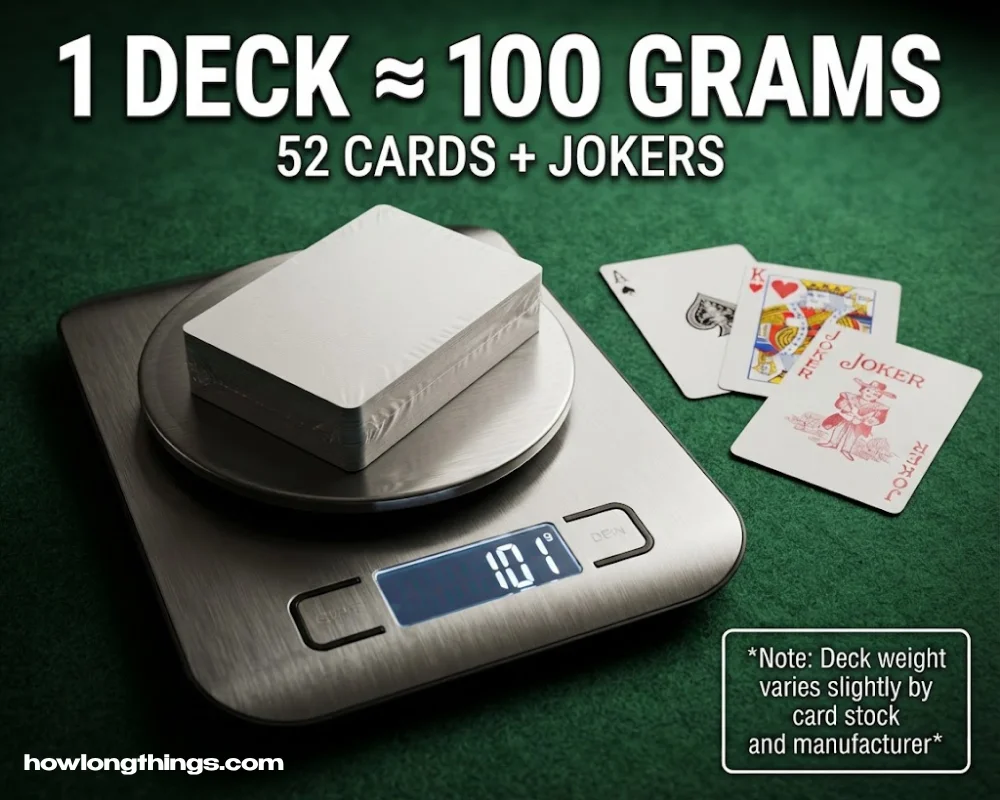
A Deck of Playing Cards
A full 52-card deck, jokers included, weighs close to 100 grams. Nutritionists often use this comparison to describe a portion size of meat or fish.
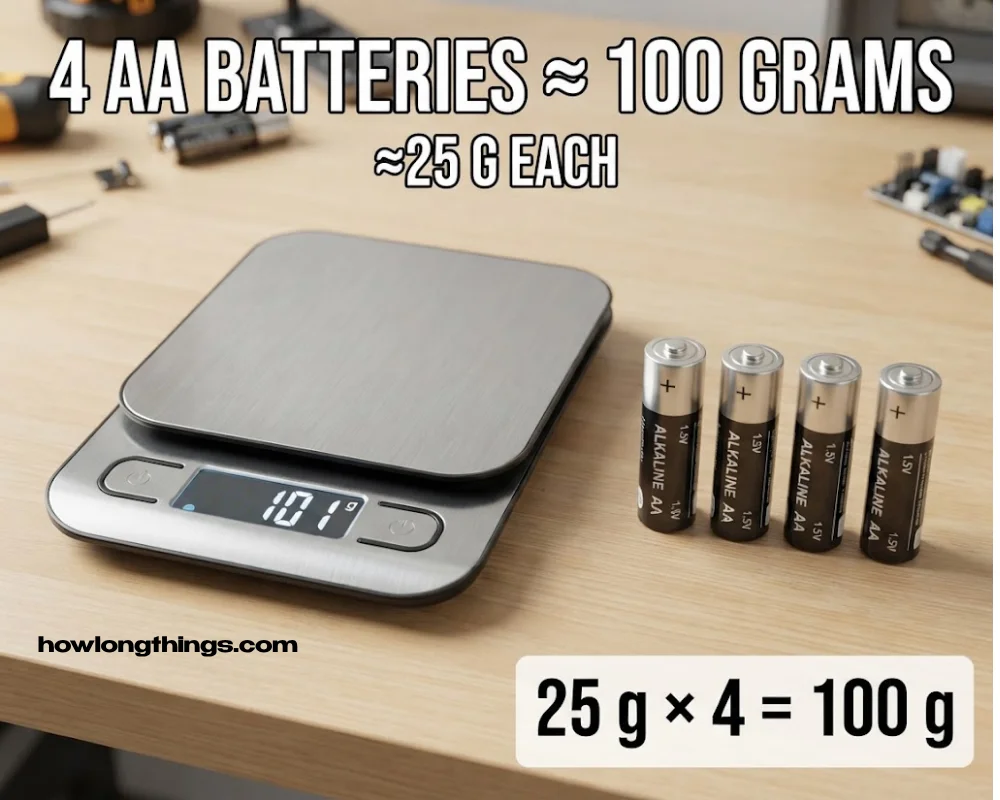
Four AA Batteries
Each alkaline AA battery weighs about 25 grams, so four together land right at 100 grams. Since most homes have spare batteries lying around, this is one of the fastest checks available.
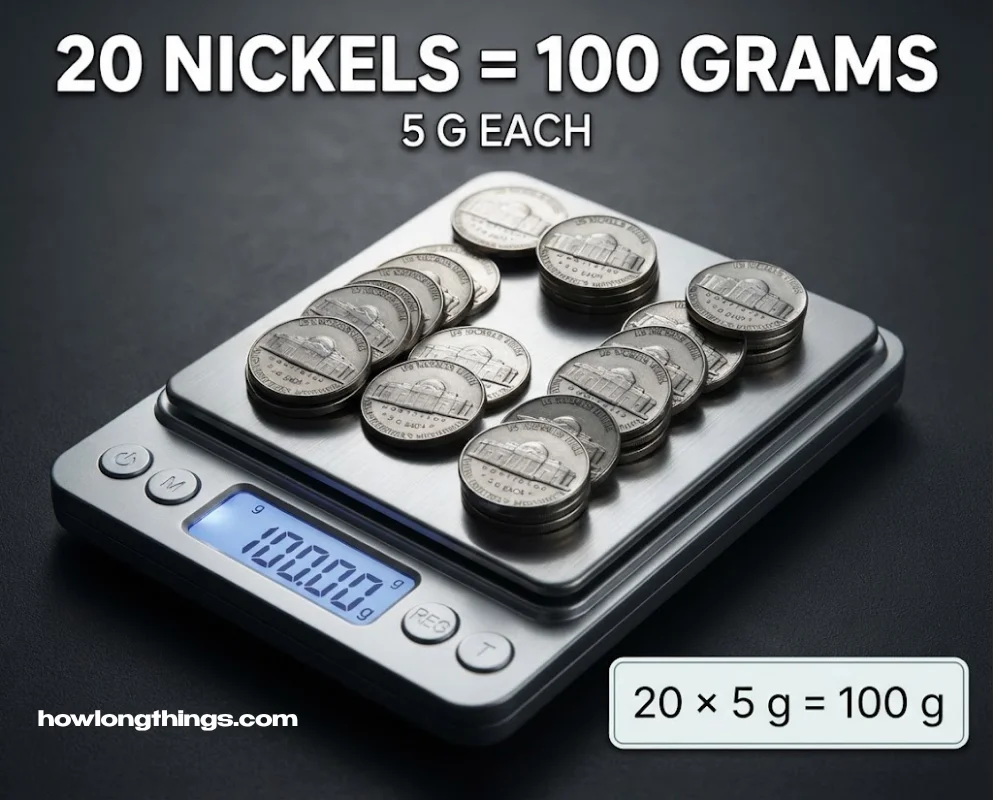
Twenty US Nickels
Every US nickel weighs exactly 5 grams under US Mint standards. Twenty of them add up to a precise 100 grams, making coins one of the most accurate DIY calibration tools.
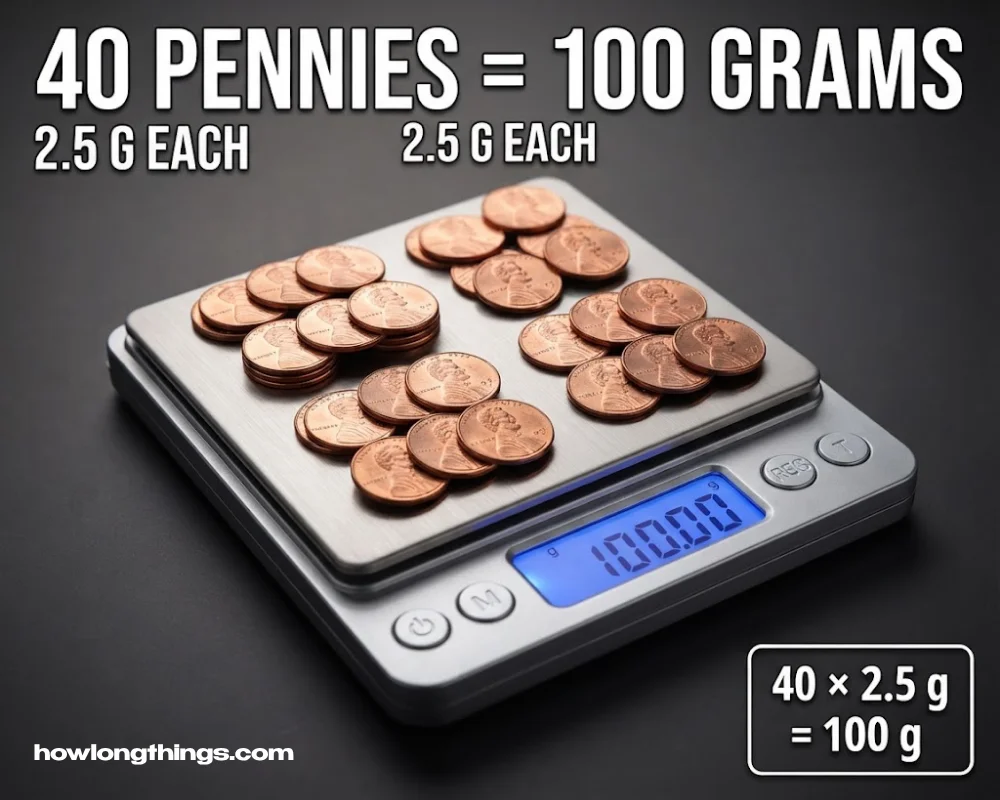
Forty US Pennies
Modern pennies, minted since 1982, are copper-plated zinc and weigh 2.5 grams each. Forty of them equal exactly 100 grams, offering another coin-based option.
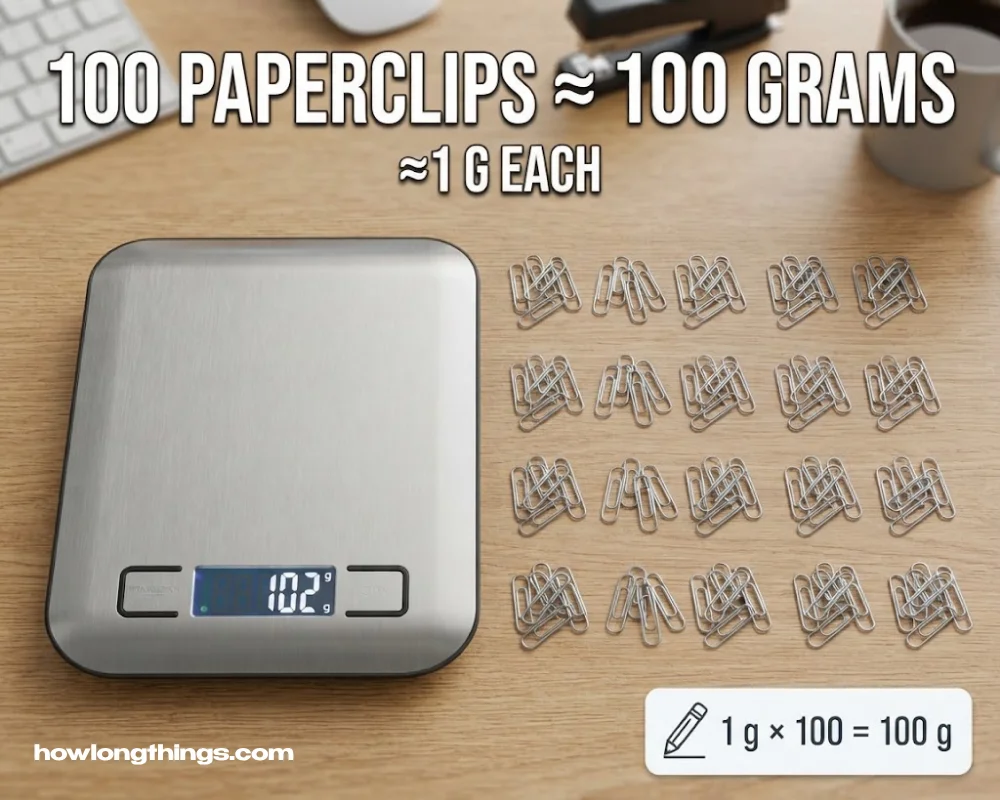
One Hundred Paperclips
A standard paperclip weighs close to 1 gram, so a stack of 100 gets you almost exactly there. Office supply drawers make this an easy, no-cost reference.
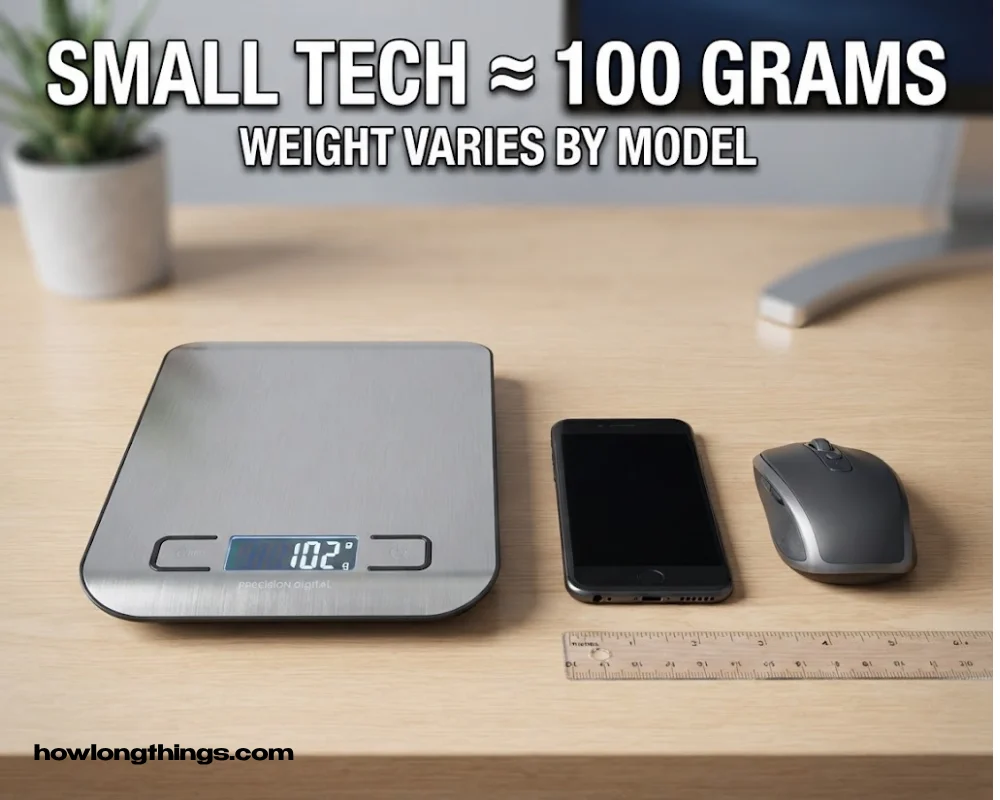
A Small Smartphone or Computer Mouse
Compact mice and small phones commonly weigh close to 100 grams. The Apple Magic Mouse, for example, weighs almost exactly 100 grams — about 0.22 pounds.
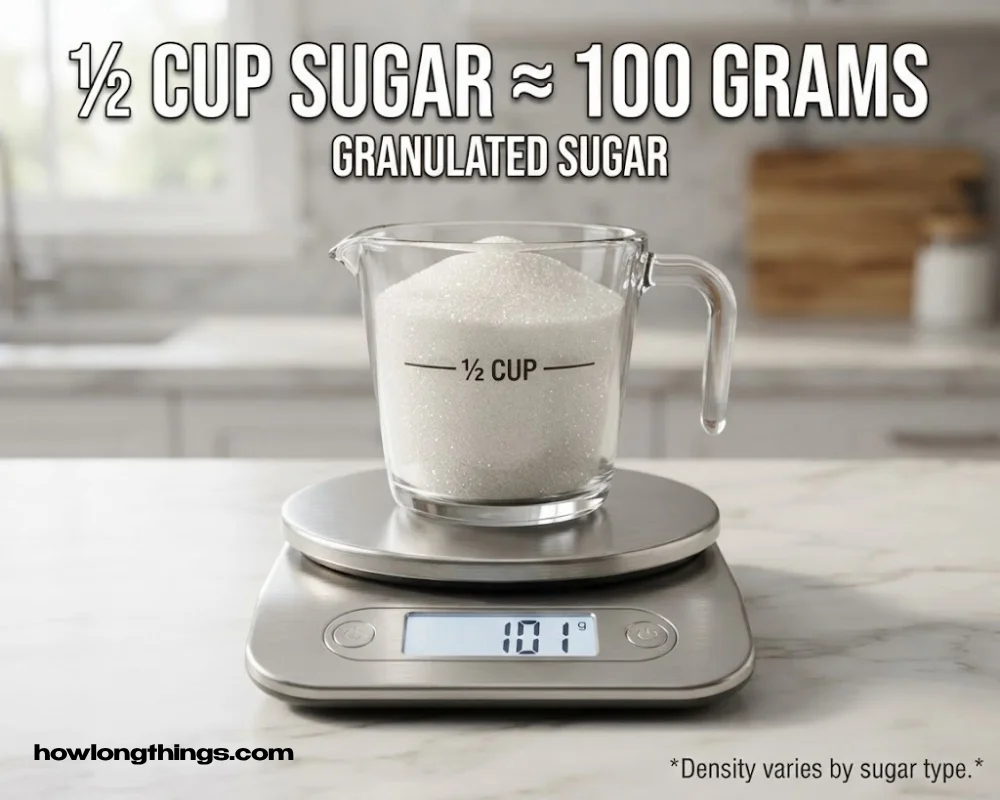
Half a Cup of Sugar
Granulated or brown sugar packed into a half-cup measure weighs close to 100 grams. It’s one of the most common baking conversions home cooks look up.
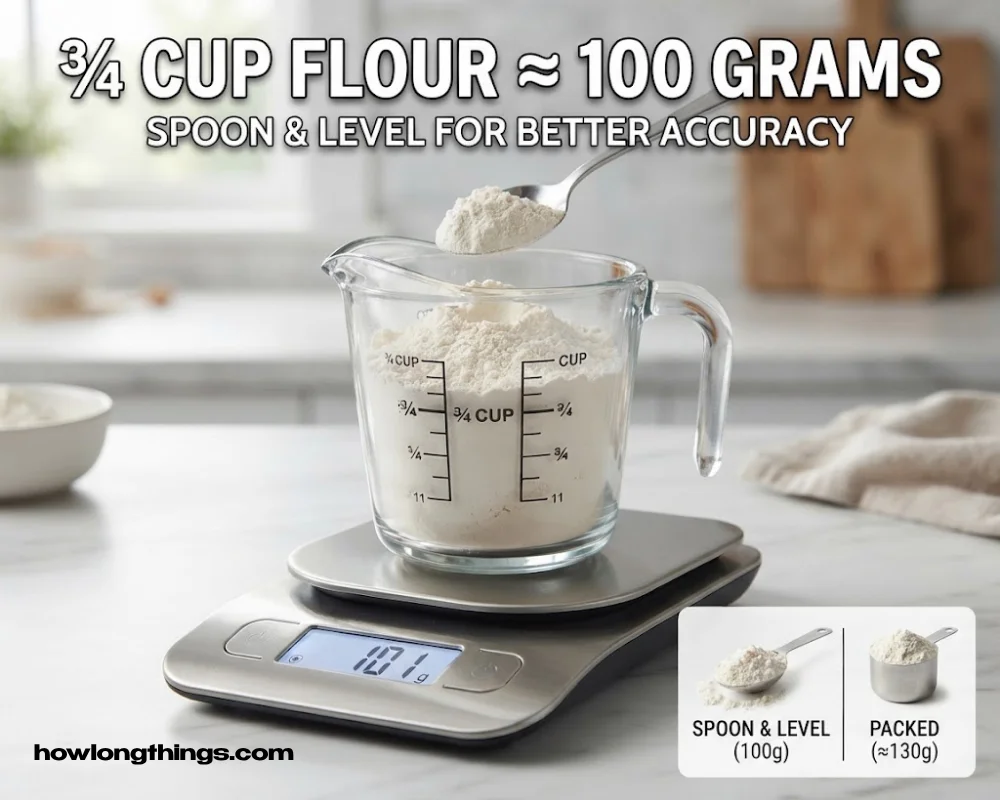
Three-Quarters Cup of Flour
All-purpose flour is lighter and airier than sugar, so it takes about ¾ cup to reach 100 grams. Spooning flour into the cup rather than scooping keeps this estimate accurate.
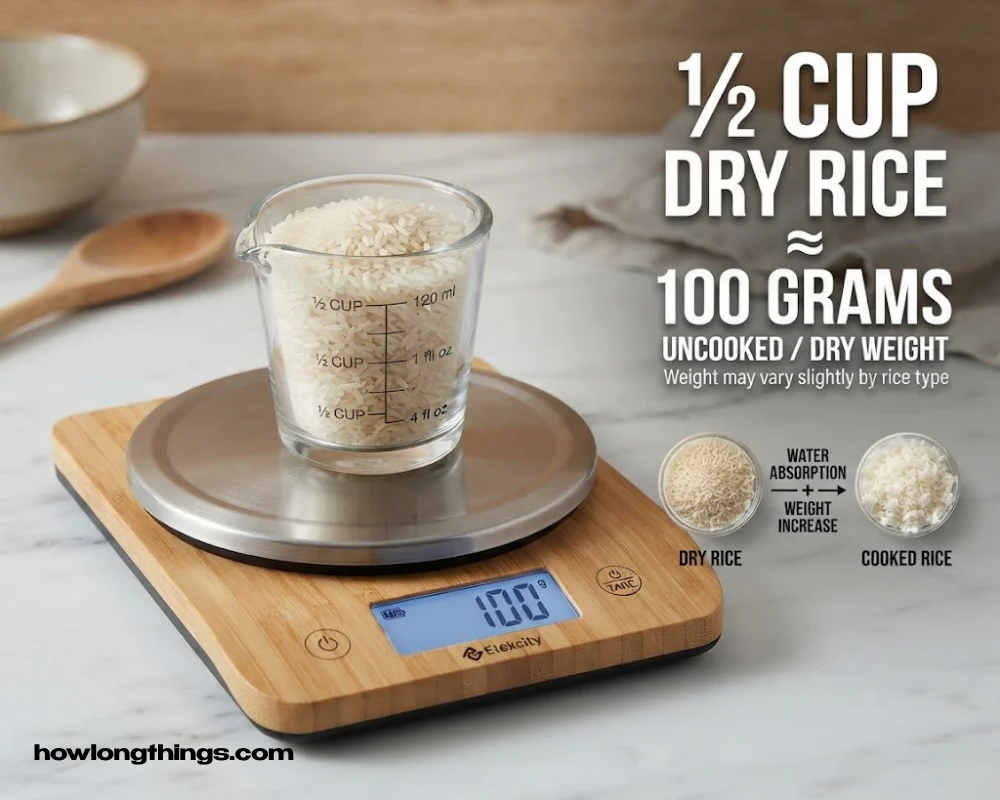
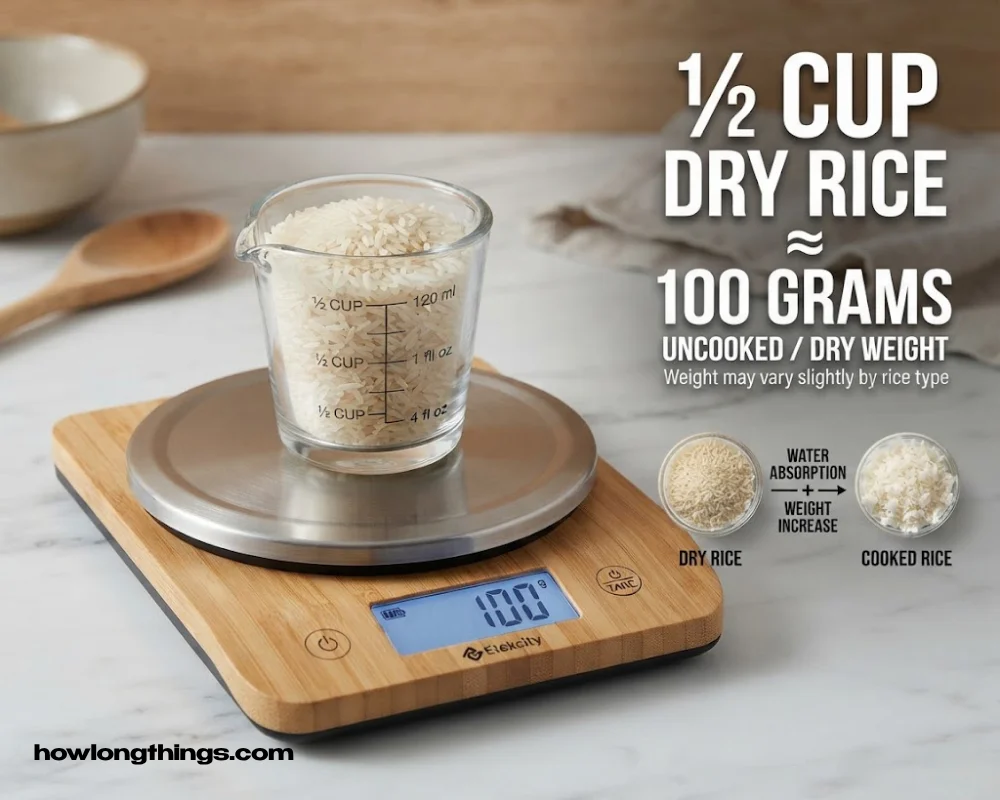
Half a Cup of Uncooked Rice
Dry, uncooked rice measuring about half a cup weighs approximately 100 grams. Once cooked, that same rice roughly triples in weight as it absorbs water.
A Small Handful of Almonds
Around 20 to 25 whole almonds, or roughly a quarter cup, weighs close to 100 grams. Almonds are dense with healthy fats, which is why the gram count feels heavier than the handful looks.
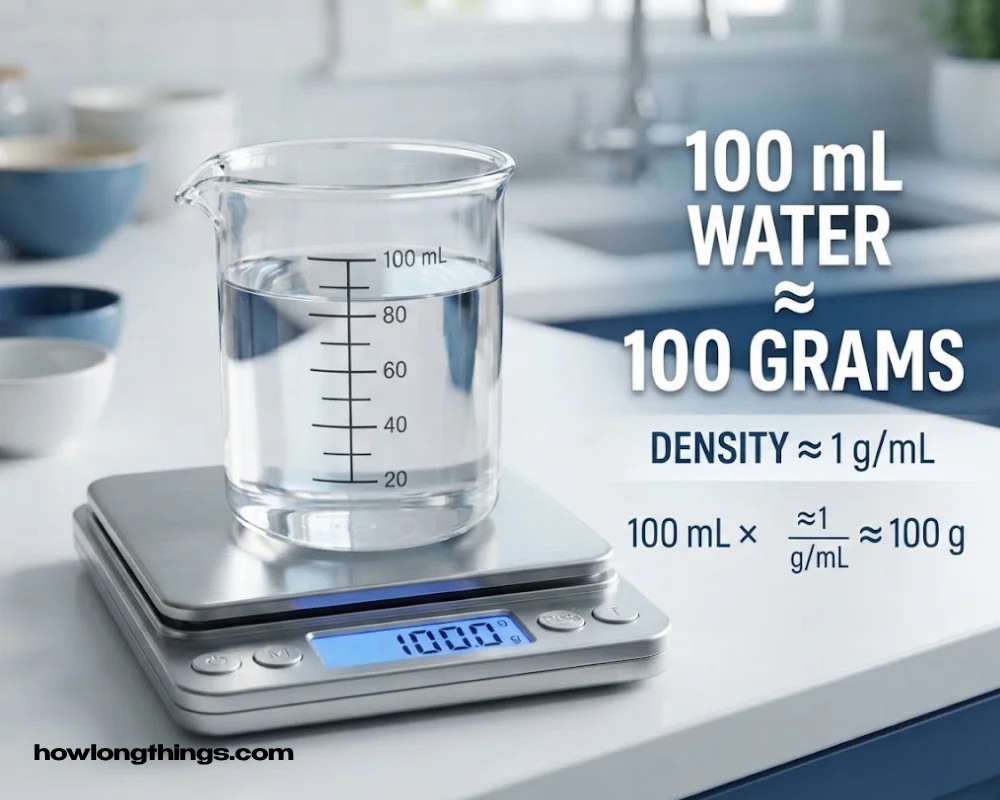
One Hundred Milliliters of Water
Water is the simplest reference of all: 100 milliliters weighs almost exactly 100 grams at room temperature, since water’s density is close to 1 gram per milliliter.
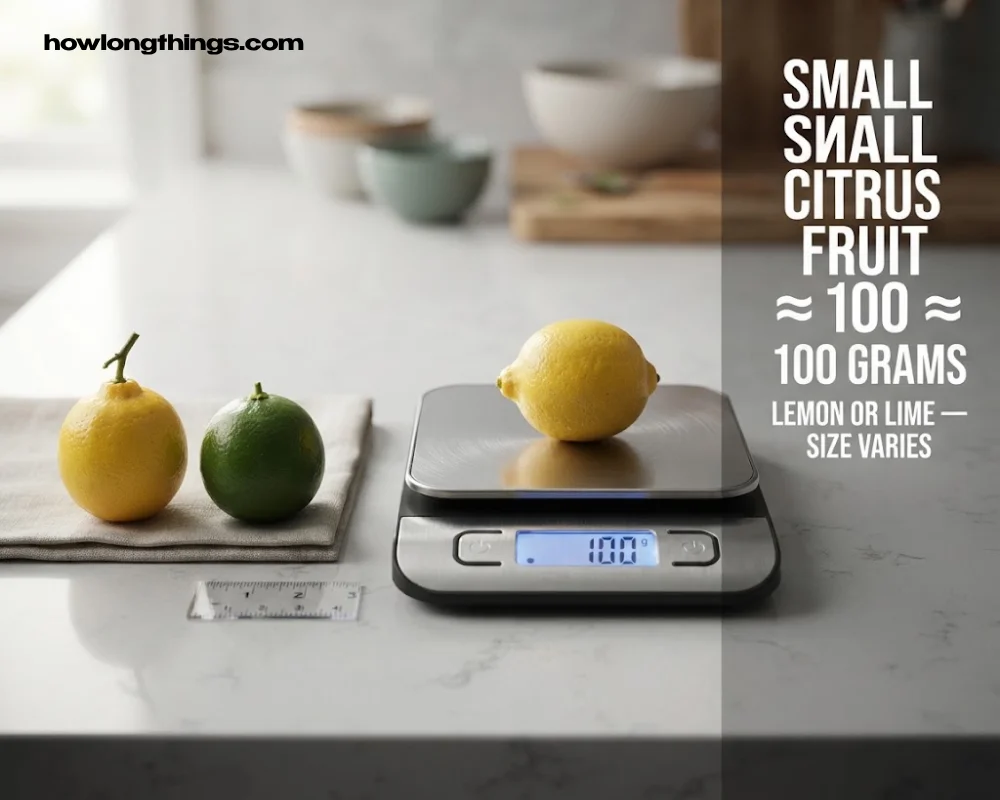
A Small Lemon or Lime
A small citrus fruit — lemon or lime — typically weighs close to 100 grams. It’s a comparison that works well for anyone cooking or baking without a scale nearby.
Not every kitchen has a digital scale, but there are still reliable ways to estimate 100 grams using things you likely already own.
Use coins for precision. Twenty nickels or forty pennies give you an exact 100-gram reference, since US coins are manufactured to strict, consistent weight standards.
Use measuring cups for dry ingredients. Flour, sugar, and rice each have their own cup-to-gram ratio, so lean on the conversion table above rather than assuming one size fits all.
Use water for liquids. Because 100 milliliters of water weighs almost exactly 100 grams, a standard liquid measuring cup doubles as a rough scale for anything water-based.
Use your palm for protein. A piece of meat or fish roughly the size and thickness of your palm — minus the fingers — usually lands close to 100 grams once cooked. This method is widely used in nutrition counseling for quick portion control.
100 Grams in Cooking, Baking and Nutrition
Recipes from outside the US frequently list ingredients in grams rather than cups, since gram measurements are more precise for baking. A few grams of extra flour can noticeably change a cake’s texture, while volume measurements like cups can vary depending on how tightly an ingredient is packed.
Nutrition labels lean on grams for the same reason. According to the USDA FoodData Central database, many nutrient values are reported per 100-gram serving, which is why food packaging and calorie-tracking apps so often reference this exact amount.
For protein tracking specifically, 100 grams of cooked meat, poultry, or fish is a commonly used serving size benchmark. It roughly matches the palm-sized portion mentioned earlier, giving home cooks a fast way to estimate meals without pulling out measuring tools every time.
FAQs About 100 Grams
How Much Is 100 Grams?
100 grams is about 3.53 ounces, 0.22 pounds, or 0.1 kilograms. For reference, it’s roughly the weight of a small apple, two medium eggs, or a standard 100-gram chocolate bar.
Is 100 Grams the Same as 1 Cup?
No. A cup measures volume, while a gram measures mass, and the two only match up for specific ingredients. Water comes close, but flour, sugar, and rice each need a different cup amount to reach 100 grams.
How Much Do 100 Grams Look Like?
Picture a medium apple, a bar of soap, or a deck of playing cards — all sit close to 100 grams. Holding any of these gives an accurate physical sense of the weight.
Is 100 Grams a Teaspoon?
No, not even close. A teaspoon holds a small volume, and depending on the ingredient, it typically takes about 20 teaspoons to reach 100 grams.
What Is 100 Grams to Cups?
It depends entirely on the ingredient. As a guide, 100 grams equals roughly ¾ cup of flour, ½ cup of sugar, or ½ cup of uncooked rice.
How Do I Measure 100 Grams?
The most accurate method is a digital kitchen scale. Without one, twenty nickels, a measuring cup paired with the conversion chart above, or a palm-sized portion of food all provide close, reliable estimates.
Conclusion
100 grams isn’t just a number on a nutrition label — it’s a weight you can picture, hold, and measure using things already in your kitchen or your pocket. Whether you’re converting a recipe, tracking a meal, or just curious, the comparisons and conversions above make it easy to visualize every time.
Elizabeth Queen is a Owner and consumer research writer at HowLongThings.com, specializing in product lifespan, durability, and everyday household research. She’s passionate about helping readers make smarter, longer-lasting buying decisions.