Twenty-five feet is a number that sounds small on paper but feels bigger in real life. It equals 300 inches, 8.33 yards, and 7.62 meters (NIST length conversion tables).
Most people can’t picture a length just from a number. So this guide turns 25 feet into things you already know — school buses, houses, pools, and even a few facts you won’t find in a typical conversion chart.
Table of Contents
How Long Is 25 Feet in Inches, Yards, and Meters?
Before the visuals, here’s the exact math. How much is 25 feet in every common unit:
Unit
Value
Inches
300 in
Yards
8.33 yd
Feet
25 ft
Meters
7.62 m
Centimeters
762 cm
Builders, movers, and landscapers use these conversions daily. A tape measure marked in feet won’t always match a blueprint drawn in meters, so knowing the swap matters for real project work.
18 Real-Life Things That Are 25 Feet Long
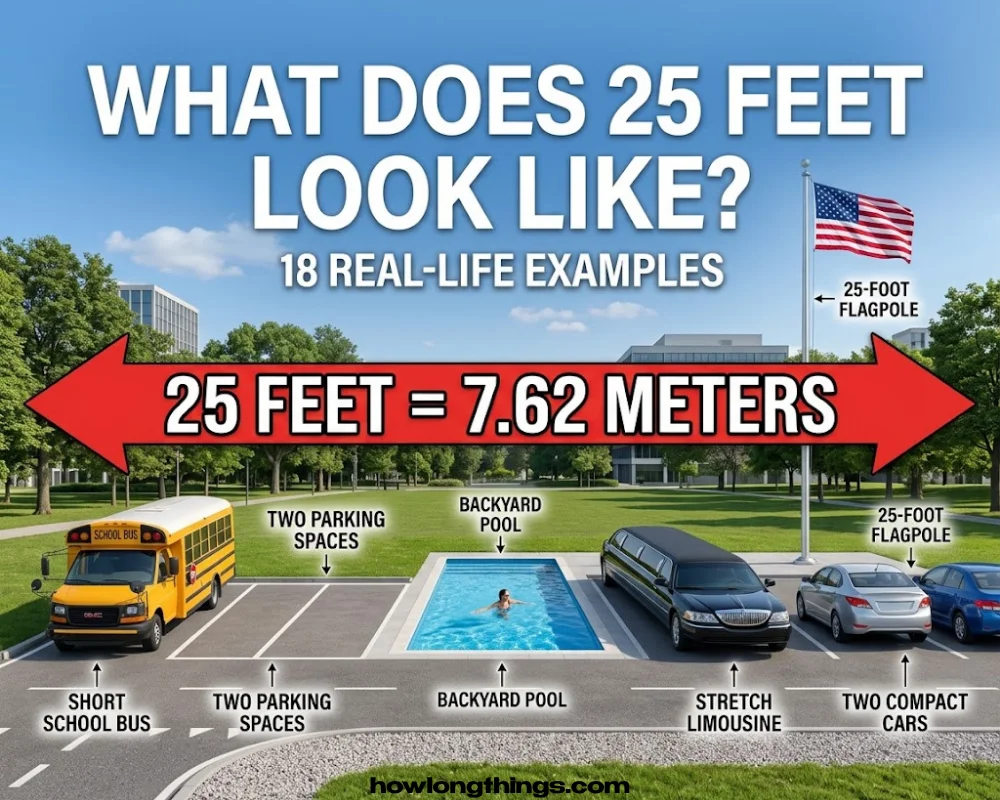
What is 25 feet visually? The fastest way to answer that is to line it up against things you pass every day. Here are 18 objects and distances close to this exact length.
A short school bus
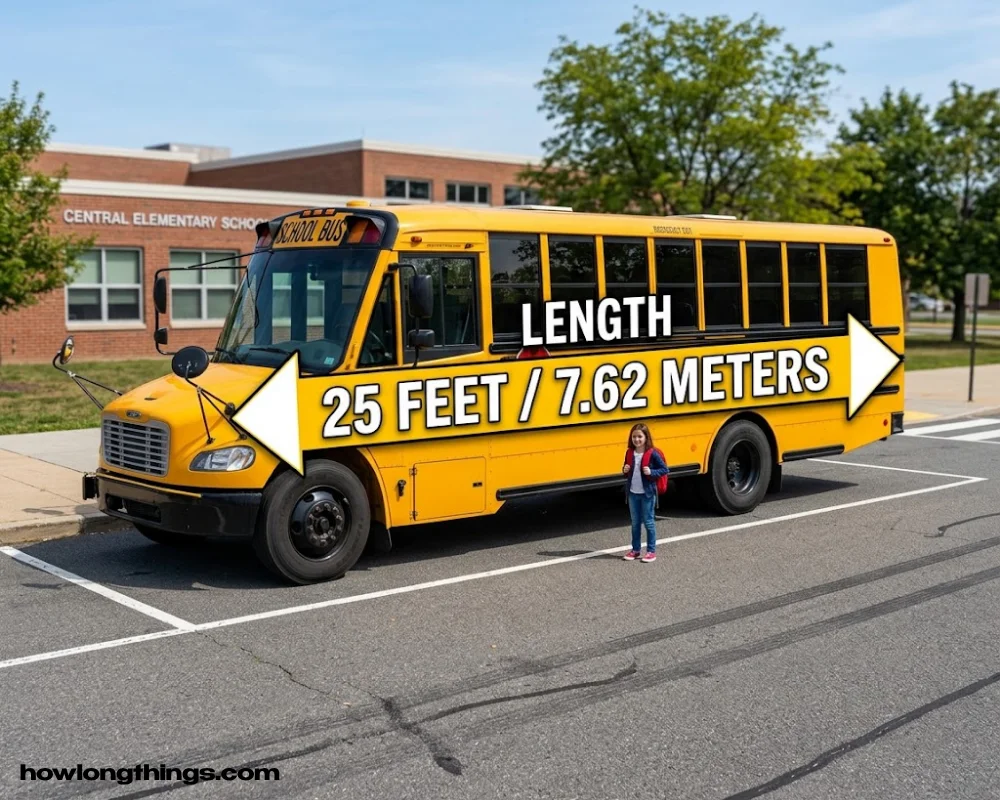
Many short school buses run about 20 to 25 feet from bumper to bumper (School Bus Fleet). They’re used mostly for small routes and special transport. Stand at the front and walk to the back door — that’s your 25 feet.
Two parking spaces end to end
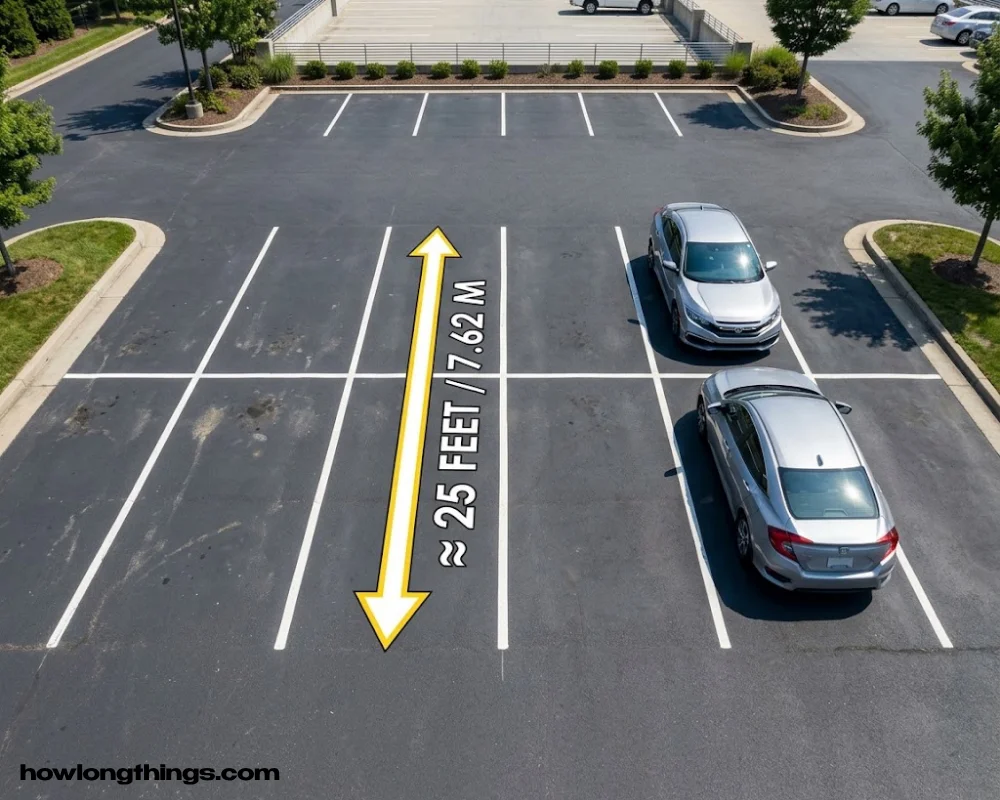
A single parking space runs close to 12 feet. Line up two spaces in a row, and you’ve almost reached 25 feet. It’s one of the easiest ways to spot this length in any parking lot.
A two-story house, ground to roofline
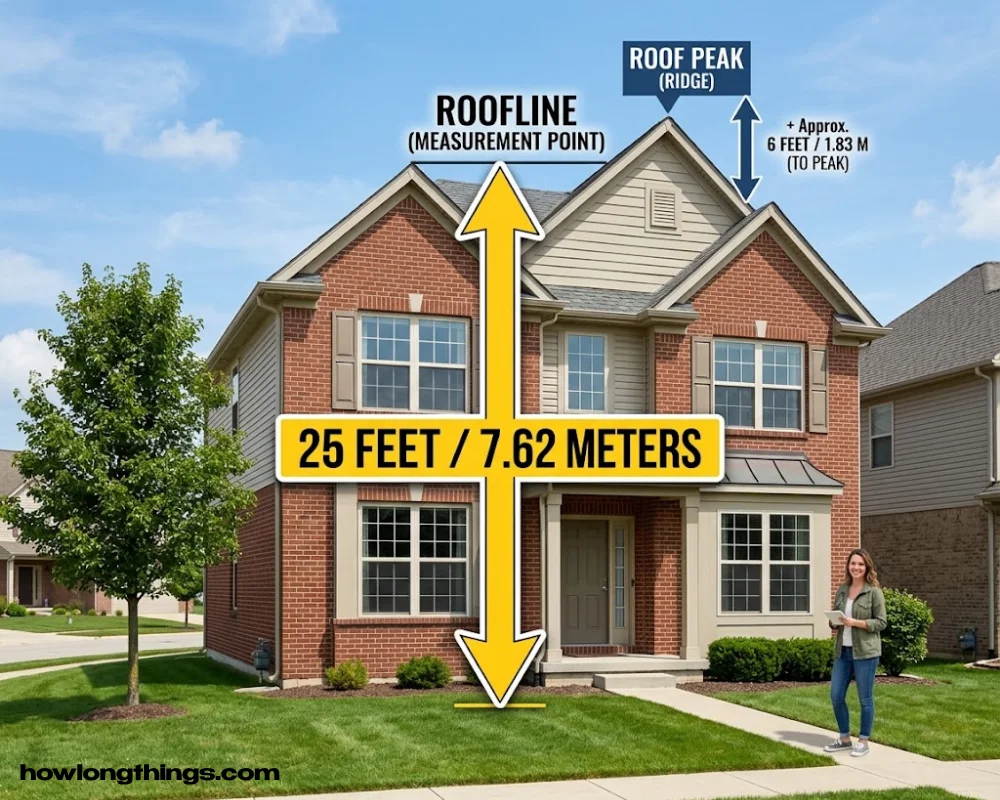
Most two-story homes measure 20 to 25 feet from the ground to where the roof begins (International Code Council residential guidelines). Add the roof peak, and the full height climbs even higher. But the two livable floors alone sit right at this mark.
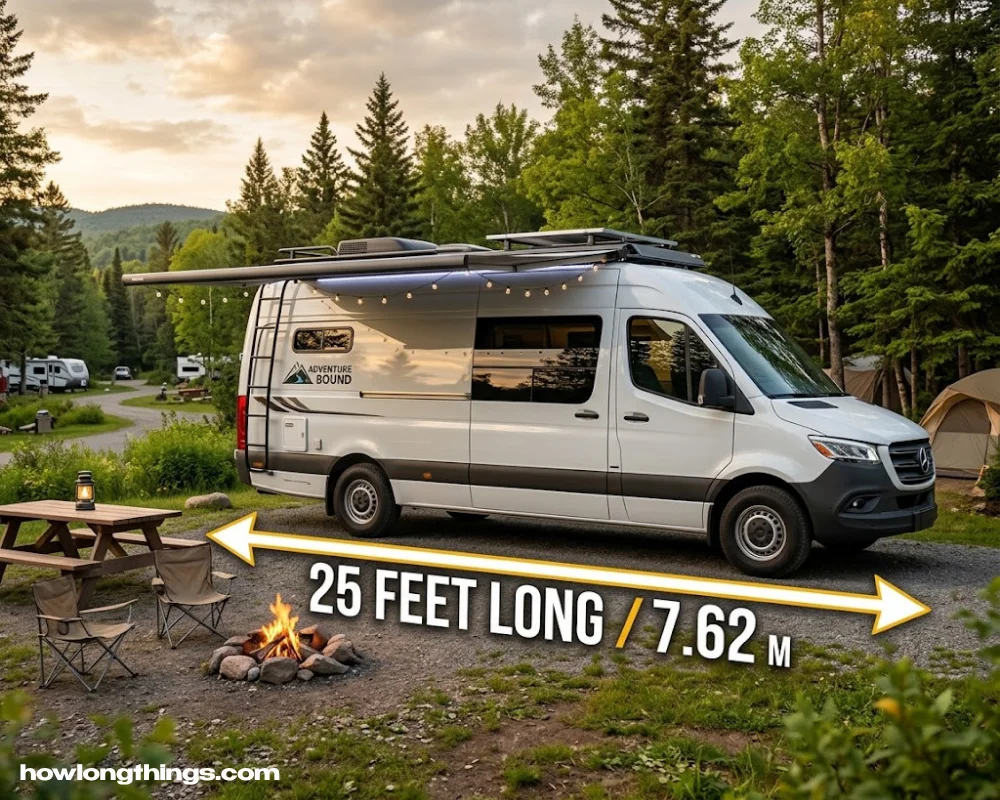
A Class B camper van
Popular camper vans like the Winnebago Revel or Roadtrek Zion measure close to 25 feet. Many national parks cap vehicle length at exactly 25 feet. That rule is why this size became the sweet spot for van travel.
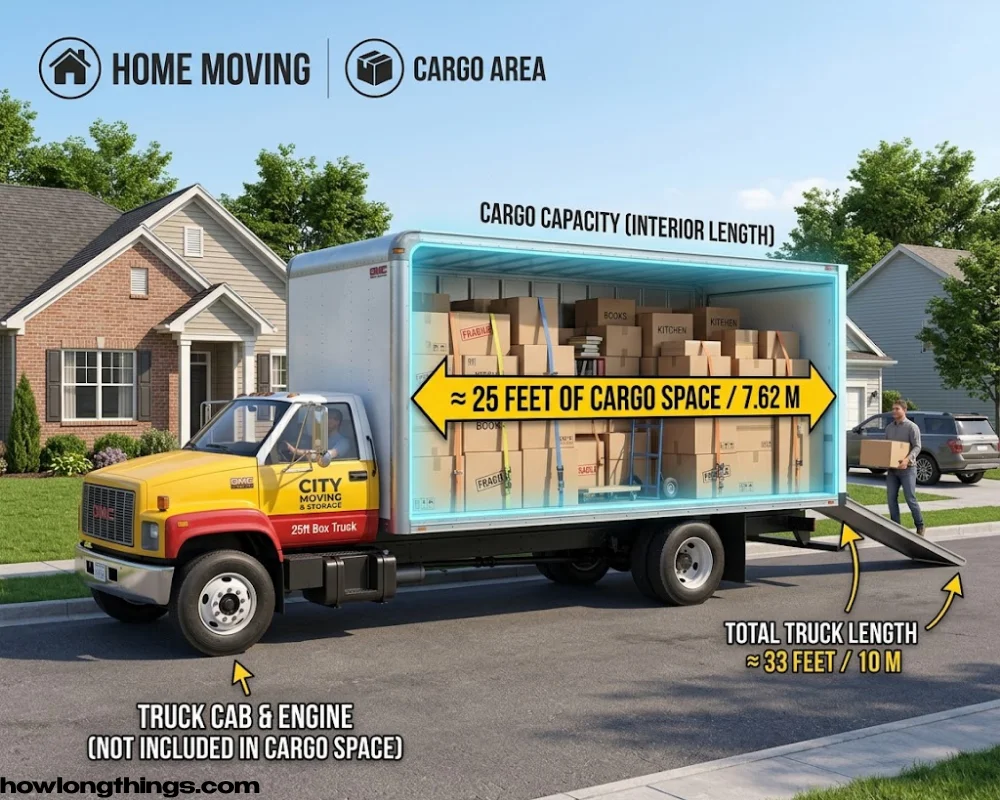
A 26-foot moving truck’s cargo box
Rental trucks used for home moves are often listed at 26 feet total length. The actual cargo area inside runs closer to 24 or 25 feet. That’s still enough room to move most of a small house.
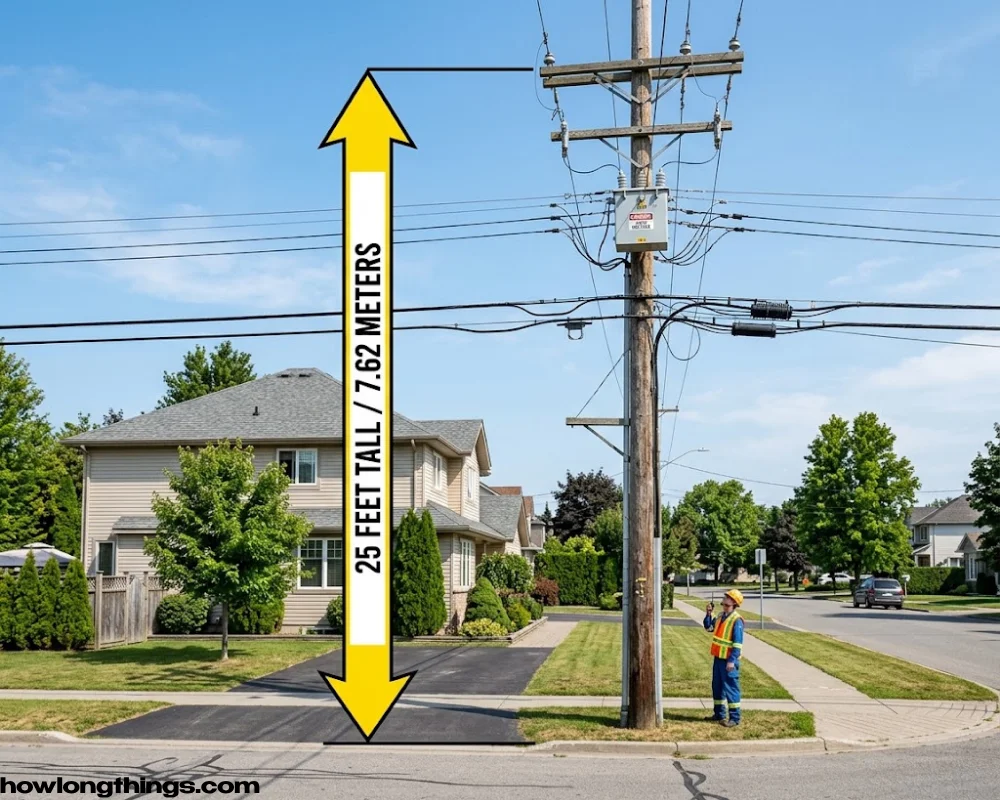
A residential telephone pole
Utility poles near homes often stand 25 to 30 feet tall. Look up at one on your street. The shorter ones land almost exactly at 25 feet.
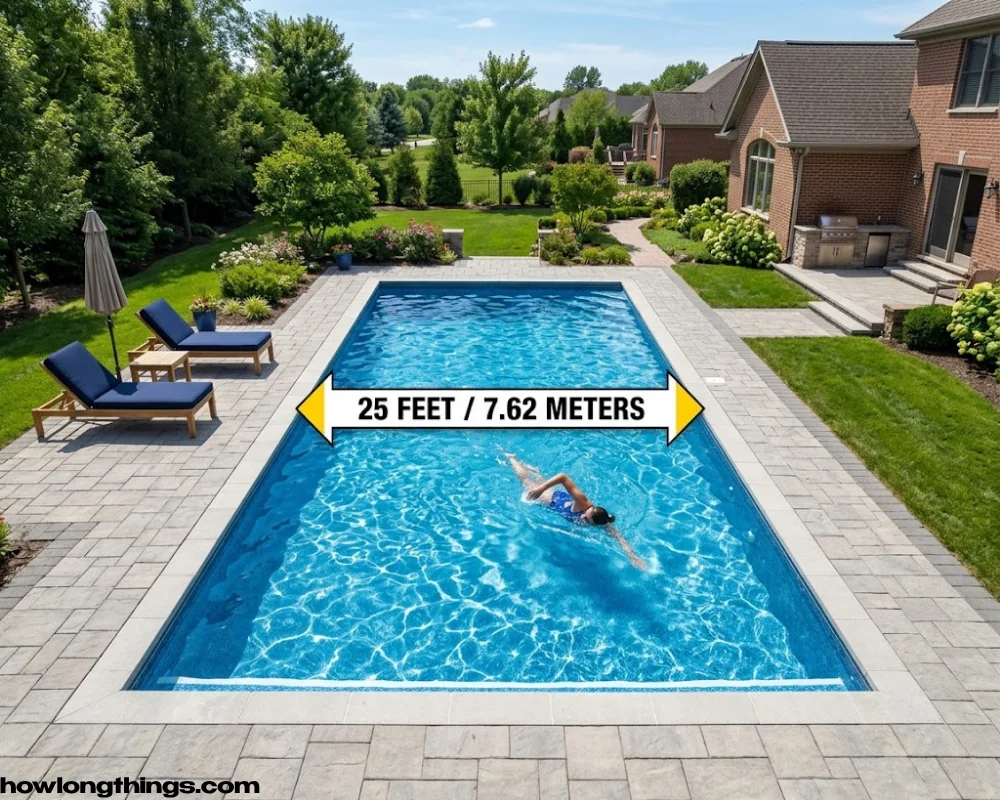
A backyard swimming pool
Many in-ground residential pools measure 25 feet from end to end. It’s a common size for backyards with limited space. Most swimmers can picture a full lap in about one breath.
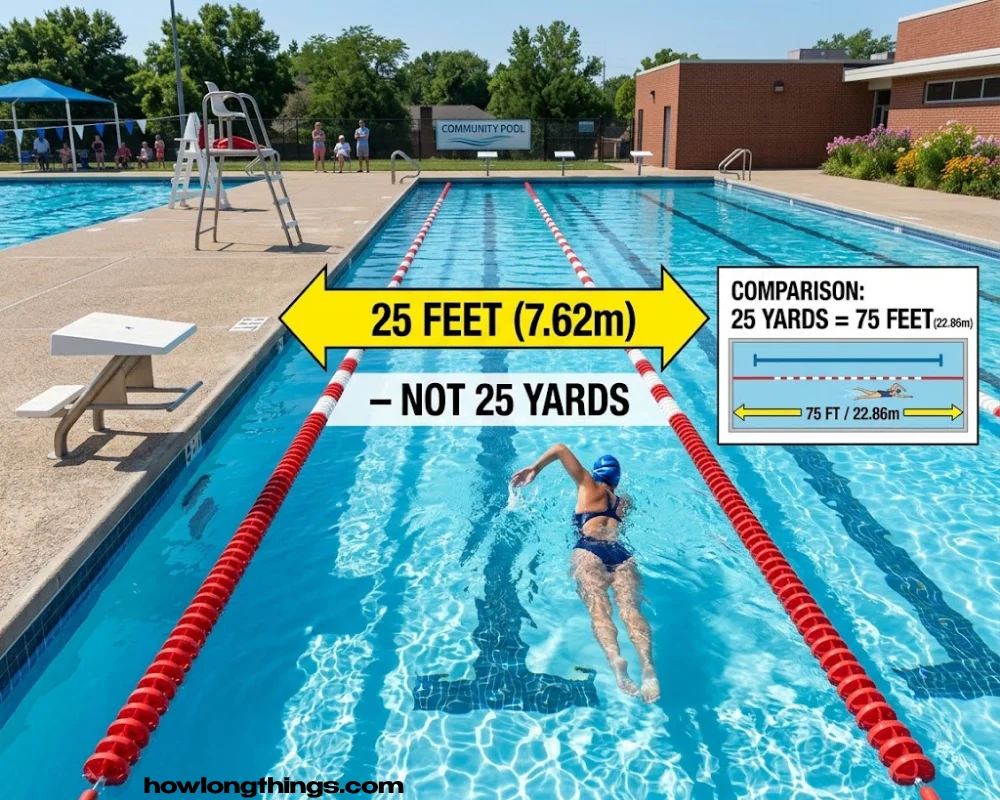
A short-course swimming pool
USA Swimming defines a “short course” pool as 25 yards, which equals 75 feet (USA Swimming rules). That’s three times our target length, so don’t confuse the two. Still, a true 25-foot lane shows up often in smaller community and hotel pools.
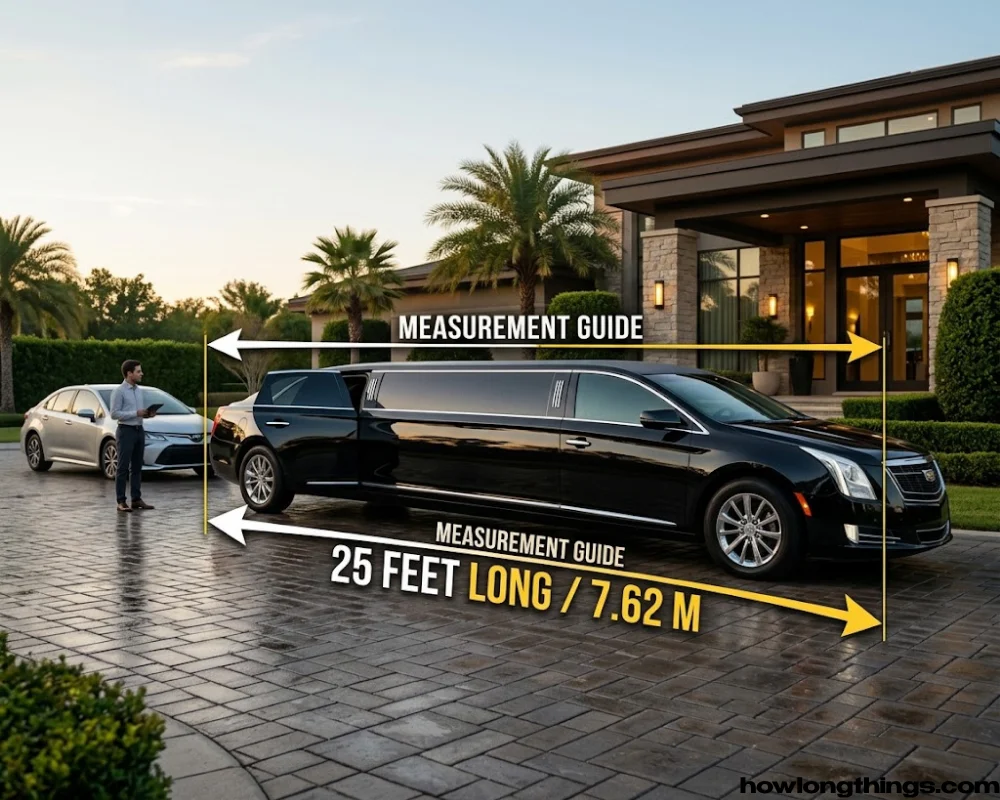
A stretch limousine
Classic stretch limos built from sedans typically stretch to 24 or 25 feet. That’s long enough for a full party inside. It’s also short enough to still fit in most driveways.
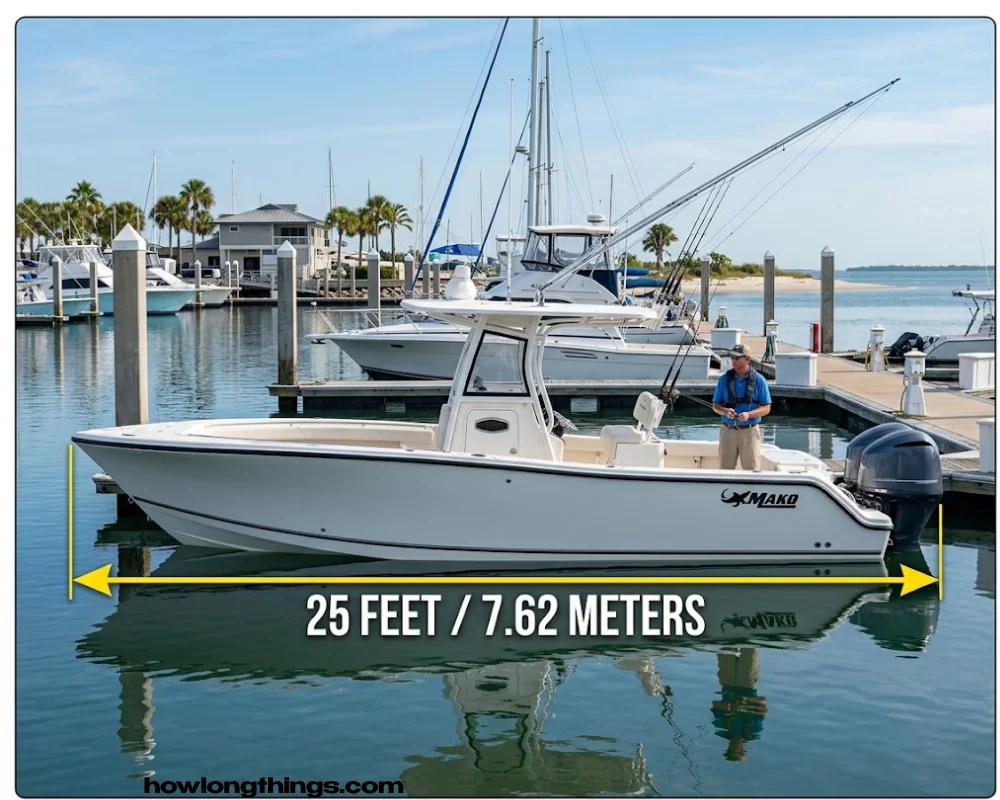
A recreational fishing or sailboat
Boats used for weekend fishing or day-sailing commonly run 24 to 26 feet. The U.S. Coast Guard tracks this size closely for registration and safety rules (USCG boating statistics). Standing at the bow and looking toward the stern gives a clear sense of the length.
A fully extended articulated ladde
r Extension ladders used by roofers and painters often reach 24 to 28 feet when fully open. Many settle right around the 25-foot mark. That’s enough to reach most home rooflines safely.
A 25-foot flagpole
This is the single most common residential flagpole size sold in the U.S. It’s tall enough to fly a full-size flag with room to spare. It’s also short enough that most cities skip the permit requirement.
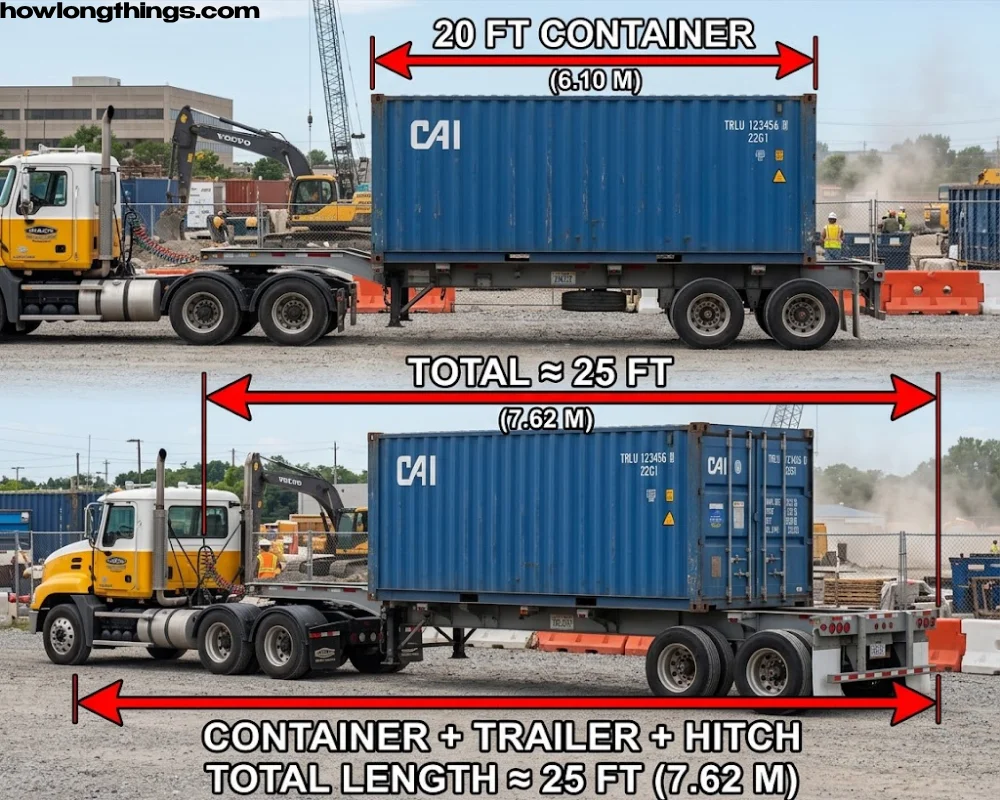
A shipping container plus trailer hitch
A standard shipping container runs 20 feet long on its own. Add the trailer’s hitch and frame, and the total hauling length lands close to 25 feet. You’ll see this exact setup on highways and construction sites.
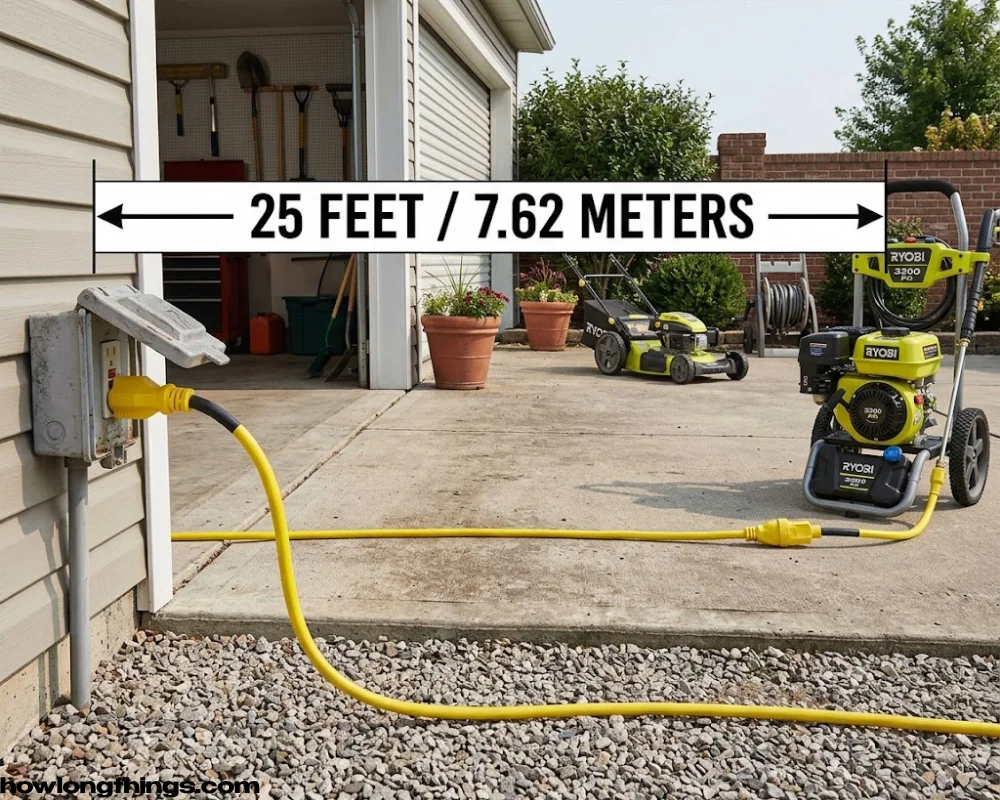
A heavy-duty outdoor extension cord
Retail extension cords and string lights are commonly sold in 25-foot lengths. That’s long enough to reach a garage, patio, or backyard tree. It saves most people from linking two shorter cords together.
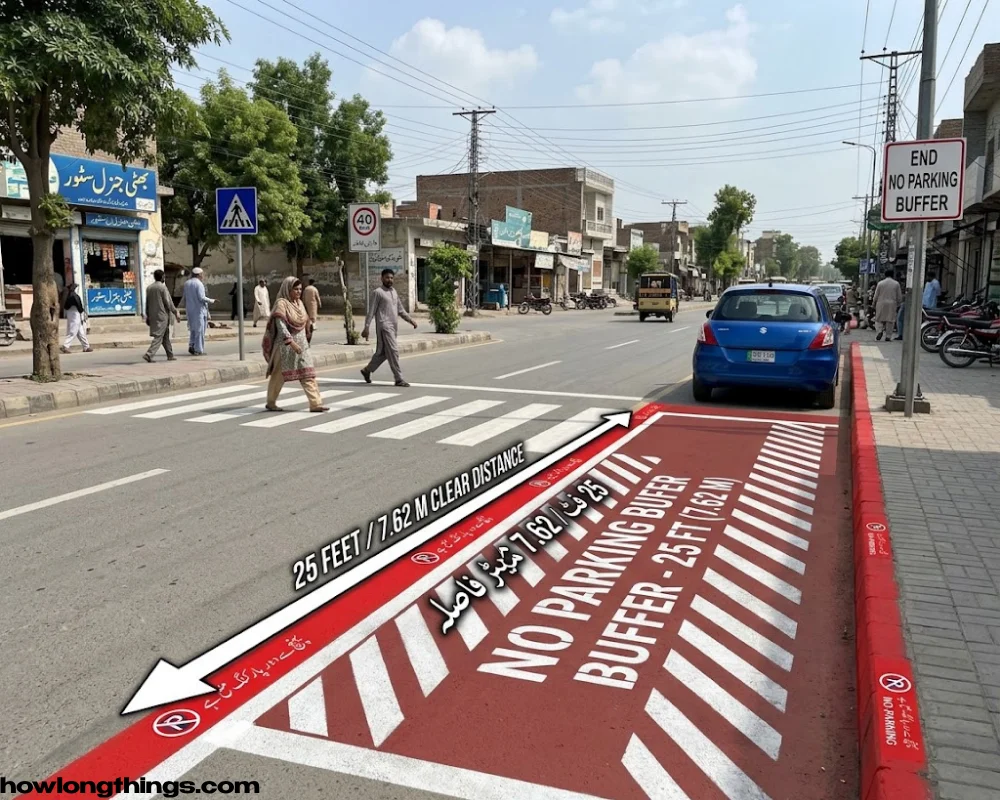
The legal buffer near a crosswalk
Most U.S. states require parked cars to stay at least 20 feet from a marked crosswalk (Uniform Vehicle Code standards). Some cities push that distance to 25 or 30 feet in busy areas. It’s one of the most-ticketed rules drivers don’t know about.
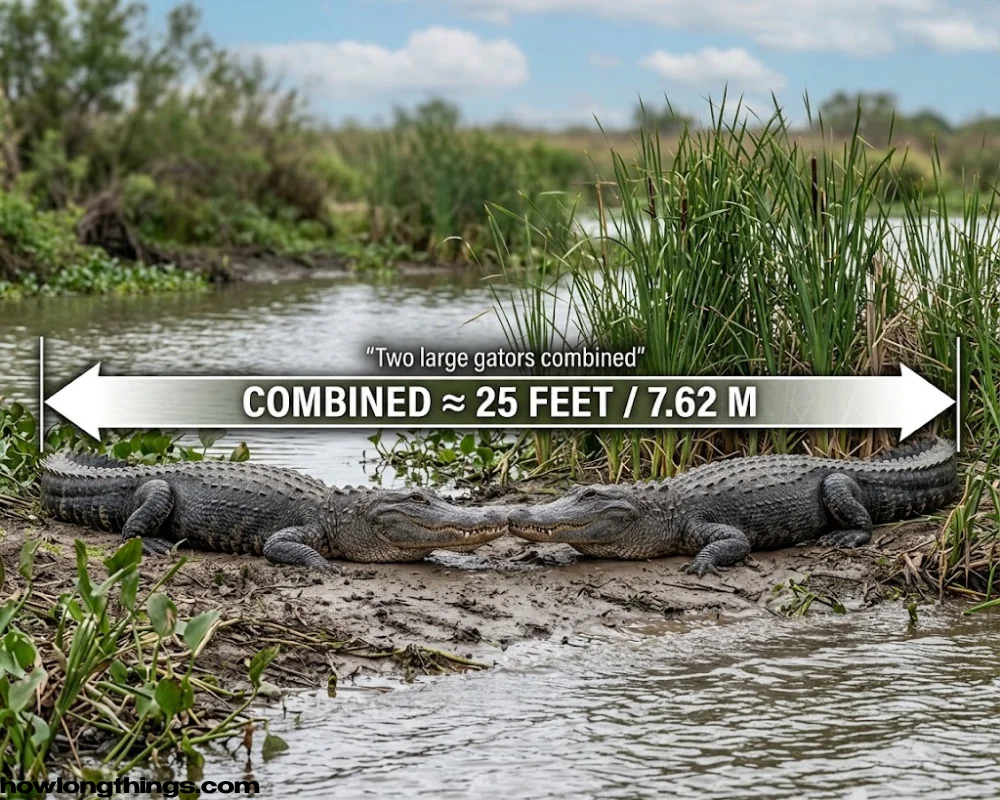
A large adult alligator
Wild American alligators rarely reach 25 feet on their own. The biggest verified individuals have approached 14 to 15 feet (Florida Fish and Wildlife Conservation Commission). Line up two large gators nose to tail, and you’re close to this length.
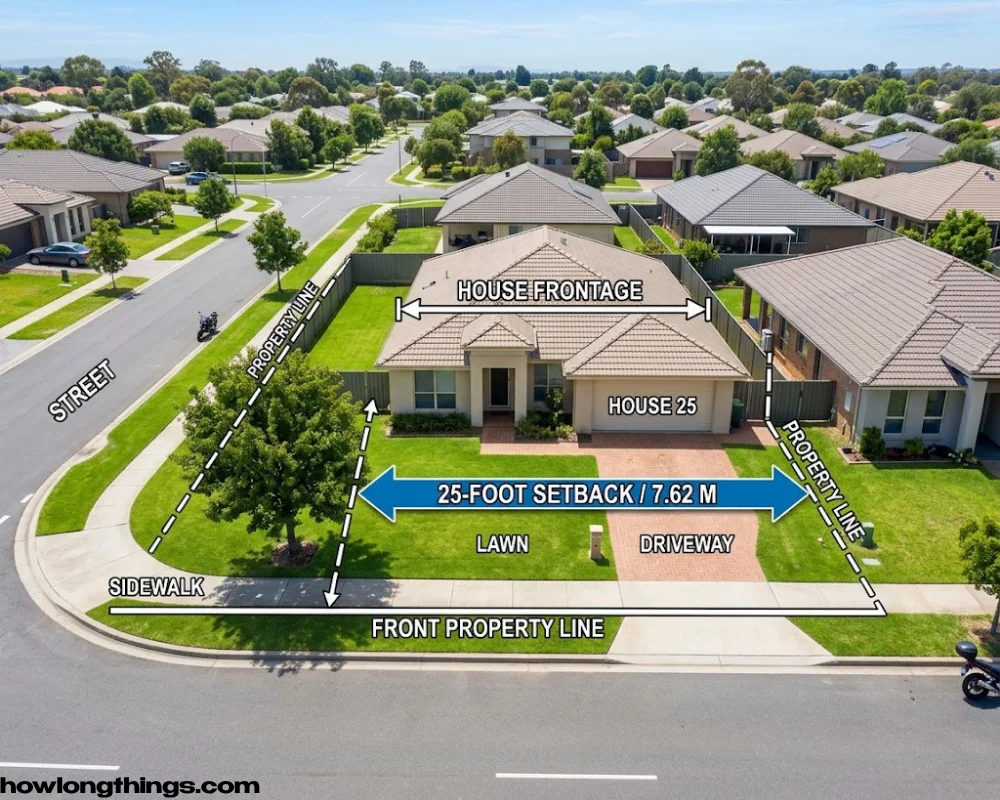
A typical home setback from the property line
Many U.S. zoning codes require homes to sit at least 20 to 25 feet back from the front property line. This rule shapes how close a house can sit to the street. It also explains why front yards in many neighborhoods look similar in size.
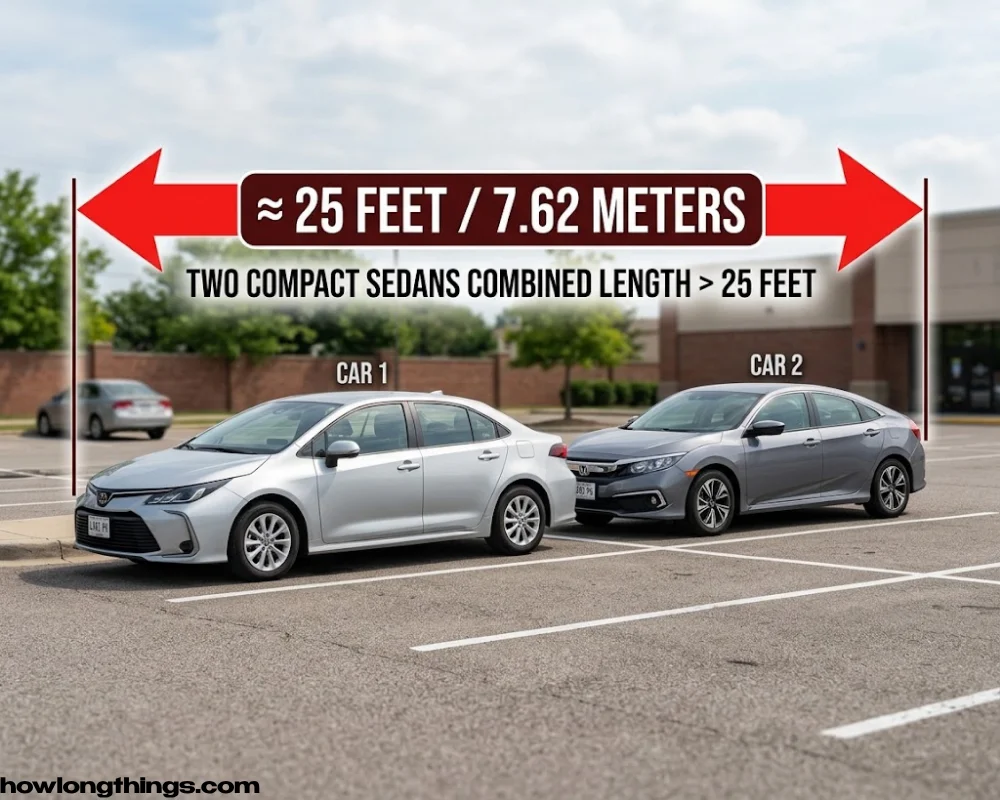
Two compact cars parked nose to tail
A Honda Civic or Toyota Corolla runs close to 14 feet long. Park two of them back-to-back, and you’ll slightly pass 25 feet. It’s a close, familiar visual almost anyone can picture instantly.
How long is 25 feet compared to a human? The average U.S. adult stands around 5 feet 6 inches to 5 feet 9 inches tall (CDC height data). Lay four adults head to toe, and you’ll cover close to 25 feet.
Walking is another simple gauge. The average adult stride covers about 2.5 feet, so 10 to 12 normal steps gets you there without a tape measure.
Is 25 Feet a Long or Short Distance?
Context changes everything. Next to a couch or a kitchen table, 25 feet feels huge — most furniture tops out at 7 or 8 feet. Next to a two-story roofline, a fishing boat, or a flagpole, it feels ordinary. In outdoor spaces like driveways, pools, and parking lots, 25 feet is one of the most common working distances in American design.
FAQs
What is 25 feet visually?
It’s close to a short school bus, a two-story house height, or two parking spaces placed end to end.
How much is 25 feet?
25 feet equals 300 inches, 8.33 yards, or 7.62 meters.
How long is 25 feet compared to a human?
It’s roughly four average adults lying head to toe, or about 10 to 12 walking steps.
How far is 25 feet away?
It’s the length of two compact cars parked bumper to bumper, or the height of a residential telephone pole.
How long is 24 feet visually?
Nearly identical to 25 feet — close to two parking spaces or a small moving truck’s cargo box, just one foot shorter.
Conclusion
25 feet equals 300 inches, 8.33 yards, and 7.62 meters — but the number sticks best once it’s tied to something real. A school bus, a two-story roofline, a flagpole, and even a legal parking buffer all sit at this same length. Next time you need to picture 25 feet, skip the math and picture the bus instead.
Elizabeth Queen is a Owner and consumer research writer at HowLongThings.com, specializing in product lifespan, durability, and everyday household research. She’s passionate about helping readers make smarter, longer-lasting buying decisions.