A number on a tape measure doesn’t always mean much on its own. How long is 10 feet, really, once you take it off the ruler and put it in your yard, your driveway, or your living room?
Here’s the short answer: 10 feet equals 120 inches, 304.8 centimeters, or 3.048 meters. But the real value comes from seeing it — a basketball hoop, a kayak, a garage door width. This guide walks through 15 everyday objects, exact conversions, walking distance, and simple ways to measure 10 feet without any tools at all.
Table of Contents
How Long Is 10 Feet in Feet, Inches, and Meters
How long is 10 feet exactly? It’s a fixed, unchanging distance because the foot is a standardized unit. One foot always equals 12 inches, so 10 feet always equals 120 inches. That relationship comes from the international foot definition, agreed upon in the International Yard and Pound Agreement of 1959, which locked the inch at exactly 2.54 centimeters across the US, UK, Canada, and Australia.
Unit
Exact Value
Feet
10 ft
Inches
120 in
Yards
3⅓ yd
Centimeters
304.8 cm
Millimeters
3,048 mm
Meters
3.048 m
Multiply 10 by 12 and you get 120 inches. Multiply 120 by 2.54 and you land on 304.8 centimeters. No rounding, no guesswork — these are exact conversions, not estimates.
How Long Is 10 Feet Visually? What 10 Feet Looks Like
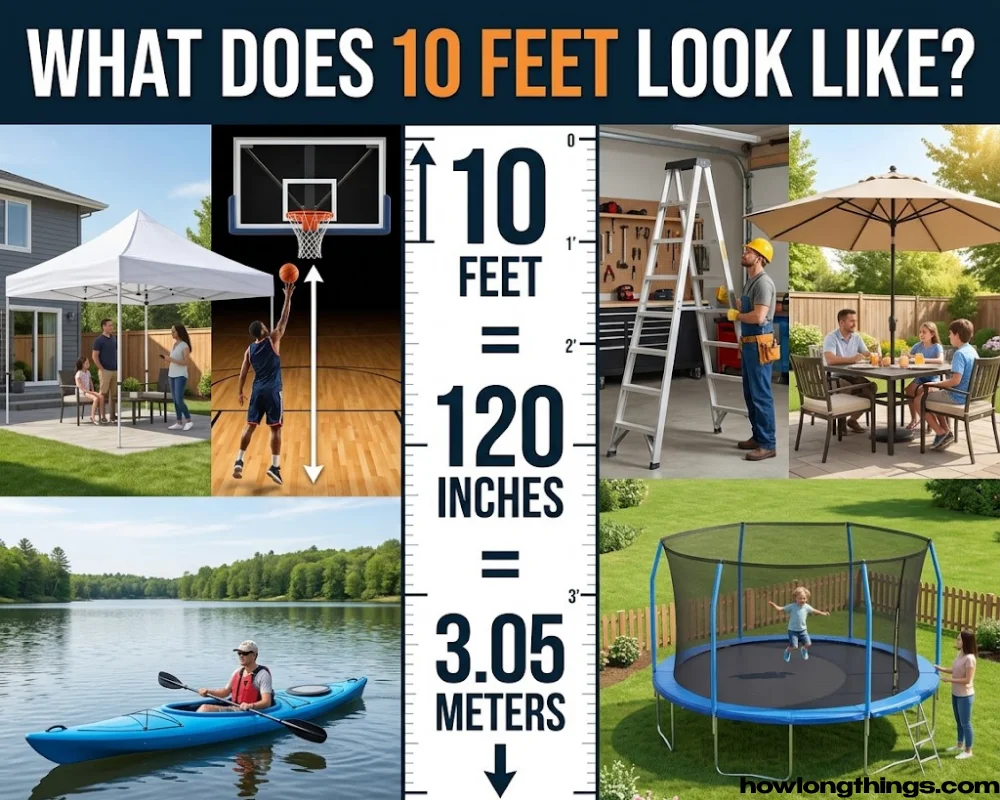
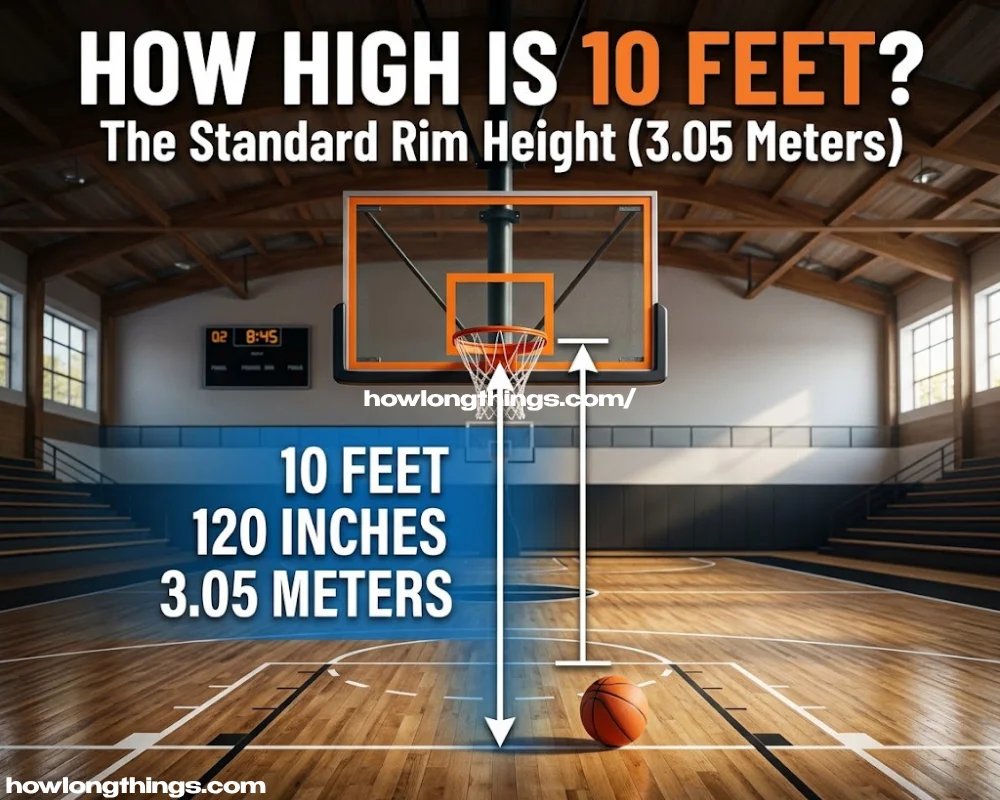
How long is 10ft visually? Picture the rim of a regulation basketball hoop. From the court to the top edge of that orange rim is exactly 10 feet, straight up. It’s one of the most recognizable height references in American sports, and almost everyone has stood underneath one at some point.
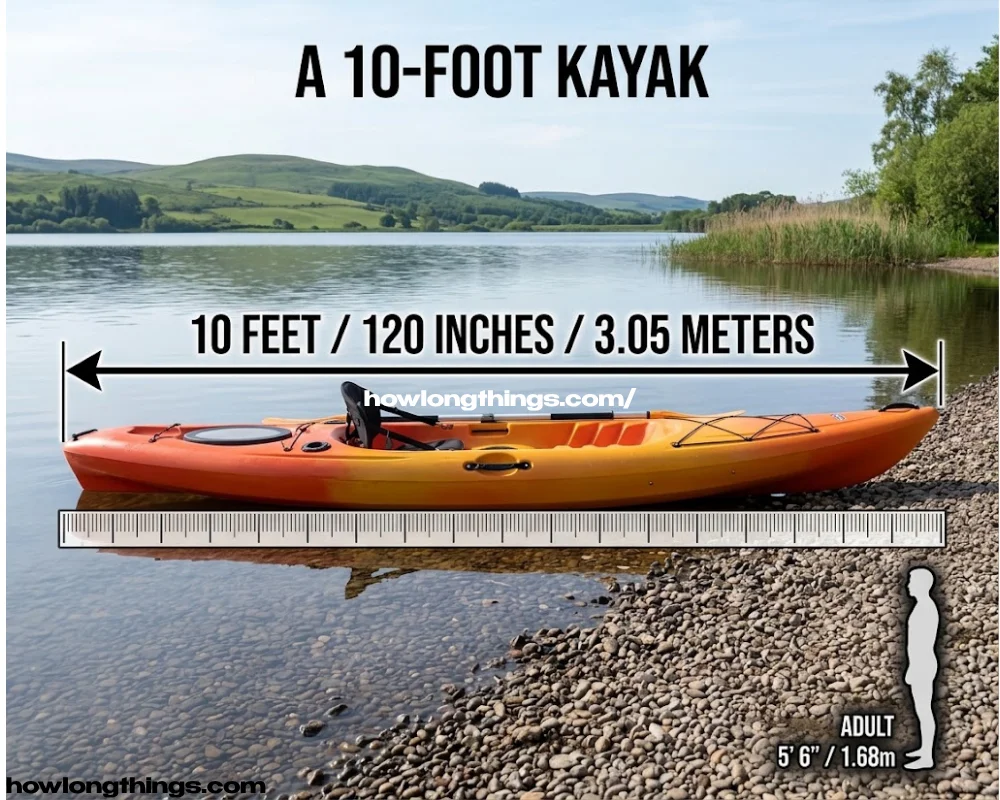
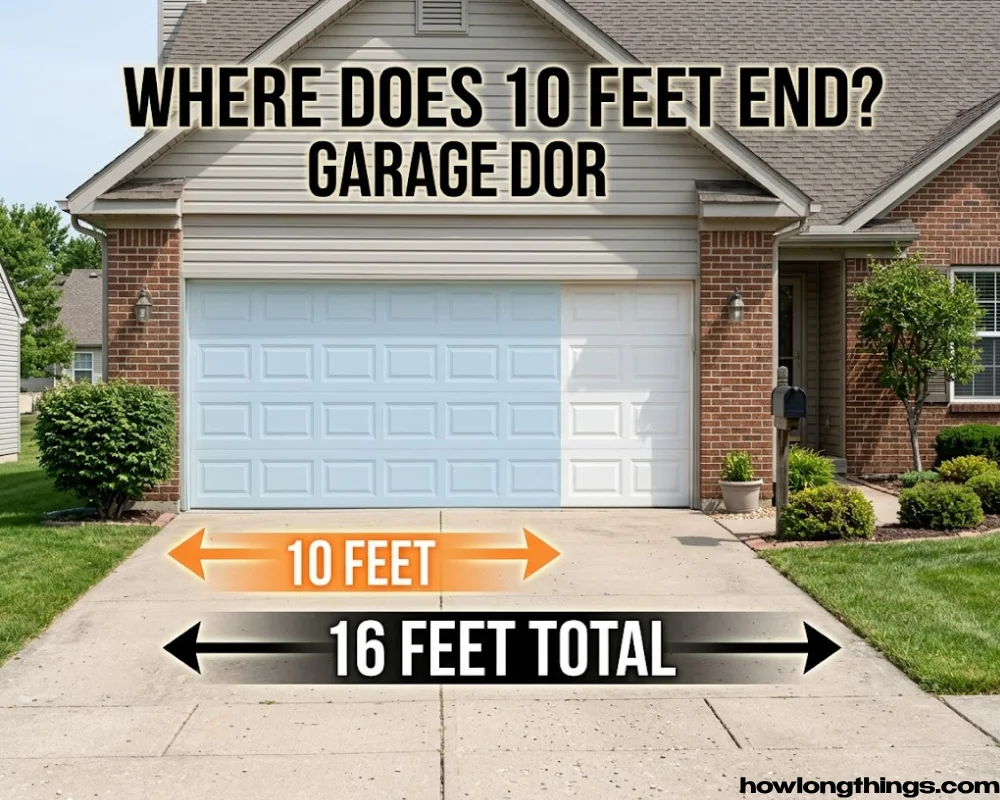
Now flip that image sideways. What does 10 feet distance look like on the ground? Lay a 10-foot kayak flat on grass, or picture a standard two-car garage door — most run close to 16 feet wide, so 10 feet covers roughly two-thirds of that span in one unbroken line.
Indoors, 10 feet feels bigger than it sounds. A typical American ceiling sits at 8 to 9 feet, so a 10-foot length stretched across a room already clears the ceiling height by a foot or more. Outdoors, that same distance can feel almost small next to a driveway or a fence line, because there’s no wall or edge to compare it against. Context changes how a fixed length feels, even though the measurement itself never moves.
15 Real-Life Things That Are 10 Feet Long
Numbers stick better with a picture attached. Here are 15 verified, everyday objects that measure close to 10 feet, pulled from sports regulations, product specs, and standard building dimensions.
Basketball hoop.
The rim sits 10 feet above the court in the NBA, NCAA, and most high school gyms. It’s the single most consistent vertical reference for this length in the country.
Recreational kayak.
Many single-rider kayaks measure close to 120 inches from bow to stern. That length balances stability with easy handling for beginners.
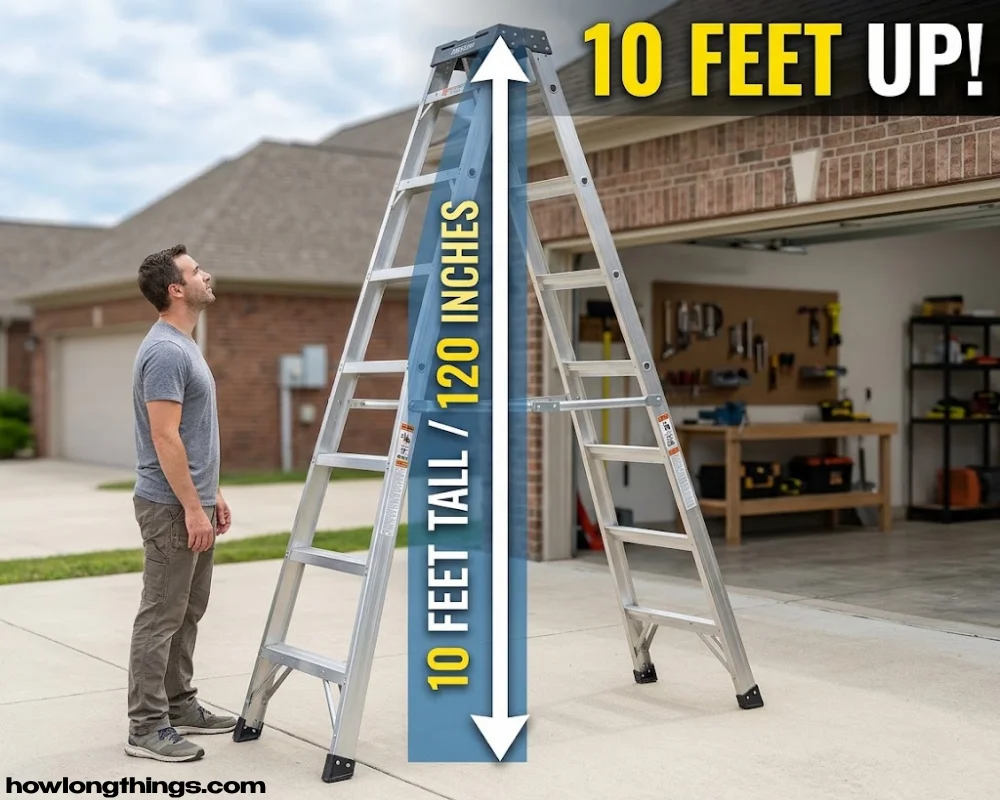
Step ladder.
A 10-foot A-frame ladder is a common size for cleaning gutters or reaching high ceilings. Fully extended, it clears most adults by several feet.
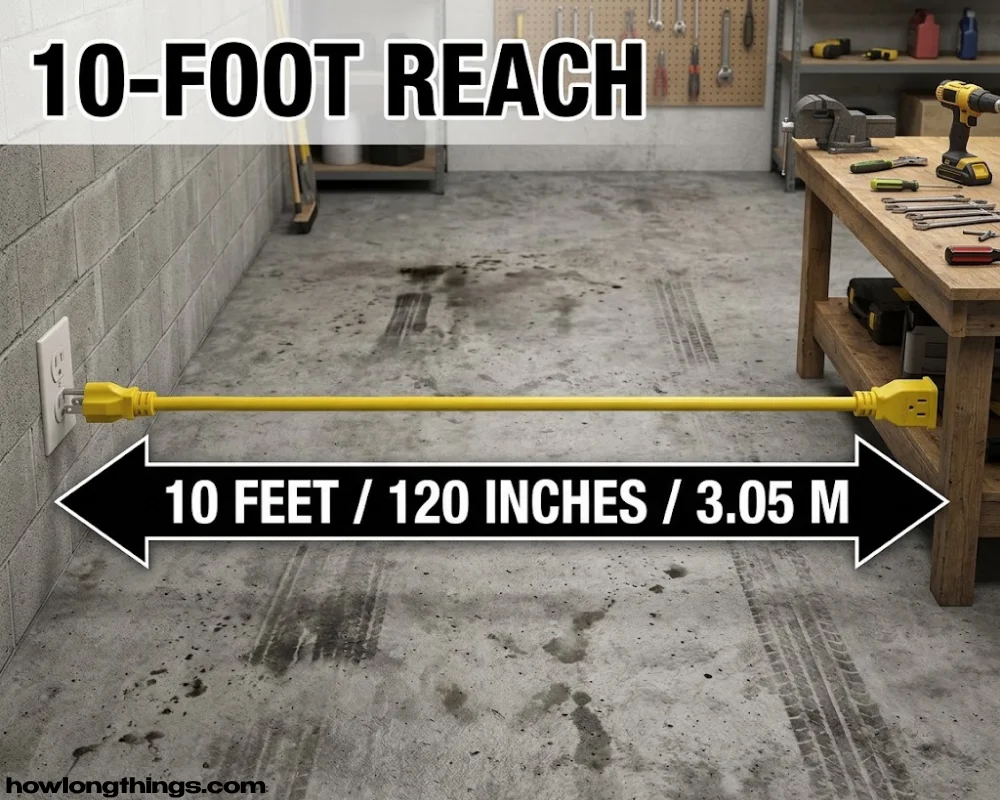
Extension cord (heavy-duty).
Thick 12-gauge shop cords often start at 10 feet, just long enough to reach a workbench from a garage outlet without excess slack.
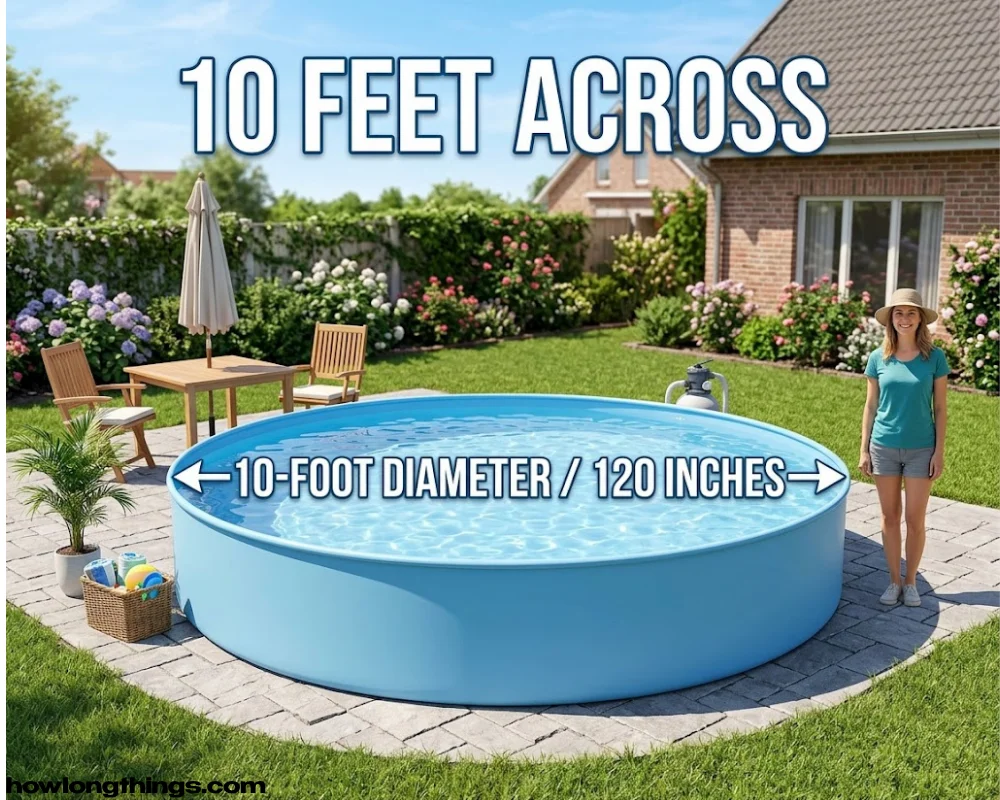
Above-ground pool.
Many entry-level backyard pools come in a 10-foot diameter, filling a compact circle of yard space.
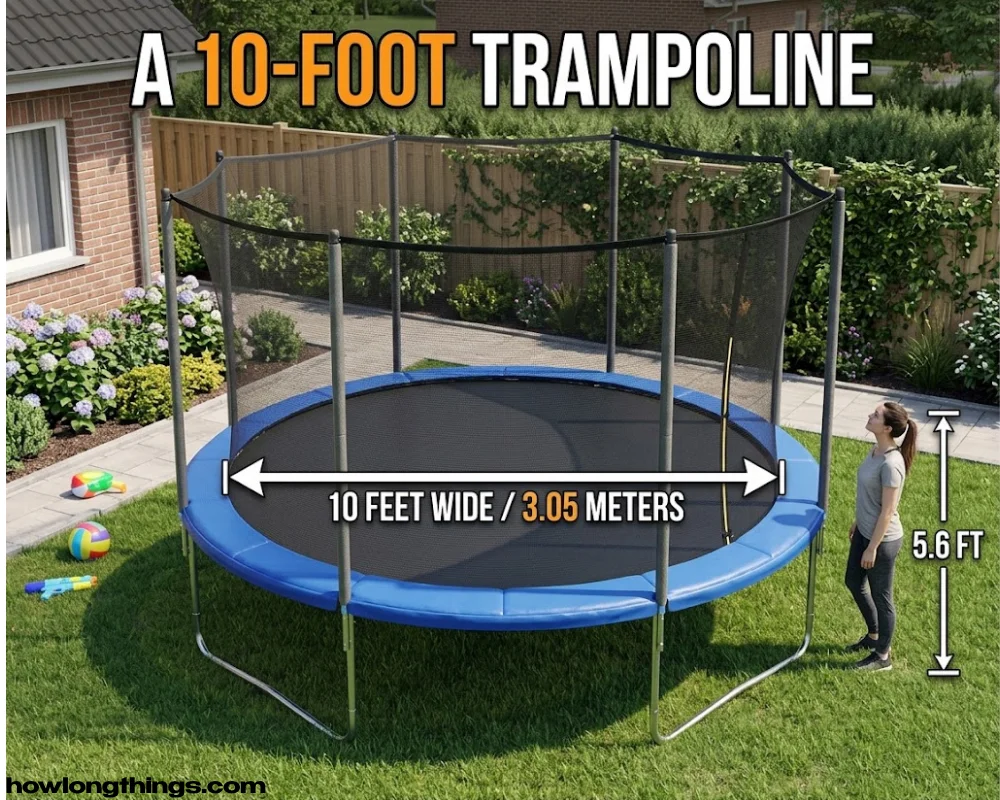
Backyard trampoline.
The 10-foot round trampoline is the most common residential size sold in the US, striking a balance between yard space and jump area.
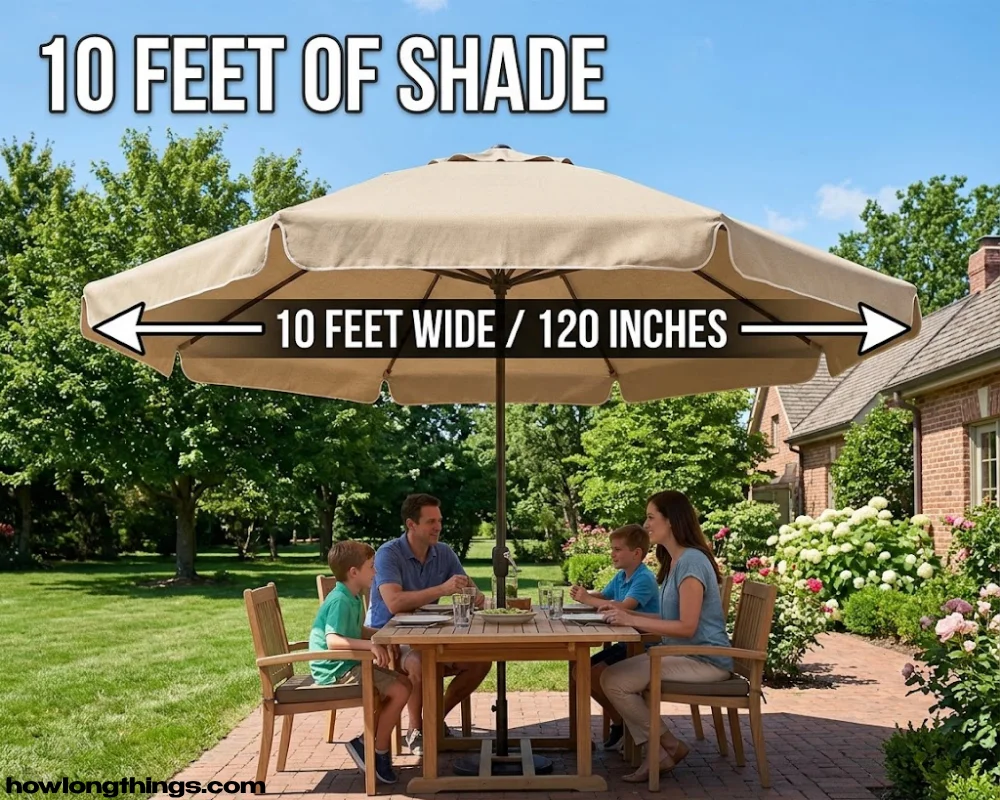
Patio umbrella.
Large outdoor umbrellas are often sold by canopy width, and 10 feet is a standard size for shading a full outdoor dining table.
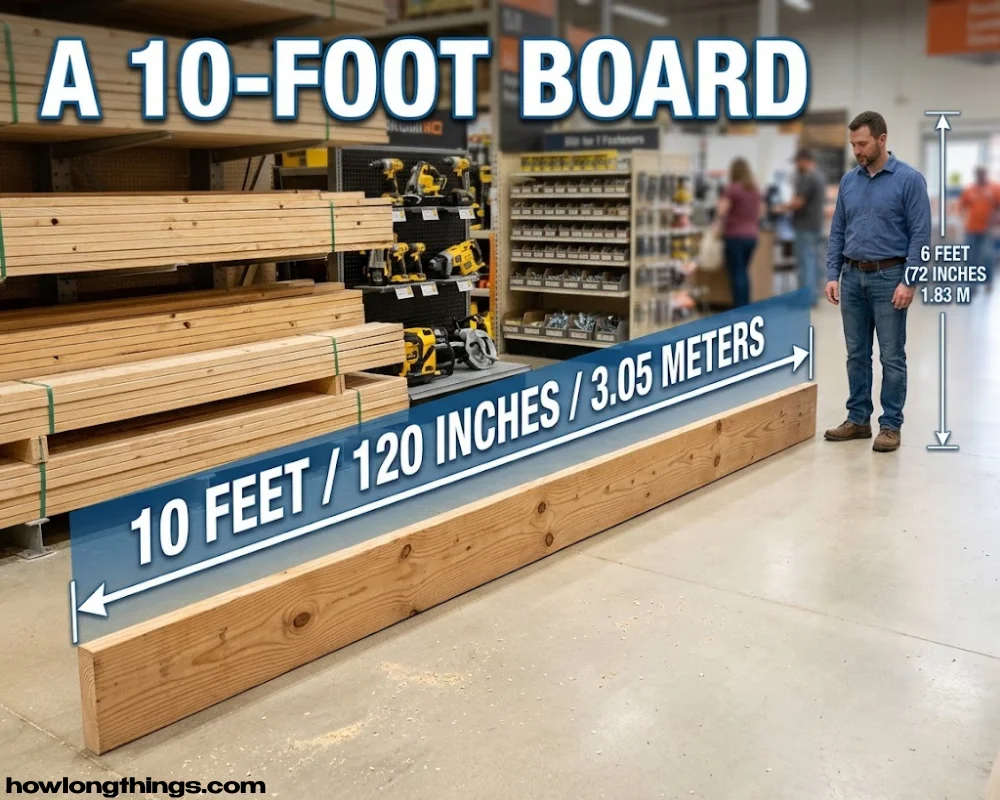
Lumber board.
Hardware stores commonly stock boards cut to 10-foot lengths for framing and decking projects.
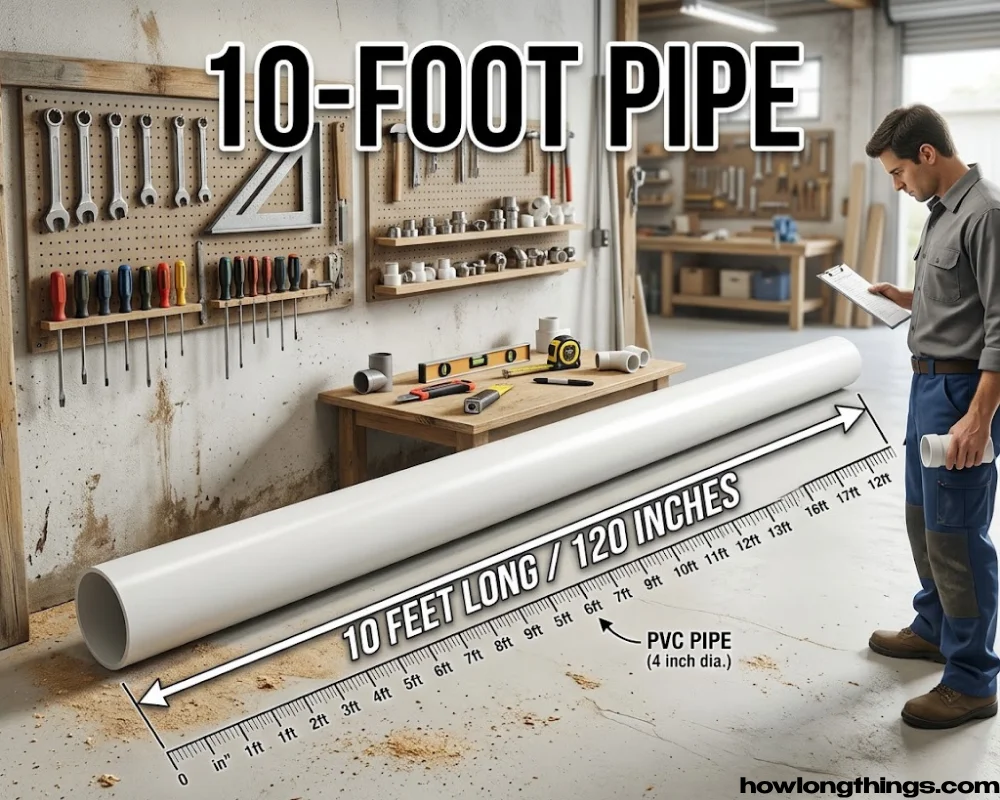
PVC pipe or electrical conduit.
Building supply stores sell conduit in 10-foot sections as an industry standard, matching warehouse racks and delivery truck beds.
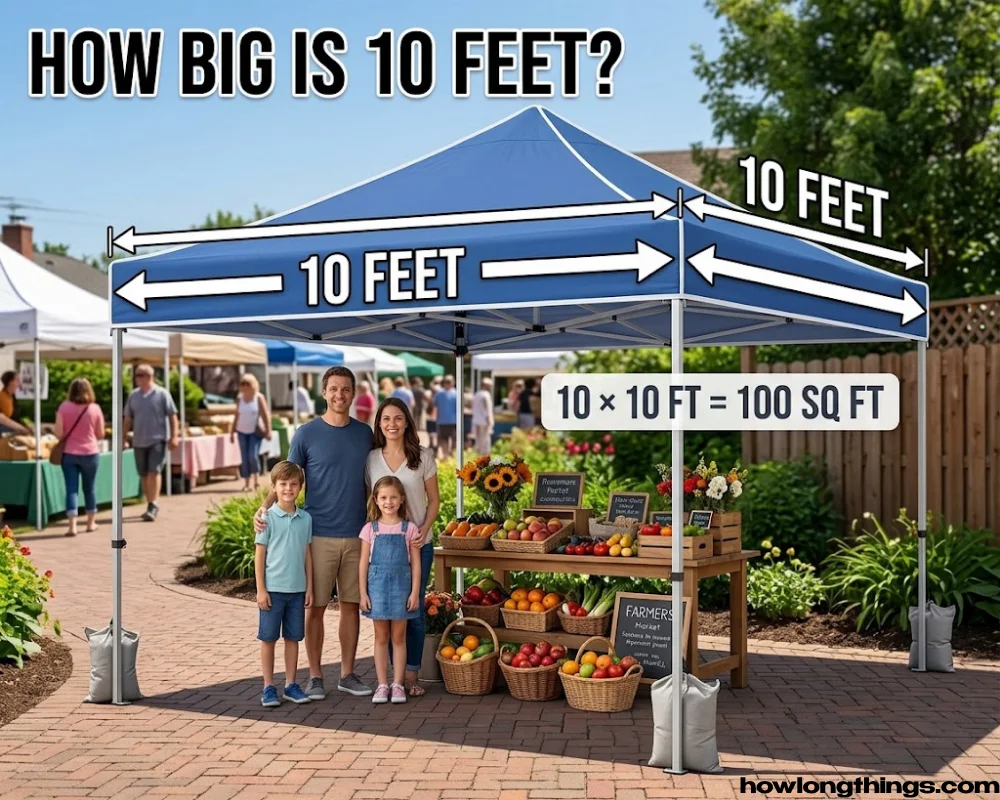
Pop-up canopy tent.
The classic 10×10 vendor tent shows up at farmers markets and tailgates across the country, with a footprint of exactly 100 square feet.
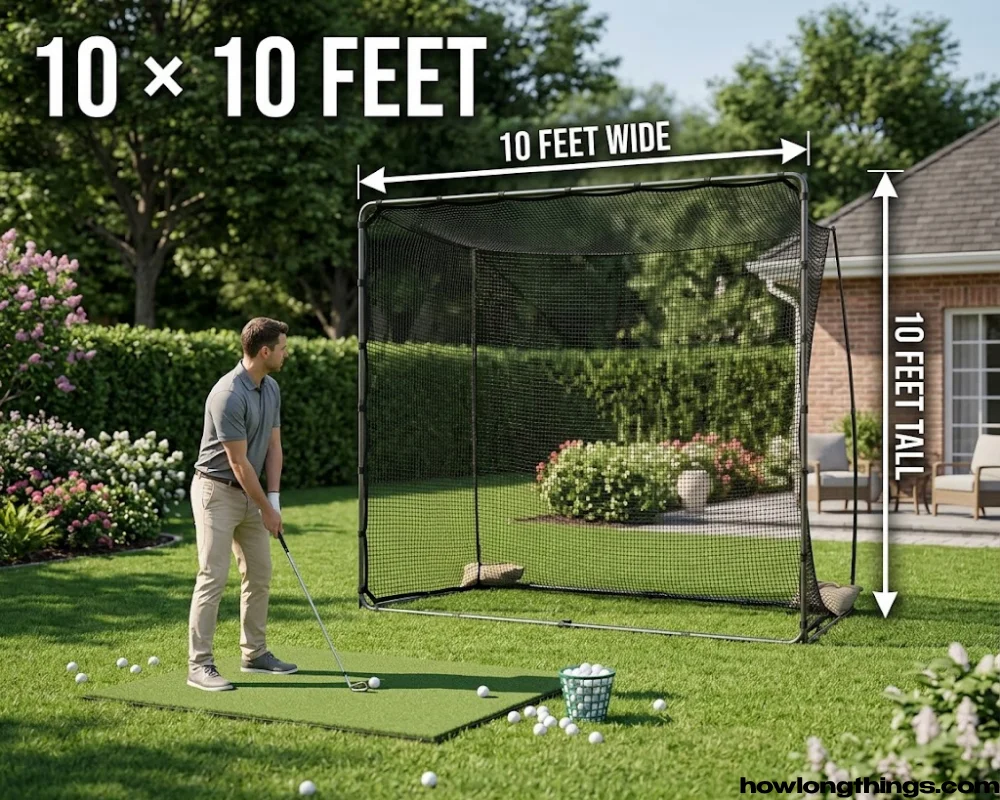
Golf hitting net.
Backyard golf nets are commonly built at 10 feet wide by 10 feet tall, giving mishit shots enough frame to stay contained.
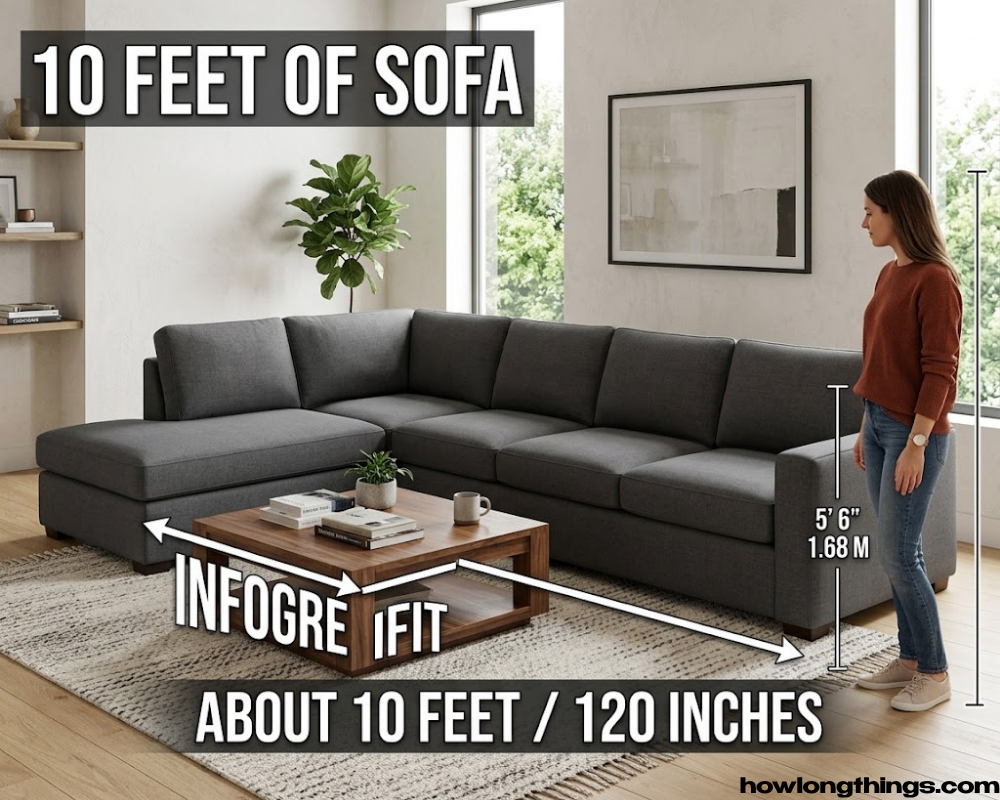
Sectional sofa.
The long run of a large L-shaped sectional — the side with three or four cushions — often lands close to 10 feet.
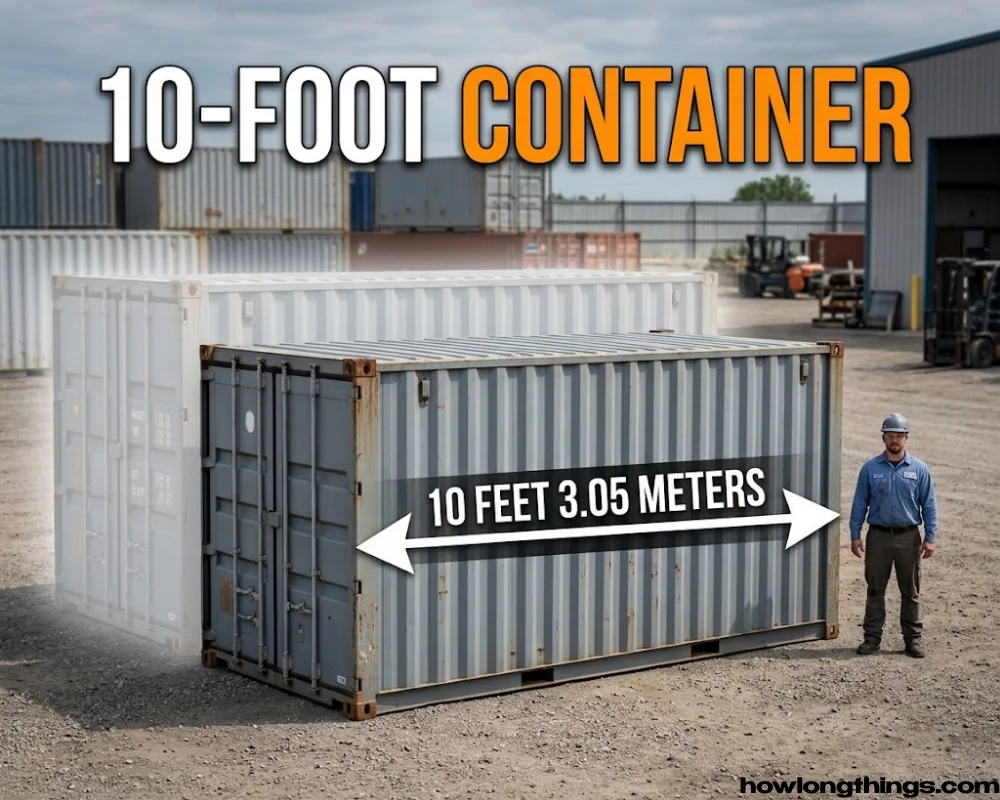
Mini shipping container.
Less common than the 20 or 40-foot versions, a 10-foot shipping container is used for smaller moves and backyard storage.
Two-car garage door (partial width).
Standard garage doors run 16 feet wide, so a 10-foot mark falls a bit past the halfway point — a useful everyday reference most homeowners can picture.
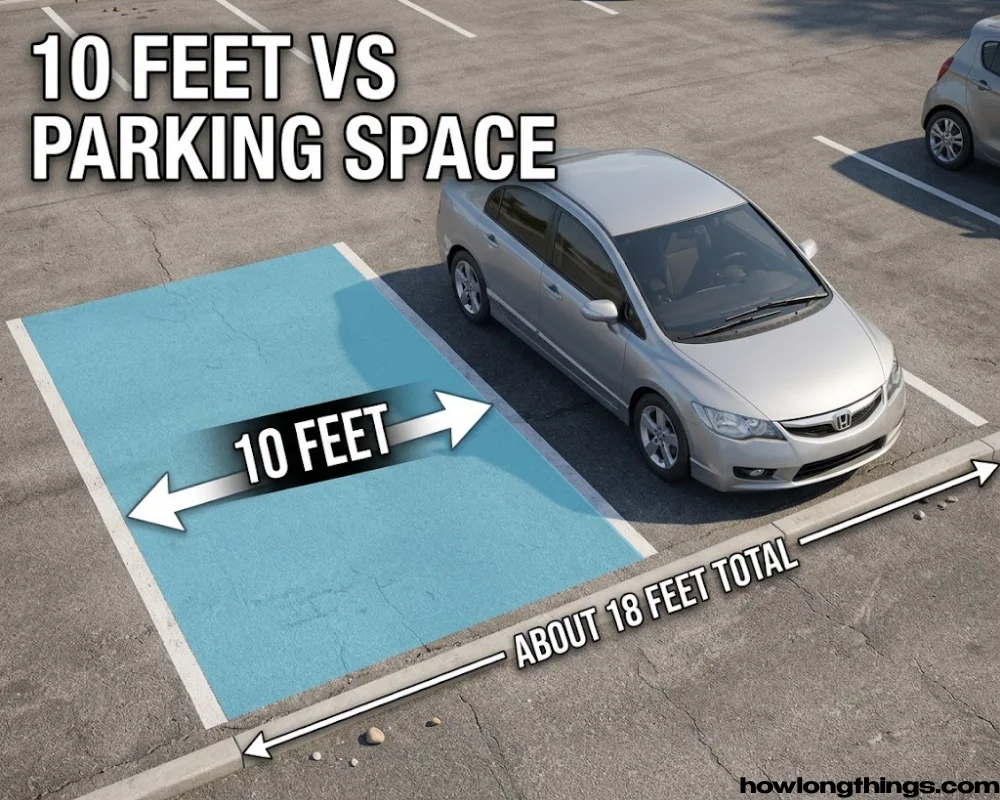
Compact car parking space.
Many standard parking spaces measure around 18 feet long, meaning 10 feet covers a little over half the length of a parked sedan.
How far is 10 feet to walk? Not far at all — it’s a short, quick stretch that most people cover in a few strides without thinking about it.
How far is 10 feet in steps to walk? The average adult stride runs close to 2.5 feet, according to general walking-gait research used by physical therapists and mobility researchers. Divide 10 feet by 2.5, and that comes out to about 4 normal steps. Taller adults with a longer stride might cover it in three and a half.
Step length isn’t identical for everyone, though. Height, leg length, and walking pace all shift the number slightly. A tall adult with a 3-foot stride could cross 10 feet in just over three steps, while someone with a shorter gait might need five. As a rough, repeatable rule of thumb, four steps gets most adults close enough for a quick mental estimate.
For a visual anchor, 10 feet is close to the width of a typical two-lane residential driveway, or a little more than the length of a parked sedan’s front half. It’s a distance you cross constantly — walking through a doorway and a few steps into a room — without ever needing a tape measure.
How to Measure 10 Feet Without a Tape Measure
No tape on hand? These three methods use things most people already have or can picture.
Use a basketball hoop. Any regulation court has a rim set at exactly 10 feet above the playing surface. Confirm it hasn’t been lowered for younger players, and measure from the floor, not a curb or platform.
Stack yardsticks and a ruler. Three 36-inch yardsticks laid end to end cover 108 inches. Add one standard 12-inch ruler, and the total reaches exactly 120 inches — precisely 10 feet.
Count door heights. A standard interior door in most US homes stands 6 feet 8 inches tall. Stack one and a half of those mentally, and you land almost exactly on 10 feet — a handy trick when you’re indoors with no tools at all.
Picture a basketball hoop’s rim — that’s 10 feet straight up. On the ground, it’s close to the length of a small kayak or two-thirds the width of a standard garage door.
How far is 10 feet to walk?
It’s a short distance most adults cross in just a handful of steps, roughly the width of a driveway or a couple strides past a doorway.
How far is 10 feet in steps to walk?
About 4 steps for the average adult, based on a typical 2.5-foot stride length. Taller people may cover it in closer to 3 or 3.5 steps.
What does 10 feet distance look like?
Indoors, it stretches beyond a standard 8 to 9-foot ceiling height. Outdoors, it’s close to the width of a two-car garage door or a large patio umbrella’s canopy.
What things are 10 feet long?
Common examples include a basketball hoop’s height, a recreational kayak, a step ladder, a 10×10 pop-up canopy, a backyard trampoline, and standard lumber boards sold at hardware stores.
Conclusion
10 feet stops being just a number once it’s tied to something you can picture — a hoop, a kayak, four ordinary steps. Next time a listing or floor plan mentions this measurement, you’ll already know exactly what it looks like.
Elizabeth Queen is a Owner and consumer research writer at HowLongThings.com, specializing in product lifespan, durability, and everyday household research. She’s passionate about helping readers make smarter, longer-lasting buying decisions.