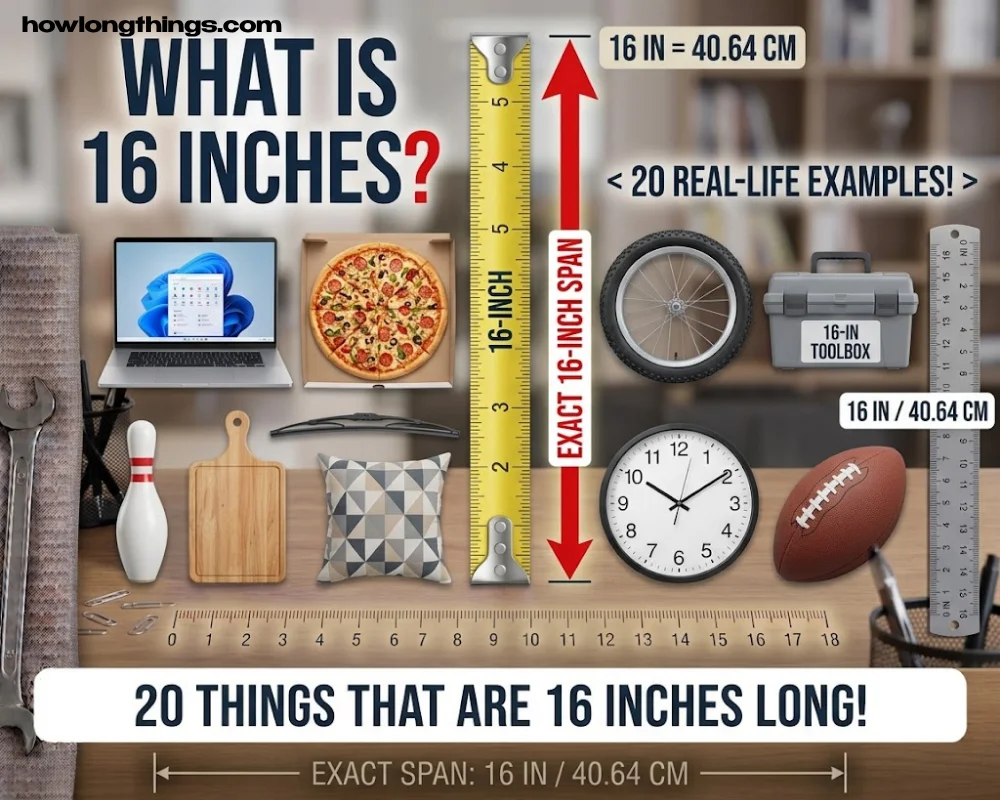
16 inches equals 1 foot 4 inches, or 40.64 centimeters. That’s the short answer. But numbers alone don’t help you see a length in your head.
This guide fixes that. Below are 20 real-life 16 inch objects you already know, plus ruler math, body comparisons, and clothing sizing — so you never have to guess how long is 16 inches again.
Table of Contents
How Long Is 16 Inches? (Quick Conversion)
Before the examples, here’s the exact math behind 16 inches in length, shown in every unit you might need.
An inch is defined as exactly 2.54 centimeters under the international yard-and-pound agreement, which the United States adopted in 1959. That means every inch conversion below is exact, not rounded.
Unit
Value
Inches
16 in
Feet
1.333 ft (1 ft 4 in)
Centimeters
40.64 cm
Millimeters
406.4 mm
Meters
0.4064 m
Yards
0.444 yd
16 inches is also 133% of a standard 12-inch foot — meaning it’s one-third longer than a foot. Written as a fraction, it’s 1⅓ feet, or 4⁄3 of a foot if you prefer improper fractions.
What Does 16 Inches Look Like on a Ruler?
A standard ruler only measures 12 inches, so 16 inches actually runs past the end of it.
If you’re using a tape measure instead, find the 12-inch mark, then keep going another 4 inches — that’s your 16 inch length. On rulers or tapes marked in sixteenths, each small tick represents 1⁄16 of an inch, so the 16-inch mark itself lands exactly on a bold, whole-number line, not a fraction. This is why carpenters and tailors often prefer a tape measure over a 12-inch ruler for anything at or beyond a foot — you avoid re-measuring in two passes. For quick visualization, picture one full 12-inch ruler, then add roughly a third of another ruler on top of it.
How Long Is 16 Inches Compared to a Human Body?
The human body is one of the most reliable 16 inches comparison tools, because you’re carrying it with you at all times.
The average adult forearm, measured from elbow to wrist, runs close to 10 inches, so 16 inches is roughly one and a half forearms. A typical adult shin, from knee to ankle, measures close to 16 inches on many adults, making it a near-perfect body-based reference. Two adult hand spans placed end to end (each averaging 7–8 inches) come close to matching 16 inches as well. According to CDC growth data, the average U.S. men’s shoe length is close to 11–12 inches, so 16 inches is roughly a shoe and a half laid end to end. Because body proportions vary by person, these are useful estimates, not exact substitutes for a tape measure.
20 Real-Life Examples of Things That Are 16 Inches Long
Here are 20 everyday things that are 16 inches long, ranging from your kitchen to your driveway.
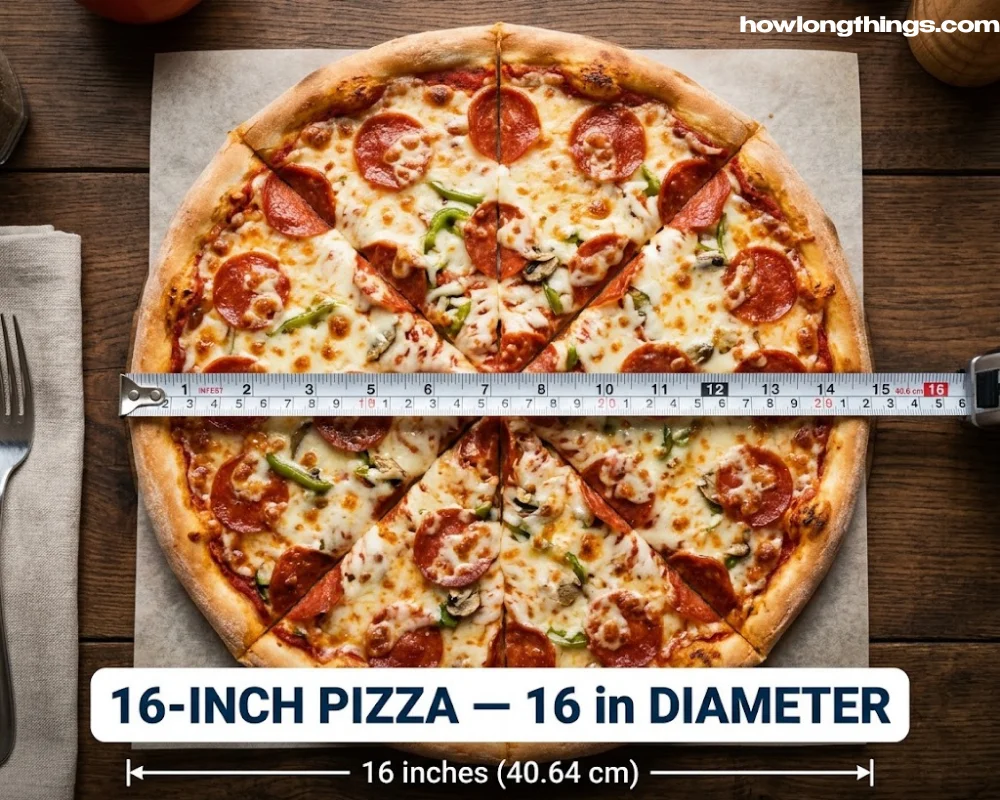
Large Pizza
A large pizza from major U.S. chains is sold at a 16-inch diameter, making it one of the most familiar 16 inch objects in American households. This size typically yields 8 to 12 slices, depending on how it’s cut, which is why it’s the standard “family size” option nationwide. Because pizza boxes are also cut close to this dimension, the box itself doubles as a quick 16 inches example sitting in your fridge.
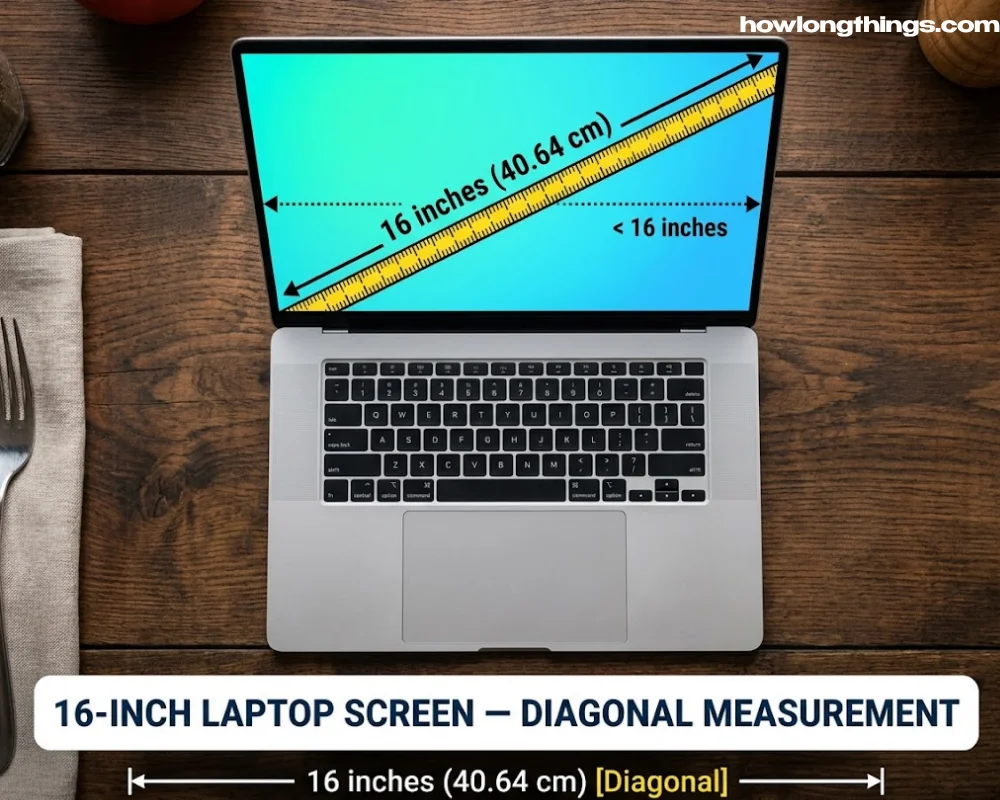
16-Inch Laptop Screen
Laptop screens are measured diagonally, corner to corner, and a 16-inch laptop sits at the larger end of the consumer market. Popular models like the MacBook Pro 16-inch and several Dell XPS variants use this exact screen size for creative and professional work. This size balances a bigger visual workspace against portability, which is why editors, designers, and programmers often prefer it over 13- or 14-inch models. If you own one, simply measuring corner to corner confirms this 16 inches length instantly.
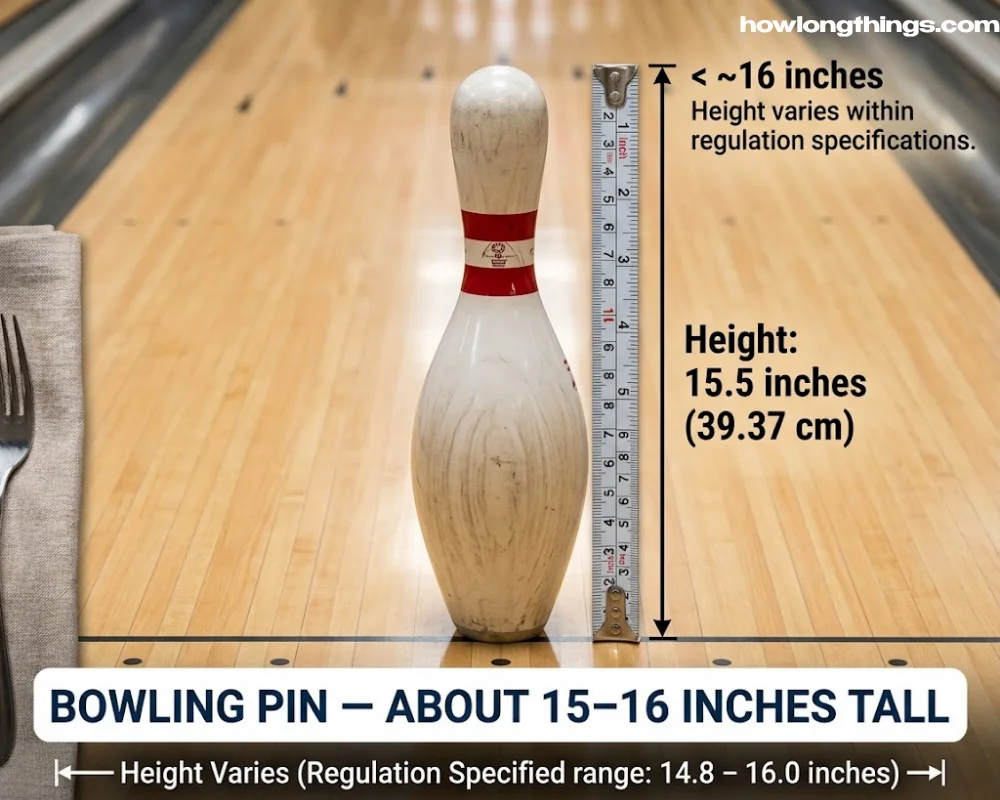
Bowling Pin
Regulation bowling pins stand between 15 and 16 inches tall, a height strictly enforced by the United States Bowling Congress to keep gameplay fair across every certified lane. This makes a bowling pin one of the more physical, tactile 16 inch objects most Americans have stood beside at some point. The pin’s shape — wider at the base, narrow at the neck — also affects how it topples, which is part of why the exact height matters for consistent scoring. If you’ve ever bowled a single game, you’ve already seen this measurement in action.
Large Cutting Board
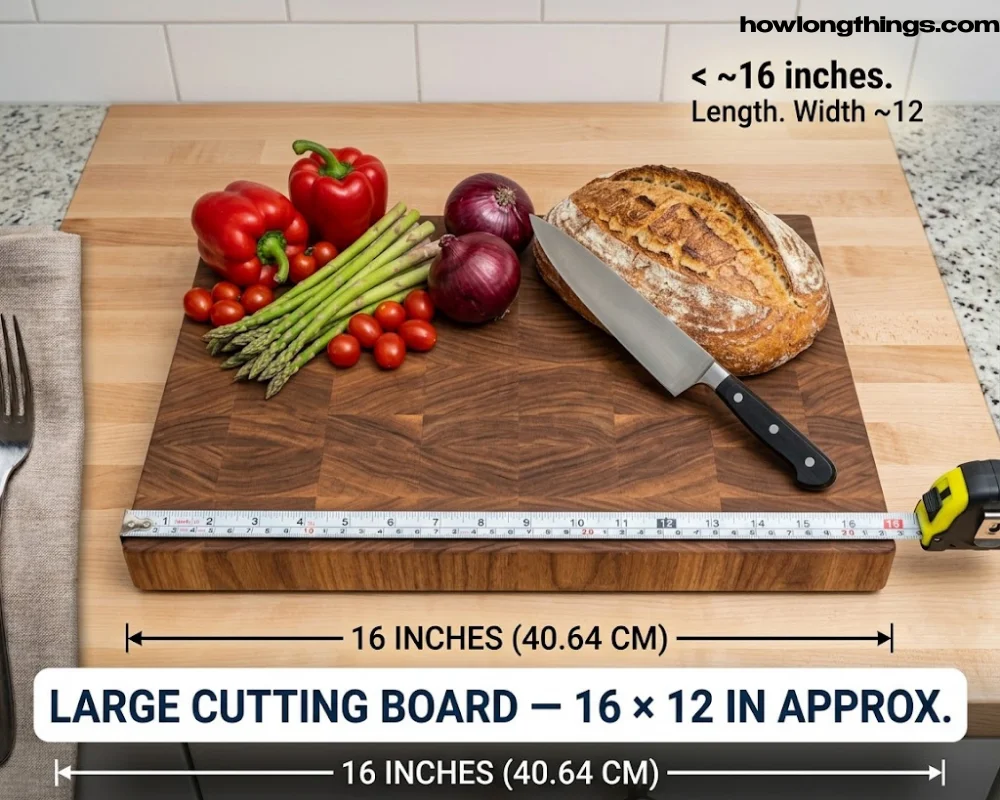
A large kitchen cutting board commonly measures around 16 inches in length, giving enough surface area for whole vegetables, full cuts of meat, or a loaf of bread. Professional kitchens often favor this size because it reduces food sliding off the edges during prep work. Home cooks shopping for a new board will notice 16 inches repeatedly listed as a “large” or “family” size across major kitchenware retailers. It’s a practical, hands-on way to understand this length without ever picking up a ruler.
Skateboard Deck Width
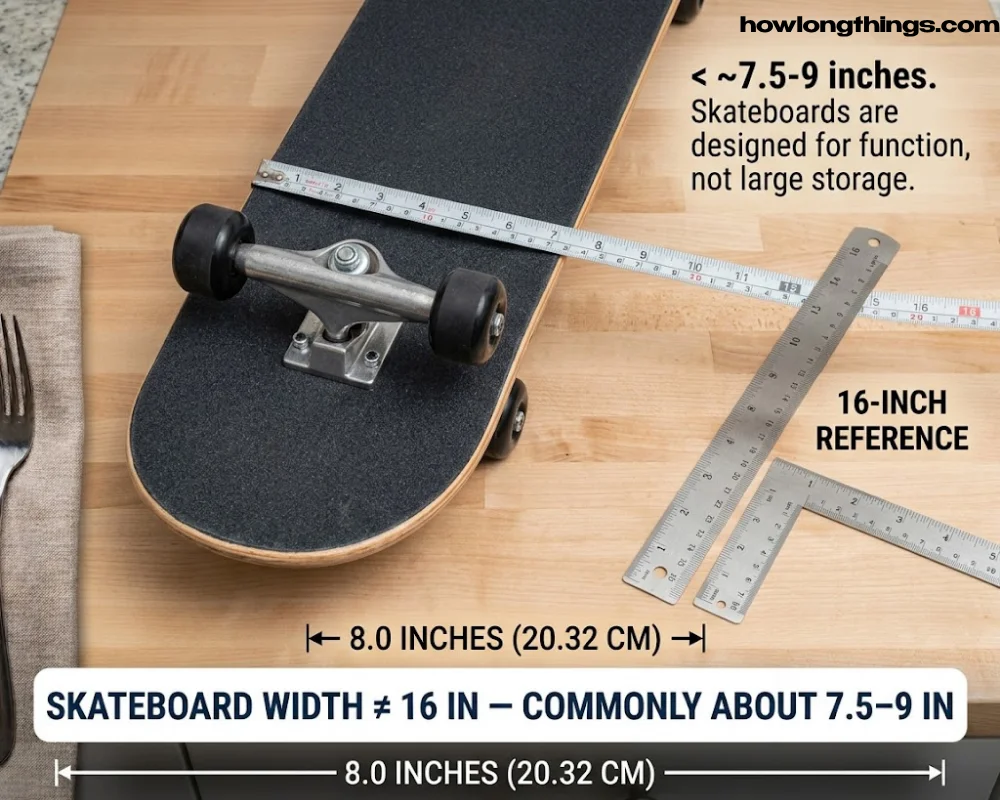
Standard skateboard decks measure close to 16 inches wide at their widest point, a dimension that directly affects balance and trick control. Wider decks in this range are generally favored for stability, while narrower boards suit technical street skating. Because deck width stays fairly consistent across major skate brands, it’s a reliable size reference for anyone into skate culture. Riders who’ve stood on a board have physically felt this 16-inch width under their feet.
Windshield Wiper Blade
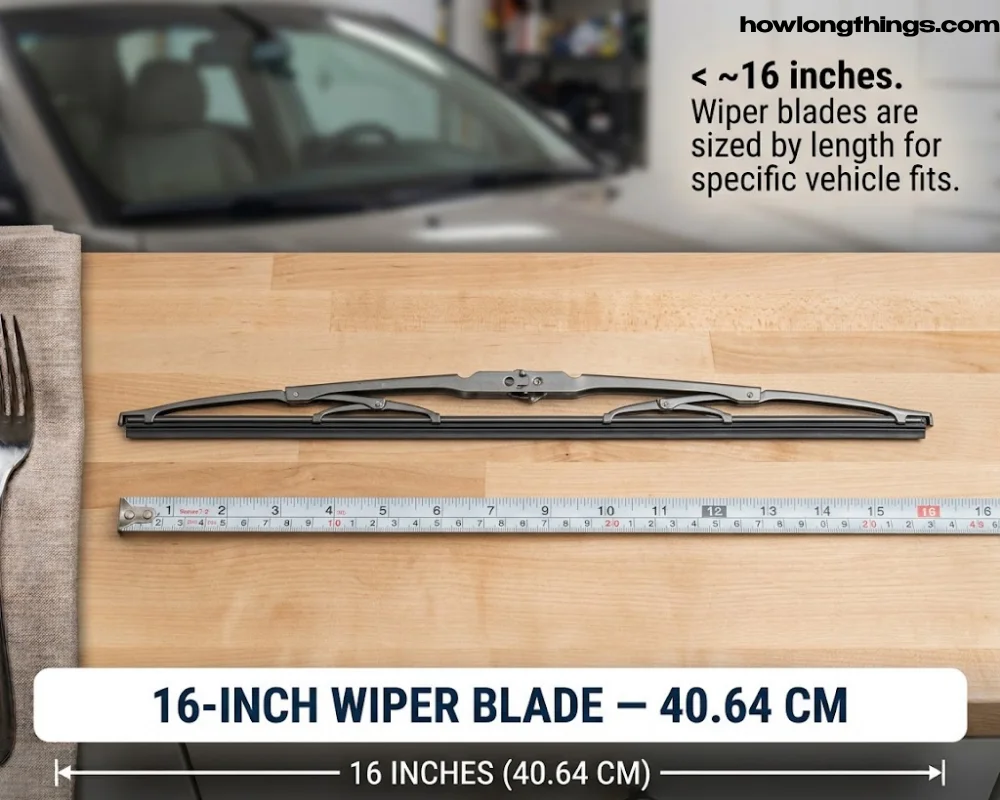
Many compact and mid-size vehicles in the U.S. use a 16-inch wiper blade, a size commonly listed at auto parts retailers as a top seller for passenger cars. Wiper length is matched to windshield curvature, so manufacturers test this size extensively for clearing rain and debris without leaving streaks. Drivers replace these blades roughly once or twice a year, meaning most car owners handle this exact measurement regularly. It’s a length you’re holding in your hand more often than you might realize.
Standard Throw Pillow
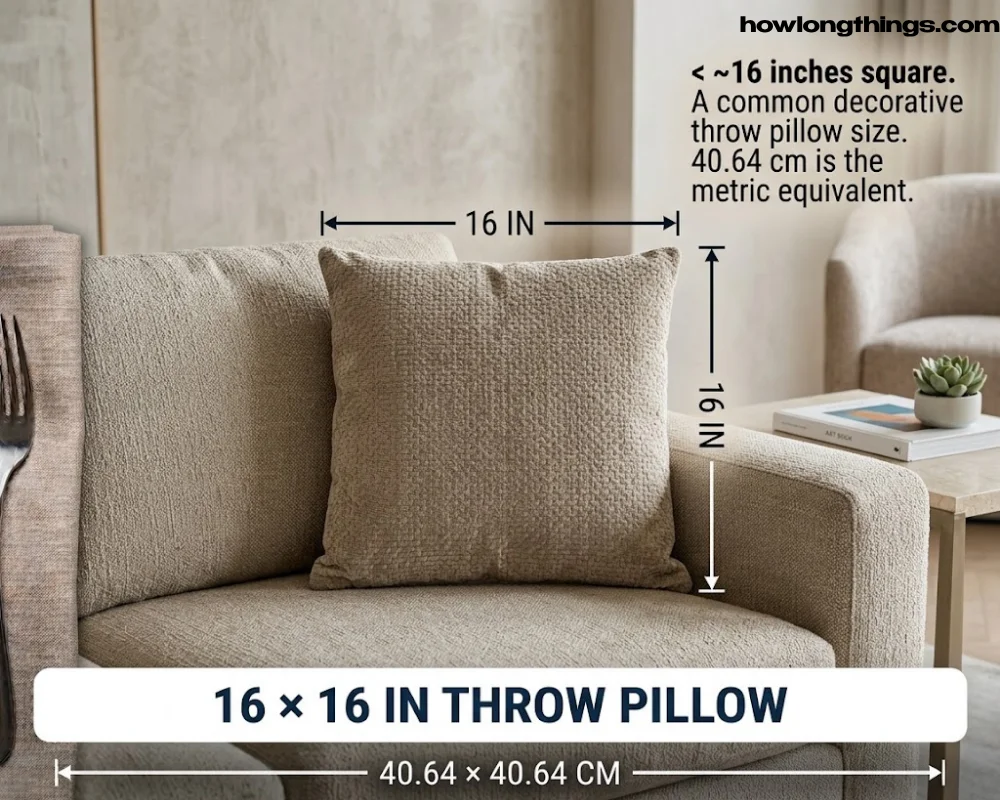
The most common decorative throw pillow size sold across U.S. home goods stores measures 16 by 16 inches, giving it a perfectly square shape. Interior designers frequently recommend this size because it complements standard sofa proportions without overwhelming the furniture. Because it’s symmetrical, a 16-inch pillow demonstrates the measurement in two directions at once, making it an efficient visual reference. Grab one off your couch, and you’re holding an accurate example on the spot.
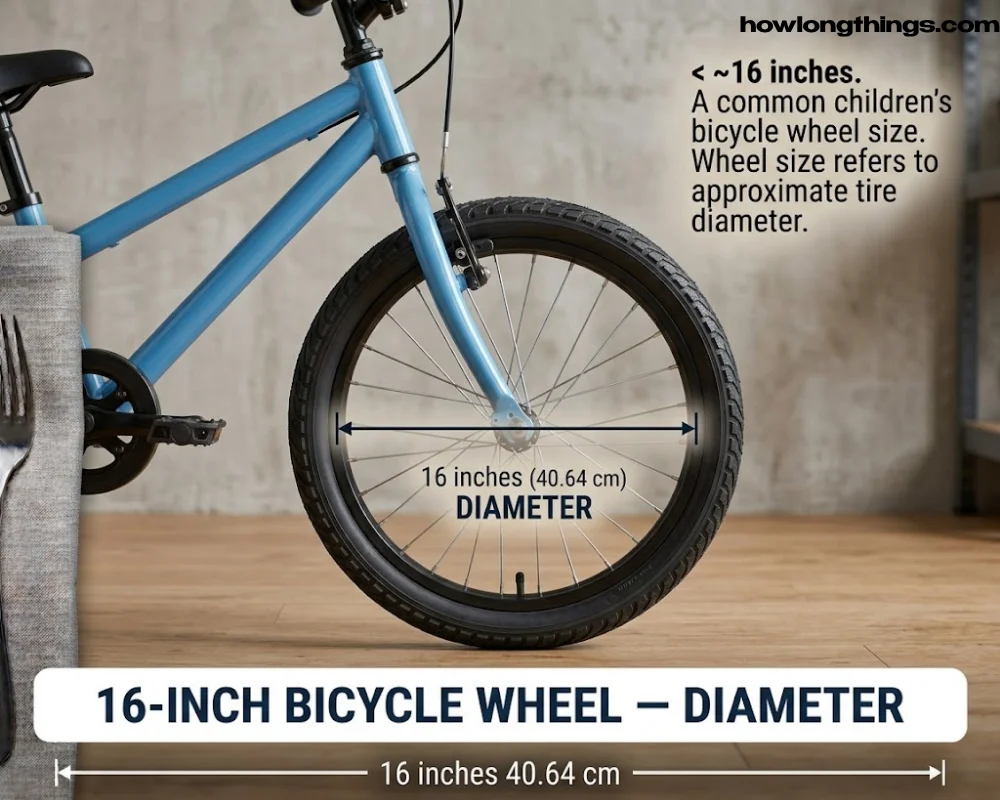
Kids’ Bicycle Wheel
Children’s bicycles built for riders roughly 4 to 6 years old typically use 16-inch wheels, a sizing standard followed by most major bike brands. Sizing charts generally match this wheel size to children standing between about 40 and 48 inches tall. This makes the 16-inch wheel one of the more emotionally memorable measurements for parents, since it’s often tied to a child’s first real pedal bike. It’s a length that connects an abstract number to a genuine milestone.
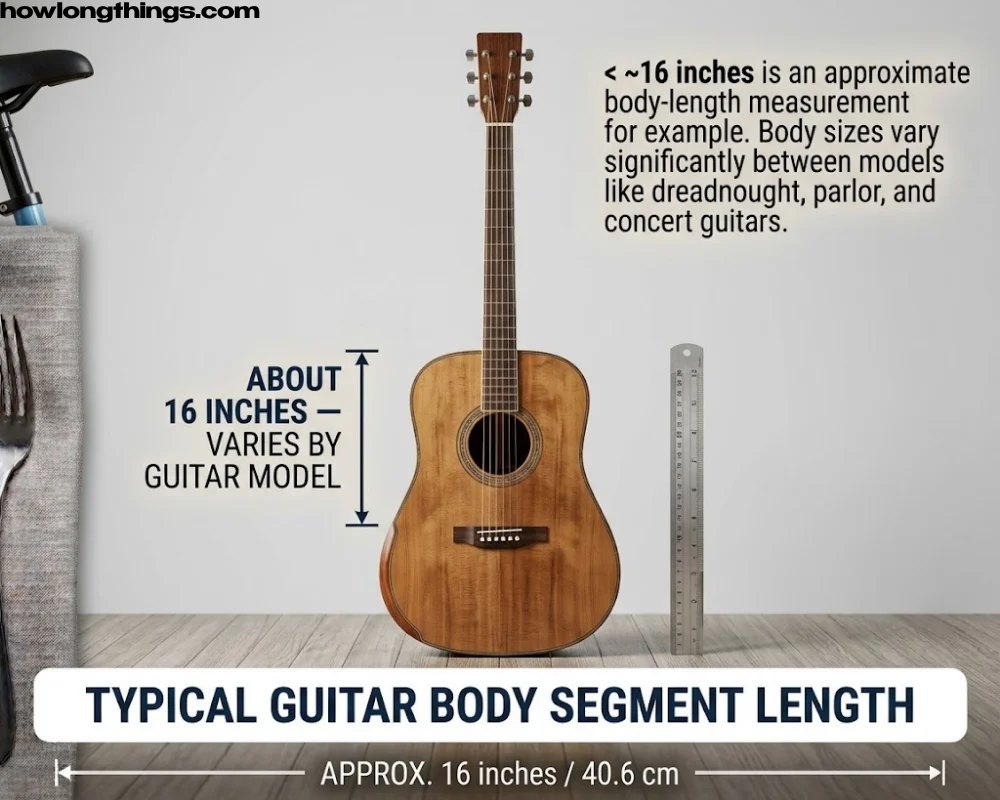
Acoustic Guitar Body
The body length of many standard acoustic guitars, from the base to the top of the shoulder, measures close to 16 inches, depending on the model and body style. Dreadnought and jumbo-style guitars often sit near this range, which affects both tone projection and comfort while playing. Guitar makers balance body size against resonance, since a larger body generally produces deeper, louder sound. Musicians who’ve held a guitar against their torso have already felt this length in practice.
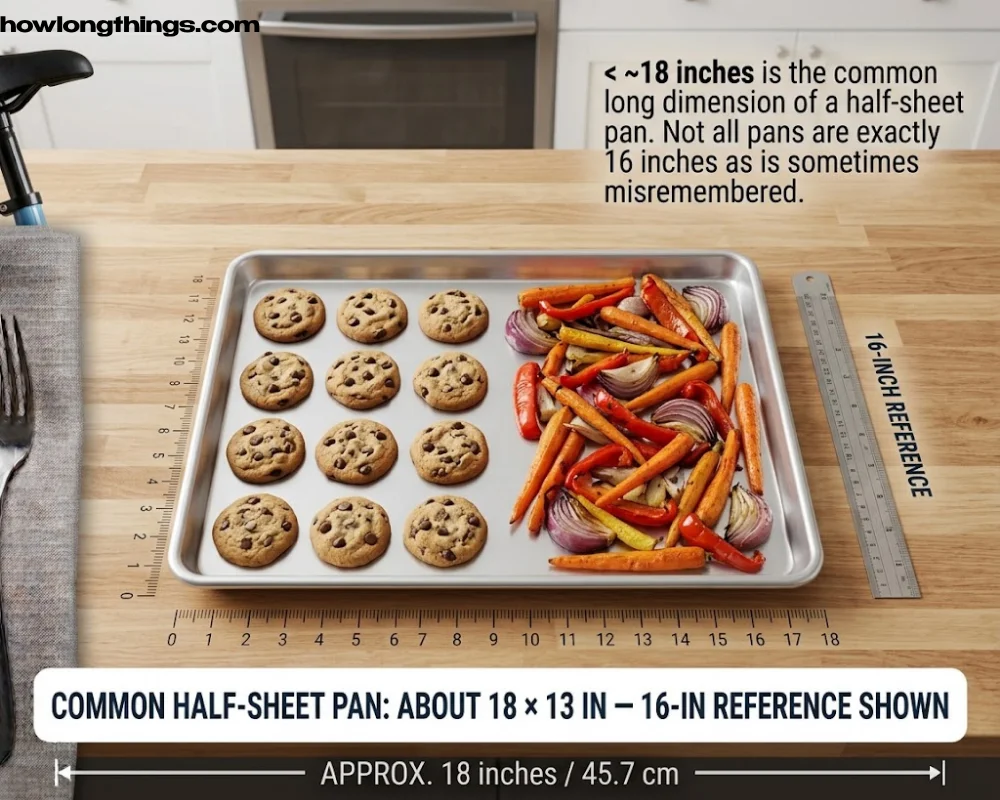
Large Baking Sheet
A half-sheet baking pan, one of the most common sizes in home and professional kitchens, measures close to 16 inches along its longer edge. This size fits most standard home ovens while still offering enough surface area for a full batch of cookies or roasted vegetables. Because it’s a widely stocked bakeware size, it’s one of the easiest 16 inch objects to check without leaving your kitchen. Pull one from your oven rack, and you’ve got an instant visual reference.
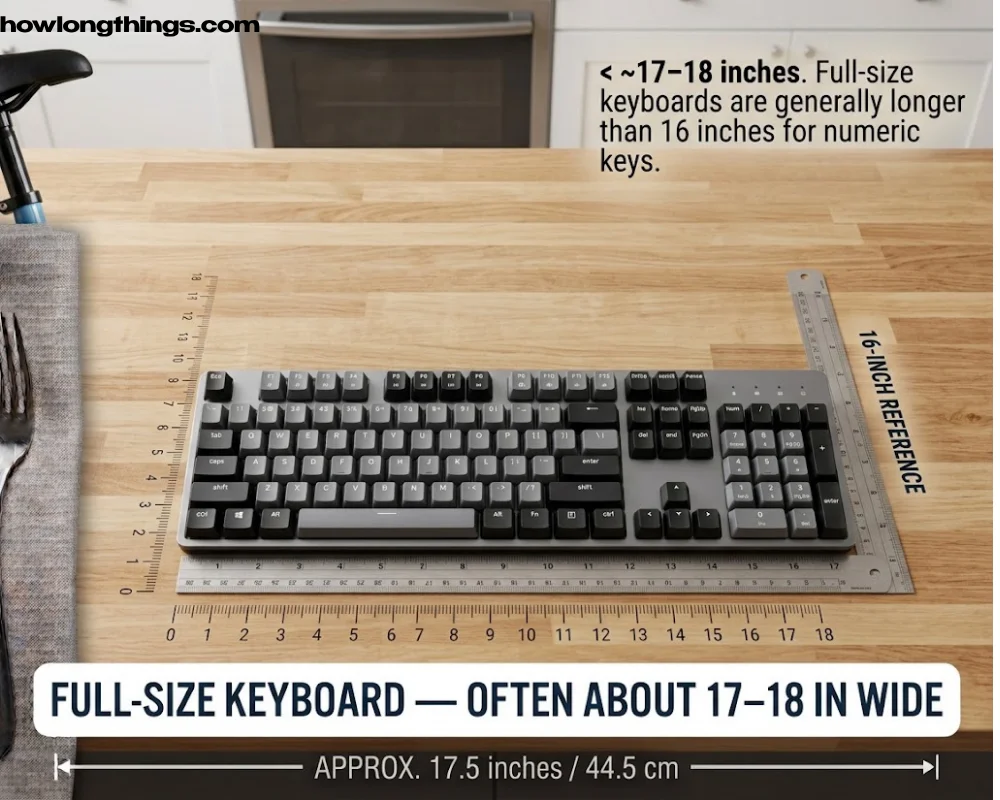
Standard Keyboard Width
A full-size computer keyboard, including the number pad, typically measures close to 16 inches across. This width accommodates all standard keys, spacing, and the numeric keypad without cramping finger movement. Ergonomic studies on typing comfort often reference keyboard width when recommending desk and chair setups, since reach distance affects wrist strain over long typing sessions. If you use a full-size keyboard at your desk right now, you’re looking at this measurement directly in front of you.
Airline Carry-On Height Limit
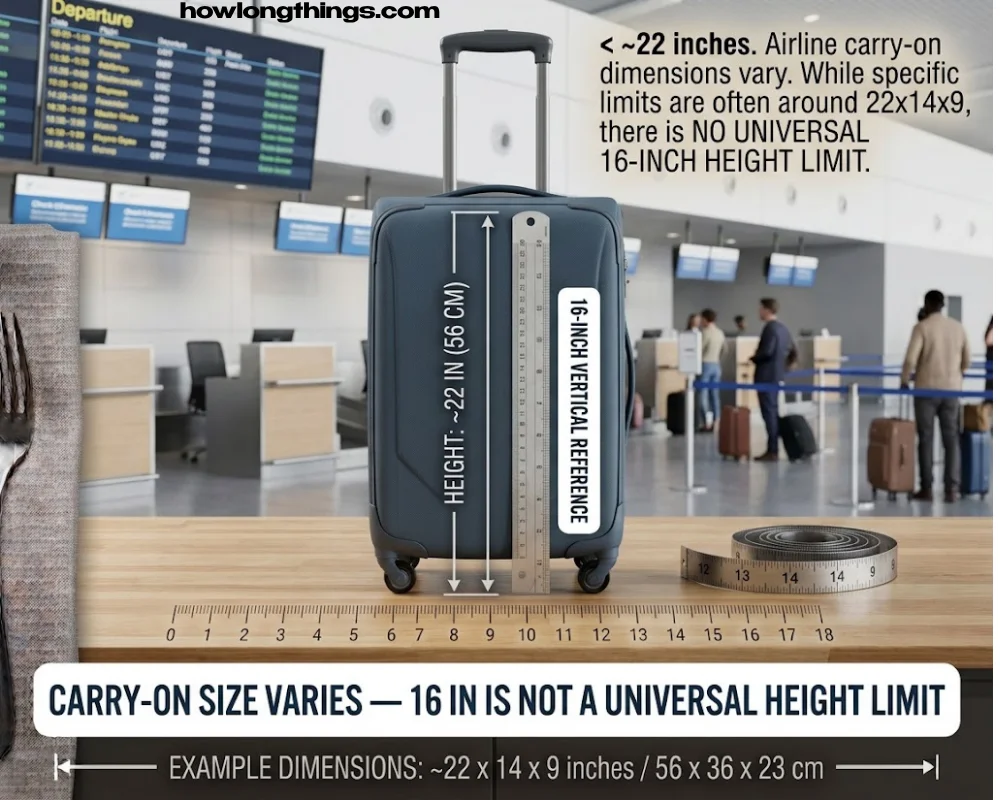
Most U.S. airlines cap carry-on bag height at close to 16 inches, excluding wheels and handles, as part of standard cabin luggage rules. This limit exists to ensure bags fit properly in overhead bins without slowing down boarding. Frequent flyers often measure their bags against this exact figure before a trip to avoid gate-check fees. It’s a length that directly affects your wallet if you travel often.
Extension Cord Reel Width
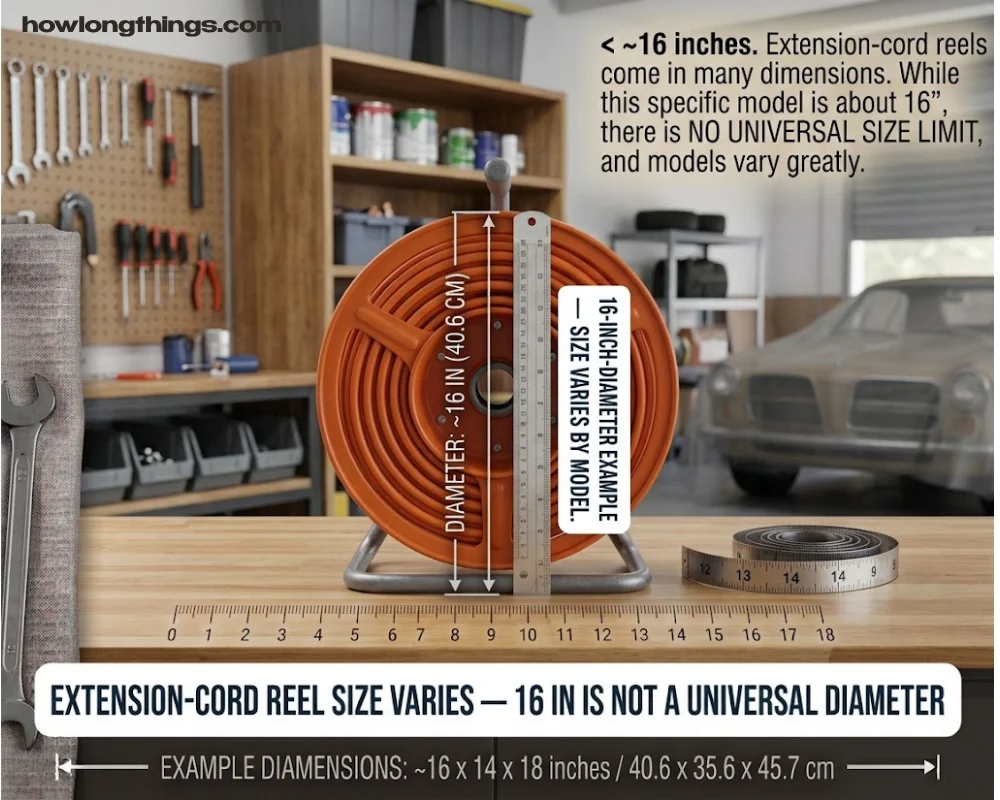
Many household extension cord reels and storage spools measure close to 16 inches across the widest point of the coil. This size allows enough cord length to wrap without kinking, which extends the lifespan of the cord’s internal wiring. Garage organizers frequently list this measurement when sizing wall-mounted storage hooks or shelving. It’s a practical, if overlooked, 16-inch object sitting in most garages.
Toolbox Length
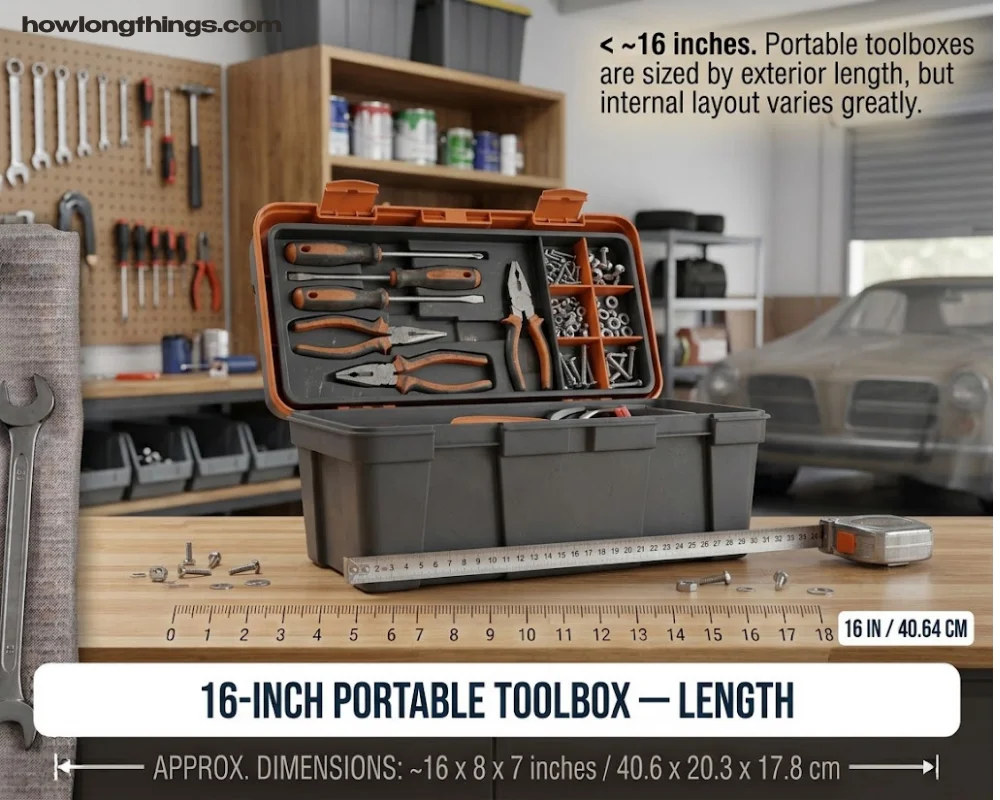
A mid-size portable toolbox commonly measures close to 16 inches in length, offering enough interior space for hand tools, fasteners, and small hardware. This size strikes a balance between portability and storage capacity, which is why it’s a popular choice for home DIY projects. Hardware retailers frequently list 16-inch toolboxes among their best-selling portable storage options. If you own one, it’s likely sitting in your garage or trunk right now.
Yoga Mat Width (Rolled)
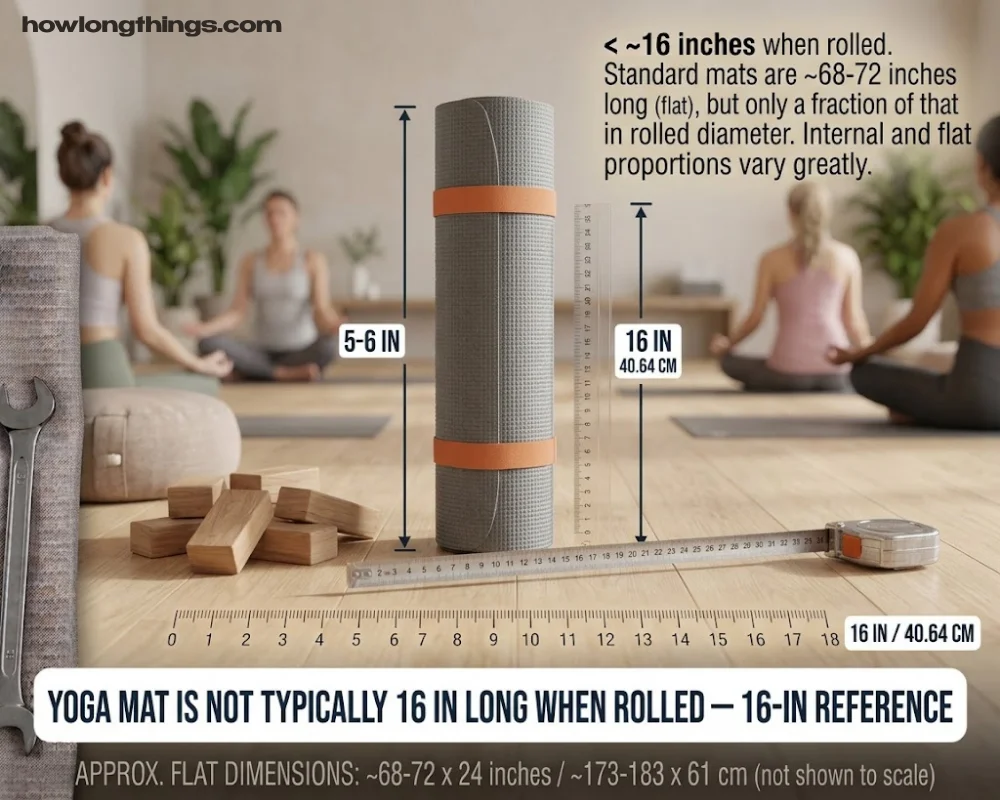
A standard yoga mat, once rolled up, typically measures close to 16 inches in circumference-to-length comparisons used by many studios for storage racks. Studios design their mat storage shelving around this rolled dimension to keep floor space clear between classes. Because yoga mats come in fairly standardized widths before rolling, this measurement stays consistent across most consumer brands. It’s a length yoga practitioners handle every time they pack up after class.
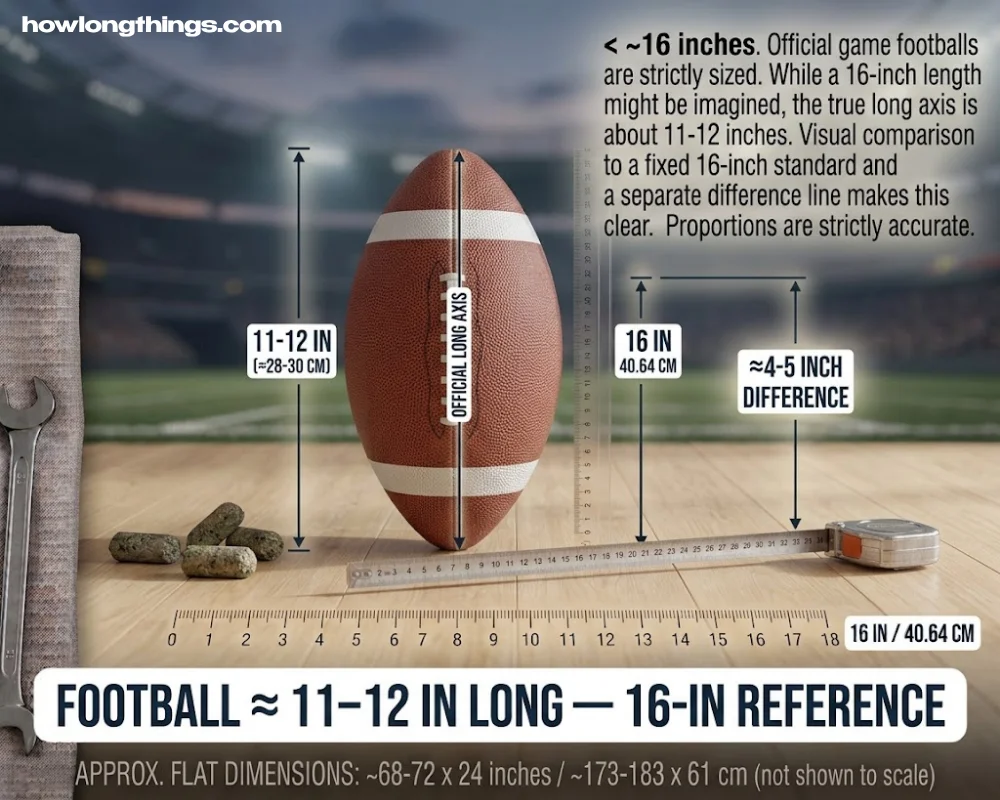
Football (Laid End to End Reference)
An official NFL football measures close to 11 to 12 inches in length, so laying one alongside roughly a third of another ball gets you close to 16 inches total. Football dimensions are tightly regulated, which is part of why this comparison stays consistent across every game played at the professional level. Fans familiar with the ball’s shape and size can use it as a mental yardstick for nearby measurements. It’s a sports-based reference that resonates strongly with American readers.
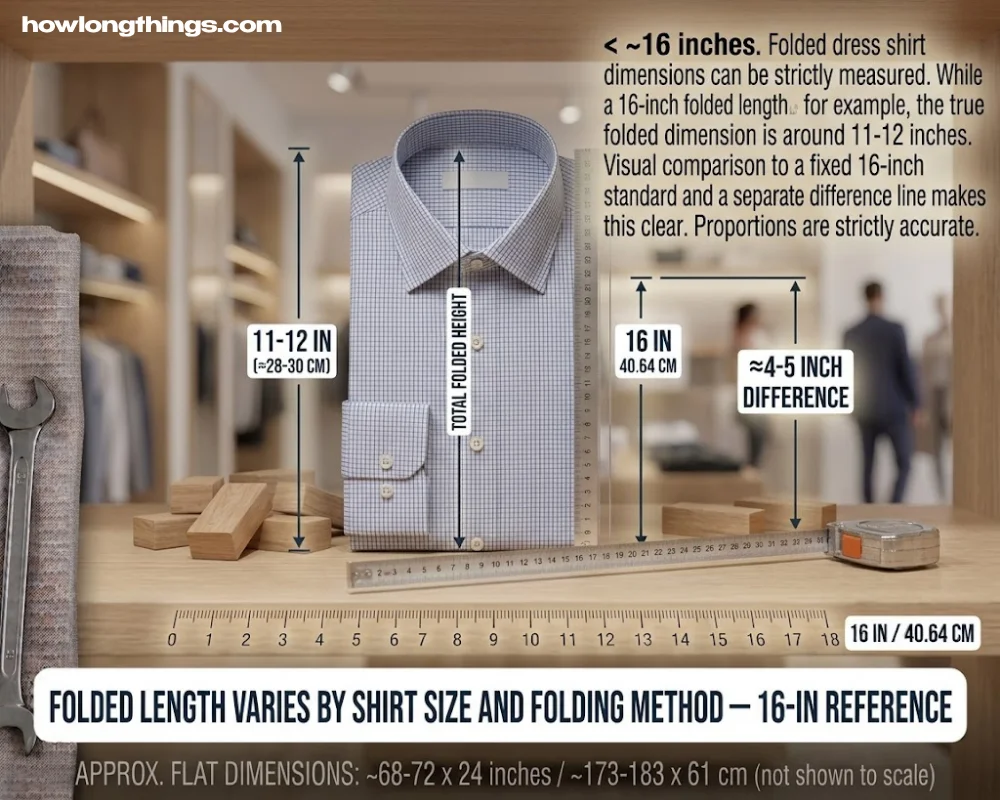
Men’s Dress Shirt Sleeve (Folded)
A folded men’s dress shirt, from shoulder seam to the folded cuff, often measures close to 16 inches, depending on shirt size and folding style. Retailers frequently use this folded length as a packaging standard for shipping and shelf display. Tailors sometimes reference this same folded measurement when advising customers on sleeve length adjustments. It’s a length most closets already contain multiple times over.
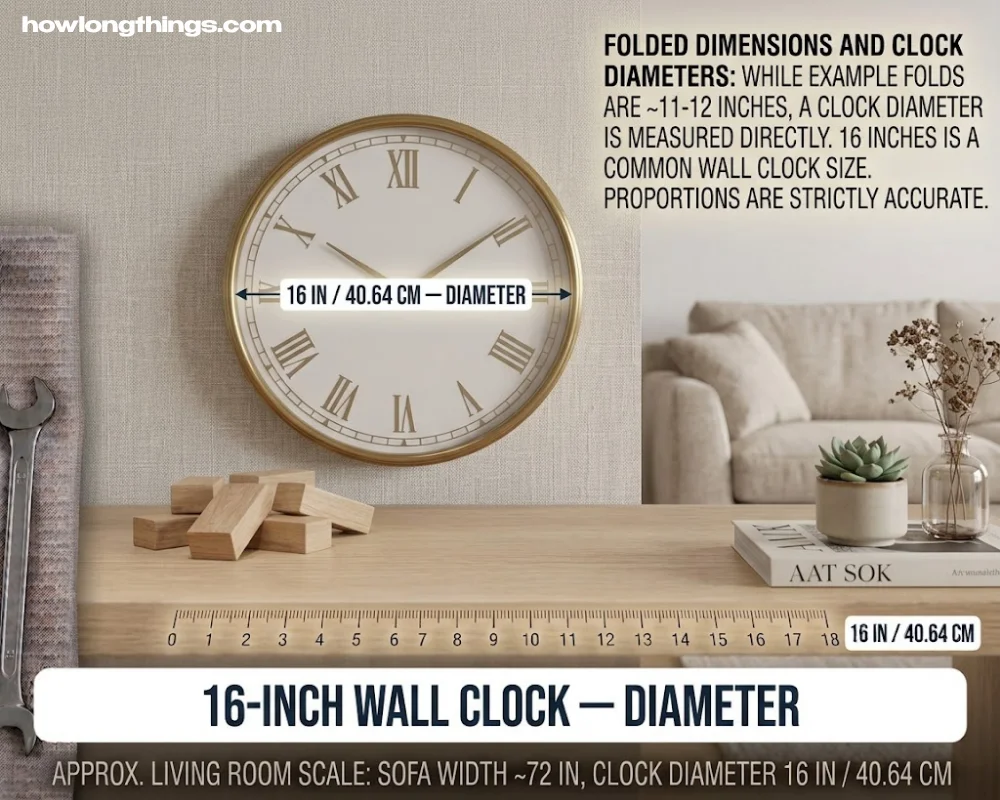
Large Decorative Wall Clock
Many oversized decorative wall clocks sold for living rooms and offices measure close to 16 inches in diameter. This size is popular because it remains readable from across a room without overwhelming smaller wall spaces. Interior design guides commonly recommend this diameter range for rooms with 8-to-9-foot ceilings. It’s a length hanging in plain sight in many American homes.
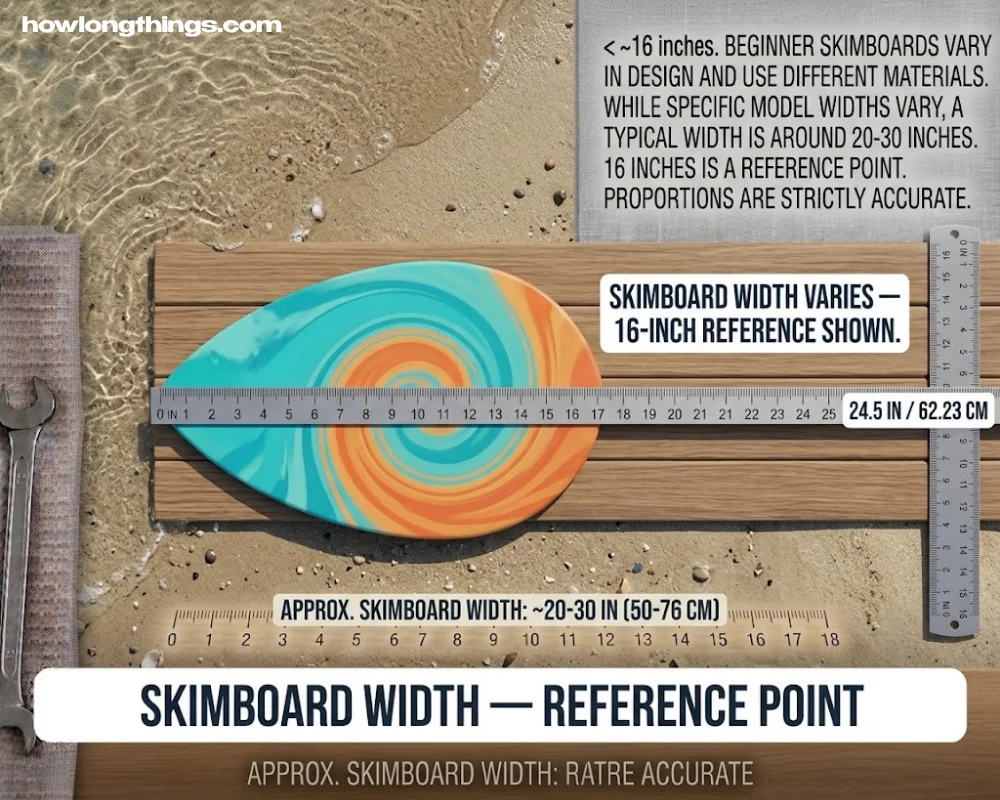
Skimboard Length
A beginner or child-size skimboard often measures close to 16 inches wide at its broadest point, suited for younger riders learning balance in shallow water. Board width directly affects stability, with wider boards offering easier balance for new riders. Surf shops frequently stock this size specifically for kids’ lesson programs. It’s a length tied to summer memories for many coastal families.
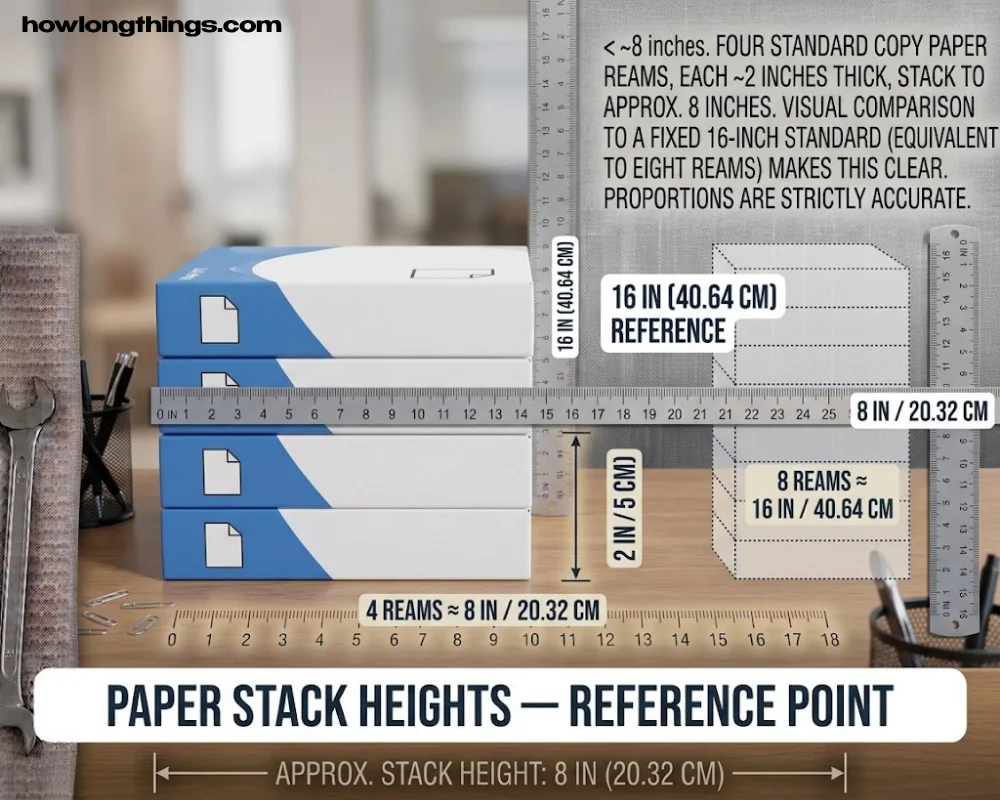
Reams of Copy Paper (Stacked)
A stack of roughly four reams of standard copy paper, each ream about 2 inches thick, reaches close to 16 inches in total height. Office supply retailers commonly package paper in ream quantities specifically because it’s easy to stack and store predictably. This makes stacked paper reams a surprisingly accurate at-your-desk measurement tool. It’s a length many office workers could recreate in under a minute.
Whether 16 inches feels big or small depends entirely on what you’re measuring.
For a pillow or cutting board, 16 inches feels generously large. For a human forearm or laptop screen, it feels proportionate and standard. Context always decides the answer, which is why comparison objects matter more than the raw number alone.
Size 16 in U.S. women’s clothing typically corresponds to a waist of about 38–40 inches and a bust of about 42–44 inches, according to standard U.S. sizing charts used across most mainstream retailers. This places size 16 at the entry point of plus-size categories in most American clothing brands, though sizing does vary between manufacturers.
16-inch hair length reaches roughly the mid-back area, often described as landing near the bra-strap line. This is a commonly requested length for hair extensions in the U.S., since it offers noticeable length without reaching the lower back.
FAQs About 16 Inches
How big is a 16 inch example?
A 16 inch example is roughly the size of a large pizza, a 16-inch laptop screen, or a standard square throw pillow — all close to 1 foot 4 inches in length.
What does 16 inches look like on a ruler?
Since a standard ruler only measures 12 inches, 16 inches extends 4 inches past the end of it — about one-third longer than the full ruler.
Is 16 inches big or small?
It depends on context. 16 inches is large for a pillow or cutting board, but proportionate for a laptop screen or human forearm.
How long is 16 inches compared to a human?
16 inches is close to the length of an average adult shin, or roughly one and a half forearms measured end to end.
How big is a size 16 woman?
A size 16 in U.S. women’s clothing typically fits a 38–40 inch waist and a 42–44 inch bust, sitting at the start of plus-size ranges.
What can I compare 16 inches to?
You can compare 16 inches to a large pizza, a laptop screen, a bowling pin, a throw pillow, or an adult shin — all reliable, everyday 16-inch objects.
Conclusion
16 inches equals 1 foot 4 inches, or 40.64 centimeters — and now you have 20 real objects to picture it instantly. From a pizza on your counter to the shin below your knee, this length is closer to your daily life than you probably realized.
Elizabeth Queen is a Owner and consumer research writer at HowLongThings.com, specializing in product lifespan, durability, and everyday household research. She’s passionate about helping readers make smarter, longer-lasting buying decisions.