A number on a scale rarely means much until you’ve held it. Read “300 grams” all day, and it still won’t tell you what that weight actually feels like in your hand.
That’s what this guide fixes. Below, you’ll get fast conversions, 15 real objects near the 300-gram mark, and a clear answer to what 300 grams looks like in everyday life.
Table of Contents
How Much Is 300 Grams? Quick Conversion Chart
Here’s the short version: 300 grams equals 0.3 kilograms, or about 0.661 pounds (roughly two-thirds of a pound). That’s also close to 10.58 ounces, or 300,000 milligrams.
Unit
Equivalent
Kilograms (kg)
0.3 kg
Pounds (lb)
≈0.661 lb
Ounces (oz)
≈10.58 oz
Milligrams (mg)
300,000 mg
Cups (water)
≈1.27 cups
How Much Sugar Is 300g?
The answer changes depending on what’s filling the cup, since density decides volume, not weight alone. Here’s a real breakdown by ingredient:
Ingredient
Approx. Cups (for 300g)
Granulated sugar
≈1.5 cups
All-purpose flour
≈2.4 cups
White rice (uncooked)
≈1.5 cups
Butter
≈1.3 cups
Rolled oats
≈3.3 cups
Water
≈1.27 cups
Sugar packs down tighter than flour, so it takes fewer cups to hit 300 grams. This is exactly why bakers weigh ingredients instead of scooping — a cup of flour can weigh anywhere from 120 to 150 grams depending on how it’s packed.
Is 300g Equal to 1 Cup?
Not quite, and this trips up a lot of home cooks. A single cup only equals 300 grams for very dense ingredients, and even then it’s rarely exact. For most common baking ingredients, 300 grams is closer to 1.25 to 1.5 cups. Water is the cleanest reference: 1 cup of water weighs about 237 grams, so 300 grams of water fills a bit more than 1 cup.
How Many 300g Are in 1 kg?
A kilogram holds 3.33 portions of 300 grams. Since 1 kilogram equals 1,000 grams, dividing 1,000 by 300 gives you that figure. So three 300-gram servings, plus a bit extra, make up a full kilogram.
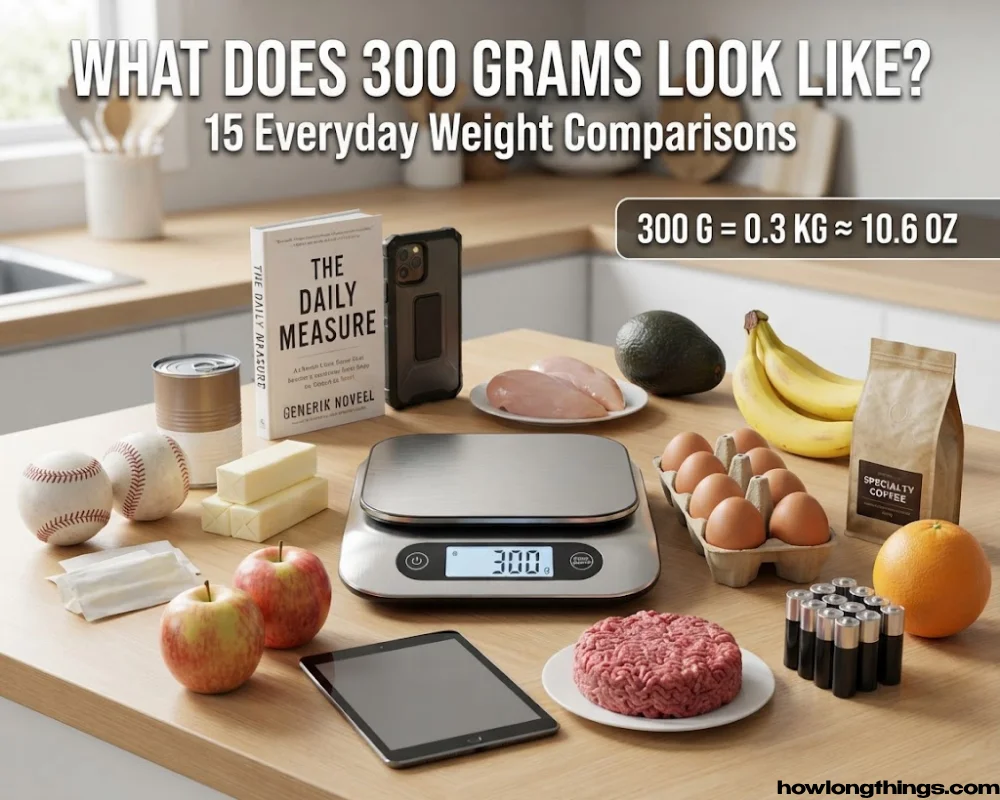
15 Everyday Things That Weigh 300 Grams
Numbers stick better once you’ve held the object behind them. Here are 15 familiar items that land right around 300 grams, mixing kitchen staples with a few unexpected entries.
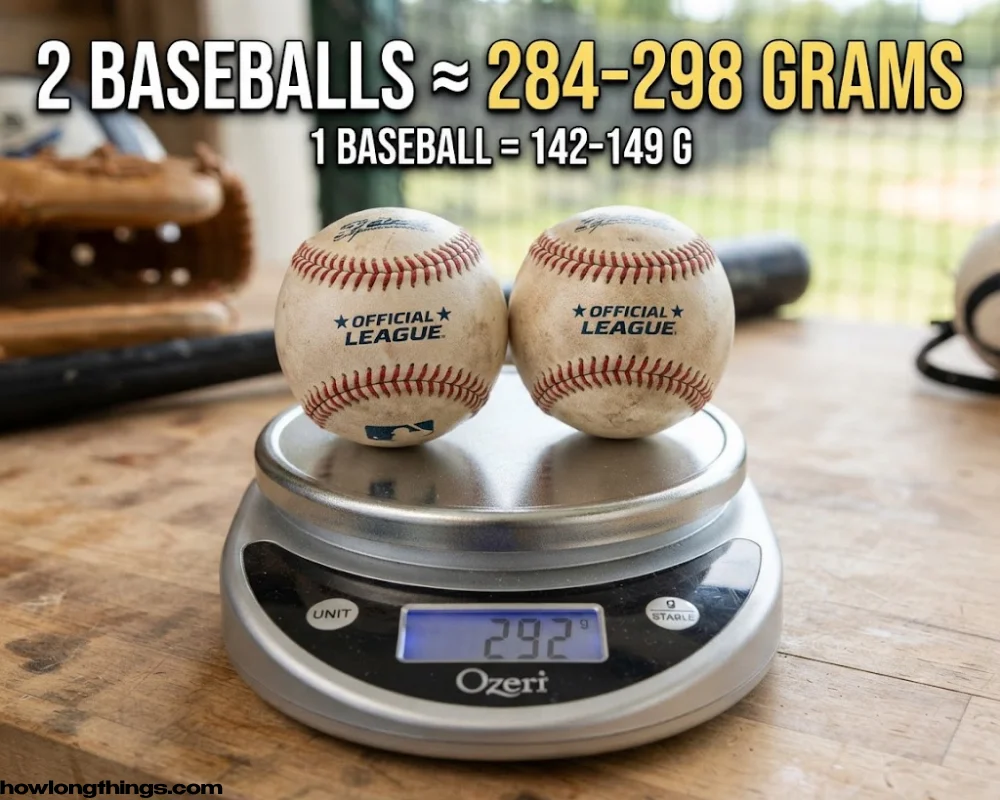
Two Regulation Baseballs
An official Major League Baseball weighs between 142 and 149 grams, based on MLB’s own equipment rules. Two baseballs held together land at roughly 284 to 298 grams, just under the 300-gram mark, making this one of the most culturally familiar American references on this list.
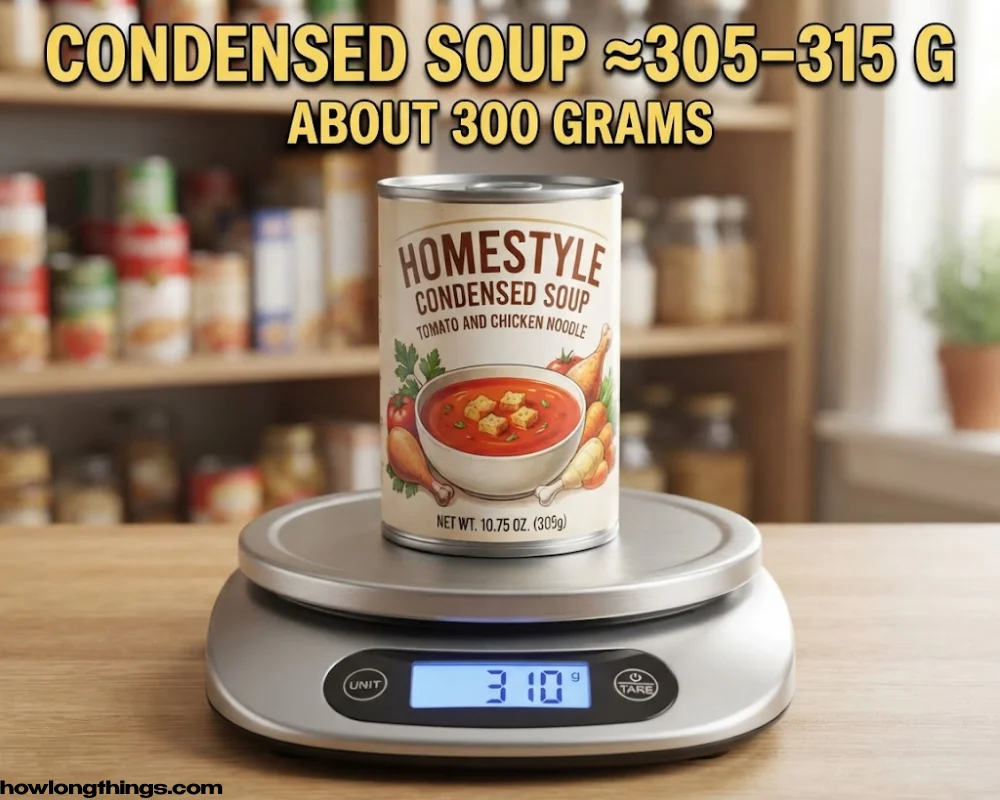
A Can of Condensed Soup
A standard 10.75-ounce condensed soup can, metal container included, weighs approximately 305 to 315 grams. It’s one of the most reliable pantry references out there, since nearly every American kitchen has one sitting on a shelf right now.
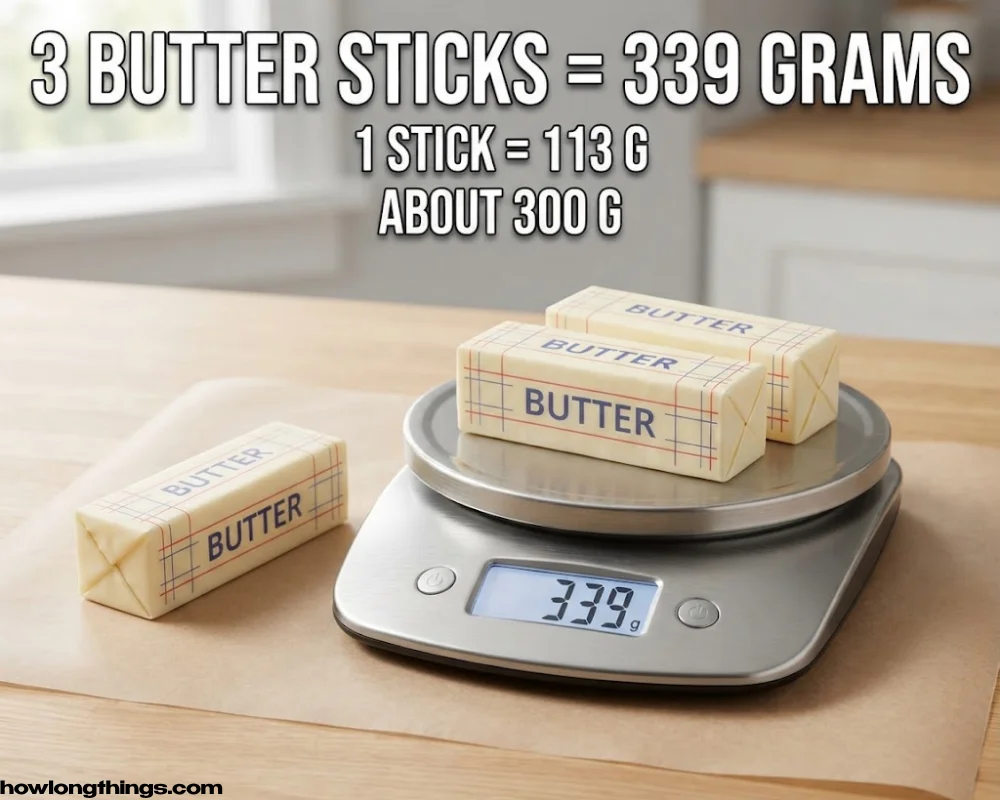
Three Sticks of Butter
A single US butter stick weighs exactly 113 grams, which is precisely 4 ounces or a quarter pound. Three sticks together total about 339 grams, slightly over 300 but close enough for a quick baking estimate when a recipe calls for this amount.
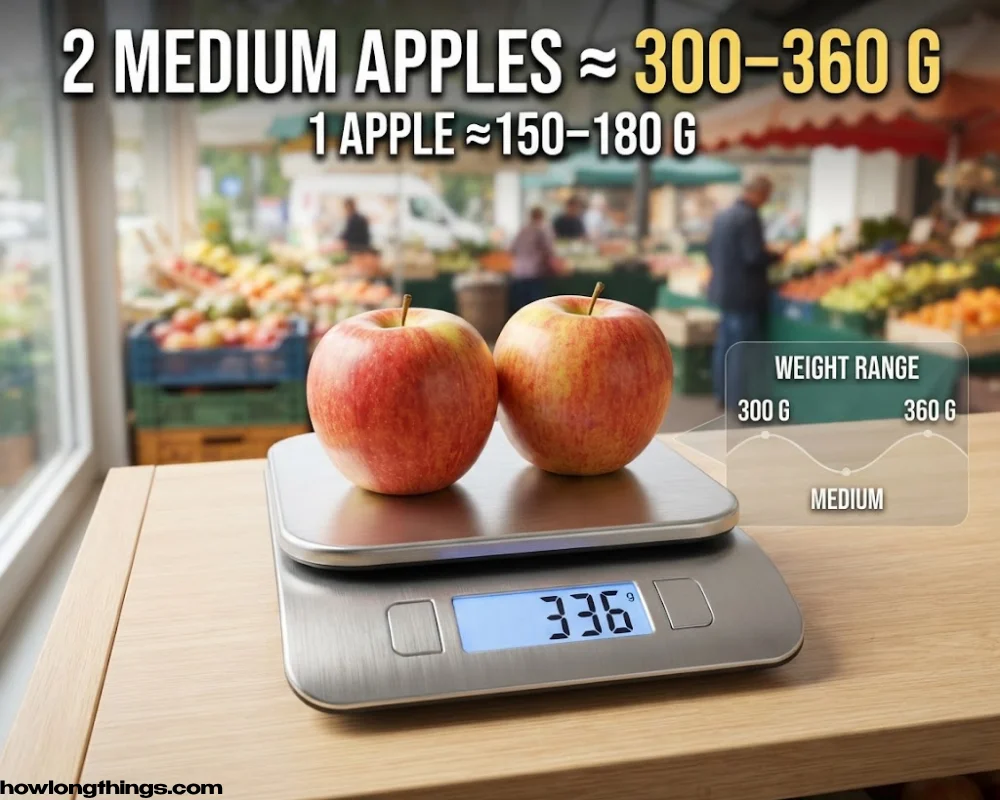
Two Medium Apples
A medium apple typically weighs between 150 and 180 grams, according to standard USDA produce data. Two apples together land in the 300 to 360-gram range, making a quick trip to the fruit bowl one of the easiest ways to picture this weight.
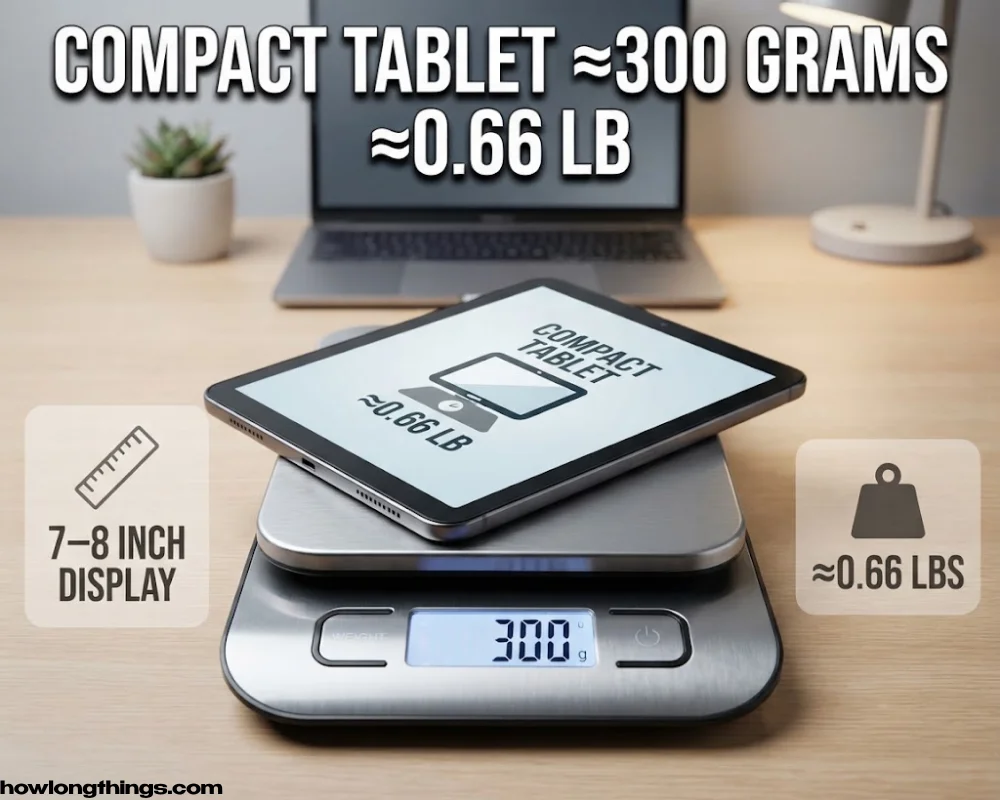
A Compact Tablet
Smaller tablets in the 7 to 8-inch category, including compact models like the iPad Mini, often weigh close to 300 grams. Larger 10-inch tablets run heavier, so it’s specifically the compact, one-handed models that land near this benchmark.
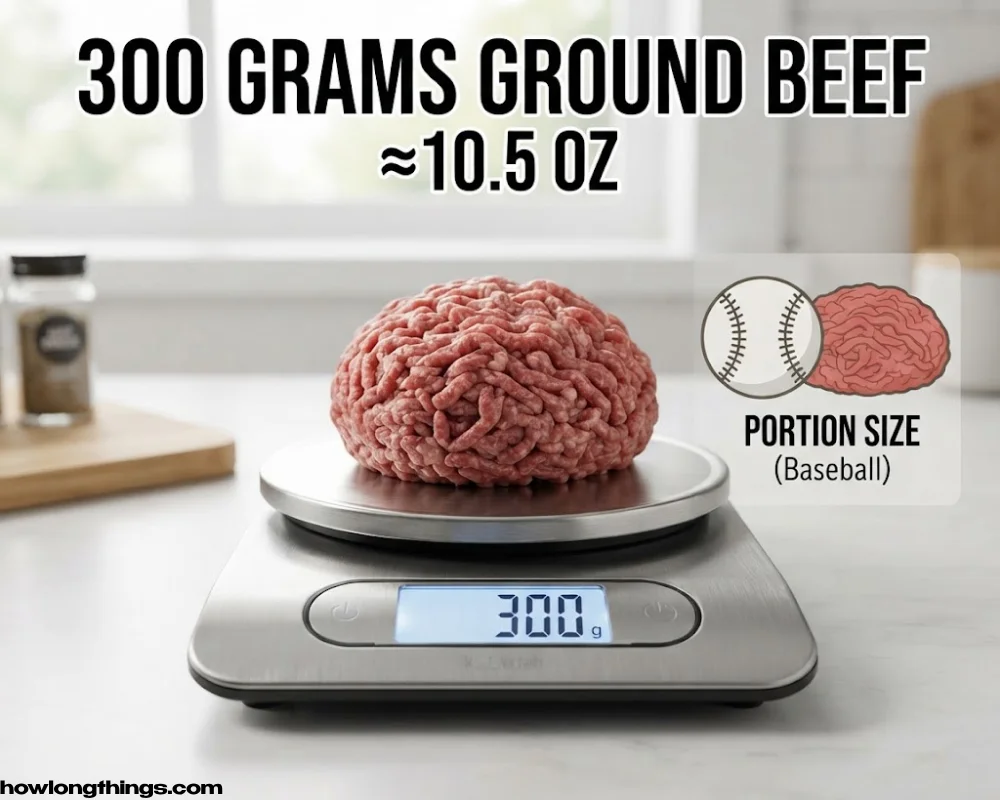
300 Grams of Ground Beef
A raw portion of ground beef weighed out to exactly 300 grams equals about 10.5 ounces, enough for two to three burger patties. Formed into a rough ball, it’s roughly the size of a large baseball, and it delivers around 60 to 70 grams of protein depending on fat content.
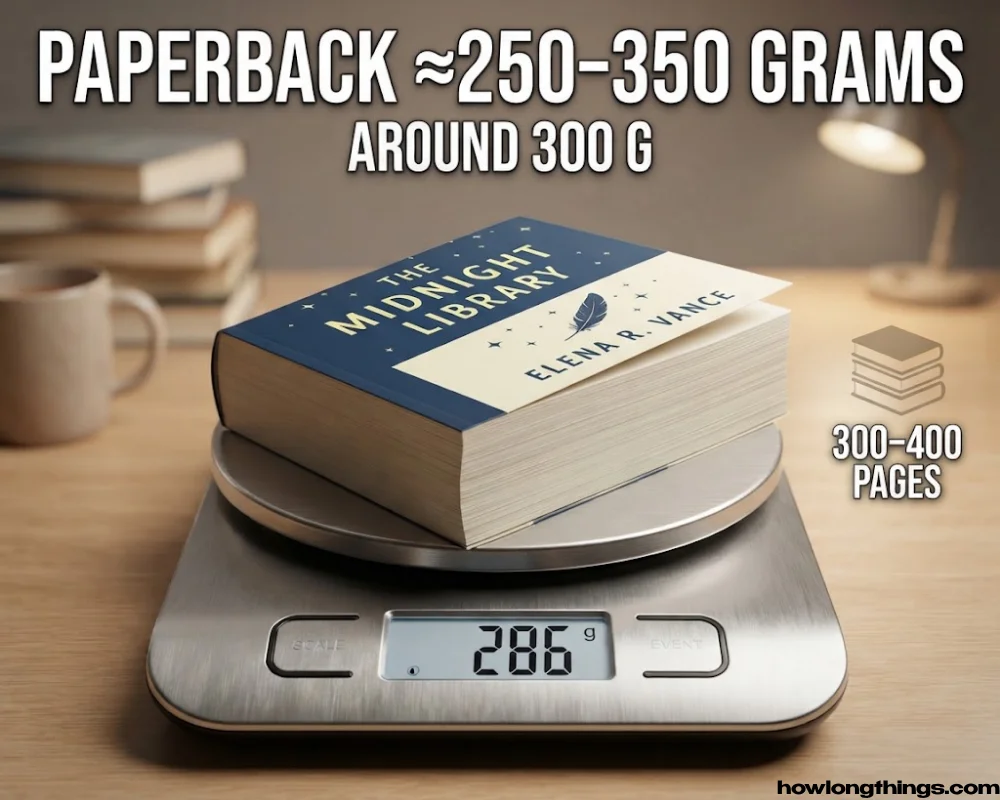
A Paperback Novel
A standard mass-market paperback with 300 to 400 pages usually weighs between 250 and 350 grams. Paper stock, binding glue, and the printed cover all factor into the final number, and most popular fiction titles land squarely in this range.
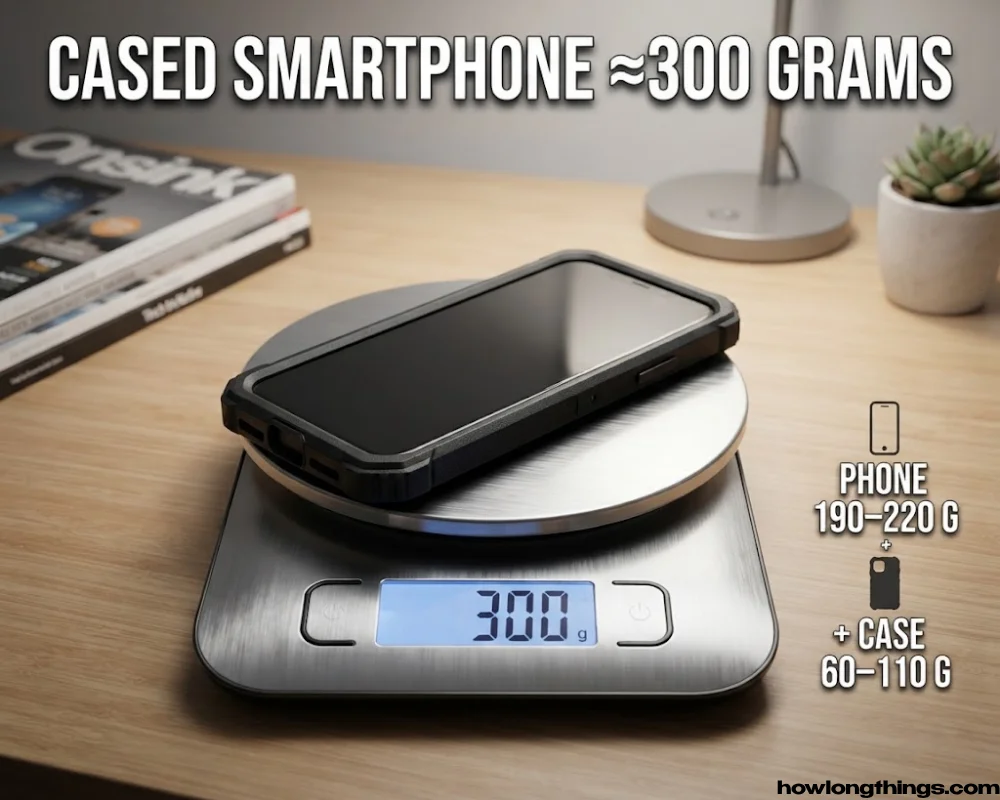
A Cased Smartphone
Many modern flagship phones weigh close to 190 to 220 grams bare. Slide on a protective case adding 60 to 110 grams, and the combined weight reaches right around 300 grams, making your everyday cased phone a surprisingly accurate reference.
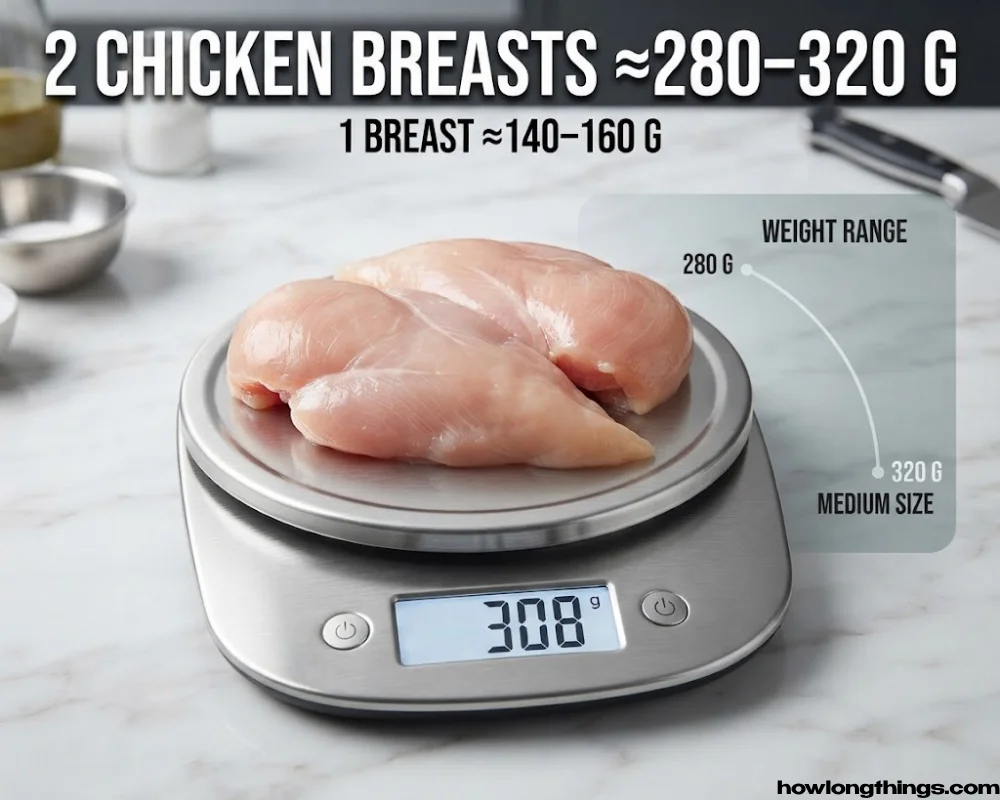
Two Chicken Breasts
A single boneless, skinless chicken breast averages 140 to 160 grams per USDA poultry data. Two breasts together land at roughly 280 to 320 grams, which makes this one of the most practical kitchen comparisons for anyone cooking dinner tonight.
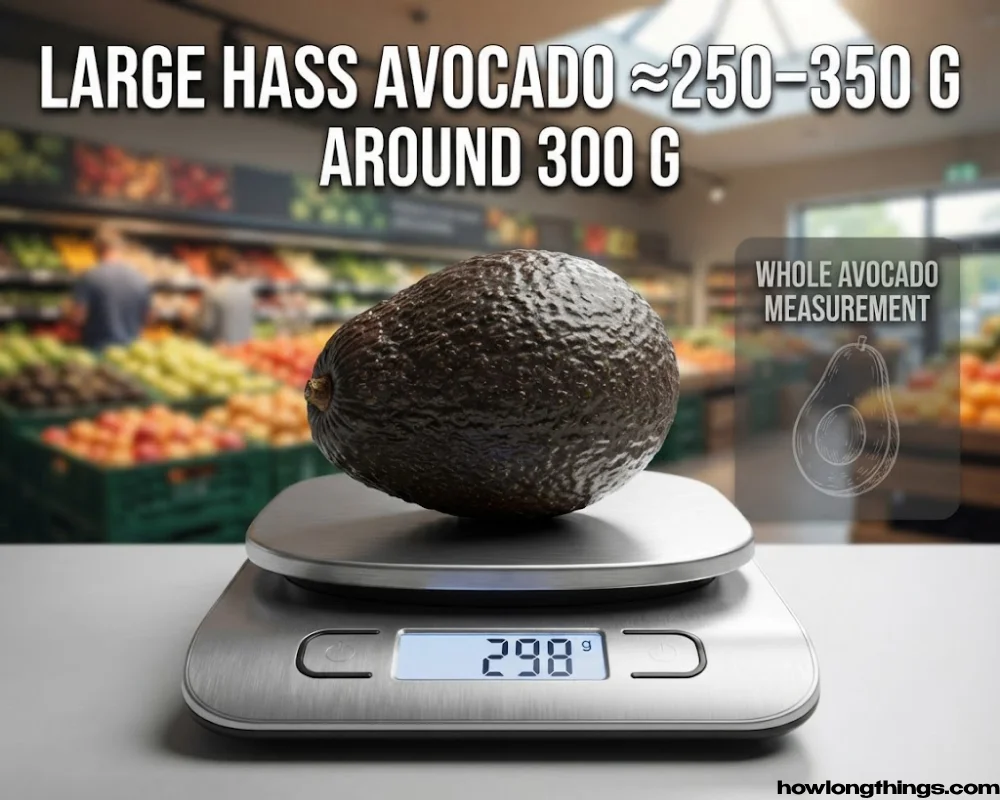
A Large Hass Avocado
A large Hass avocado, skin and pit included, typically weighs between 250 and 350 grams. Premium, larger specimens found at most grocery stores tend to land right near the 300-gram mark.
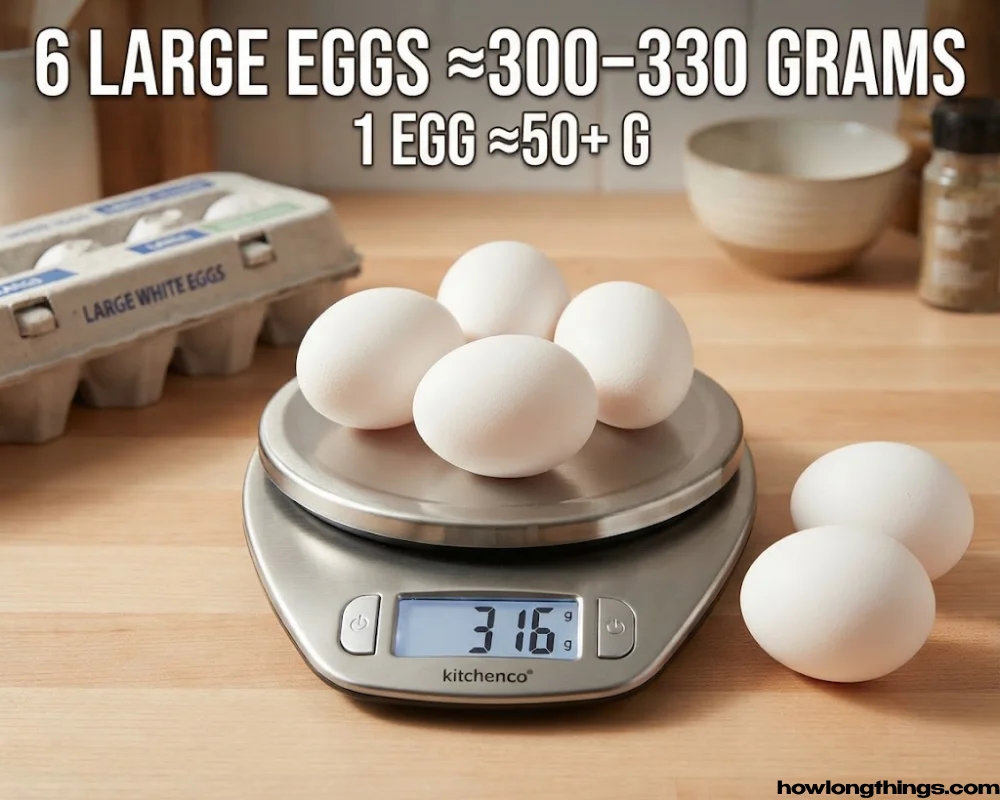
Six Large Eggs
A single large egg weighs a minimum of 50 grams, according to USDA egg-grading standards. Six eggs together total roughly 300 to 330 grams, meaning a standard half-dozen carton sits almost exactly at this benchmark.
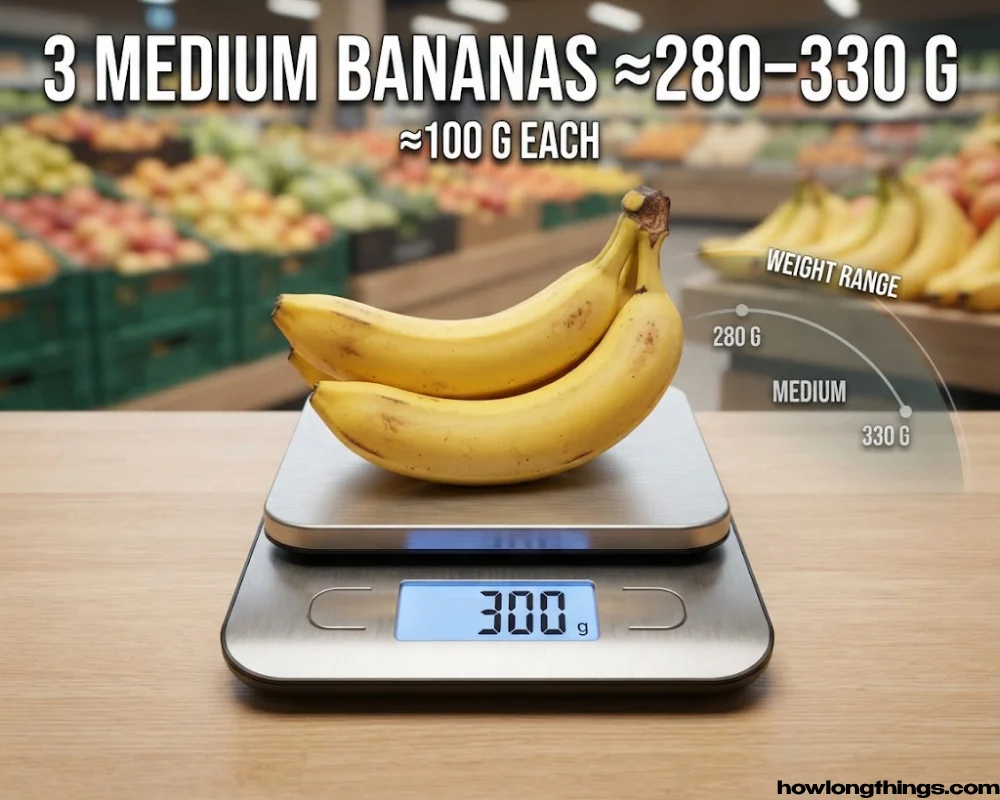
Three Medium Bananas
A medium banana with its peel weighs about 100 grams on average. Three bananas together land in the 280 to 330-gram range, making a quick bunch from the produce aisle a dependable natural reference.
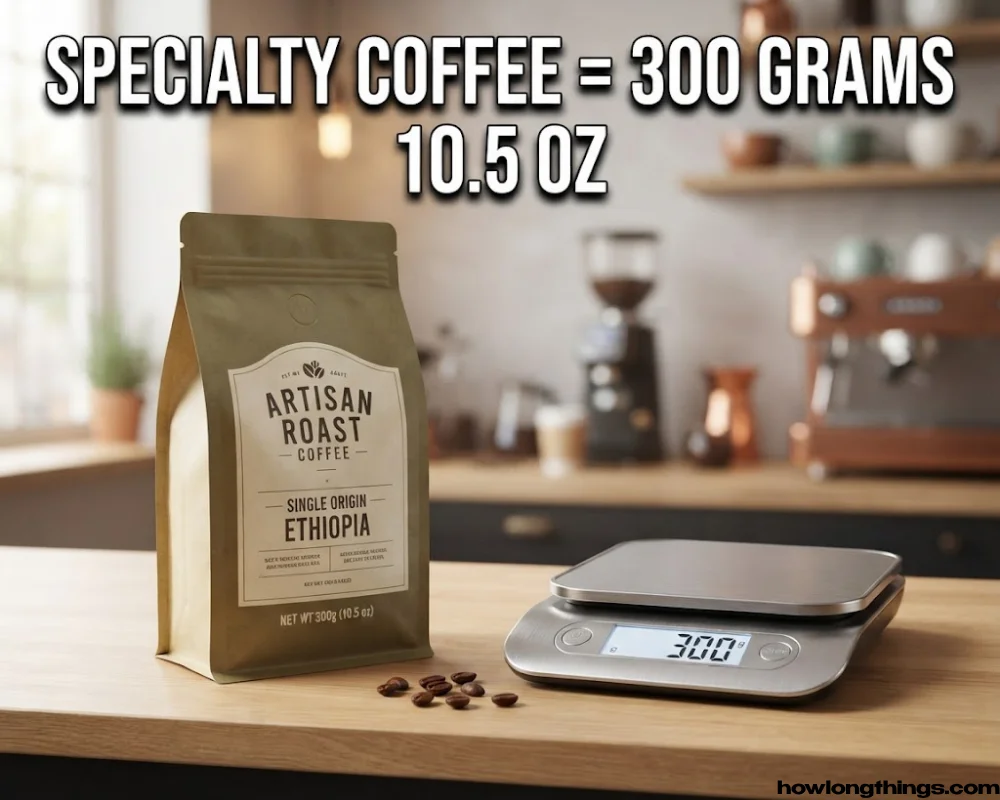
A Bag of Specialty Coffee
Specialty whole-bean and ground coffee is almost universally sold in 300-gram (10.5-ounce) bags at cafés and roasters across the country. This makes an unopened bag of coffee one of the most exact, no-guessing references on this entire list.
13 AA Batteries
A single AA alkaline battery weighs about 23 grams, according to Energizer’s own product datasheet. Line up 13 of them, and you land at roughly 299 grams, an oddly precise match that makes a junk drawer full of batteries surprisingly useful for estimation.
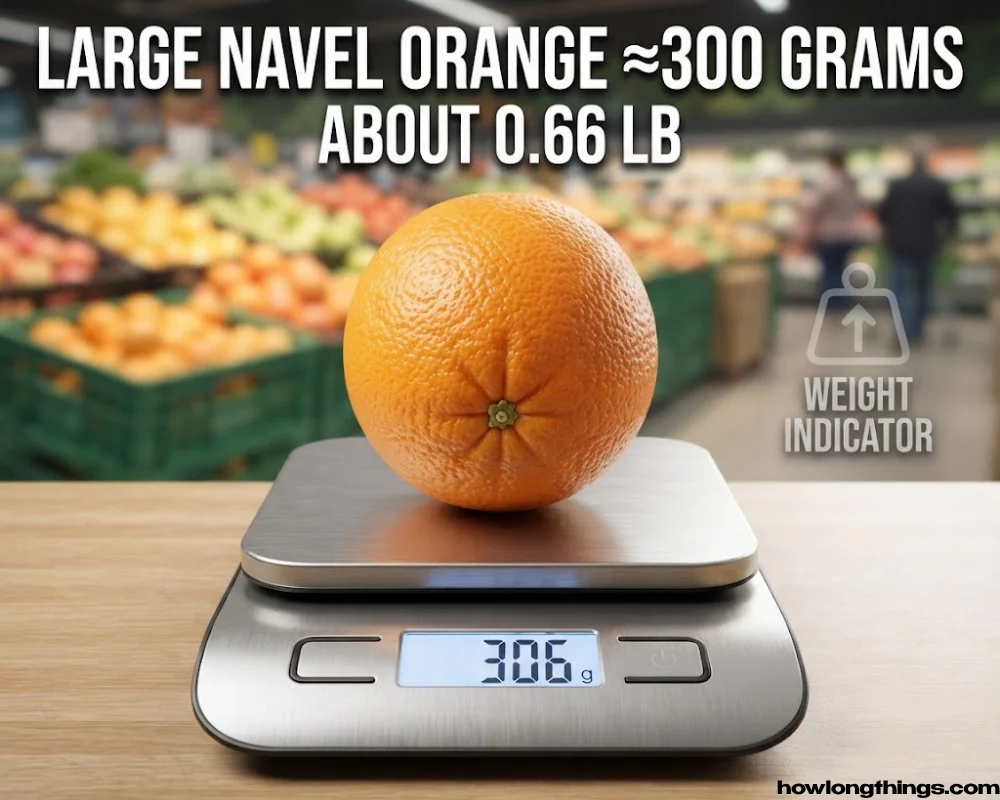
A Large Navel Orange
A large navel orange typically weighs close to 300 grams on its own, heavier than most people expect before they pick one up. It’s one of the few single-object entries on this list that doesn’t require pairing two items together to hit the target weight.
Picture a can of soup sitting on your counter, or two chicken breasts laid out on a cutting board. Both give you an accurate, no-scale mental image of what 300 grams looks like in real, physical terms.
Six eggs nestled in their carton is another dependable visual, since that half-dozen weight lands almost exactly on target. If you want a single object instead of a pair, a large navel orange or an unopened bag of specialty coffee gets you there without any combining or estimating.
No scale on hand? Try these low-tech methods instead:
Water method: Fill a liquid measuring cup to just past the 1-cup line. Water weighs 1 gram per milliliter, so roughly 300 milliliters gets you extremely close.
Egg-carton method: Six large eggs in their shells land almost exactly at 300 grams, making an unopened carton one of the fastest household checks available.
Battery method: Count out 13 AA alkaline batteries from a junk drawer. At 23 grams each, this gets you within a gram of the target.
300 Grams vs Other Common Weights
Context makes any single number easier to hold onto. Here’s where 300 grams sits on the broader scale:
100 grams — about the weight of a bar of soap or one medium apple
200 grams — close to a large apple or an empty ceramic coffee mug
300 grams — two chicken breasts, a soup can, six eggs
500 grams — roughly double, a loaf of bread or a full water bottle
1 kilogram — more than triple, about 2.2 pounds
There’s a practical shipping angle worth knowing too. At 10.58 ounces, a 300-gram package sits comfortably inside the sub-16-ounce pricing tier used by USPS Ground Advantage, which prices packages by the ounce until they cross the 1-pound line. That makes 300 grams a genuinely affordable weight class for anyone shipping small goods domestically.
FAQs About 300 Grams
How much does 300 grams look like?
It looks like a standard can of condensed soup, two chicken breasts side by side, or six large eggs in their carton. All three give an accurate visual for what 300 grams looks like without needing a scale.
How much do 300 grams weigh?
300 grams weighs 0.3 kilograms, about 0.661 pounds, or roughly 10.58 ounces. It’s noticeably lighter than a pound but heavier than most people expect when they first pick up the equivalent object.
How many 300g are in 1 kg?
There are 3.33 portions of 300 grams in 1 kilogram. Since a kilogram equals 1,000 grams, dividing that by 300 gives you just over three full portions.
How much sugar is 300g?
300 grams of granulated sugar equals about 1.5 cups. Sugar is denser than flour, so it takes fewer cups by volume to reach the same weight.
Is 300g equal to 1 cup?
Generally, no. Most common ingredients need 1.25 to 1.5 cups to reach 300 grams, since density varies significantly between dry goods like flour, sugar, and rice.
What do 300 grams of sugar look like?
Visually, 300 grams of sugar fills a standard 1-cup measuring cup one and a half times over. It’s enough to fully coat the bottom of a mixing bowl in a loose, sandy layer roughly an inch deep.
Conclusion
Three hundred grams shows up constantly, in your pantry, your fruit bowl, even your junk drawer full of batteries. Once you’ve connected that number to a soup can or a carton of eggs, you’ll be able to picture 300 grams anywhere, no scale required.
Elizabeth Queen is a Owner and consumer research writer at HowLongThings.com, specializing in product lifespan, durability, and everyday household research. She’s passionate about helping readers make smarter, longer-lasting buying decisions.