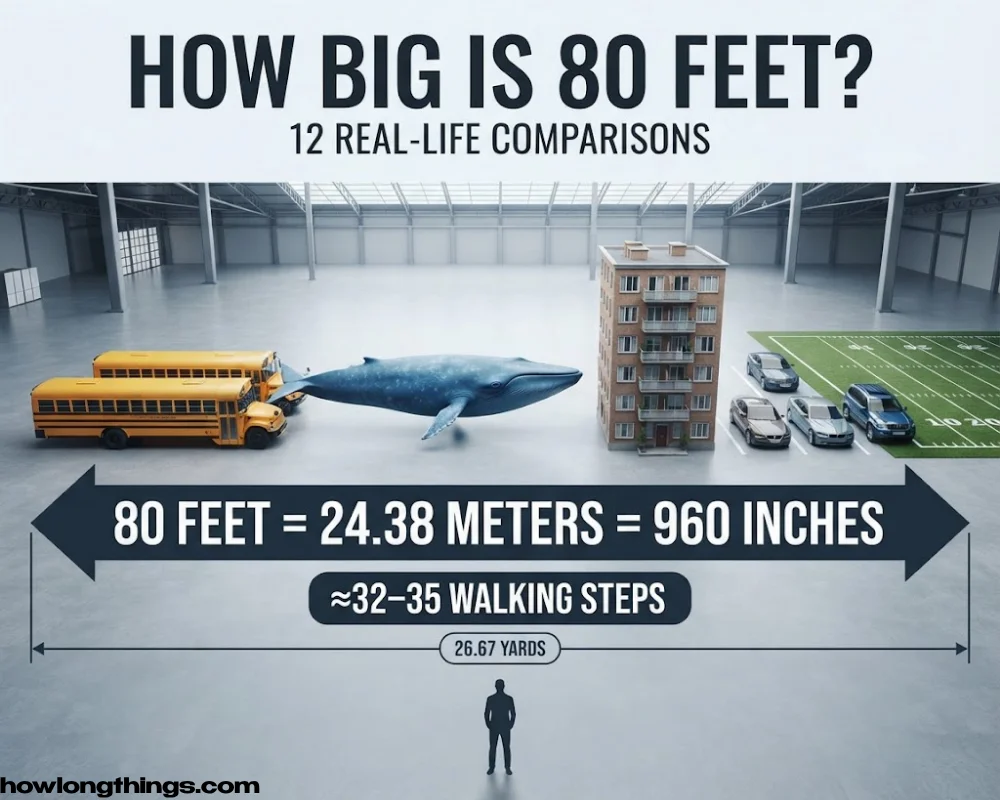
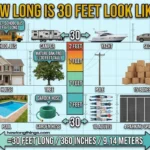
Eighty feet is longer than most people guess. It equals 24.38 meters, 26.67 yards, or 960 inches. That’s about one-third of a football field, or roughly 32 to 35 average walking steps.
Numbers alone don’t help much, though. This guide breaks down how long 80 feet really is using things you already know — buses, whales, buildings, and even your own body. By the end, you’ll be able to picture 80 feet instantly, no tape measure needed.
Table of Contents
How Long Is 80 Feet in Meters, Yards, Inches & Steps?
Before comparing 80 feet to real objects, it helps to see the raw numbers side by side.
Unit
Value
Meters
24.38 m
Yards
26.67 yd
Inches
960 in
Miles
0.015 mi
Average steps
32–35 steps
A foot equals exactly 0.3048 meters, based on the international foot standard adopted by the U.S. and other countries in 1959 (source: NIST). Multiply 80 by that figure and you land on 24.384 meters — the exact conversion, not a rounded guess.
How many feet is 80 in long?
This one trips people up because “in” here means inches, not a shorthand for “feet.” Eighty inches equals 6.67 feet, or about the height of a tall doorway. It’s a completely different scale than 80 feet, so don’t confuse the two when searching for conversions.
What is 80 in equal to in feet?
Same answer from the other direction: 80 inches = 6.67 feet. Divide inches by 12 to get feet, since there are 12 inches in every foot. This is a common long-tail keyword confusion, so it’s worth clarifying twice.
How many steps is 80 feet?
The average adult stride measures about 2.2 to 2.5 feet per step. Divide 80 by that range and you get roughly 32 to 36 steps to cover the distance. Your own step count will vary slightly based on height and walking speed, but this range holds true for most adults in the U.S.
12 Real-Life Examples That Show How Big 80 Feet Really Is
These everyday and larger-than-life objects give you an instant mental picture of what 80 feet looks like. Each one is close to the real 80-foot mark, based on official specs or documented measurements.
Blue Whale
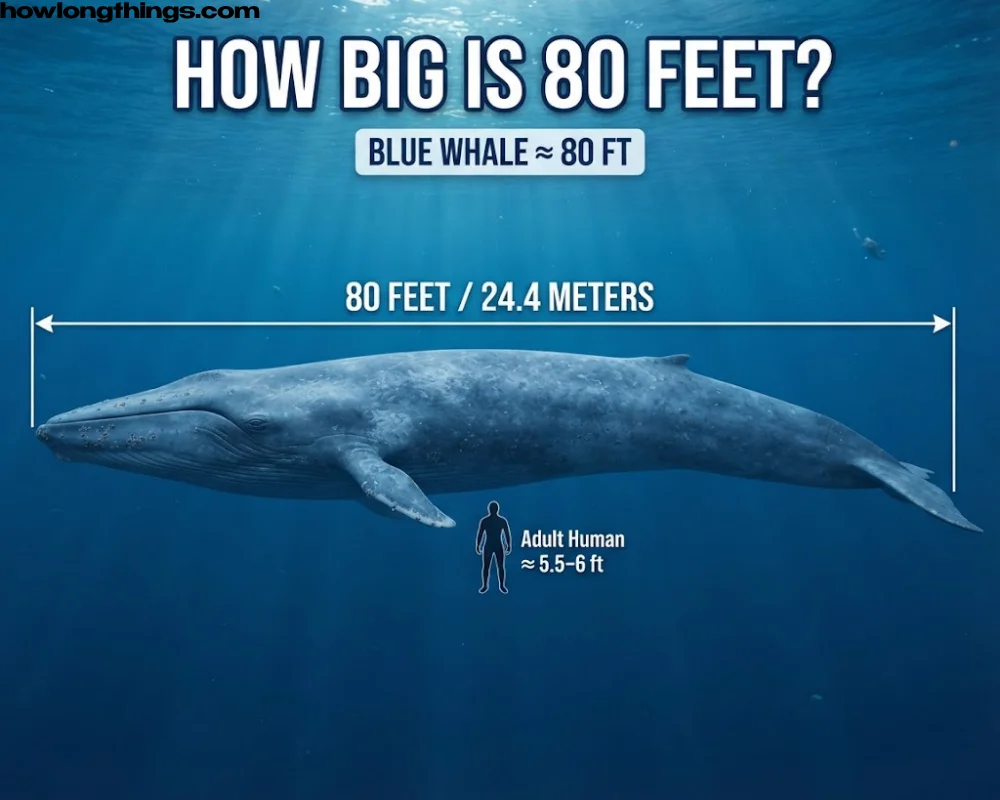
The blue whale is the largest animal known to have ever lived, and adults commonly measure between 75 and 100 feet long (source: NOAA Fisheries). Many individuals land right around 80 feet, making this ocean giant one of nature’s best references for the measurement.
Seven to Eight-Story Building
Standard building floors run about 10 to 12 feet tall, including structural framing. That puts a seven to eight-story building at roughly 80 feet from ground to roof — a familiar sight in almost any U.S. city skyline.
Two School Buses End-to-End
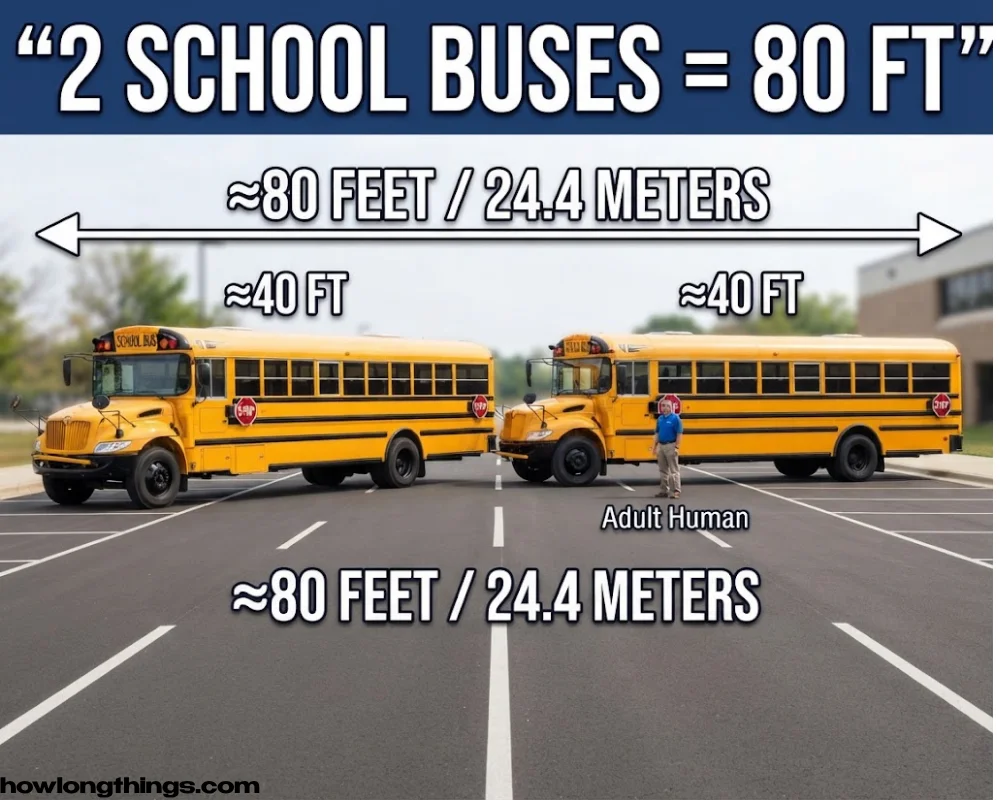
A typical school bus measures 35 to 40 feet long. Park two of them nose-to-tail with a small gap, and you’ve got a real-world 80-foot ruler that most Americans see daily.
Megalodon
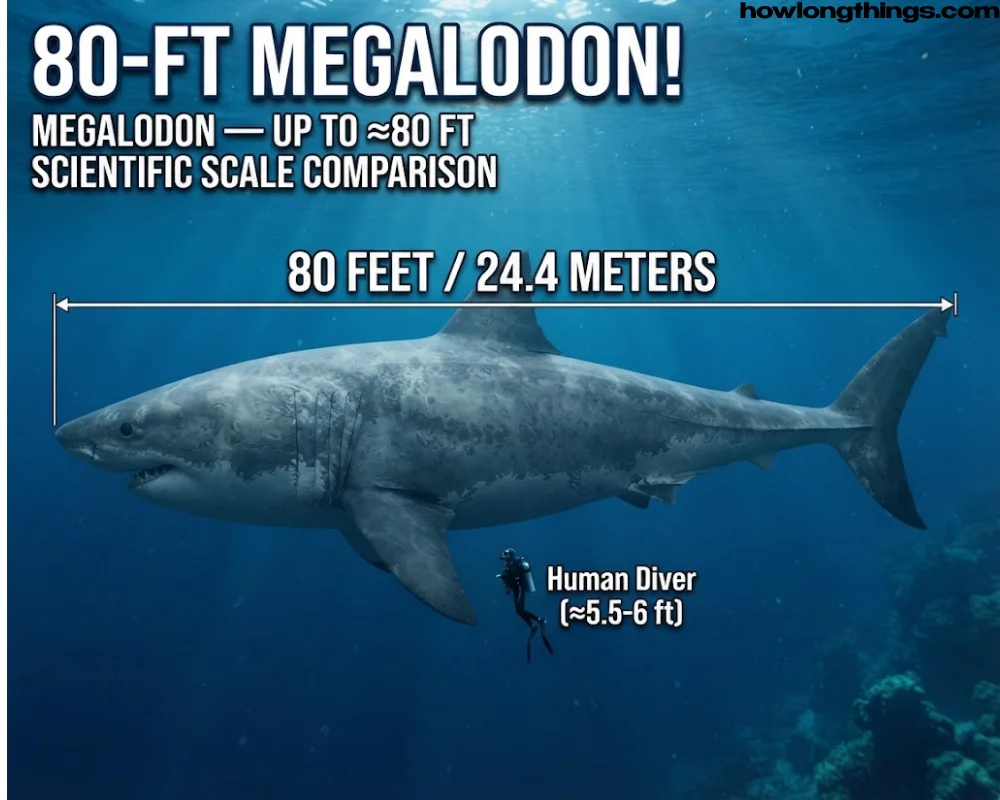
The extinct Megalodon shark is estimated to have reached 50 to 80 feet in length, based on fossil tooth and vertebra analysis (source: Smithsonian Ocean). The largest specimens may have approached the full 80-foot mark, making it one of the biggest predators ever to swim the ocean.
One-Third of a Football Field
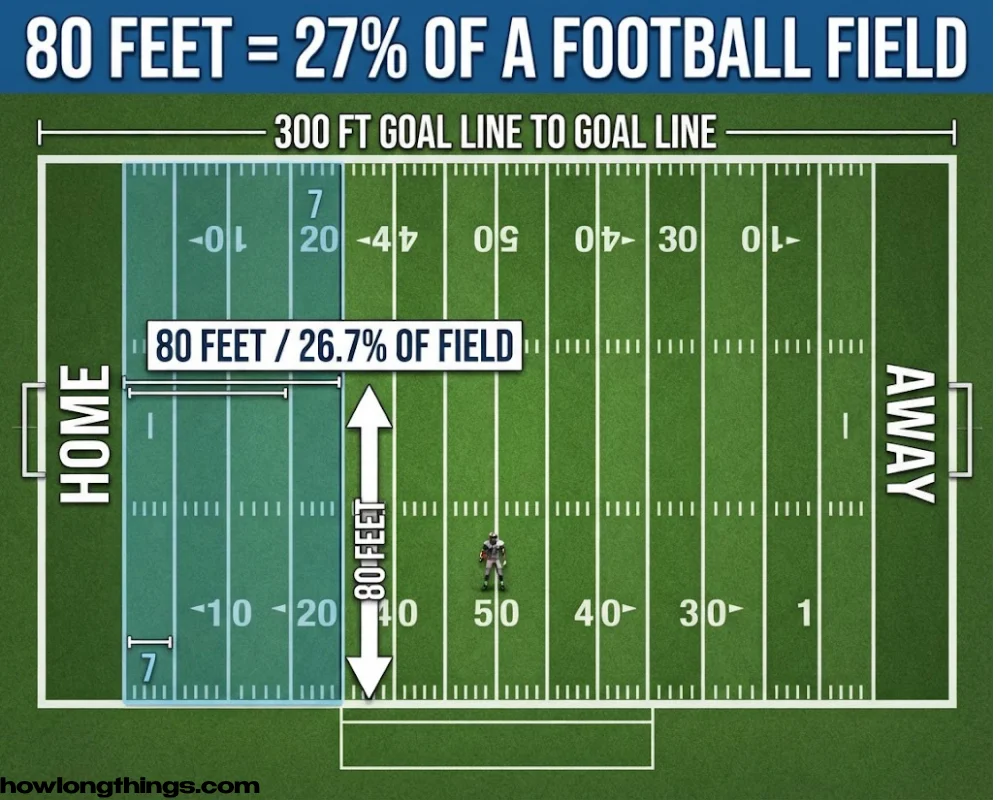
An American football field measures 300 feet between goal lines. Eighty feet covers close to 27% of that distance — picture standing on the goal line and walking almost to the 27-yard line.
Large Luxury Yacht
Recreational yachts in the 70- to 90-foot range are common in the luxury boating market, and many sit exactly at 80 feet. That length gives enough room for multiple cabins, a flybridge, and crew quarters while still fitting into most standard marina slips.
Semi-Truck With Trailer
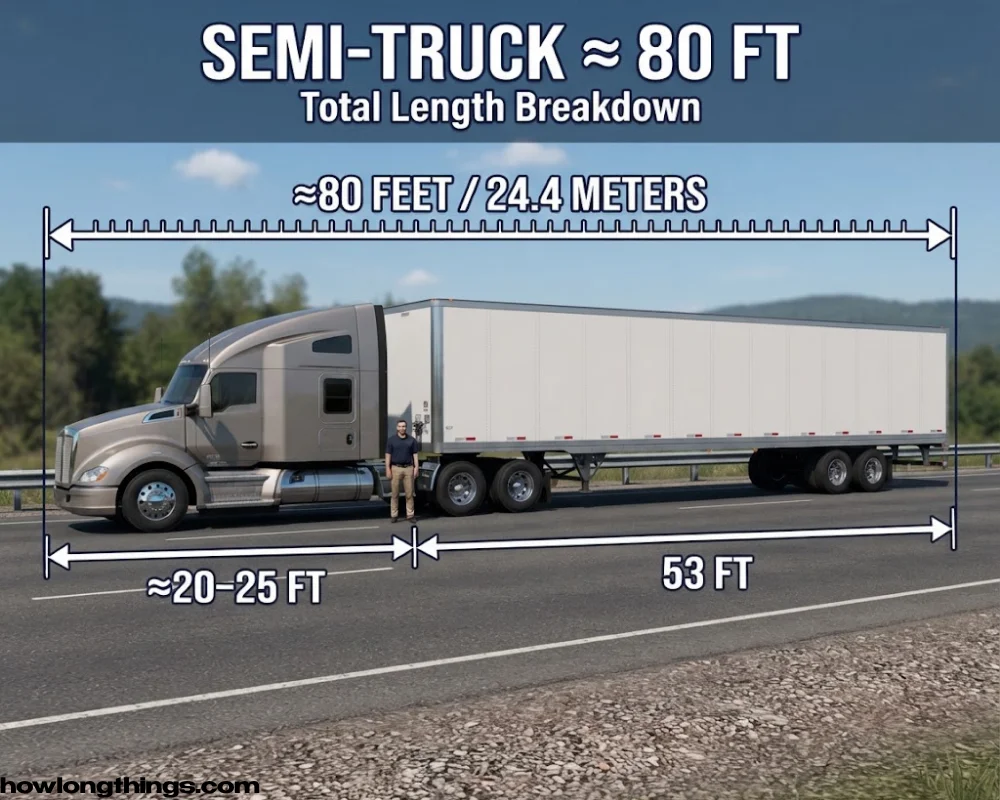
A semi-truck tractor runs 20 to 25 feet, and a standard trailer adds another 53 feet under U.S. Department of Transportation length rules (source: FHWA). Combined, the rig approaches 80 feet — a length truck drivers navigate through tight turns every day.
Bowling Lane
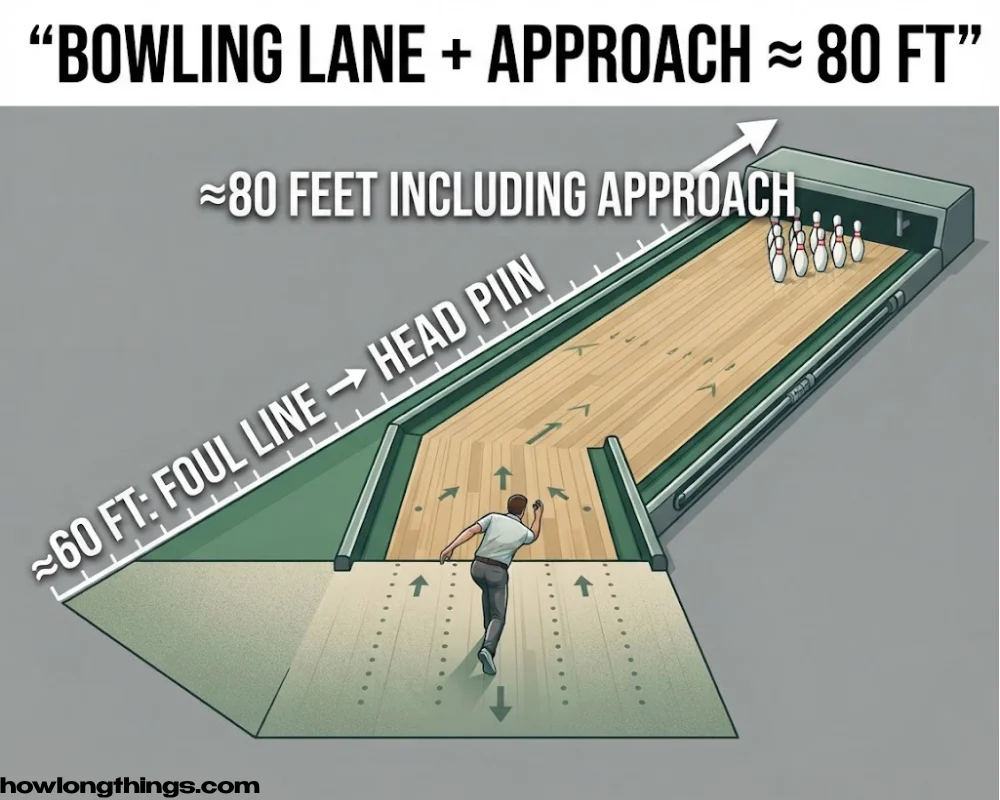
A regulation bowling lane measures 60 feet from the foul line to the head pin, per United States Bowling Congress specs. Add the approach area where players take their steps, and the total stretches to roughly 80 feet.
Mature Oak or Redwood Tree
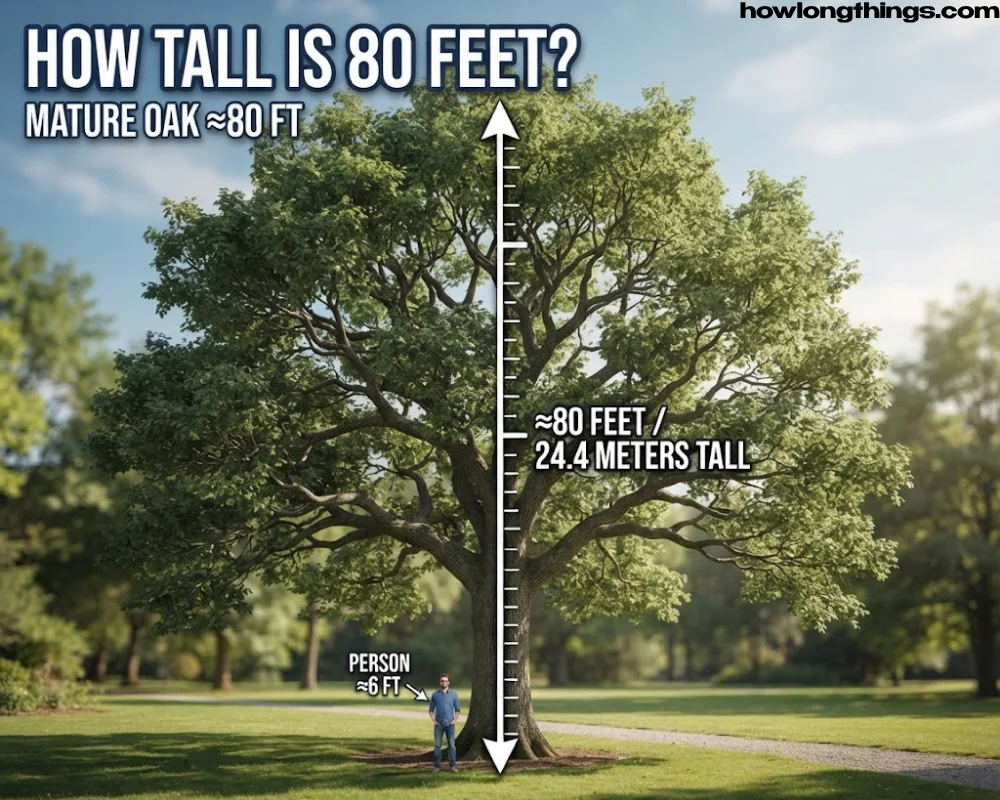
Healthy oak trees can reach 60 to 100 feet tall at maturity, with many landing close to 80 feet. Young redwoods often sit in this same range before they eventually grow much taller.
Tennis Court Plus Run-Off
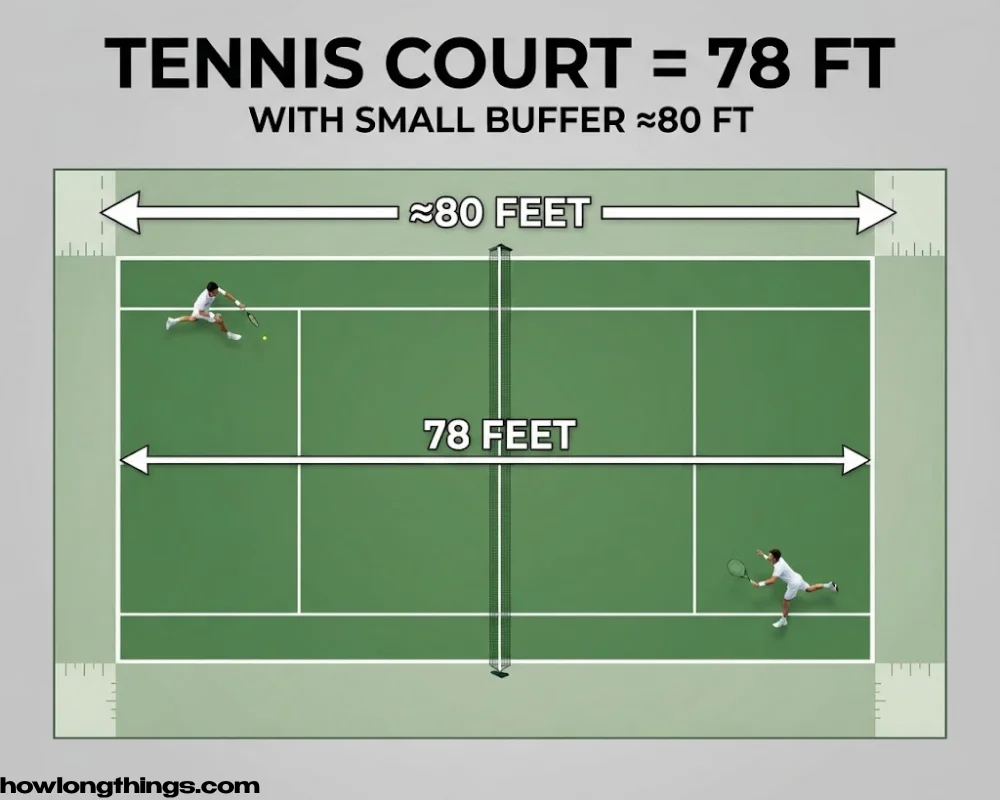
A regulation tennis court measures 78 feet long. Add even a small buffer of run-off space behind each baseline, and the total playing area reaches almost exactly 80 feet.
Baseball Base Paths, Doubled
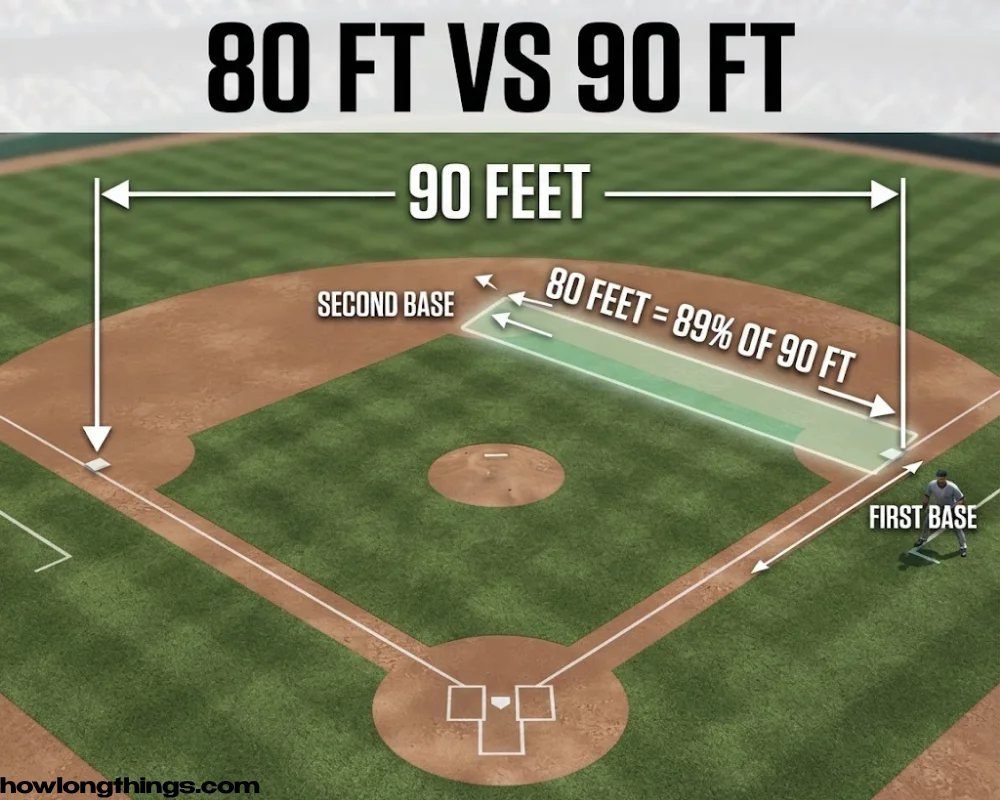
The distance between bases on a Major League diamond is 90 feet. Eighty feet is just slightly shorter — about 90% of that base-path distance — giving baseball fans an easy mental anchor.
Cricket Pitch Plus Run-Up
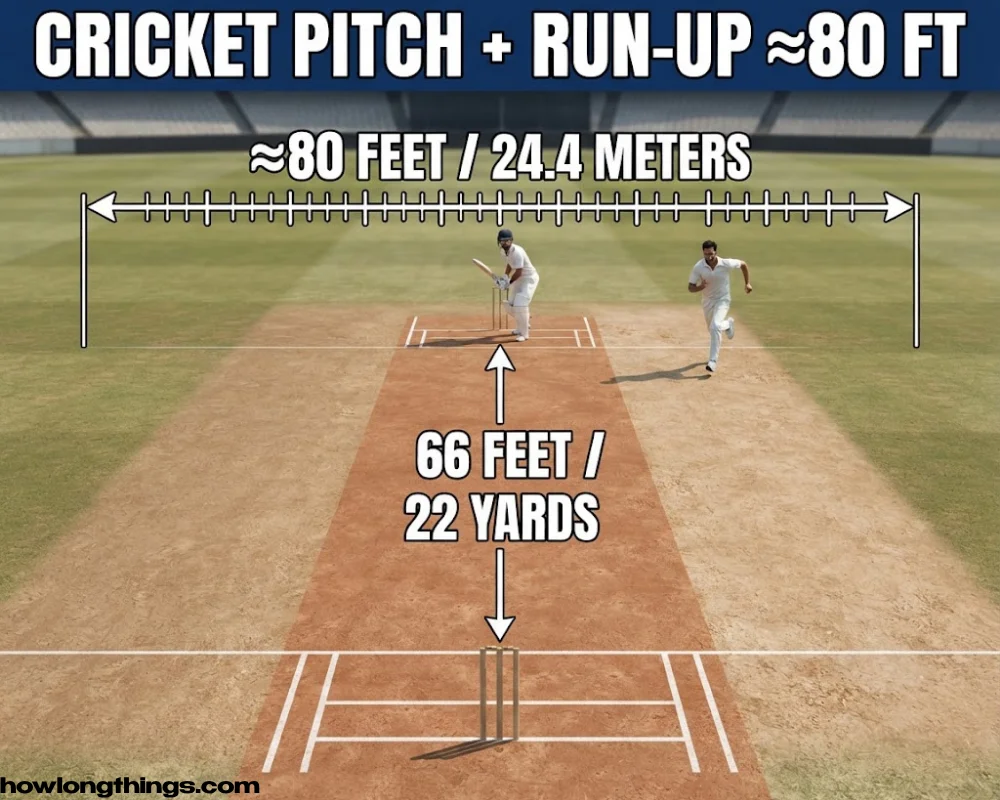
A cricket pitch runs 66 feet between bowling creases. Factor in the bowler’s run-up approach, and the full working distance on the field commonly stretches to around 80 feet.
The average American adult stands around 5 feet 6 inches to 5 feet 9 inches tall, depending on gender (source: CDC). Lay about 13 to 14 adults head-to-toe in a straight line, and you’d stretch the full 80 feet.
Another way to picture it: the average adult arm span roughly equals height. So if you stood a line of people with arms stretched out, fingertip to fingertip, it would take around 13 people to cover the same distance. This human-scale comparison makes 80 feet feel far more real than a plain number ever could.
What Does 80 Feet Look Like Without a Measuring Tape?
You don’t need a tape measure to estimate 80 feet accurately. A standard parking space and car length average around 16 feet, so five parked cars in a row roughly equal 80 feet.
Standard interior doorways measure about 6.67 to 7 feet tall. Stack roughly 11 to 12 doorways on top of each other, and you’ve reached the same distance. Or simply time your walk — at a normal pace, covering 80 feet takes about 15 to 20 seconds. Any of these quick mental tricks gives you a fast, reliable estimate on the spot.
FAQs About 80 Feet
How big is 80 feet visually?
Eighty feet looks like two school buses parked end-to-end, roughly five cars in a row, or about one-third of a football field. Visually, it’s also close to the height of a seven-story building standing on its end.
How does 80 feet compare to a human?
It takes about 13 to 14 average-height adults lying head-to-toe to stretch across 80 feet. That’s also roughly 13 people standing with arms fully outstretched, fingertip to fingertip.
How many feet is 80 in long?
Eighty inches equals 6.67 feet. This is a much shorter distance than 80 feet — about the height of a tall doorway rather than the length of a building.
How many steps is 80 feet?
Most adults cover 80 feet in about 32 to 35 steps, based on an average stride length of 2.2 to 2.5 feet per step.
What is 80 in equal to in feet?
80 inches equals 6.67 feet, calculated by dividing 80 by 12 — the number of inches in one foot.
How long is 80 feet exactly?
80 feet is exactly 24.384 meters (about 24.4 meters). It is also equal to 960 inches or 26⅔ yards.
Conclusion
Eighty feet sits at a scale most people underestimate until they see it lined up against real objects. Whether you picture two school buses, a blue whale, or a stack of thirteen adults, the measurement becomes far easier to visualize once it’s tied to something familiar. Next time you need to judge a distance fast, one of these comparisons will do the job better than any number alone.
Elizabeth Queen is a Owner and consumer research writer at HowLongThings.com, specializing in product lifespan, durability, and everyday household research. She’s passionate about helping readers make smarter, longer-lasting buying decisions.