Picture a distance in your head right now. Hard to nail down, right?
100 feet is one of those numbers that sounds simple but rarely matches what people actually picture. This guide gives you the exact measurement, 18 real objects that match it, and a few tricks to spot it anywhere.
Table of Contents
How Long Is 100 Feet? (Exact Measurement)
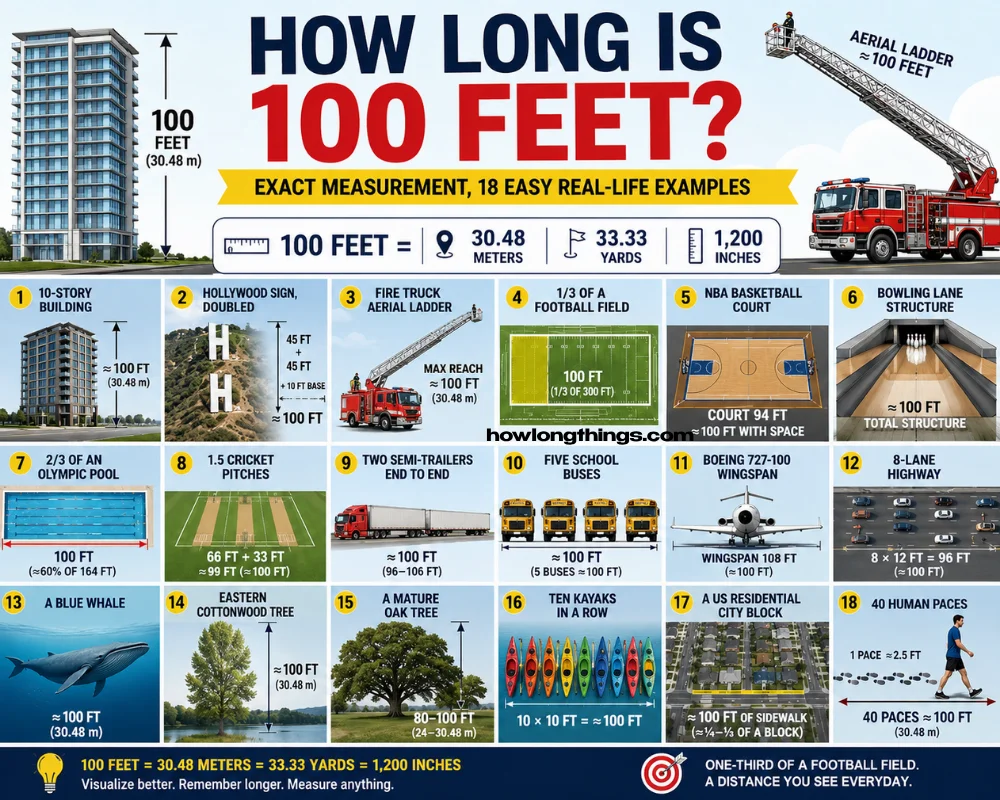
100 feet equals 30.48 meters, 33.33 yards, or 1,200 inches. In miles, it’s a tiny 0.019 — barely a blip, even though it feels massive standing next to it.
Here’s a quick feet-to-meters and feet-to-yards reference:
Feet
Meters
Yards
Inches
25 ft
7.62 m
8.33 yd
300 in
50 ft
15.24 m
16.67 yd
600 in
100 ft
30.48 m
33.33 yd
1,200 in
150 ft
45.72 m
50 yd
1,800 in
Your brain isn’t wired to picture abstract numbers like “100 feet.” It’s wired to recognize objects — cars, buildings, fields, animals. That’s exactly why comparisons work so much better than a raw figure ever could, and it’s the whole reason this guide exists.
What Does 100 Feet Look Like? 18 Real-Life Examples
Numbers alone don’t stick. Real objects do. Below are 18 things that measure close to 100 feet, grouped so you can picture the distance in different settings.
A 10-Story Building
Most commercial buildings use roughly 10 feet of vertical space per floor. That means a 10-story building stands almost exactly 100 feet tall, making it one of the clearest vertical references for this measurement.
The Hollywood Sign, Doubled
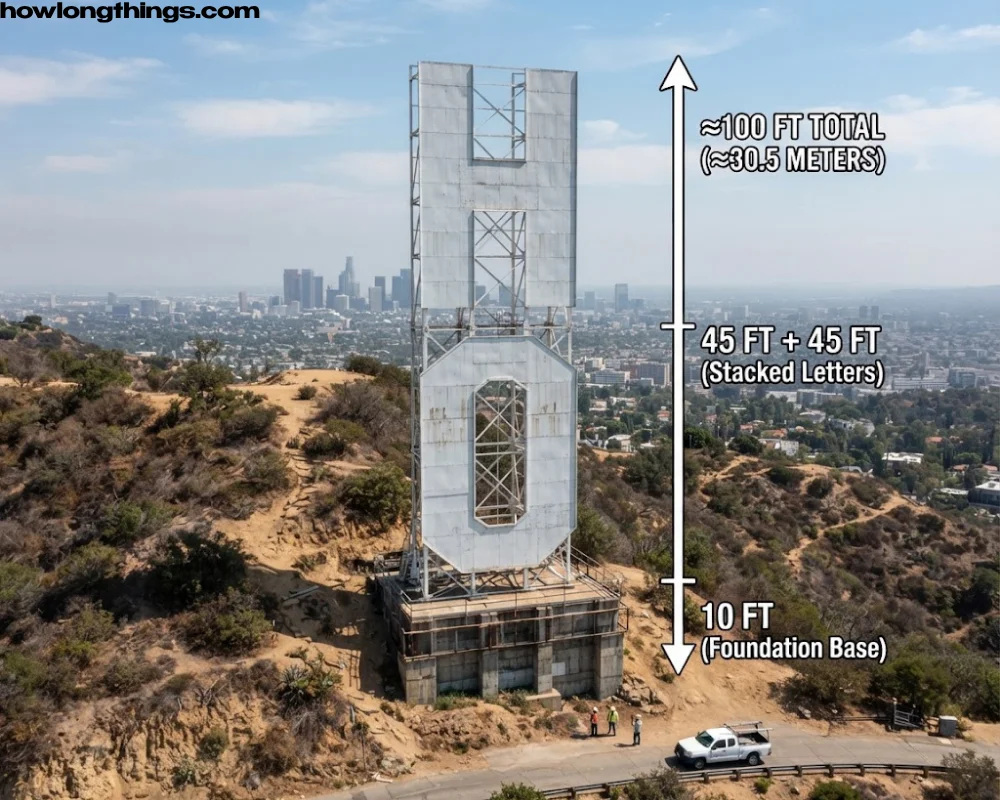
The famous letters on Mount Lee stand 45 feet tall. Stack two of them mentally, add a small base, and you’re right at the 100-foot mark.
A Fire Truck’s Aerial Ladder
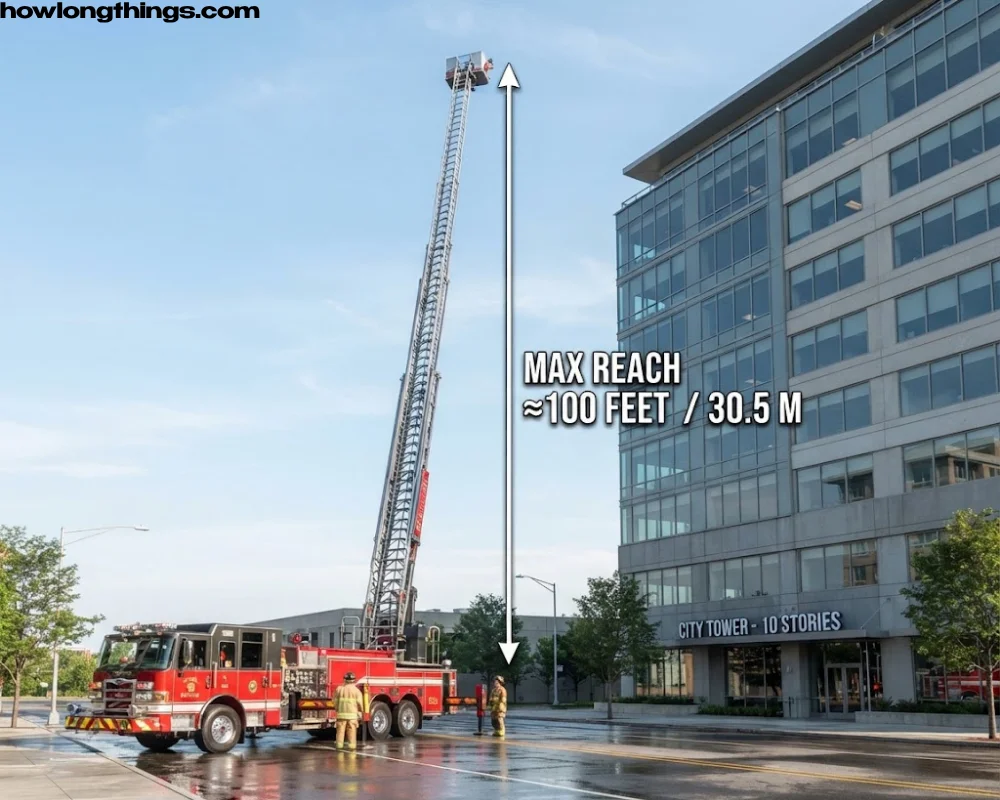
Most aerial fire trucks extend to a maximum reach of about 100 feet. That length is engineered specifically to reach the roof of a 10-story building during a rescue.
One-Third of a Football Field
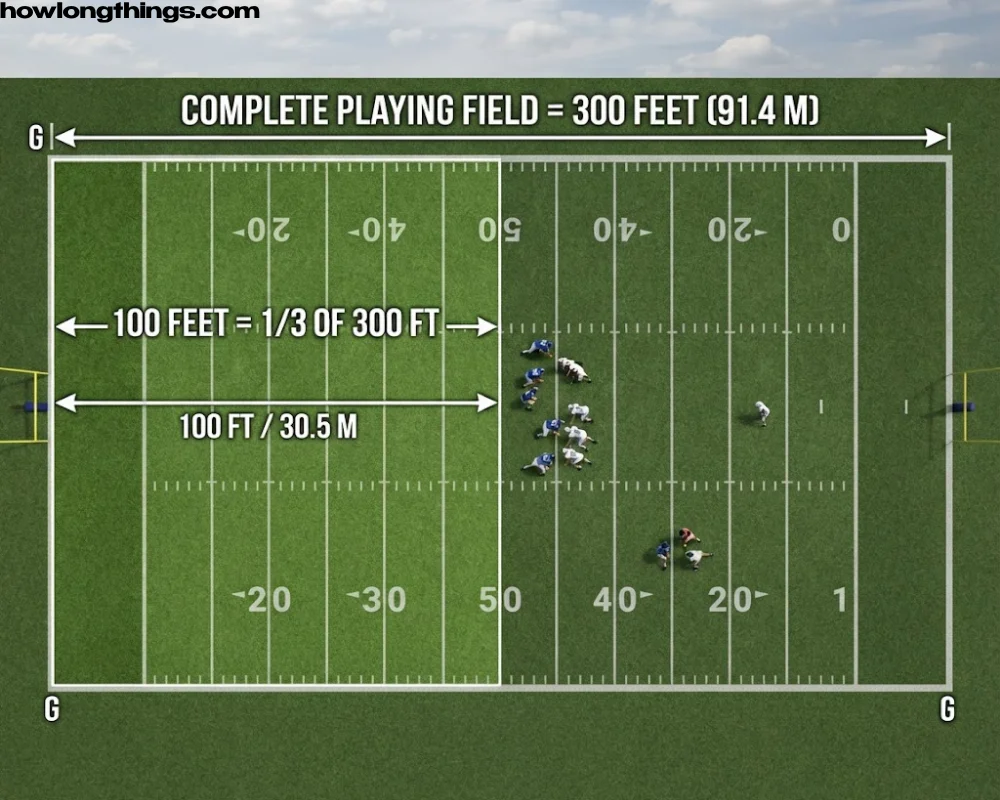
A regulation American football field measures 300 feet from goal line to goal line, not counting the end zones, according to the NFL rulebook. One-third of that distance lands you at exactly 100 feet.
An NBA Basketball Court
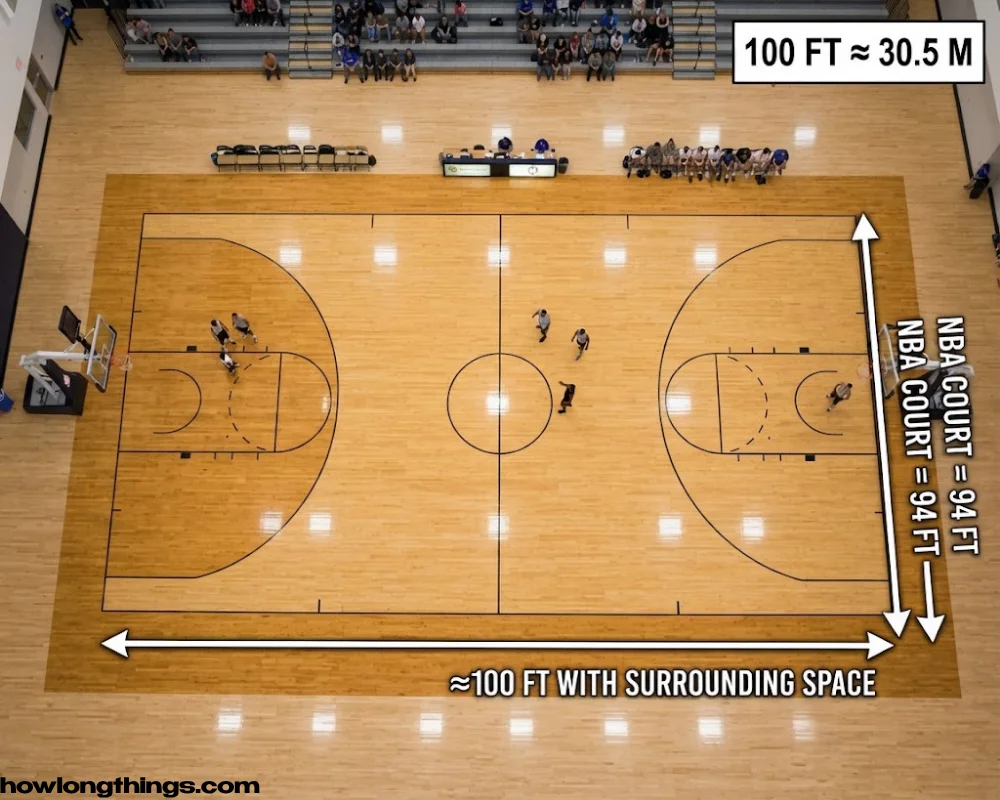
An official NBA court measures 94 feet in length, per the NBA’s official rulebook. Add the out-of-bounds safety space behind each baseline, and a full gymnasium wall-to-wall stretch usually lands close to 100 feet.
A Full Bowling Lane Structure
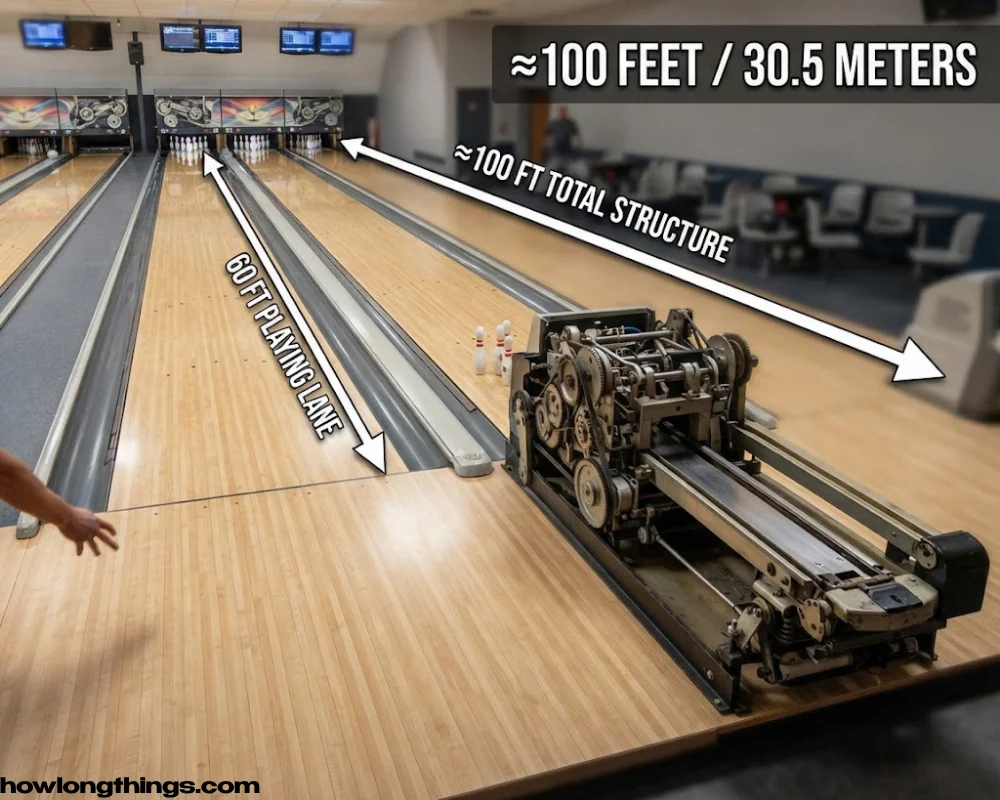
The playing surface of a bowling lane, from foul line to headpin, runs about 60 feet. Add the approach area where bowlers walk and the pit mechanism behind the pins, and the total structure stretches close to 100 feet.
Two-Thirds of an Olympic Pool
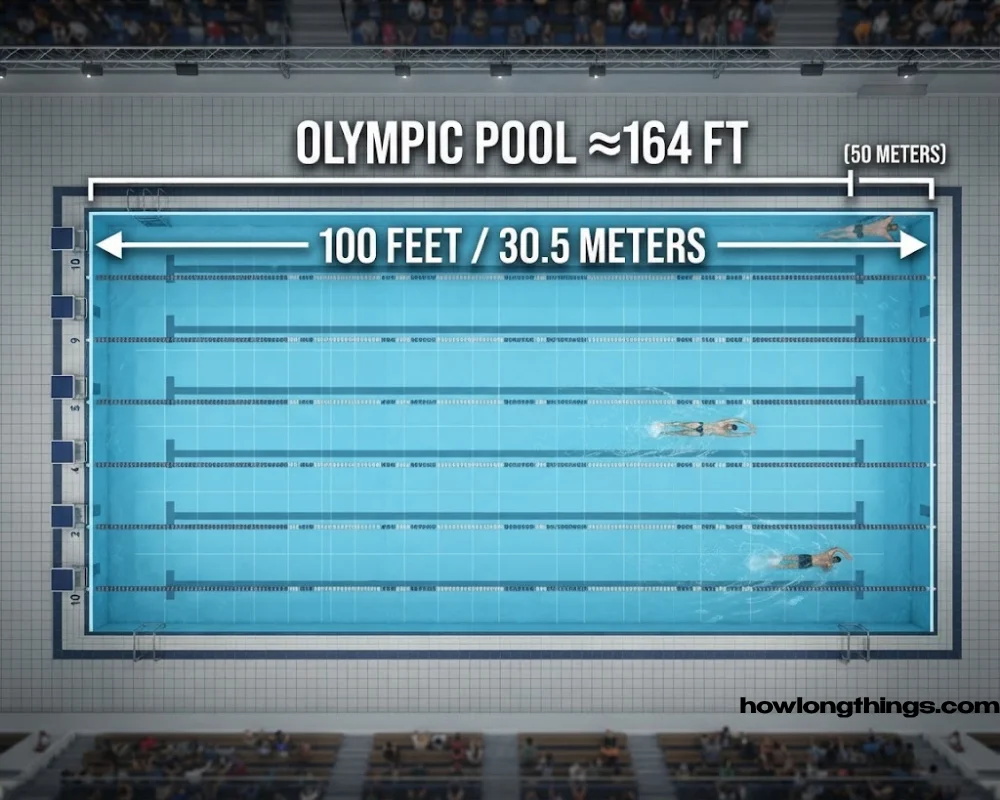
An Olympic swimming pool measures 50 meters, or about 164 feet, in length. Roughly 60% of that pool — just over half its length — equals 100 feet.
One and a Half Cricket Pitches
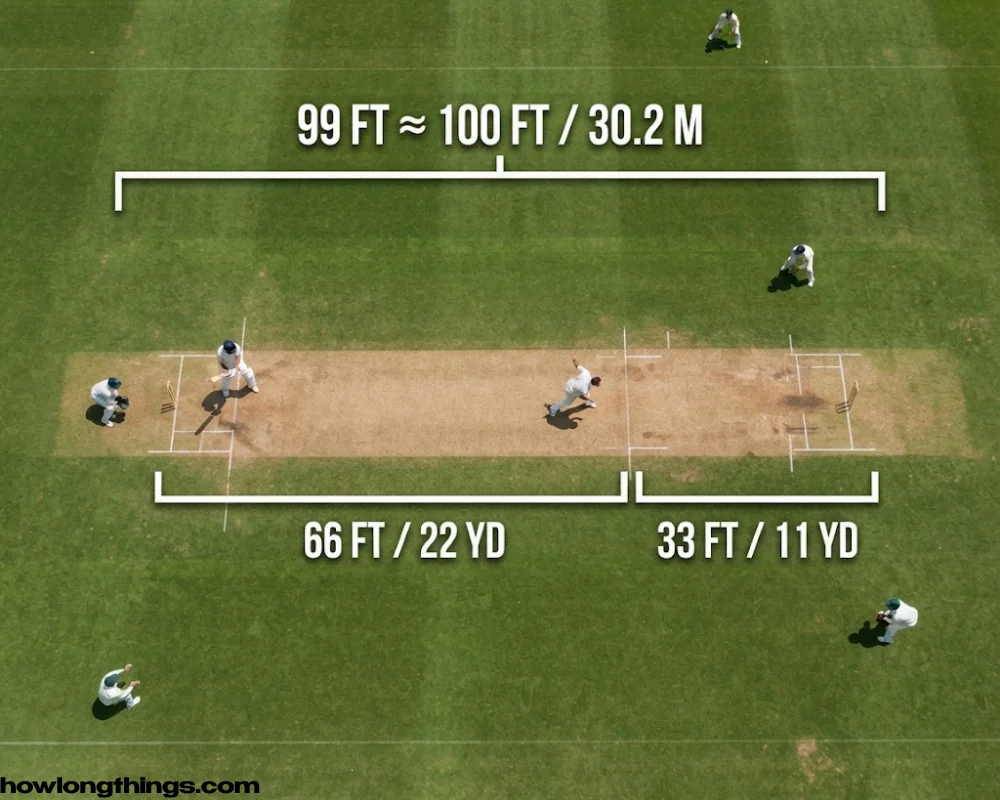
A cricket pitch measures exactly 22 yards, or 66 feet, under MCC Laws of Cricket. One and a half pitches laid end to end gets you close to the 100-foot mark.
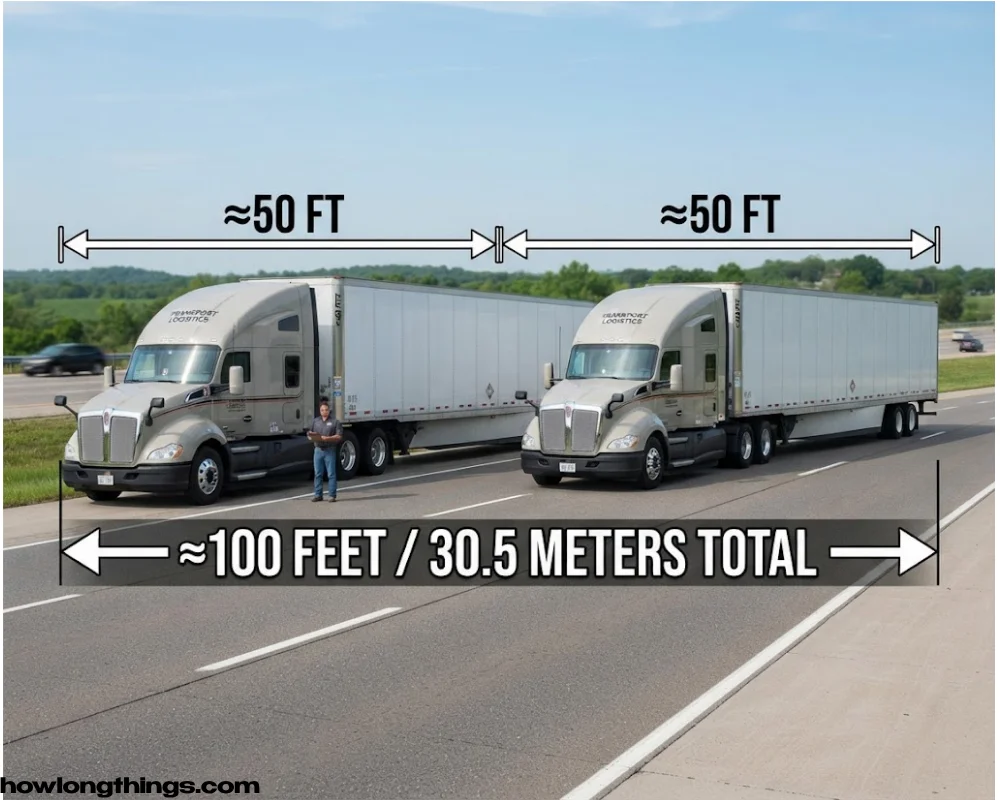
Two Semi-Trailers, End to End
A standard semi-trailer measures 48 to 53 feet long. Park two of them nose to tail, and the combined length lands right around 100 feet.
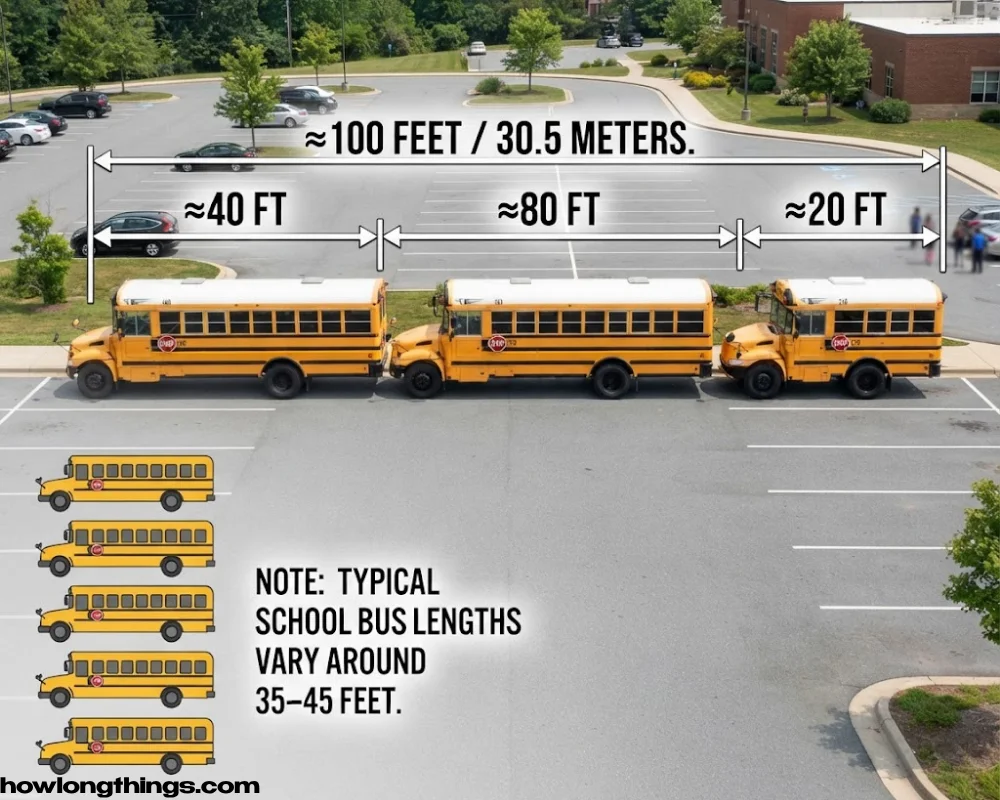
Five School Buses
A standard school bus runs 35 to 45 feet in length. Five of them, or roughly 2.5 buses using a longer estimate, cover close to 100 feet when lined up bumper to bumper.
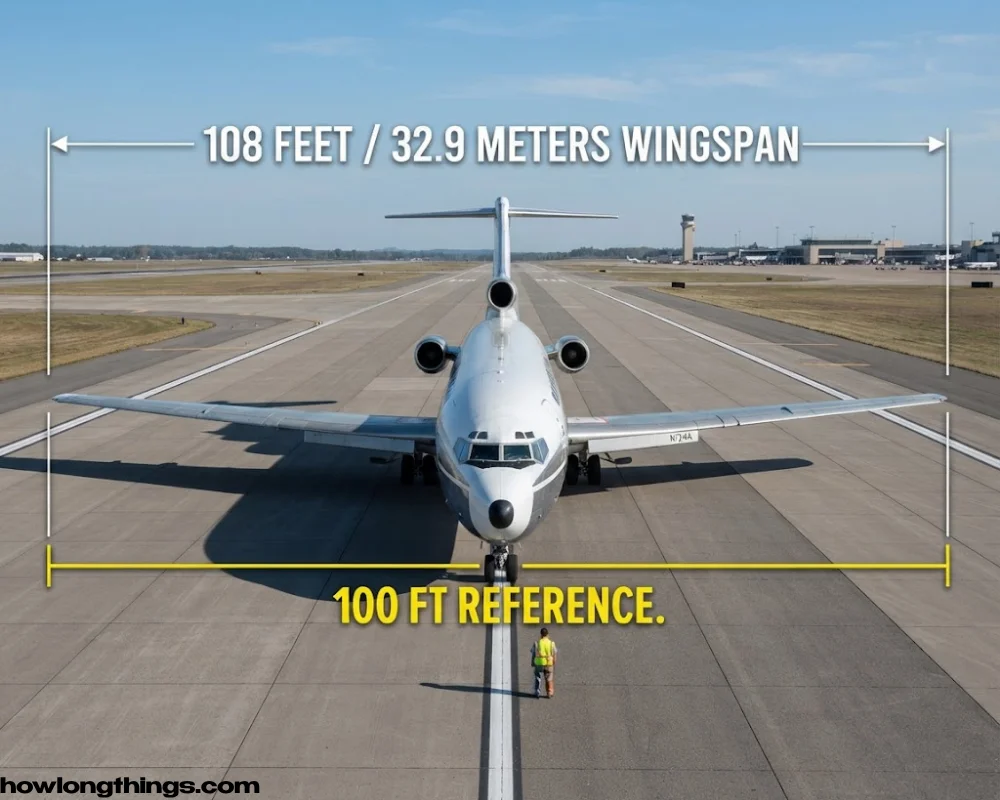
A Boeing 727-100’s Wingspan
The wingspan of a classic Boeing 727-100 measures about 108 feet, tip to tip. Stand at one wingtip, and the opposite tip sits just slightly beyond the 100-foot goal.
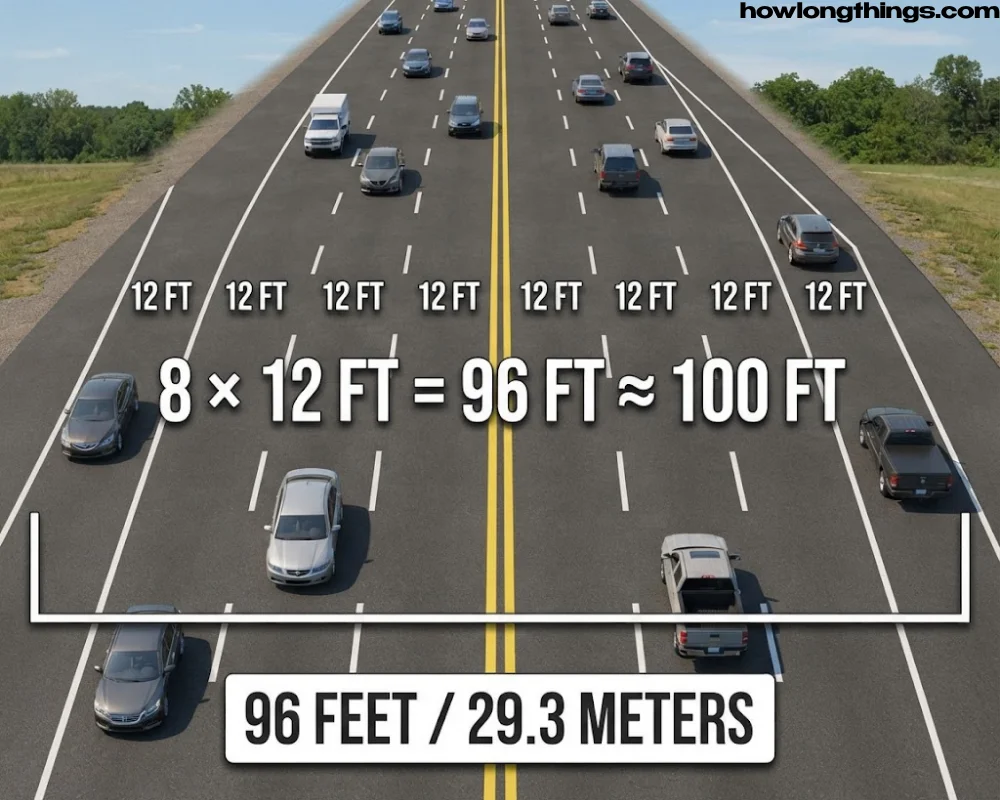
An 8-Lane Highway, Side by Side
A standard US highway lane measures 12 feet wide. Eight lanes packed side by side, not counting shoulders, add up to 96 feet — nearly a perfect horizontal match.
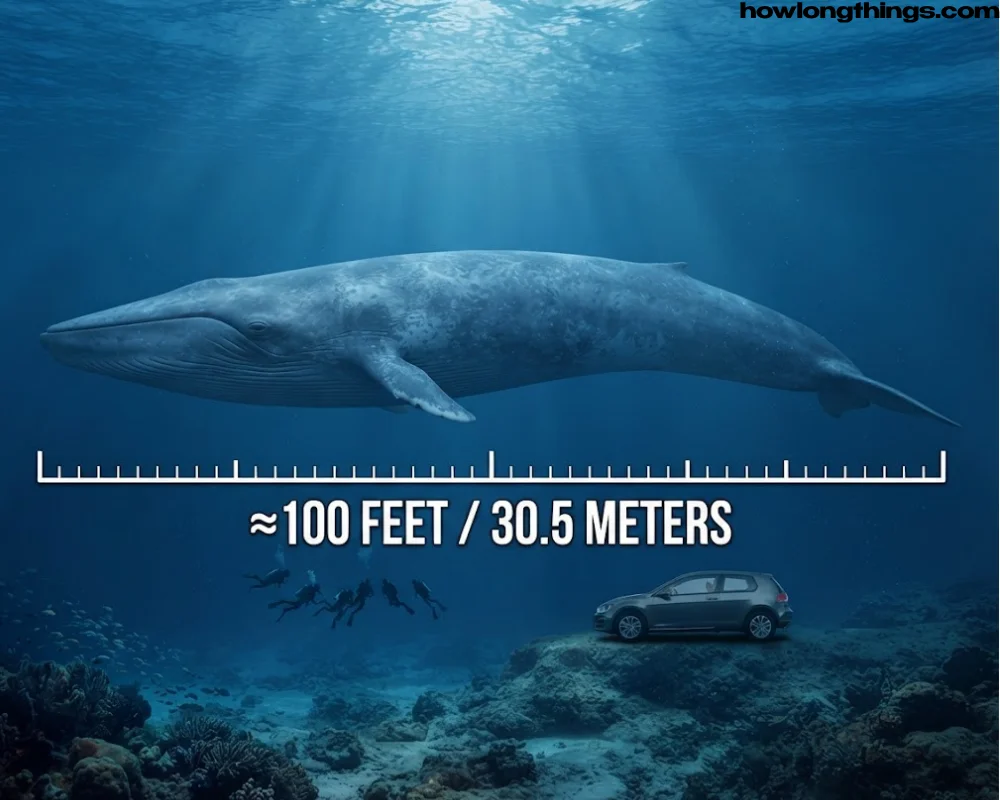
A Blue Whale
A mature blue whale can stretch 98 to 100 feet in length, making it the largest animal ever known to exist. Its heart alone is roughly the size of a small car.
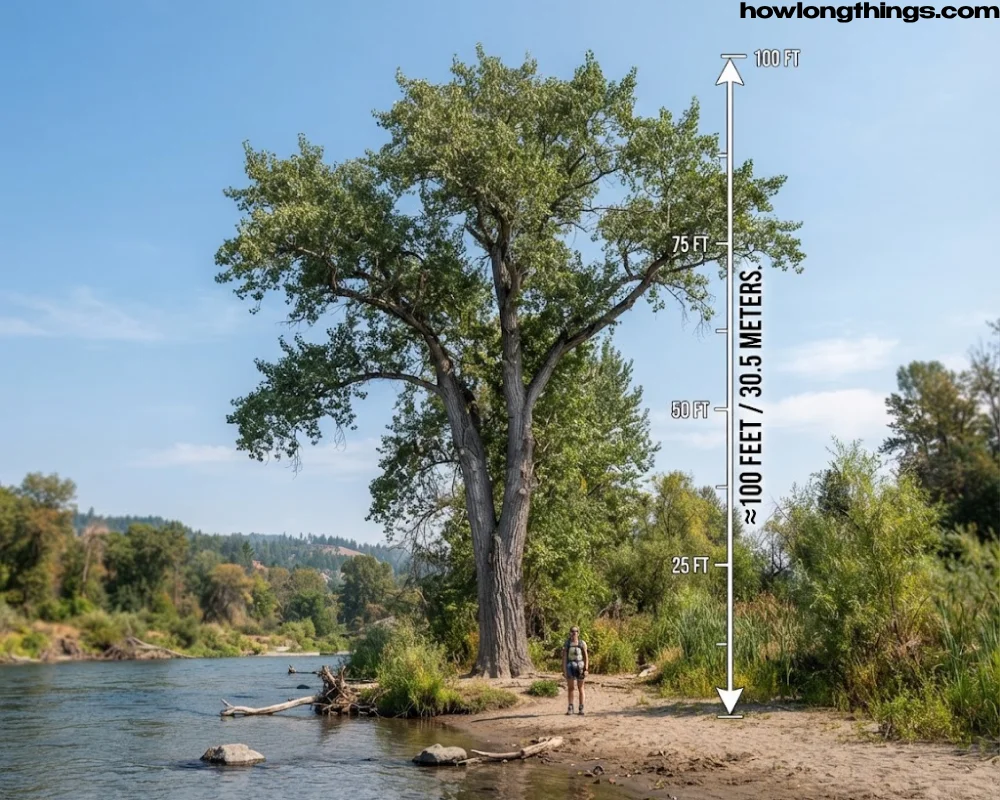
An Eastern Cottonwood Tree
The Eastern Cottonwood grows fast along riverbanks in North America. A healthy, mature specimen commonly reaches close to 100 feet in height.
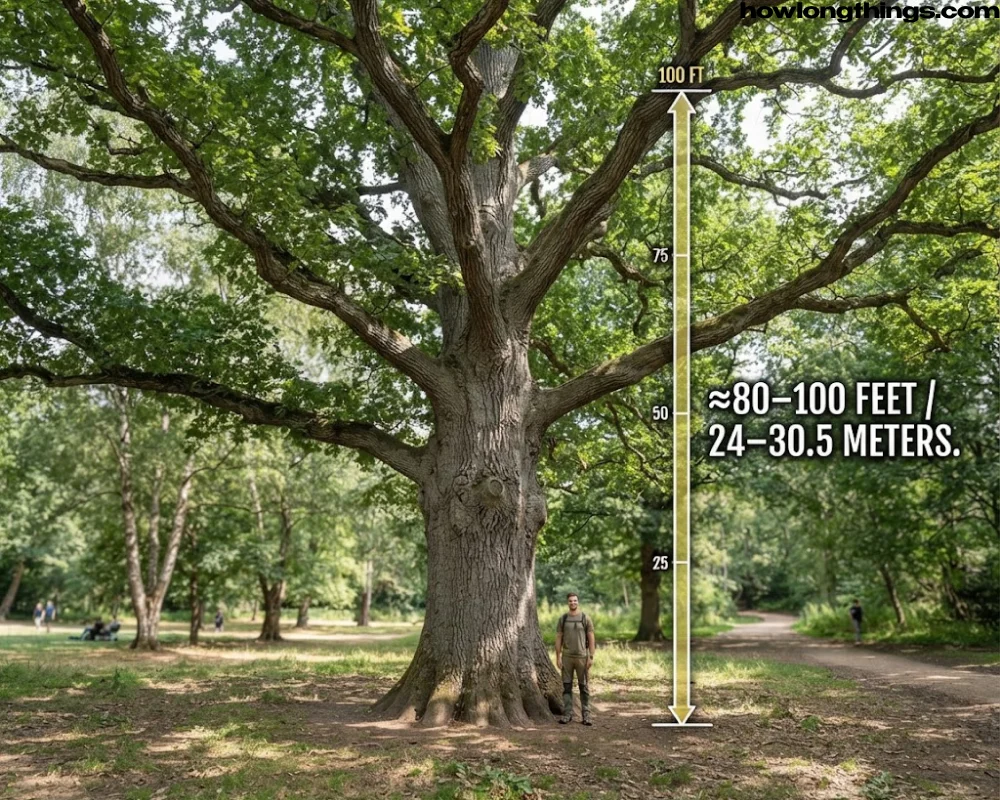
A Mature Oak Tree
Large oak trees found in parks and forests often grow to between 80 and 100 feet tall. Their canopies make them one of the most recognizable natural references for this height.
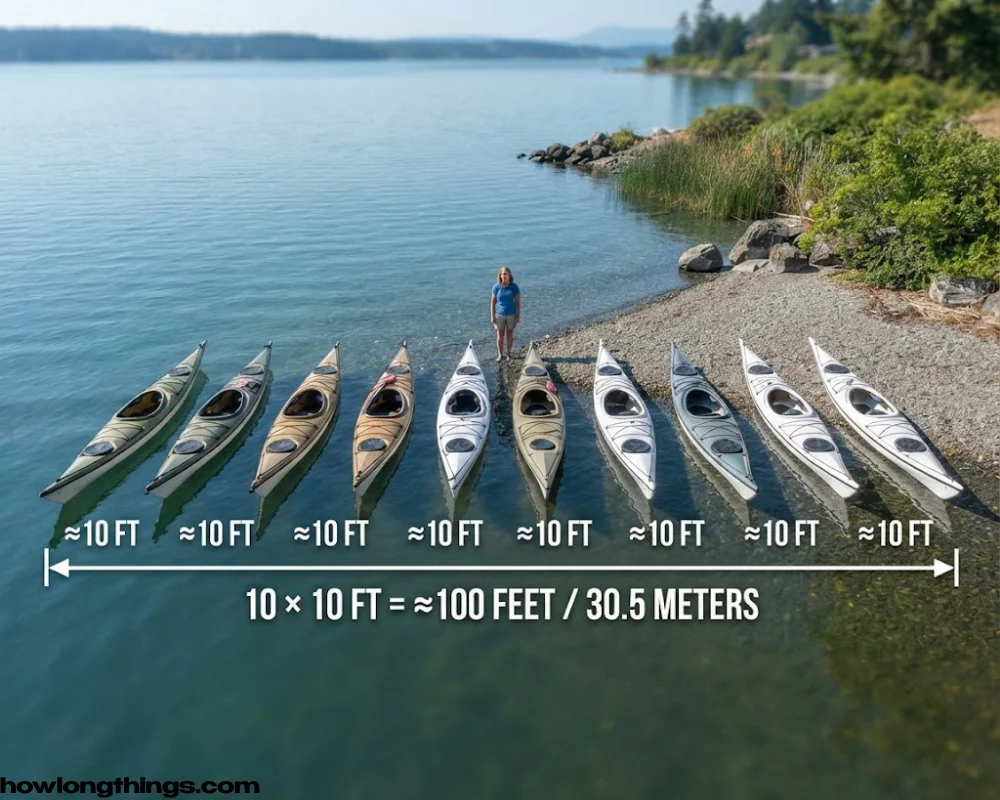
Ten Kayaks in a Row
A standard touring kayak measures close to 10 feet long. Line up ten of them end to end, and you’ve reached almost exactly 100 feet.
A US Residential City Block
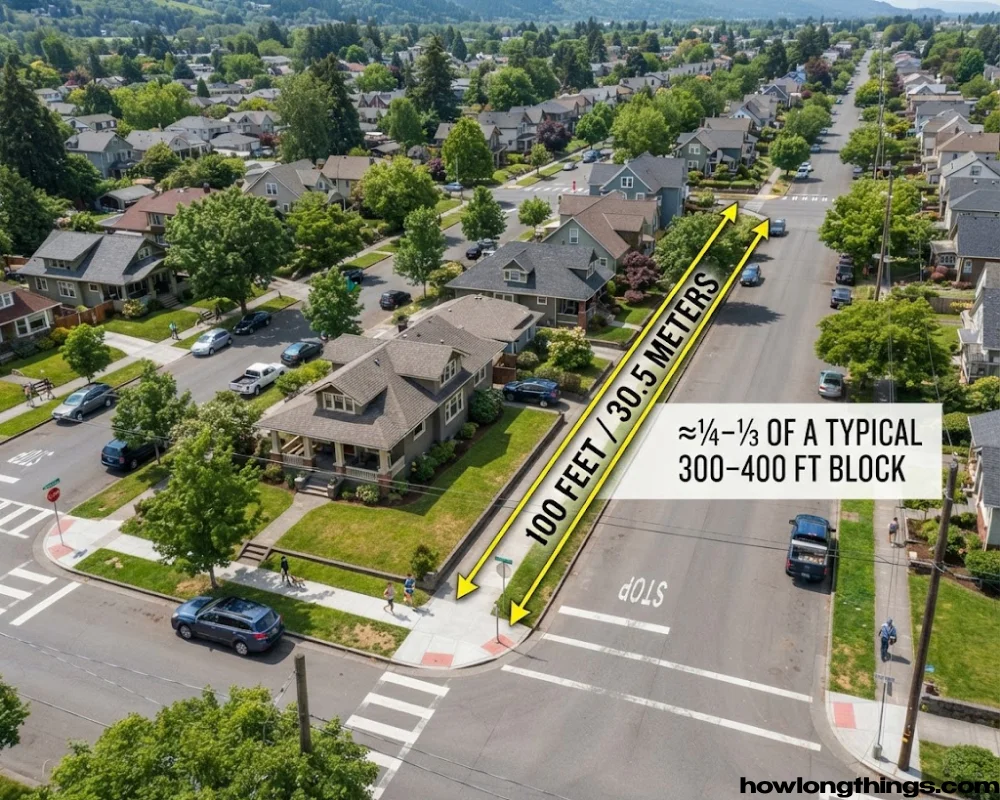
Standard city blocks in many US grid-planned neighborhoods run close to 300 to 400 feet, though shorter blocks in older or denser areas can measure closer to 200 feet. A quarter to a third of a typical block equals roughly 100 feet of sidewalk.
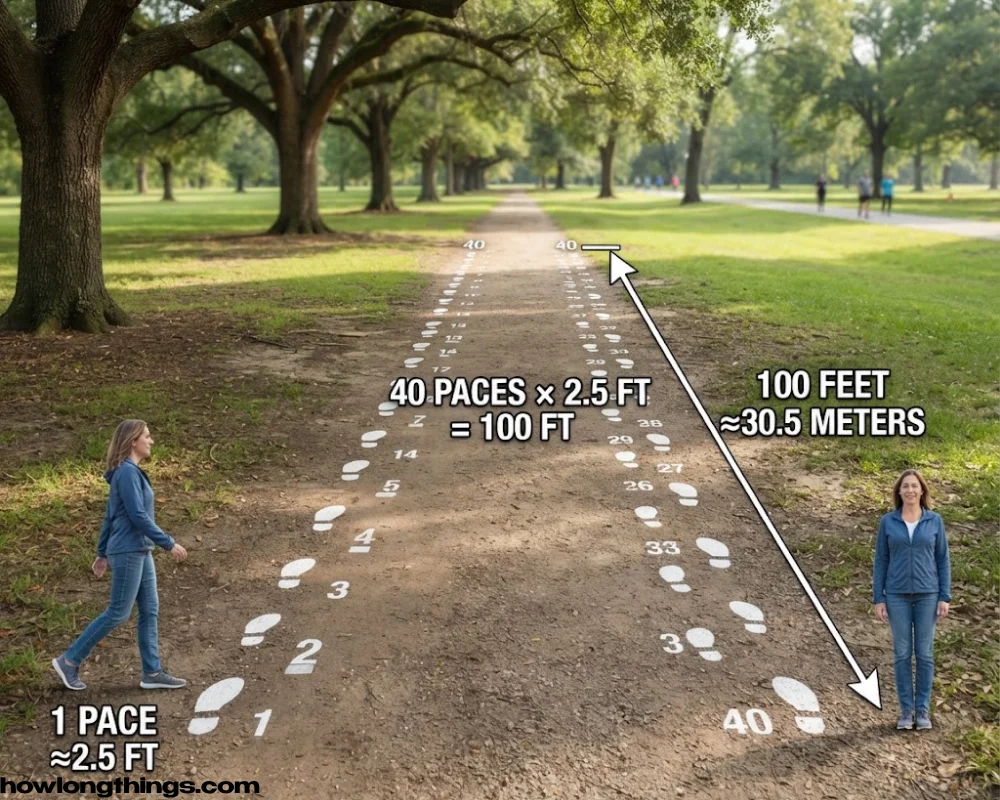
40 Human Paces
The average adult stride measures about 2.5 feet. Forty steady, normal-length steps in a straight line lands you almost exactly at the 100-foot mark.
Stack roughly 16 to 17 average adults head to toe, and you’ll reach 100 feet. That’s a strange, almost dizzying way to picture height, but it puts the scale into human terms fast.
For a safety-related anchor, most US states require pool safety barriers to stand at least 4 feet tall, and many residential fence codes cap out around 6 to 8 feet. Set next to those numbers, 100 feet suddenly looks enormous — roughly 12 to 16 times taller than a typical backyard fence.
How Long Is 100 Feet to Walk?
Walking speed changes everything. Here’s how long it actually takes to cover 100 feet on foot:
Walking Pace
Speed
Time to Cover 100 ft
Slow stroll
2 mph
~34 seconds
Average walk
3 mph
~23 seconds
Brisk walk
3.5 mph
~20 seconds
Fast walk
4 mph
~17 seconds
At an average pace, that’s about 33 to 40 steps — roughly the distance from a parking spot to a store entrance. Next time you’re walking into a building, count your steps. You’ll likely hit the 100-foot mark faster than you expect.
How Long Is 100 Feet Compared to a Football Field?
A full American football field, goal line to goal line, measures exactly 300 feet — this figure excludes both end zones, which add 10 yards (30 feet) each if included in a stadium’s total footprint. Divide that 300-foot playing field into three equal sections, and each section equals exactly 100 feet.
Picture standing on one goal line and looking toward the 33-yard line. That distance is your 100-foot reference, and it’s one of the most reliable visual anchors for US sports fans trying to judge this length.
FAQs About 100 Feet
How long is 100 feet visually?
Picture one-third of a football field, or a 10-story building standing straight up. Both give an accurate, instant sense of the distance.
What does 100 feet look like?
It looks like two semi-trailers parked end to end, or a mature oak tree reaching toward the sky. Either image captures the scale clearly.
How long is 100 feet to walk?
At an average walking pace of 3 mph, covering 100 feet takes about 23 seconds, or roughly 33 to 40 normal steps.
How long is 100 feet compared to a football field?
It’s exactly one-third of a regulation football field, which measures 300 feet from goal line to goal line.
How tall is 100 feet compared to a human?
It’s about the height of 16 to 17 average adults stacked head to toe — far taller than any residential fence or pool barrier allowed under US safety codes.
What are some things that are 100 feet tall?
A 10-story building, a mature Eastern Cottonwood tree, and a fully extended fire truck ladder all reach close to 100 feet in height.
Final Thoughts
100 feetbreaks down to 30.48 meters, 33.33 yards, or exactly one-third of a football field — a number that shows up everywhere from fire safety to sports to nature. Once you connect it to something familiar, like a 10-story building or two semi-trailers end to end, the distance stops feeling abstract and starts feeling obvious at a glance.
Elizabeth Queen is a Owner and consumer research writer at HowLongThings.com, specializing in product lifespan, durability, and everyday household research. She’s passionate about helping readers make smarter, longer-lasting buying decisions.